
Why depression and insomnia together raise dementia risk
Having both depression and insomnia may substantially increase dementia risk beyond the risk of either condition alone. This article explains the combined risk from recent research and what you can do about it.
For adults over 50, the important finding is not simply that depression and poor sleep each show up in dementia research. It is that major depressive disorder and insomnia together mark a higher-risk profile than either condition alone. In a 10-year electronic health record study of 1,868,790 patients aged 50 and older, people with neither diagnosis were the reference group. Insomnia alone was linked with an 11% higher dementia risk, major depressive disorder alone with a 70% higher risk, and both conditions together with a 91% higher risk. [1]
That ordering matters. It prevents a common overstatement: this is not evidence that a few bad nights of sleep cause dementia. Depression carried the stronger association in the study. Insomnia appeared to add to the risk picture when it occurred with depression, and the combined risk was greater than a simple add-on of two equal problems.
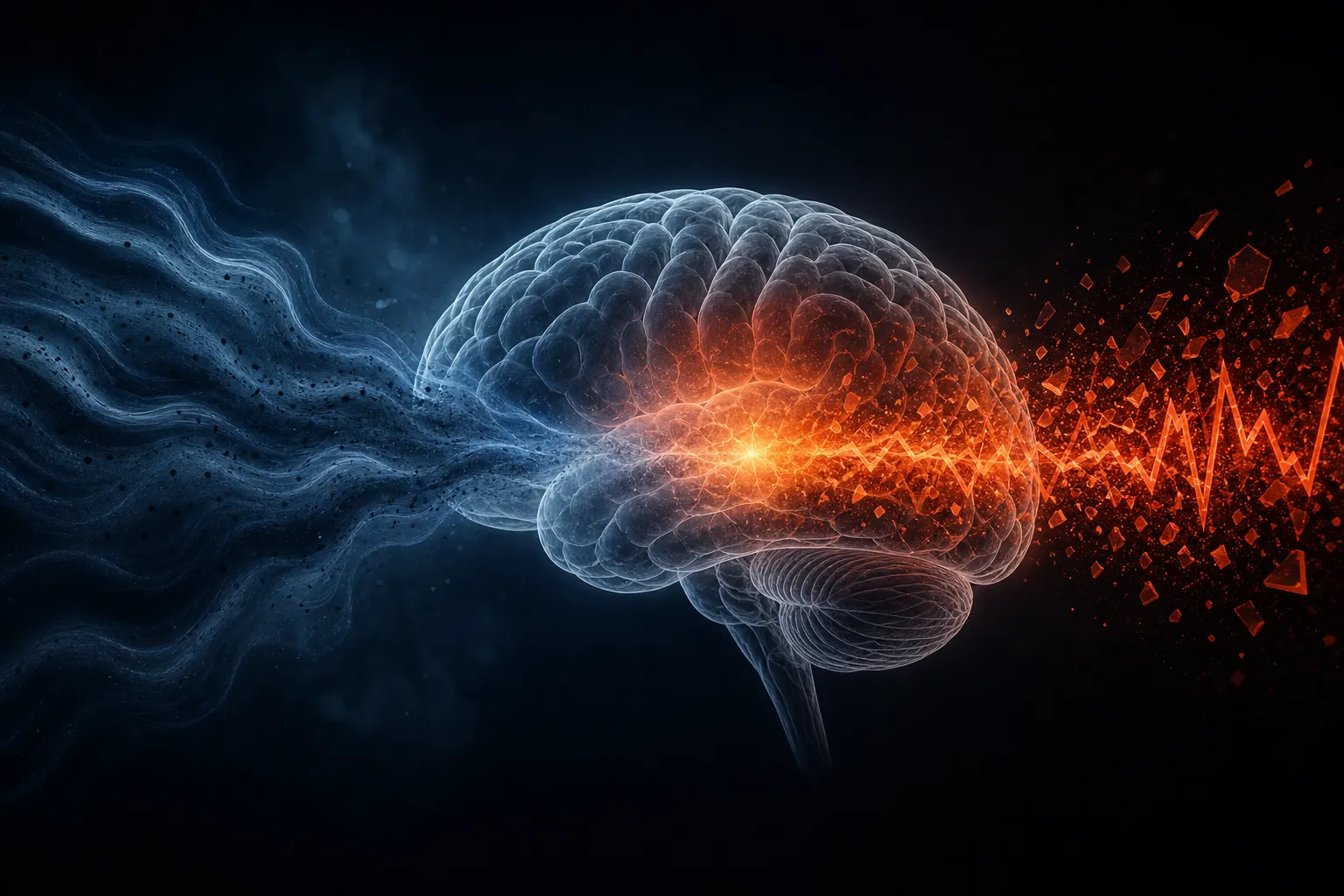
This is also not a rare pairing tucked away in a specialist clinic. Roughly 59% of people with major depressive disorder also experience insomnia, which means many older adults and caregivers are not dealing with two separate complaints so much as one overlapping clinical problem.
What the 10-year study actually found
The Saint Louis University and TriNetX study followed patients aged 50 and older using diagnosis codes from electronic health records. The published hazard ratios were 1.11 for insomnia alone, 1.70 for major depressive disorder alone, and 1.91 for both conditions together, each compared with adults who had neither diagnosis. [1]
| Group | Dementia risk compared with neither condition |
|---|---|
| Neither major depressive disorder nor insomnia | Reference group |
| Insomnia alone | 11% higher risk; HR 1.11, 95% CI 1.07-1.14 |
| Major depressive disorder alone | 70% higher risk; HR 1.70, 95% CI 1.65-1.76 |
| Both major depressive disorder and insomnia | 91% higher risk; HR 1.91, 95% CI 1.83-2.00 |
The association was not meaningfully changed by race in the study. The same general pattern held across White, Black, and Asian populations, which is useful because many dementia-risk studies either lack diversity or cannot say much about whether an association is limited to one group. [1]
The study also found that the combined group had higher rates of chronic disease and healthcare use, including conditions such as hypertension, diabetes, and obesity. That does not prove those conditions are the reason dementia risk rose, but it does fit a pattern clinicians already recognize: depression plus chronic insomnia often travels with broader cardiovascular, metabolic, and inflammatory strain. [1]
One source-quality note is worth making plainly. If you see different percentages attributed to this same study in secondary coverage, the primary paper's published figures are the numbers to use: 11% for insomnia alone, 70% for major depressive disorder alone, and 91% for both. [1]
Why depression appears to do more of the heavy lifting
Depression is not just sadness that happens to coincide with memory concerns. In dementia-risk research, it is tied to stress-system dysregulation, inflammation, and changes in brain regions involved in memory. The Alzheimer's Society describes depression as a dementia risk factor and notes that the relationship is complicated: depression may contribute to dementia risk, and depression can also appear before dementia is diagnosed. [2]
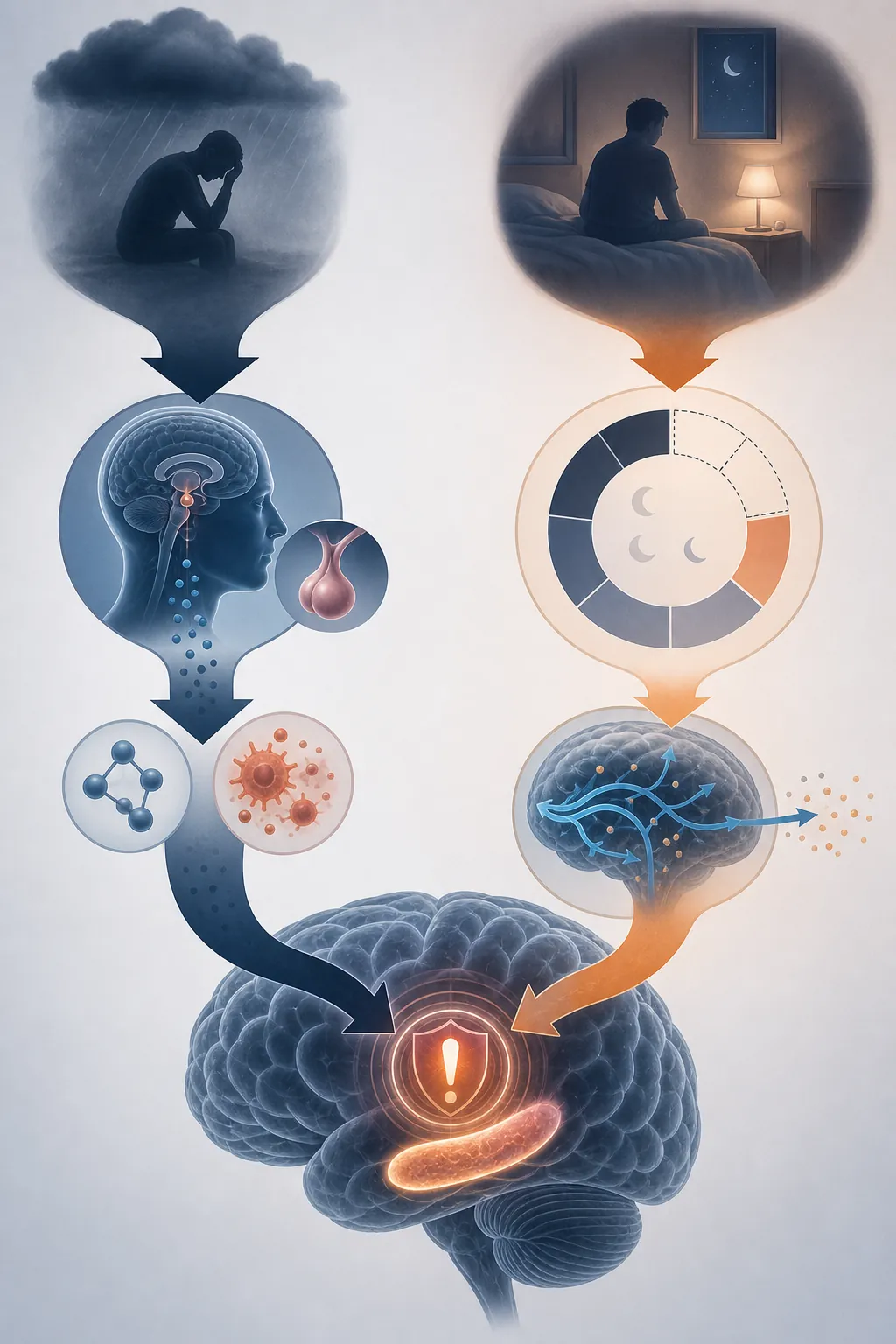
One plausible pathway runs through the hypothalamic-pituitary-adrenal axis, the body's central stress-response system. When that system is persistently activated, cortisol exposure may affect the hippocampus, a brain structure essential for memory. Depression has also been discussed in relation to beta-amyloid deposition and chronic inflammation, both of which are relevant to dementia biology. [2][3]
This does not make every episode of depression a forecast of dementia. It does make late-life or persistent depression a condition worth naming, measuring, and treating instead of dismissing as personality, aging, grief, or lack of willpower.
How insomnia may compound the risk
Insomnia adds something different. Sleep is one of the body's recovery windows, and deep non-rapid eye movement sleep is one period when the brain's waste-clearance activity appears especially active. Research reviewed by the University of Rochester describes glymphatic clearance of amyloid-beta and tau during sleep, with slow oscillations in norepinephrine helping drive rhythmic blood-vessel motion that supports fluid movement. [4]
That mechanism is promising, but it should be handled carefully. Glymphatic research is still developing, and much of the strongest mechanistic work comes from animal models. It is too much to say that treating insomnia will clean the brain and prevent Alzheimer's disease. It is fairer to say that chronic insomnia may remove a recurring period of physiologic recovery at the same time depression is increasing stress-system and inflammatory load. [4]
There is also a practical difference between insomnia and other sleep disorders. Chronic difficulty falling asleep, staying asleep, or waking too early belongs in one conversation. Loud snoring, witnessed pauses in breathing, morning headaches, or unusual daytime sleepiness may point toward sleep-disordered breathing, which is a separate pathway worth checking rather than folding into ordinary insomnia. For more on that mechanism, see carbon dioxide retention during sleep and Alzheimer's risk.
The most useful response is paired screening
The study does not justify panic. It does justify better intake questions. If an adult over 50 is being evaluated for depression, insomnia should be asked about directly. If someone is being treated for chronic insomnia, depression should be screened for rather than assumed away as frustration from poor sleep.
That screening can be simple. A primary care visit or behavioral health visit can include a depression measure such as the PHQ-9, a review of sleep timing and awakenings, medication history, alcohol use, pain, nighttime urination, and symptoms suggesting sleep apnea. The point is not to turn every tired person into a dementia patient. The point is to stop treating depression and insomnia as unrelated complaints when they are present together. For a closer look at screening tools, see how mental health screening affects sleep quality.
- If depression is diagnosed, ask whether sleep problems are present most nights, how long they have lasted, and whether they began before or after the mood symptoms.
- If insomnia is the main complaint, ask about low mood, loss of interest, guilt, appetite change, slowed thinking, agitation, and thoughts of self-harm.
- If both are present, ask who is coordinating care: primary care, psychiatry, sleep medicine, psychology, or a combined behavioral health team.
- If memory complaints are also present, bring those into the same visit rather than waiting to see whether they resolve on their own.
Age matters here because retirement, caregiving, bereavement, medication changes, pain, and medical illness can all disturb sleep and mood after midlife. Those life changes may explain why symptoms started, but they do not make the symptoms medically irrelevant. For more on that age-50-plus context, see how retirement affects sleep quality.

Treatment matters, even though prevention is not proved
The practical goal is not to promise dementia prevention. It is to treat two modifiable conditions that are already harming daily life and that, when combined, identify a higher-risk group.
For chronic insomnia, cognitive behavioral therapy for insomnia, or CBT-I, is generally treated as first-line care. It works differently from simply giving sleep tips. CBT-I usually addresses time in bed, sleep scheduling, conditioned arousal, beliefs about sleep, and behaviors that keep insomnia going. For a depressed person who is spending long hours in bed awake, napping irregularly, or dreading the night, that structure can be clinically important.
Depression treatment also belongs in the dementia-risk conversation, with appropriate caution. In a UK Biobank study of 354,313 participants, depression treatment was associated with a 30% lower dementia risk compared with untreated depression, with a hazard ratio of 0.70. That is observational evidence, not proof from a randomized trial, and healthier treatment-seeking patterns or socioeconomic differences may partly explain the association. [5]
Still, the finding supports a reasonable clinical stance: depression should not be left untreated because dementia prevention is uncertain. Psychotherapy, medication when appropriate, social support, pain management, substance-use treatment, and sleep treatment may all be part of reducing the overall burden on the brain and body.
Medication choices need nuance. Some antidepressants with anticholinergic properties have raised dementia-related concerns, while selective serotonin reuptake inhibitors are generally considered safer from that standpoint. That is a reason to review medications with a clinician, not a reason to stop an antidepressant suddenly or avoid treatment altogether.
When symptoms are severe, treatment may require more than a single prescription or a sleep handout. Psychiatric and sleep problems often have to be managed together, especially when suicidality, bipolar disorder, trauma, substance use, or complex medication regimens are involved. For a deeper look at coordinated care in more intensive settings, see how psychiatric hospitals actually treat sleep disorders.
Where the evidence stops
The main study was retrospective and based on ICD diagnosis codes in electronic health records. That design can capture very large populations, but it can also miss people whose insomnia or depression was never diagnosed, coded, or treated. It also cannot fully separate cause from early warning sign. Depression and insomnia may contribute to dementia risk; they may also be early symptoms in some people who are already on a path toward dementia. [1]
That uncertainty should narrow the conclusion, not erase it. The evidence does not prove that treating depression and insomnia will prevent dementia. It does show that their combination marks a higher-risk, modifiable pathway that deserves earlier screening and coordinated care.
If both are present in an adult over 50, do not normalize the pairing as ordinary aging, and do not split it into two separate conversations. Bring the mood symptoms, sleep pattern, medications, medical conditions, and memory concerns into the same clinical visit.
References
- Major depressive disorder, insomnia, and risk of dementia among older adults, Aging & Mental Health, 2025
- Depression and dementia risk, Alzheimer's Society
- Depression and dementia risk, Alzheimer's Research UK
- The Brain's Night Shift: How Sleep, Waste Clearance and Dementia May Be Linked, University of Rochester Medical Center
- Depression, depression treatments, and risk of incident dementia: a prospective cohort study of 354,313 participants
Explore the mechanism
Next step
Spot an error or have clinical feedback?
Because this article covers clinical, medication, or safety information, we use a moderated correction channel instead of open public comments. Let us know if something about “Why depression and insomnia together raise dementia risk” needs a closer look.
Send feedback on this article