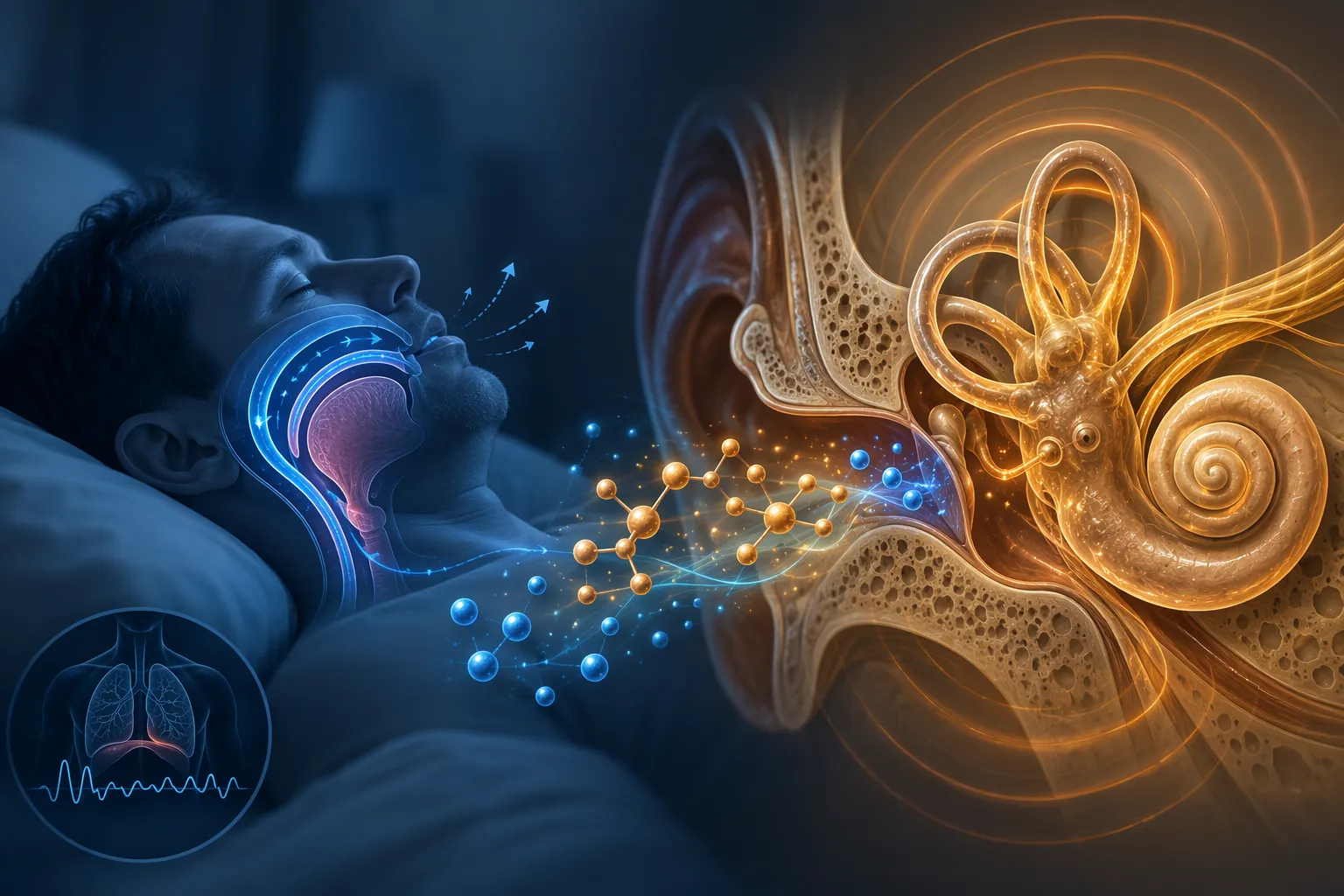
Circadian and hormonal cycle, an editorial illustration

A life-stage sleep specialist

Restful Ground

Sleep medicine for the life stages generic advice skips — perimenopause, pregnancy, ADHD, and aging — with a named sleep specialist, an evidence tier, and a last-reviewed date on every guide, never a supplement storefront.

Informational only. Restful Ground is editorially independent and is not a supplement storefront — every clinical guide carries a named, credentialed medical reviewer, an evidence tier, and a last-reviewed date.

Life stage · Hormonal

Perimenopause & Menopause

Intermittent hypoxia and sympathetic activation from sleep apnea destabilize inner ear fluid pressure.

Start here for perimenopause & menopause

Life stage · Trimester-aware

Pregnancy

Intermittent hypoxia and sympathetic activation from sleep apnea destabilize inner ear fluid pressure.

Start here for pregnancy

Life stage · Aging & safety

Older Adults

Intermittent hypoxia and sympathetic activation from sleep apnea destabilize inner ear fluid pressure.

Start here for older adults

Neurotype · ADHD, anxiety, circadian

Neurodivergent

Covers ADHD adults, anxiety-linked sleep disruption, and circadian misalignment (e.g. delayed sleep phase). Guidance is mechanism-first: circadian and executive-function links to delayed sleep onset, stimulant medication timing, and non-drug strategies suited to ADHD-specific barriers like difficulty following rigid sleep hygiene routines. Carries the same reviewer, evidence-tier, and last-reviewed metadata as Life-Stage Sleep. Boundary: organized by neurotype rather than age or reproductive stage; where a topic intersects both axes (e.g. ADHD during perimenopause), the article lives in the more specific cluster and is cross-linked from the other.

Start here for neurodivergent

Why every guide carries a named reviewer

RCT, observational, and consensus evidence are labeled honestly on every clinical article, alongside a last-reviewed date and the credentialed physician or PhD who reviewed it — structural fields, not footnotes.

  • Editorial TeamMD
Why Meniere's sleep disruption may need a sleep apnea remedy

Intermittent hypoxia and sympathetic activation from sleep apnea destabilize inner ear fluid pressure.

Why Meniere's sleep disruption may need a sleep apnea remedy

If your Meniere's disease isn't improving with standard treatment, undiagnosed sleep apnea may be the culprit. Learn how CPAP therapy can reduce vertigo attacks and improve hearing in the subset of Meniere's patients with concurrent sleep apnea.

Observational evidence

Why your sleep suffers when your partner has Parkinson's

Parkinson's nighttime symptoms like REM sleep behavior disorder, difficulty turning, and nocturia don't just disrupt the person with Parkinson's—they cascade into caregiver sleep loss, increased burden, and reduced life satisfaction. This article explains the documented cycle and what partners can do to break it.

Observational evidence

How Perimenopause Sleep Loss Accelerates Your Biological Age

Perimenopause sleep disruption may accelerate biological aging by up to 6 percent, with insomnia adding nearly two extra biological years. This guide explains the epigenetic clock evidence and which sleep strategies are proven to slow that clock for women in perimenopause.

Observational evidence

Is It Postpartum Insomnia or Just New Mom Exhaustion?

Many new mothers assume severe sleep problems are just part of parenthood, but there is a clinically meaningful difference between expected newborn-driven sleep fragmentation and treatable postpartum insomnia. This guide provides a framework to distinguish the two and explains why CBT-I is an evidence-based treatment option.

RCT evidence

See all Life-Stage guides →

Blogarama - Blog Directory