Why Earthquake Anxiety Hijacks Your Sleep
Earthquake anxiety disrupts sleep through a distinct neurobiological pathway involving hyperarousal and a specific fear of being unconscious. This article explains the brain science behind the cycle and why it persists without intervention.
The difficult moment often comes before any dream has a chance to begin. The room is dark. The phone is close enough to grab. Shoes may be lined up beside the bed, not because anyone wants to live in fear, but because bare feet on broken glass is a lesson people do not need to learn twice. At noon, the same person may work, talk, cook, answer messages, and appear steady. At night, as the body starts to hand itself over to sleep, steadiness can disappear.
That is the center of earthquake anxiety and sleep problems: not simply worrying about another quake, and not simply “being stressed.” Sleep asks for a temporary surrender of monitoring. After shaking, collapse, evacuation, entrapment, or even the repeated waiting for aftershocks, the nervous system may treat that surrender as unsafe.
A 2025 study of adolescent survivors 9–12 months after the great earthquakes in Türkiye makes this point unusually plainly. Persistent fear of being caught or trapped while asleep was associated with shorter sleep duration, and high earthquake anxiety made poor sleep quality nearly six times more likely, with an odds ratio of 5.721. Among adolescents with high earthquake anxiety, 89.4% had poor sleep quality on the Pittsburgh Sleep Quality Index, or PSQI, where scores above 5 indicate poor sleep quality.[1]
Why the edge of sleep feels unsafe
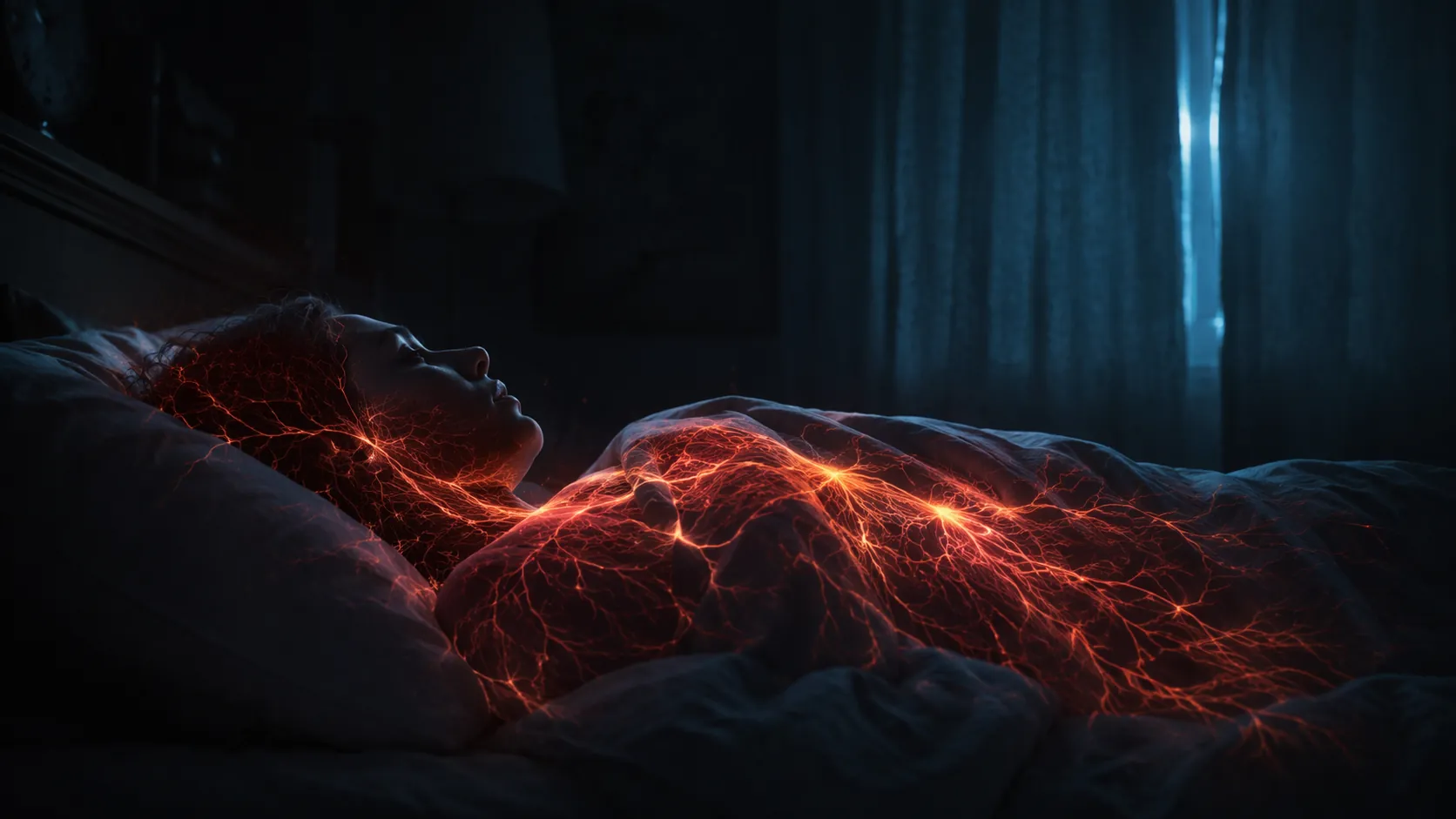
Falling asleep is not a switch. It is a narrowing of contact with the outside world. Muscles soften. Responsiveness drops. The ordinary checks that keep a person oriented — sound, light, balance, phone, door, hallway — recede. In an uninjured nervous system, that narrowing is welcome. In a trauma-trained one, it can feel like the exact condition under which danger would have the advantage.
Earthquake fear has a particular cruelty here. The original danger may have arrived without negotiation. The bed moved. Walls sounded different. The floor, which normally promises stability without asking for attention, became the threat. After that, the body may not regard lying still in the dark as rest. It may regard it as poor positioning.
This is why some survivors are not primarily afraid of nightmares. They are afraid of being unreachable, slow, pinned, separated from children, unable to find glasses, unable to unlock a door, unable to judge whether the next shaking is real. The fear attaches to unconsciousness itself. It is not dramatic from the outside. It can look like scrolling too late, listening for building sounds, sleeping lightly, choosing the couch, leaving lights on, or waking again and again to check whether the world is still where it was.
The Türkiye adolescent study is useful because it does not flatten this into a vague fear state. It identifies the fear of being caught or trapped while asleep as a distinct factor tied to reduced sleep duration. That matters clinically and practically: “I feel anxious” and “I cannot tolerate being unconscious if the building moves again” may overlap, but they are not the same complaint.[1]
Hyperarousal is protection that will not stand down
After a real threat, the body does not need a philosophy of danger. It needs speed. The sympathetic nervous system prepares for action: faster heart rate, sharper attention, readiness to move. The hypothalamic-pituitary-adrenal axis, often shortened to the HPA axis, helps coordinate the stress response through hormones including cortisol. In the short term, this is not a mistake. It is part of how a body survives.
The problem is timing. Sleep initiation depends on the body being able to reduce vigilance. Sleep maintenance depends on staying below the threshold where ordinary sounds, body sensations, or small environmental changes are interpreted as possible threat. Hyperarousal pushes in the opposite direction. A person may be exhausted and still unable to cross the threshold into sleep, or may fall asleep only to wake repeatedly with the sense that something needs checking.
The PSQI scores reported after earthquakes are not describing a few restless nights. In one 2025 cross-sectional study of adult earthquake survivors, the mean PSQI score was 11.10, well above the clinical cutoff of 5.[2] In the Türkiye adolescent study, the mean PSQI score 9–12 months after the earthquakes was 9.28, also well above that threshold.[1]
Those numbers are self-reported and reflect recent sleep quality rather than objective sleep-lab measurement. They also do not tell us what each person’s sleep was like before the earthquake. Still, they are strong enough to reject the gentler fiction that post-earthquake sleep loss is usually just light worry that will automatically fade once people are told to relax.
The manner of survival can follow someone into bed
Not every survivor’s nervous system learns the same lesson. Someone who walked out immediately may carry one kind of fear. Someone who had to get out from rubble may carry another. The difference is not moral strength, and it is not a contest over whose fear is legitimate. It is exposure.
Kahraman et al. found that adolescents who self-extricated from rubble had worse sleep quality than those who exited immediately, with an odds ratio of 2.578.[1] That finding should be handled carefully because it comes from adolescents after a specific disaster context, and it does not prove that every person who escaped rubble will develop insomnia. But it gives a concrete example of how the route through danger can shape the body’s later nighttime behavior.
If being trapped was part of survival, then sleep may not feel like rest. It may feel like re-entering a state in which movement, awareness, and escape are delayed. The body is not remembering in neat sentences. It is remembering in thresholds: darkness, stillness, muffled sound, pressure, silence, the first seconds after waking when the room has to be identified again.
Fear of sleeping is not just louder anxiety
General anxiety tends to scatter. It can attach to repairs, money, school, elevators, aftershocks, insurance, weather, news alerts, or the reliability of buildings. Fear of sleeping is narrower. It asks what happens if danger returns during the one state in which response is slowest.
That narrower fear can change behavior even when daytime functioning looks intact. A person may avoid going to bed, not because they are not tired, but because bed marks the beginning of reduced control. They may sleep in clothes, keep a bag nearby, leave doors open, ask family members to keep phones on, avoid sleeping pills, or wake at small vibrations. These behaviors can be rationally connected to the original danger and still become damaging when they prevent recovery night after night.
This distinction also prevents a common misreading. If the complaint is “I am afraid something will happen while I am asleep,” then a generic reassurance that anxiety is normal may be true and still incomplete. The person is naming a vulnerability problem, not merely a mood problem. The sleeping body cannot scan exits, judge structural sounds, or gather children with the same speed as the waking body. After an earthquake, the alarm system may treat that biological fact as an emergency.
The evidence is not cleaner than it is. The cited studies rely heavily on self-report, and the specific fear of being caught asleep has not been isolated with objective sleep measurement in a way that would settle every mechanism. The cautious conclusion is still important: earthquake-related sleep loss can include a measurable fear of unconscious vulnerability, not only a global anxiety score.[1]
Once sleep breaks, it can start feeding the anxiety
The easy story runs one way: earthquake anxiety causes poor sleep. That happens. But it is not the whole loop, and it may not be the most useful part of the loop to notice.
A 2024 study found that sleep disturbance was a stronger predictor of subsequent anxiety than anxiety was of later sleep disturbance.[3] In older survivors of the 2011 Great East Japan Earthquake and Tsunami, Yazawa et al. found bidirectional associations between PTSD symptoms and sleep quality, with the pathway from anxiety symptoms to sleep quality mediated by hyperarousal.[4]
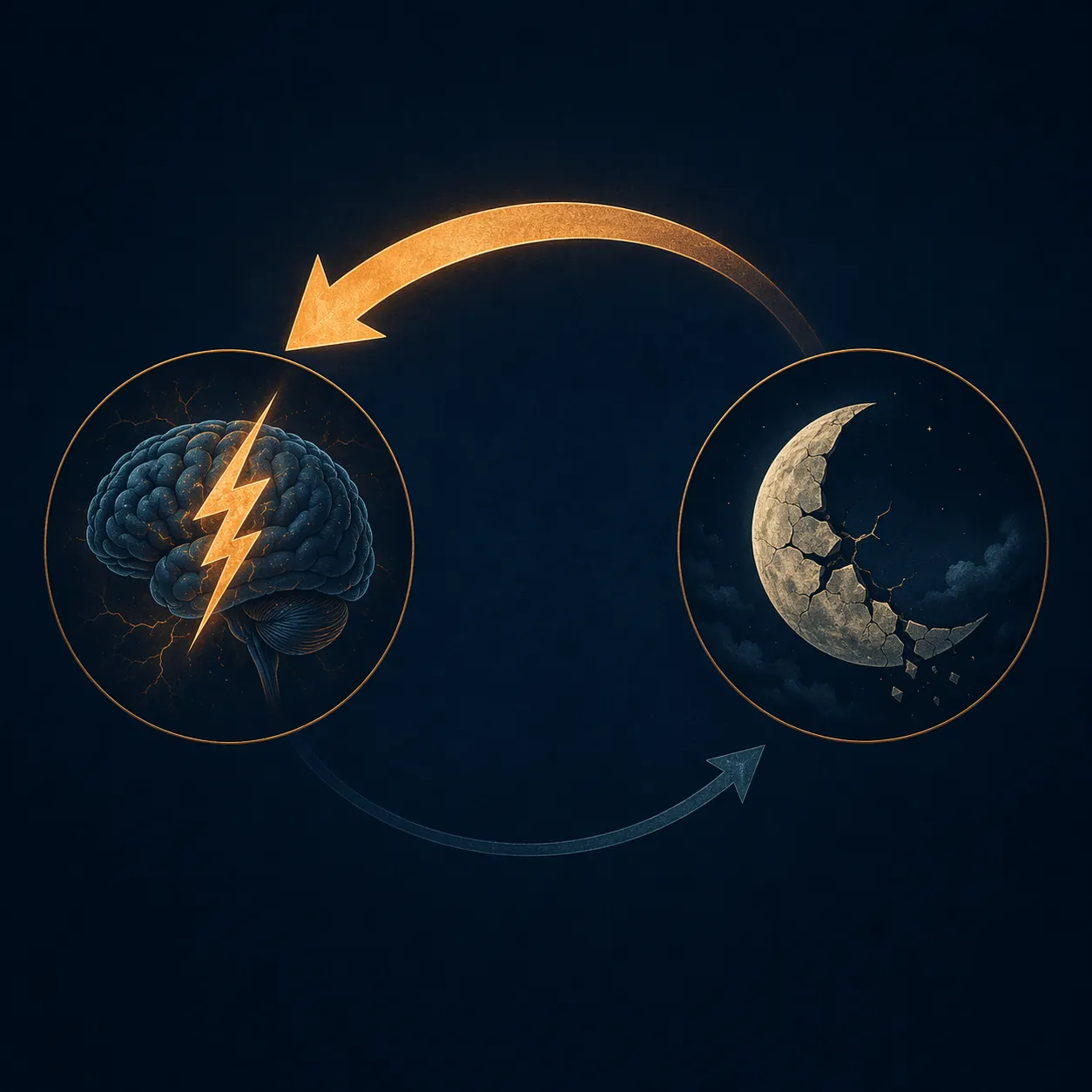
In plain terms, bad sleep does not merely reflect a frightened nervous system. It can leave that nervous system less able to regulate threat the next day. Attention becomes more reactive. Ordinary uncertainty feels sharper. Body sensations are easier to misread. The next bedtime then arrives with less recovery behind it and more evidence, from the body’s point of view, that vigilance is necessary.
This helps explain why some people feel confused by the calendar. The earthquake may be months behind them. The building may have been inspected. Aftershocks may have become less frequent. Yet sleep can remain fragile because the sleep-anxiety loop has acquired its own momentum. The original danger started the training; repeated nights of fractured sleep keep rehearsing it.
Why time alone may not repair it
Many post-disaster reactions do soften with time, practical support, and restored safety. It would be wrong to turn every sleepless week into a diagnosis. But it would also be wrong to assume that time, by itself, reliably repairs trauma-related sleep disruption.
Chen et al. documented sleep problems in adolescents 10 years after the Wenchuan earthquake while examining links among earthquake exposure, PTSD symptoms, sleep problems, and resilience.[5] A conference abstract reported that 94% of 165 Haiti earthquake survivors described insomnia symptoms, though that evidence should be treated as limited because the sample was small and the report was conference-level rather than a full peer-reviewed article.[6]
The strongest evidence base here comes from major earthquakes, including the 2023 Türkiye earthquakes, the 2008 Wenchuan earthquake, and the 2011 Japan earthquake and tsunami. It may not transfer neatly to smaller quakes, different housing conditions, or communities with different warning systems and building standards. But the pattern is consistent enough to respect: when sleep becomes part of the threat system, waiting for exhaustion to overpower vigilance is a poor plan.
The mechanism matters
Calling this “just anxiety” misses the bodily logic. After an earthquake, the brain may try to preserve survival readiness during the very state that requires letting go. Hyperarousal keeps the body closer to action. Fear of being caught asleep gives that arousal a specific target. Fragmented sleep then weakens the next day’s threat regulation, making the following night easier to disrupt.
That understanding does not mean every person needs clinical treatment, and it does not make preparedness pathological. Keeping shoes near the bed after a quake can be sensible. So can having a charged phone, a flashlight, and a family plan. The line to watch is different: whether the body can ever step down from emergency posture long enough to sleep, and whether nights are becoming a source of future anxiety rather than only a symptom of past fear.
For practical next steps, the companion guide “How to Sleep After Earthquake Trauma Tonight” belongs to the problem of what to do in the next few hours. A self-triage guide can help sort ordinary short-term disruption from signs that more support is needed. This article stops at the mechanism because the mechanism deserves to be seen clearly: the sleeping body is not failing to calm down; it is trying, too faithfully, to stay available for escape.
References
- Earthquake anxiety and sleep quality among adolescent survivors 9–12 months after the great earthquakes in Türkiye — 2025
- Sleep and Trauma Effects of the Earthquake: A Cross-Sectional Study — 2025
- Sleep disturbance is a stronger predictor of anxiety
- Bidirectional associations between PTSD symptoms and sleep quality among older survivors of the 2011 Great East Japan Earthquake and Tsunami — 2023
- Earthquake Exposure and PTSD Symptoms Among Disaster-Exposed Adolescents: A Moderated Mediation Model of Sleep Problems and Resilience — Frontiers in Psychiatry, 2021
- Disturbed sleep linked to mental health problems in natural disaster survivors — American Academy of Sleep Medicine, 2019
Explore the mechanism
Next step
Spot an error or have clinical feedback?
Because this article covers clinical, medication, or safety information, we use a moderated correction channel instead of open public comments. Let us know if something about “Why Earthquake Anxiety Hijacks Your Sleep” needs a closer look.
Send feedback on this article