
How to Sleep Well During Extreme Heat Alert When Pregnant
If you’re pregnant during an extreme heat alert, treat tonight differently
Yes: pregnancy changes the risk. If you are in the second or third trimester, overheated, and trying to figure out how to sleep well during an extreme heat alert, this is not just ordinary summer insomnia. The CDC lists pregnant women among groups at higher risk for heat-related illness, which means your sleep plan tonight should be a safety plan first and a comfort plan second.[1]
The short version: cool your body and room gradually, keep fluids within reach, use a fan only when the indoor temperature is low enough for it to help, and stop trying to “sleep through it” if heat symptoms appear. If you cannot get the room or your body temperature down, the safer move is to relocate to air conditioning, call your prenatal care team, or seek urgent help rather than stay in bed hoping the night improves.
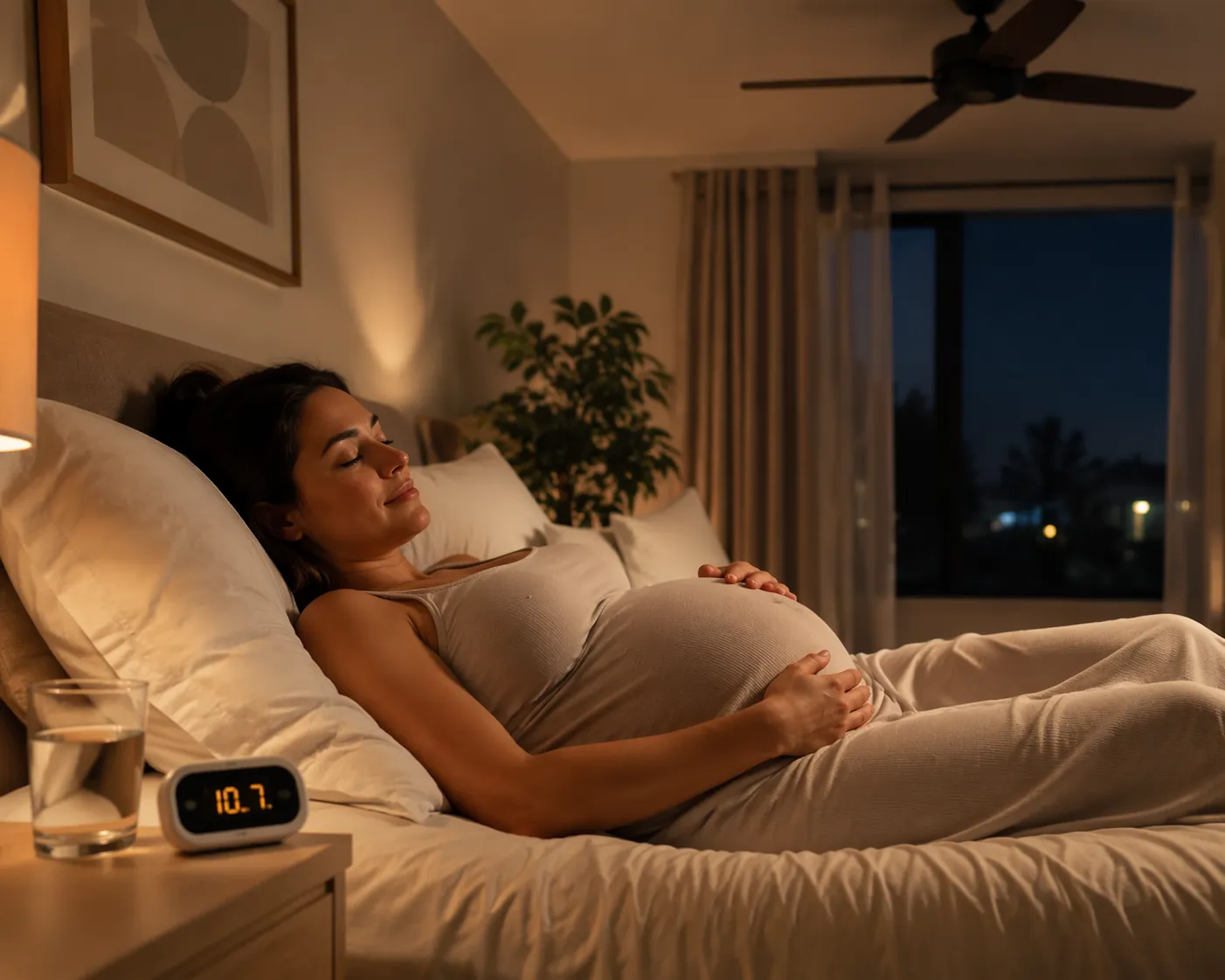
The safest cooling plan for tonight
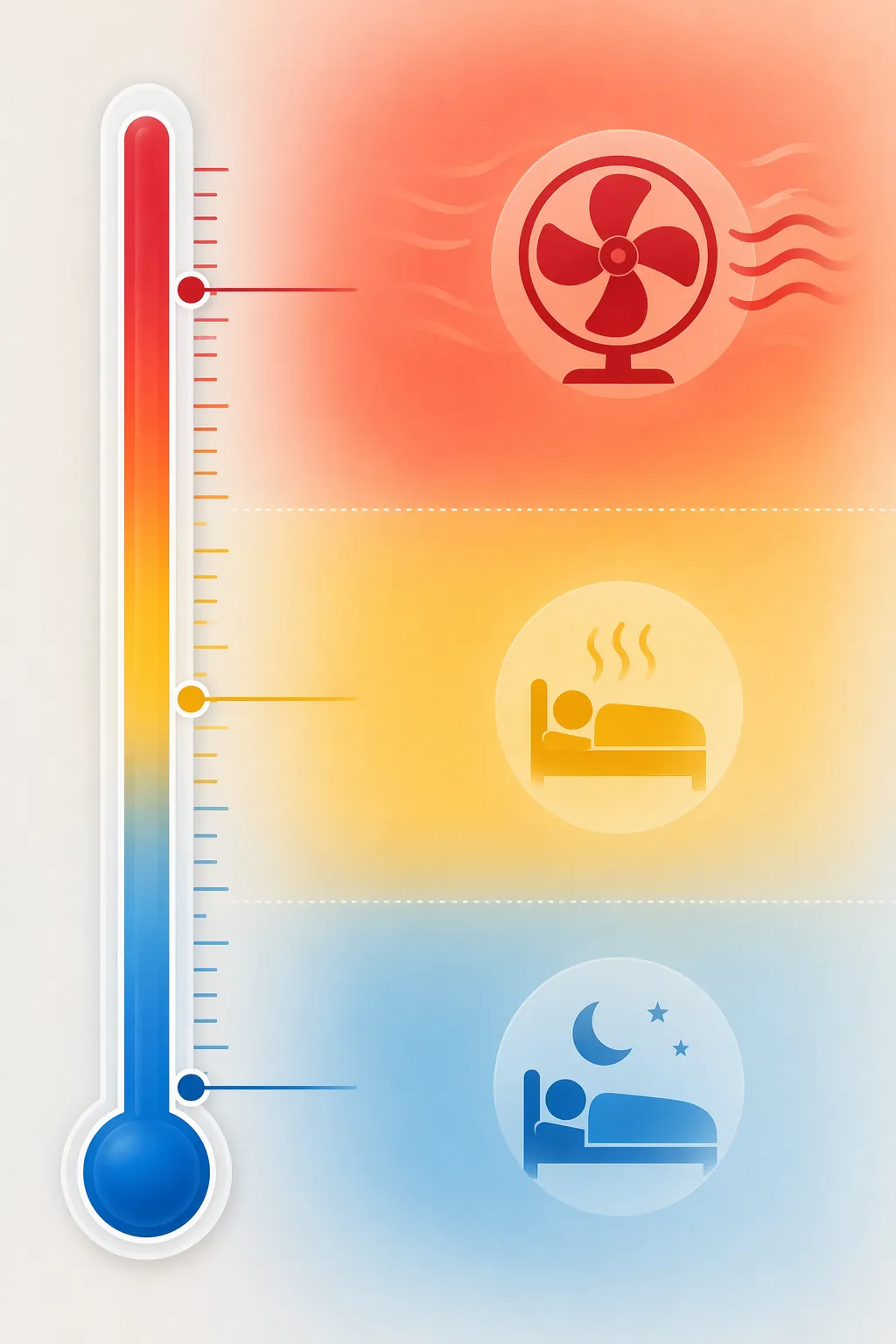
Start with the indoor temperature, not just how the room feels. A fan can make sweat evaporate and feel relieving, but the CDC warns that electric fans may not prevent heat-related illness when temperatures are very high; the practical threshold to know is 90°F indoors. Below that, a fan can be part of your plan. At or above that, a fan blowing hot air can increase heat gain instead of protecting you.[1]
| Tonight’s decision | Pregnancy-safe direction |
|---|---|
| Room is warm but below 90°F | Use a fan with light clothing, water nearby, and a cool damp cloth on the neck, chest, or wrists. |
| Room is 90°F or hotter | Do not rely on the fan as your main protection. Move to air conditioning if available, a cooler room, a lower floor, or a cooling location. |
| You feel hot but otherwise well | Use gradual cooling: a cool or lukewarm shower, damp cloths, breathable bedding, and small sips of fluid. |
| You feel dizzy, faint, confused, nauseated, or unable to cool down | Stop treating this as a sleep problem. Move to a cooler place and seek medical help. |
If you have air conditioning, set the room as cool as you can safely and realistically maintain. The National Sleep Foundation’s commonly cited sleep-temperature range is 60–67°F, and sleep quality tends to worsen once nighttime temperatures rise above 75°F.[2] During an extreme heat alert, that ideal range may be out of reach. Do not chase it with unsafe shortcuts. The goal is to reduce heat strain enough that your body can cool, not to create a perfect sleep lab.
Use cooling that lowers heat load without shocking your body
- Take a cool or lukewarm shower rather than an icy one. The aim is steady heat loss, not a sudden temperature contrast that leaves you shivering or uncomfortable.
- Place cool damp cloths on the neck, upper chest, wrists, or ankles. These areas are easier to cool safely than the abdomen.
- Use wrapped cold packs briefly on non-abdominal areas if they feel good, but avoid prolonged ice directly on the belly. This is a cautious pregnancy-specific boundary, not a finding from randomized heat-sleep trials.
- Sleep in loose, breathable clothing or just a light sheet if that is comfortable. Heavy bedding can trap heat even when the fan is running.
- Keep water within reach and sip as needed. If you are vomiting, unable to keep fluids down, or have been told to restrict fluids for a medical reason, use your prenatal care team’s guidance rather than generic heat advice.
Be careful with “natural” cooling hacks. Essential oils, menthol-heavy rubs, or strong topical cooling products can feel harmless because they are sold for comfort, but that is not the same as being established as safe for pregnancy during heat stress. If you use anything on the skin, keep it simple and stop if there is irritation, dizziness, nausea, or a sense that the cooling sensation is masking how hot you actually are.
Why pregnancy makes hot-night sleep harder
Sleep onset depends partly on the body’s ability to shed heat. In normal sleep physiology, core body temperature falls at night; thermal-environment research describes this drop as part of the sleep process, and hot, humid conditions interfere with it.[3] Pregnancy adds a higher heat burden because the body is already working harder metabolically. That combination helps explain why a room that felt merely uncomfortable before pregnancy can become a night of repeated waking, sweating, thirst, and restlessness.
The best population data are not pregnancy-specific, so they should be used carefully. A 2025 USC/All of Us analysis found that a 10°C rise in nighttime temperature was associated with 2.63 fewer minutes of total sleep, 0.93 fewer minutes of REM sleep, and a 0.03% reduction in sleep efficiency; the same report found females had 22.9% greater heat-related sleep loss than males.[4] That does not prove what will happen to an individual pregnant person tonight, but it does support what many people notice in real life: heat can measurably erode sleep, and females may be more affected in population data.
If heat is only one piece of your sleep problem, use it as the urgent piece. For hip pain, reflux, anxiety, leg cramps, or trimester-specific wakeups that continue after the alert passes, the broader guide to pregnancy insomnia by trimester is the better next stop. For heat physiology without the pregnancy lens, see why hot weather sabotages sleep quality.
When a sleep aid is the wrong answer
It is understandable to want medication when you are exhausted and the room will not cool down. But during an extreme heat alert, sedation is not a substitute for cooling. If your body is overheating, the priority is to lower heat exposure, not to make yourself less aware of the discomfort.
Do not add an over-the-counter sleep aid just to push through a hot room without checking whether it is appropriate for your pregnancy and your current symptoms. If you are specifically wondering about acetaminophen-diphenhydramine products, use the separate guide to Tylenol PM and pregnancy sleep safety as a starting point for the medication question, then route the decision through your clinician.
Danger signs: stop trying to sleep and get help
Heat illness can move from miserable to dangerous quickly. The CDC’s heat-health guidance points to symptoms such as dizziness, fainting, confusion, nausea, headache, heavy sweating, hot skin, and inability to cool down as reasons to act rather than wait.[1]
- Move to a cooler place immediately: air conditioning, a cooler room, a lower floor, a shaded outdoor area only if it is cooler, or a public cooling site.
- Loosen clothing and use cool damp cloths while you arrange help.
- Call emergency services if there is confusion, fainting, severe weakness, chest pain, trouble breathing, or symptoms that do not improve after cooling.
- Call your prenatal care team or labor-and-delivery triage for pregnancy-specific concerns, especially if heat symptoms come with contractions, fluid leakage, bleeding, or a noticeable change in fetal movement.
This is the line worth drawing firmly: if the room is hot enough that a fan may worsen heat gain, or if your symptoms are escalating, staying in bed is not the safer choice. Sleep can wait. Cooling and medical assessment cannot always wait.
If the alert lasts several nights
Plan the next night before sunset. Charge your phone, freeze water bottles if you have freezer access, identify the coolest room, and decide where you would go if the bedroom stays too hot. If you have a partner, family member, neighbor, or friend nearby, tell them you are treating the alert as pregnancy-relevant and may need help relocating.
If you usually sleep upstairs, test a lower level. If your home holds heat after dark, spend part of the evening in an air-conditioned location before trying to sleep. If power outages are possible, keep prenatal medications, water, a charger, and basic medical information easy to grab. The broader life-stage heat guide, Heatwave Sleep Tips for Pregnancy, Menopause, and Older Adults, can help other people in the household understand why your plan may need to be more cautious.
During an extreme heat alert, sleeping well while pregnant means reducing heat strain safely, not forcing sleep in unsafe conditions or chasing an ideal bedroom temperature at any cost. If cooling measures are not working, if the room is too hot for a fan to help, or if heat-related danger signs appear, the priority is maternal-fetal safety over staying in bed.
References
- About Heat and Your Health — CDC.
- What Is the Best Temperature for Sleep? — National Sleep Foundation.
- The effects of thermal environment on sleep and circadian rhythm — Journal of Physiological Anthropology.
- Study links rising temperatures to reduced sleep in U.S. adults — Keck School of Medicine of USC.