
Free Movies to Stream Before Sleep, Chosen by Your Life Stage
Putting on a free movie before bed is not a strange little failure of willpower. It is one of the most ordinary bedtime rituals in the country: 52.7% of U.S. adults said TV was their primary bedtime routine in a Sleep Foundation survey.[1] The better question is not whether every tired person should abandon the screen and become an idealized candlelit sleeper by 8:30 p.m. The useful question is how to choose free movies to stream before sleep without letting the movie become the thing that steals the sleep.
That distinction matters because the evidence is not especially sentimental about bedtime screens. In a 2025 Frontiers in Psychiatry study of 45,000 Norwegian university students, each additional hour of screen time in bed was associated with a 59% higher risk of insomnia and 24 minutes less sleep; the study was cross-sectional, so it cannot prove whether screens caused insomnia or whether people with insomnia used screens more.[2] A 2025 JAMA Network Open study also found that adults using screens before bed had a 33% higher rate of poor sleep and lost about 50 minutes of sleep per week.[3]
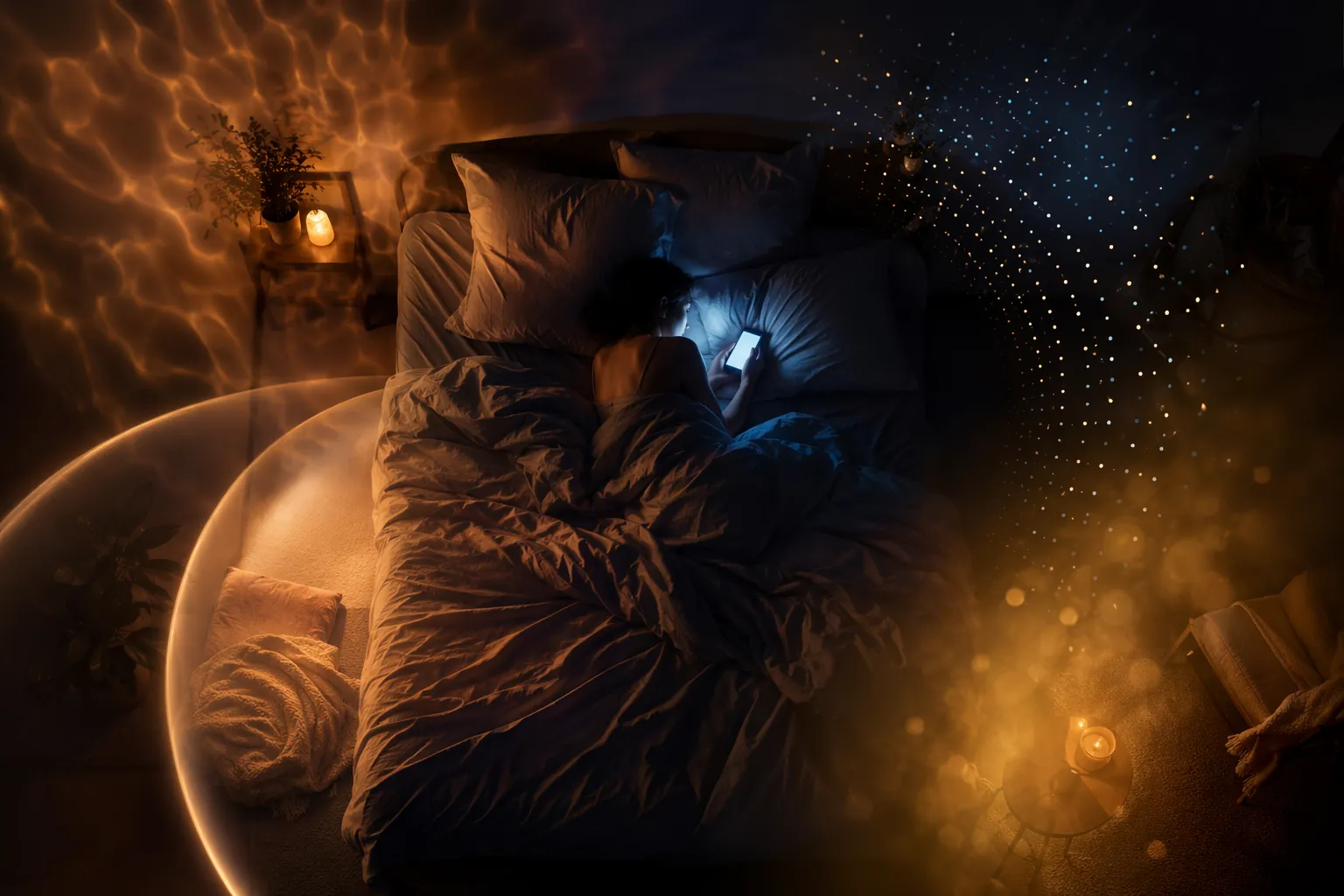
The most annoying part, if you came here wanting a tidy list of cozy films, is that content type did not seem to be the main population-level lever in the Frontiers study. Social media, movies, and other screen activities did not significantly change the sleep-risk pattern once duration was considered.[2] So the first rule is blunt: the movie choice only helps after the endpoint is protected.
For bedtime, the best free movie is usually not the most beautiful, acclaimed, or heartwarming one. It is the one least likely to extend the night or poke the arousal pathway already causing trouble: heat and vigilance in perimenopause, threat scanning in pregnancy, novelty chasing in ADHD, or late-night spillover in older adulthood.
Start With the Stop Point, Not the Title
Before choosing a film, choose the exit. A free movie that ends cleanly at 10:15 p.m. is usually safer for sleep than a supposedly soothing channel that rolls straight into the next episode, the next recommendation, or the next half-remembered childhood favorite.
Binge momentum is not a small edge case. The American Academy of Sleep Medicine has reported that 91% of Americans have lost sleep to binge-watching, and Sleep Foundation survey material has found that 88.6% binge-watch at least monthly.[4][1] That does not mean one movie ruins sleep. It means the most sleep-protective feature of a bedtime movie may be a boring one: a visible end.
| If your main sleep disruptor is... | Choose free movies that... | Avoid movies that... |
|---|---|---|
| Perimenopause night sweats or stress arousal | Stay low-threat, emotionally even, and visually warm without being intense | Use suspense, conflict, heat, arguments, or danger to keep attention |
| Pregnancy anxiety | Feel predictable, gentle, and free of medical peril or violence | Turn on danger, birth complications, illness, crime, or alarming family conflict |
| ADHD racing thoughts | Are familiar, repetitive, and easy to leave without needing closure | Create novelty loops, mysteries, cliffhangers, or rapid joke density |
| Older-adult early waking | Move slowly, look warm, and end before the late-night second wind | Run long, peak late, or start a new storyline near bedtime |
Free platforms can help or sabotage that plan. PCMag’s 2026 review describes Tubi as having about 275,000 titles, Kanopy as free through participating public libraries, Pluto TV as built around passive live channels, and The Roku Channel as an ad-supported option.[5] That matters less as a shopping guide than as a behavior guide: a huge catalog can invite searching, a library-card service can feel more intentional, a live channel can provide a natural cutoff, and an ad-supported interface can tempt one more click.
Perimenopause: Keep the Movie From Adding Heat and Vigilance
Perimenopause already has enough false alarms built into the night. A person who wakes hot, startled, or wired does not need a movie that trains the body to scan the room for threat. The goal is not to find a film so dull it becomes punishment. The goal is to avoid giving the nervous system a reason to rehearse danger right before body temperature and sleep stability are already fragile.
Good candidates are gentle travel films, old studio comedies, low-conflict family stories, quiet food or garden documentaries, and familiar musicals where nothing urgent has to be solved. If the film contains danger, betrayal, courtroom escalation, disaster, survival stakes, or a late emotional confrontation, save it for earlier in the evening. Even a well-made thriller can be the wrong bedtime tool for someone whose main problem is waking in a cortisol-flavored sweat.
This is where “relaxing” lists often fail. A film can be aesthetically cozy and still run on social embarrassment, ticking clocks, or escalating conflict. For perimenopause, watch the mechanism: fewer spikes, fewer arguments, fewer hot rooms, fewer scenes built around being trapped or exposed.
- Best fit: older comedies, gentle nature or travel features, calm food documentaries, familiar musicals.
- Use with caution: romantic dramas with breakups, family secrets, or long emotional reckonings.
- Poor fit: thrillers, true crime, medical crises, survival stories, disaster films, tense workplace dramas.
- Platform tactic: use Kanopy or a single Tubi title you picked before bedtime, not a late-night browse through hundreds of options.
Pregnancy: Predictability Is the Sleep Feature
Pregnancy sleep can be disrupted by discomfort, reflux, frequent urination, and worry. The movie cannot fix those. It can, however, avoid throwing more threat into a brain that may already be sorting through safety, symptoms, and tomorrow’s questions.
The safest bedtime lane is predictable and low-stakes: gentle comedies you already know, light romances without betrayal or crisis, nature films without predator sequences, and soft documentaries about art, food, music, or places. Avoid medical drama, birth complications, violence, kidnapping plots, grief-heavy stories, and anything that sends you into symptom searching after the credits.
If pregnancy insomnia is persistent, severe, or tied to medication questions, a movie choice is not the right level of care. Restful Ground’s deeper pregnancy sleep material is a better next stop for questions about insomnia during pregnancy, pregnancy sleep aid safety, melatonin in pregnancy, and a pregnancy sleep aid treatment ladder. A bedtime film is a wind-down container, not a treatment plan.
- Best fit: rewatched gentle comedies, soft travel films, food documentaries, art documentaries, light romances with no major peril.
- Use with caution: animal documentaries, because some include predator or injury scenes.
- Poor fit: medical dramas, violence, crime, emergency scenes, grief-heavy family stories, pregnancy or infant jeopardy.
- Platform tactic: pick the title before you get into bed, then stop at the credits instead of opening search.
ADHD: Familiar Beats Calm
ADHD bedtime advice often leans too hard on the word “calm.” Calm can be useful, but it is not always enough. For many ADHD adults, the screen is doing a specific job: giving the brain one predictable track to follow so it does not generate five louder ones on its own.
That makes novelty the enemy. A brand-new mystery, a puzzle-box sci-fi film, a fast comedy with dense jokes, or a documentary that opens ten unanswered tabs in the mind can turn bedtime into research hour. Familiar, repetitive, low-demand movies are more suitable because they provide auditory and visual structure without requiring completion.
This is also where the screen-time evidence should keep everyone honest. If a familiar movie becomes a nightly three-hour loop, the familiarity does not cancel the duration risk. In the Frontiers study, what stood out was time spent using screens in bed, not a clean ranking of which screen activity was most harmful.[2]
- Best fit: movies you have already seen, gentle ensemble comedies, older animation, simple musicals, quiet documentaries with no investigative hook.
- Use with caution: clever comedies, because joke density can keep attention active.
- Poor fit: mysteries, twist endings, franchise entries that invite lore checking, competitive reality-style pacing, documentaries built around shocking revelations.
- Platform tactic: Pluto TV’s passive channels may help if the channel format reduces choosing, but only if you set a stop time before the next program catches you.
Older Adulthood: Protect the Early Morning
Sleep often becomes lighter and shifts earlier with age. That changes the math of a bedtime movie. Staying up late may not simply move sleep later; it can collide with an early wake time that still arrives on schedule.
For older adults, the best bedtime movies usually have slower pacing, clear scenes, warm imagery, and emotionally legible plots. A film that requires tracking multiple timelines or waiting for a final reveal asks the brain to stay on duty. A film that reaches a gentle resting point halfway through is easier to leave.
Color is worth a modest note, not a grand theory. OddMattress’s 2026 proprietary analysis reported that films from the 1960s scored highest for warm-toned, sleep-friendlier palettes, with fantasy and comedy performing well by its method.[6] That is not peer-reviewed clinical evidence, but it does line up with a practical viewing preference many people recognize: warmer, older, less visually aggressive films tend to feel less like a late-night alarm.
- Best fit: older comedies, gentle classics, warm-toned musicals, nature or travel films with slow pacing.
- Use with caution: long epics, even if they are beautiful, because they make stopping harder.
- Poor fit: dark thrillers, rapid editing, loud action, complicated timelines, films that peak emotionally near the end.
- Platform tactic: choose a shorter movie or a live channel block with a natural ending, then leave the room or turn the TV off at that endpoint.
What to Do With Ads, Autoplay, and the Second Movie
Free streaming usually means ads, and ads are not neutral at bedtime. A loud trailer, a brighter commercial break, or a recommendation tile can wake up the exact choosing mind the movie was supposed to quiet. The fix is not complicated, but it does need to happen before sleepiness lowers your standards.
- Decide the latest stop time before pressing play.
- Turn off autoplay where the platform allows it.
- Choose the title outside the bedroom if browsing tends to expand.
- Prefer a movie you can abandon without needing the ending.
- If ads feel startling, lower the volume before starting rather than during the first commercial break.
One informed lay synthesis noted that cliffhanger content showed only about a three-minute marginal effect on sleep onset in controlled studies, while the bigger practical problem was that viewers kept watching past bedtime.[7] That is the lesson to keep: the next-title trap is usually more dangerous than the individual plot beat.
A Practical Way to Pick Tonight’s Free Movie
If you are going to watch, pick by the sleep problem first and the platform second. Tubi’s large catalog can be useful if you already know the lane you want, but it can also become a search engine with credits. Kanopy may suit people who want a quieter, library-like browsing environment, though access depends on a participating library. Pluto TV can reduce decision fatigue with passive channels, but the next program is still waiting. The Roku Channel is convenient for ad-supported viewing, with the same bedtime caveat as the rest: free is not free if it buys another hour awake.[5]
| Tonight, choose... | If you are trying not to worsen... |
|---|---|
| A familiar gentle comedy | ADHD racing thoughts, pregnancy worry, or older-adult late-night activation |
| A warm older musical or classic | Perimenopause vigilance or older-adult light sleep |
| A quiet food, art, garden, or travel documentary | Pregnancy anxiety or perimenopause stress arousal |
| A passive live channel with a planned cutoff | Decision fatigue, as long as you stop before the next program |
| A movie you have seen before and do not need to finish | ADHD novelty chasing or any night when insomnia is already circling |
Catalogs change by region and over time, especially on free ad-supported services. Rather than chasing a fixed title that may disappear next month, keep a small personal shelf: three safe rewatch films, two gentle documentaries, one warm older comedy, and one option you can tolerate turning off halfway through.
There is no clinical trial proving that one specific free movie fixes night sweats, pregnancy anxiety, ADHD rumination, or early waking. The more defensible rule is narrower and more useful: match the movie to the thing that usually breaks your sleep, set a hard endpoint before the platform chooses for you, and treat the screen as a managed wind-down tool rather than a cure.
References
- Why Do We All Still Watch TV Before Bed?, Sleep Foundation
- How and when screens are used: comparing different screen activities and sleep in Norwegian university students, Frontiers in Psychiatry, 2025
- Electronic Screen Use and Sleep Duration and Timing in Adults, JAMA Network Open, 2025
- Screen Time and Sleep: What New Studies Reveal, Sleep Education / AASM
- The Best Free Video Streaming Services for 2026, PCMag, 2026
- The Best and Worst Films for Sleep: How Light Affects Your Rest, OddMattress, 2026
- Does What You Watch Before Bed Affect Your Sleep?, Nessy Hill Substack
Read the full guide: How Reading to Your Pet Before Bed Improves Sleep