How to Manage Full Moon Sleep Disruption During Aquarius 2026
Yes, it is plausible to sleep a little worse around the July 29, 2026 Aquarius full moon. The best-supported version of that claim is modest: some studies find roughly 20–30 minutes less total sleep, a small delay in falling asleep, and reduced deep-sleep activity in the nights close to a full moon. That is not destiny, and it is not proof that Aquarius is physiologically acting on your nervous system. It is enough, though, to justify taking the night seriously without making it dramatic.
For practical purposes, treat the full moon sleep disruption ritual for Aquarius 2026 as a wind-down protocol, not a moon spell. Its job is to prevent a small delay from turning into clock-watching, frustration, and a second layer of insomnia.
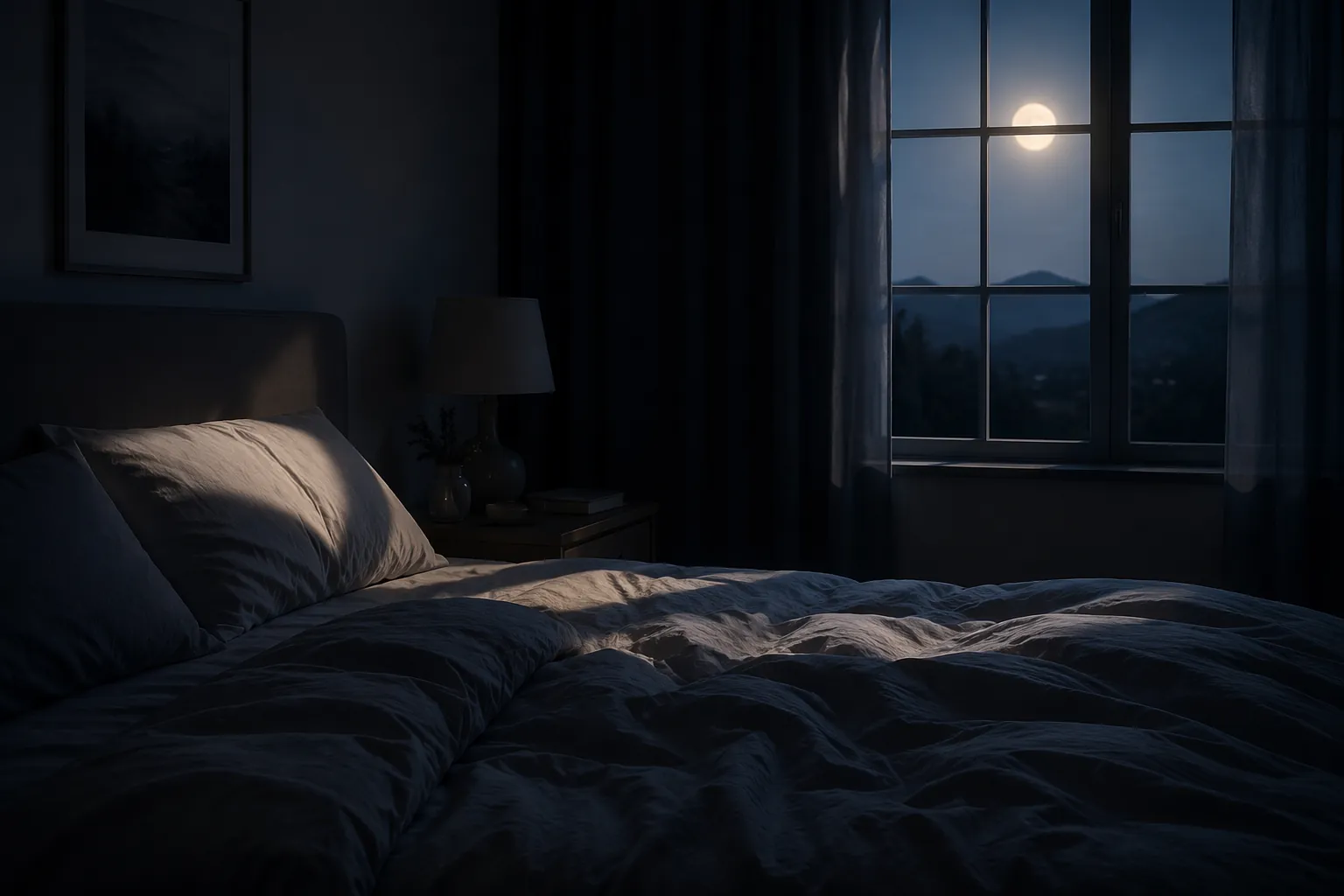
What might happen to sleep around the July 29, 2026 full moon?
The most useful expectation is small friction, not a ruined night. In a field study that tracked sleep across three Argentinian communities and 464 U.S. college students, sleep was shorter by 11–25 minutes on nights near the full moon, and sleep onset was delayed by 9–22 minutes, with the size of the effect varying by population and light exposure.[1]
A separate laboratory study found a similar direction of effect under conditions that make the result harder to dismiss as simple moonlight through the window. In that study of 33 participants sleeping in windowless rooms, researchers reported about 20 minutes less total sleep and a 30% reduction in EEG delta activity, a marker associated with deep sleep, in the 3–5 nights before the full moon.[2]
That does not mean everyone will lose exactly 20 minutes. It means the full moon window is one of those periods when sleep can become slightly less efficient for some people. If your usual bedtime already sits on top of stress, late light exposure, caffeine, alcohol, or an inconsistent schedule, that small lunar effect may be easier to notice.
Where Aquarius belongs in this question
The July 29, 2026 full moon is described in astrology coverage as an Aquarius full moon, with additional symbolic emphasis from Jupiter cazimi, a lunar node shift to Aquarius and Leo, and the Moon conjunct Pluto.[3] Those details may matter to the story a person tells about the night: mental restlessness, independence, group belonging, pressure to change, or the feeling of being unusually alert to social patterns.
They should not be treated as sleep mechanisms. There are no studies showing that Aquarius full moons, Jupiter cazimi, lunar nodes, or Moon-Pluto contacts cause a specific sleep change. If the Aquarius language helps you name the worries you are carrying into bed, it can be useful as a journaling prompt. It should not become another reason to expect failure.
What the lunar sleep evidence can and cannot say
The Casiraghi study carries weight because it looked beyond one lab night. It included Indigenous and urban communities in Argentina as well as U.S. college students, which makes the pattern more ecologically interesting and messier in the right way: people were living under different relationships to artificial light, outdoor exposure, and daily structure.[1]
The same messiness is also a limit. The sleep-loss range was not one clean number. It moved across groups, and the proposed influence of moonlight is tied to how much artificial light is already present. A person in a bright apartment with evening screens, overhead lighting, and irregular bedtimes is not living in the same light environment as someone with far less nighttime electricity exposure.
The Cajochen study is important for a different reason. Because participants slept in windowless rooms, the finding suggests the lunar association may not be explained only by visible moonlight. But it was still a small study, with 33 participants, and later replication attempts have been mixed.[2]
Sleep Foundation and Verywell Health summaries both describe the overall evidence as suggestive rather than settled: some research finds shorter or lighter sleep near the full moon, while the strength and consistency of the effect remain uncertain.[4][5]
| Question | Most careful answer |
|---|---|
| Can the full moon affect sleep? | Possibly, with small measurable changes in some studies. |
| How large is the likely effect? | Often in the range of minutes, not hours: about 11–25 minutes less sleep in one field study and about 20 minutes less in one lab study. |
| Does Aquarius cause the sleep disruption? | No evidence shows an Aquarius-specific sleep mechanism. |
| Should I plan differently? | Yes, if planning lowers light, stabilizes timing, and reduces mental arousal. |
A wind-down ritual that matches the size of the problem
The protocol starts from a plain assumption: you may need an extra 20–30 minutes of runway. That does not mean going to bed dramatically earlier and lying awake longer. It means moving the stimulating parts of the evening earlier so your actual bedtime is less crowded.
- Choose your target bedtime first, then begin the wind-down 45–60 minutes before it.
- Dim the room before you feel sleepy, not after you are already irritated that sleep has not arrived.
- Move bright screens, emotionally charged messages, and decision-heavy tasks out of the final half hour.
- Use the same sequence for the nights around the full moon so your body gets a familiar cue.
Consistency matters more than symbolism here. A ritual works best when it repeatedly pairs the same time window, lower light, quieter behavior, and a reduced demand to solve tomorrow before bed.
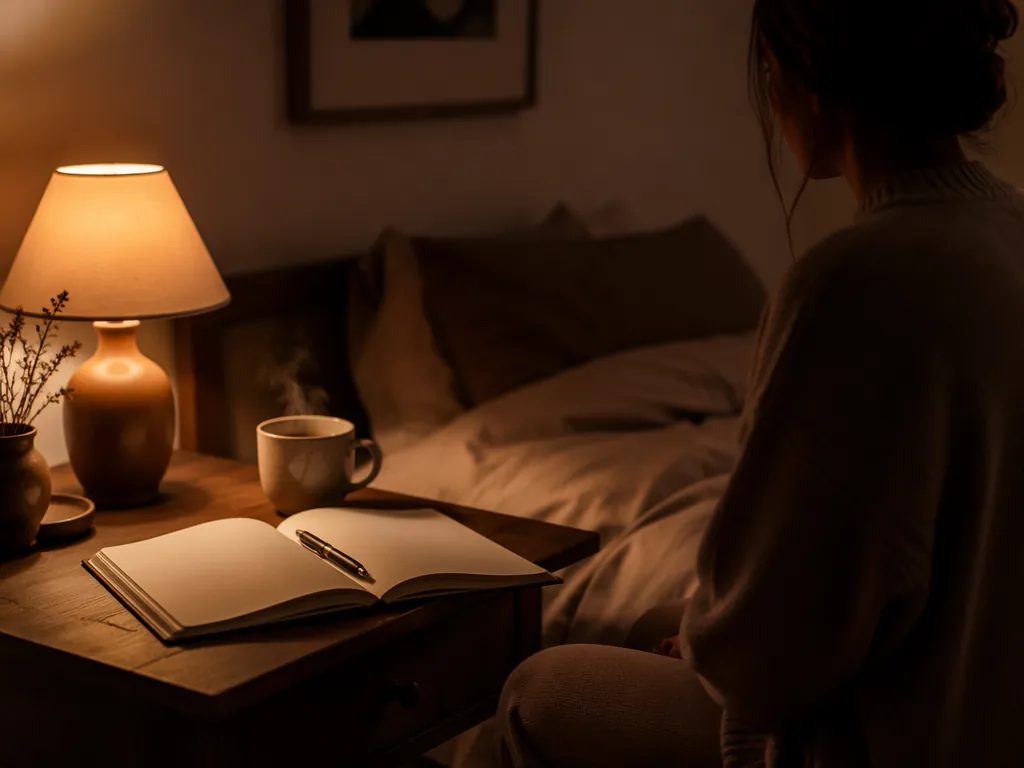
The 45-minute version for July 29
About 45 minutes before bed, set the room conditions first. Lower overhead lighting. Put the phone somewhere that requires a deliberate reach. If you need sound, choose something steady rather than interesting. The goal is not to become perfectly calm; it is to stop adding alerting inputs.
At 30 minutes, use breathwork as a way to give mental chatter a job. A simple pattern is enough: inhale gently, lengthen the exhale, and repeat for a few minutes. Do not turn it into a performance. If counting makes you more alert, drop the count and keep the exhale soft and slightly longer than the inhale.
At 20 minutes, write down the thoughts that are trying to earn a place in bed. For the Aquarius framing, keep the prompt grounded: “Where am I trying too hard to conform?” and “Where am I mistaking independence for isolation?” These are not predictions. They are containers. The page holds the material so your pillow does not have to.
At 10 minutes, stop improving the ritual. No more tracking, adjusting, interpreting, or searching for what the moon means. Get into bed with permission for sleep to arrive a little late. That permission is not resignation; it is a way of avoiding the panic spiral that turns a modest delay into a longer one.
If you wake up or cannot fall asleep
The mistake to avoid is treating wakefulness as evidence that the night is going wrong. If sleep is delayed, the response that best fits the evidence is boring on purpose: keep the room dark, keep the body comfortable, and do not start gathering proof that the full moon has taken over the night.
If you are awake long enough to become frustrated, leave the bed briefly and do something quiet in dim light until sleepiness returns. Keep the activity neutral. Folding a blanket, reading a familiar page, or sitting with slow breathing is better than opening a feed, checking the moon phase again, or calculating how little sleep remains.
Do not use the ritual to chase a perfect sleep score. Use it to keep the night from becoming psychologically louder than it needs to be.
What to do the next morning
After a full-moon night, resist the urge to overcorrect. Sleeping far later than usual, canceling all movement, or loading up on late caffeine can make the following night harder. Keep the morning fairly ordinary: get light exposure, eat at a normal time, and protect the next bedtime from becoming a referendum on whether the ritual worked.
If you track sleep, look at patterns across several lunar cycles rather than one charged night. A single rough night can come from stress, temperature, alcohol, illness, travel, noise, or anticipation. The moon may be part of the timing, but it is rarely the only variable in the room.
The honest bottom line
For the July 29, 2026 Aquarius full moon, the sensible plan is neither dismissal nor certainty. A small sleep disruption is plausible. An Aquarius-specific biological effect is not established. A structured wind-down ritual can still help because it changes the controllable parts of the night: timing, light, stimulation, and the way worries are handled before bed.
The ritual will not erase a 20–30 minute effect if your body is having one. It can make that effect feel less alarming and easier to absorb. If you want to keep working with sleep conditions rather than willpower alone, read Can Weather Forecasts Help You Sleep Better Tonight? and When Melatonin Actually Works for Insomnia.
References
- Moonstruck sleep: Synchronization of human sleep with the moon cycle under field conditions, PubMed Central, 2021.
- Evidence that the lunar cycle influences human sleep, PubMed, 2013.
- Aquarius full moon coverage, Yoga Journal.
- Does the Moon Affect Your Sleep?, Sleep Foundation.
- How the Full Moon Affects Your Sleep, Verywell Health.
Read the full guide: How the Aquarius Full Moon Disrupts Each Zodiac Sign's Sleep