
Part D premiums rising in 2027? How to protect your sleep
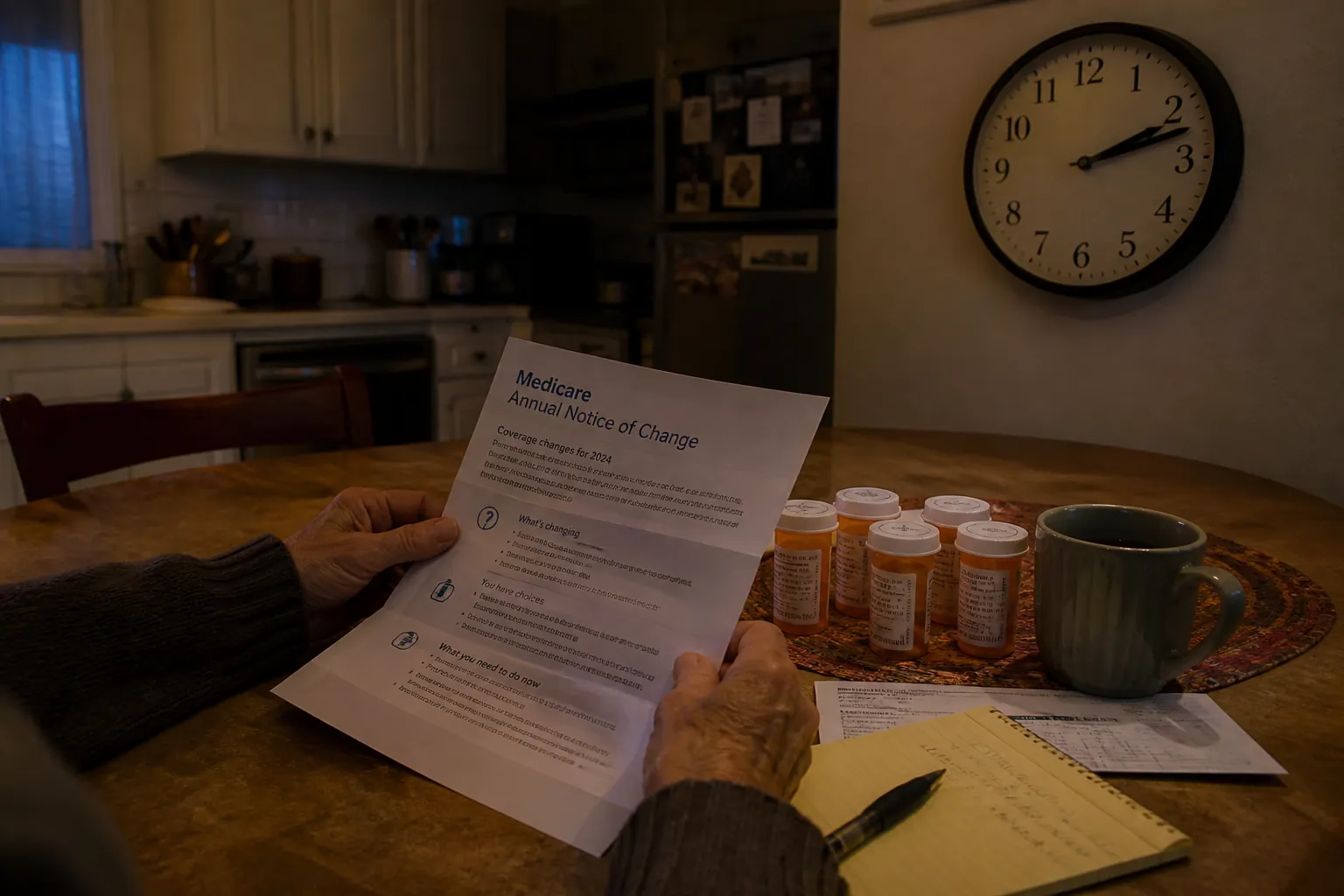
The hard part is not reading that your Medicare Part D premium may rise in 2027. The hard part is what happens after you fold the Annual Notice of Change back into its envelope and try to sleep. A higher premium turns into math: the refill due next week, the grocery order, the brand-name pill your doctor once mentioned, the plan you stayed with last year because it was familiar.
For 2027, the national Part D numbers make the worry reasonable. CMS finalized the 2027 Part D base beneficiary premium at $41.33 a month, up from $38.99, with the deductible rising to $700 and the annual out-of-pocket cap set at $2,400.[1] CMS Administrator Mehmet Oz said in July 2026 that premium increases would be less than $10 a month for the majority of enrollees, but that still leaves the part that matters at the kitchen table: your plan, your pharmacy, and your medication list.[2]
If you are trying to figure out what to do if Medicare Part D premiums rise in 2027 and sleep is already getting tangled up with the cost, the answer is not to panic-shop every plan. It is to do a narrow review before open enrollment closes on Dec. 7, 2026: confirm the change, compare total drug costs, check help programs, and bring specific coverage questions to the prescriber instead of asking vaguely whether there is “something cheaper.”
Start with the number in your own notice
The national base premium is useful because it explains why 2027 feels different. It does not tell you whether your current plan is still the best place for your sleep medication. Individual Part D premiums and formularies vary by plan, and some plans may increase more than the national average.[1]
Pull out the Annual Notice of Change when it arrives and mark four items before you open Medicare.gov Plan Finder:
- The 2027 monthly premium for your current Part D or Medicare Advantage drug plan
- The deductible and whether it applies to your sleep medication
- Any formulary tier change for each prescription you use for sleep
- Any new prior authorization, step therapy, or quantity limit
- Your preferred pharmacy and whether it remains preferred in 2027
Do not stop at the premium. A plan with a lower monthly premium can still cost more if your medication moves to a higher tier, your pharmacy is no longer preferred, or a deductible now applies before the copay starts. This is where many families lose money by staying with the familiar plan and calling it “good enough.”
Run Plan Finder with the exact sleep medication, not a memory of it
Medicare.gov Plan Finder is only as useful as the medication list entered into it. Before Oct. 15, make a plain list from the bottles, not from memory: drug name, dose, quantity, how often it is filled, and whether it is tablet, capsule, liquid, or another form. If an adult child is helping, this is the one place I would rather be fussy than polite. “The little white sleeping pill” is not enough to compare Part D plans.
Generic sleep medications such as zolpidem, trazodone, and doxepin are often covered on low Part D tiers, sometimes Tier 1 with very low copays or Tier 2, but that is still a plan-by-plan question.[3] The practical move is to enter the exact generic or brand drug into Plan Finder and look at the full-year estimate, not just the January premium.
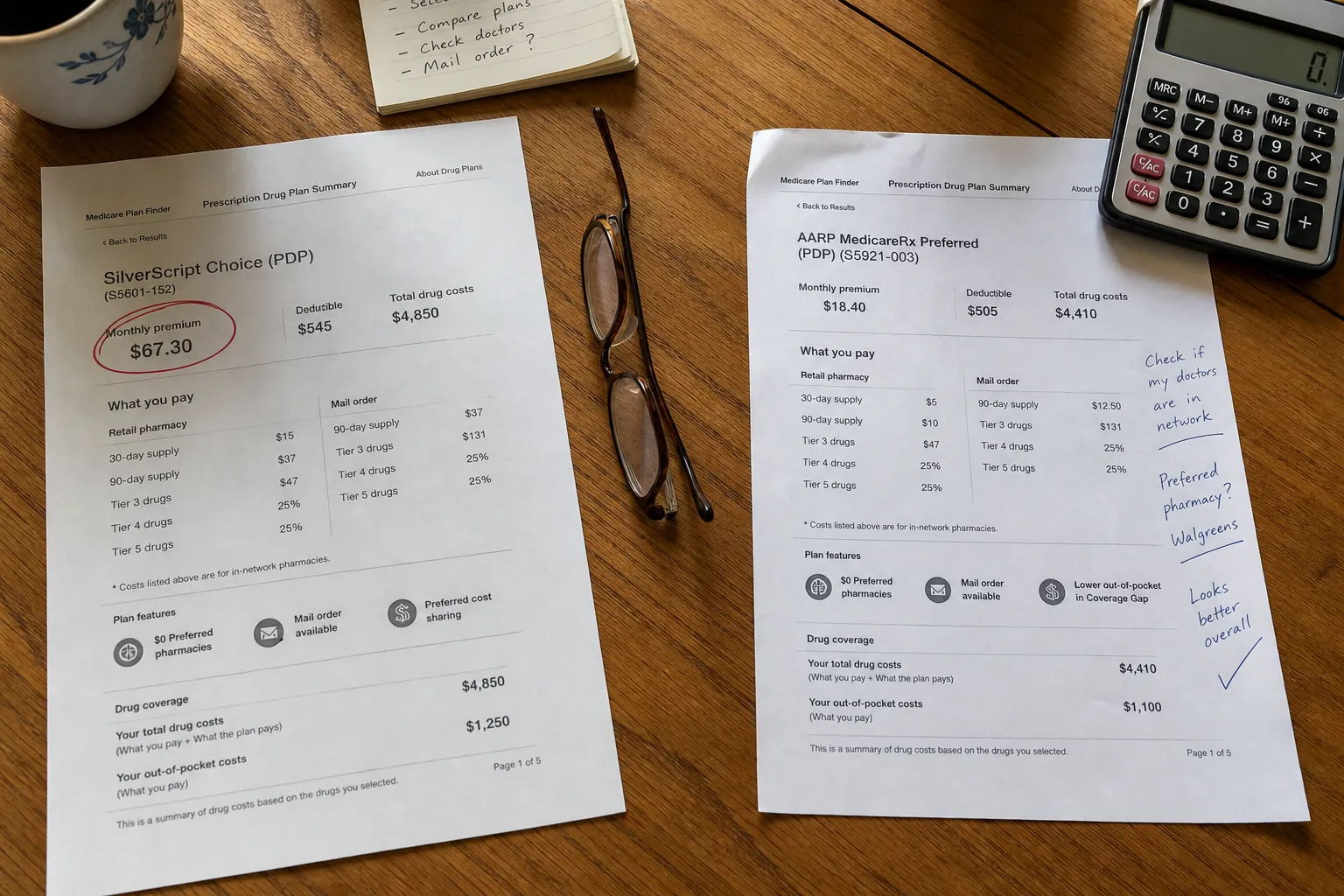
When the plan results appear, sort and compare them by total estimated yearly drug and premium cost. Then open the details for the top few plans and check the parts that decide whether the estimate will hold up in real life:
| What to check | Why it matters for sleep medication costs |
|---|---|
| Total estimated yearly cost | This combines premium and drug costs, which is more useful than choosing the lowest monthly premium. |
| Drug tier | A low-tier generic may stay affordable, while a higher-tier drug can change the monthly refill decision. |
| Deductible treatment | Some medications may be subject to the deductible before regular copays begin. |
| Preferred pharmacy status | The same drug can cost more if your usual pharmacy is not preferred in the new plan year. |
| Coverage restrictions | Prior authorization, step therapy, or quantity limits can delay a refill even when the drug is listed. |
| Mail-order pricing | It may help some people, but only if timing and reliability fit the way the prescription is actually used. |
If you take more than one medication that affects sleep, enter all of them. A plan that looks excellent for generic zolpidem may be less attractive once other prescriptions are included. The decision should be based on the whole medicine cabinet, but the sleep medication deserves special attention because running out or rationing it can immediately affect the night.
A simple comparison path for Oct. 15-Dec. 7
- Enter every current prescription into Medicare.gov Plan Finder after 2027 plan details are available.
- Use the same pharmacy you actually plan to use, then test one or two realistic alternatives.
- Compare total annual cost before comparing premiums.
- Open the formulary details for each sleep medication.
- Write down any restriction that would require your prescriber’s office to act.
- Do not enroll until the plan still looks reasonable after the pharmacy, tier, deductible, and restriction checks.
Check Extra Help before assuming the new premium is yours to carry
Extra Help is the affordability check I would do early, especially if the premium increase is what started the sleeplessness. For eligible beneficiaries, Extra Help can reduce Part D premiums and deductibles and cap prescription copays. SSA lists Extra Help copays for eligible people at no more than $5.10 for generic drugs and $12.65 for brand-name drugs in 2026-2027, and Medicare.gov describes help with drug costs, including premium-free benchmark plans for those who qualify.[4][5]
That can change the open enrollment decision. If you qualify for Extra Help, the question is not only “Which plan has the lowest premium?” It becomes “Which benchmark or low-cost plan covers my actual drugs and pharmacies cleanly?” A plan that is premium-free for someone with Extra Help may still be a poor fit if the sleep medication has restrictions or the pharmacy pricing is awkward.
If you are helping a parent, ask permission to check eligibility rather than presenting it as a takeover. The application is financial, and people can be sensitive about that. But skipping the check because the conversation is uncomfortable can leave real help unused.
Use cost smoothing for cash-flow stress, not as a discount
The Medicare Prescription Payment Plan cost-smoothing option is worth understanding because sleep is often disturbed by timing, not only by total cost. The option lets beneficiaries spread out-of-pocket Part D drug costs across the year instead of paying a larger amount all at once at the pharmacy counter.[2]
It does not make the medication cheaper. If the yearly cost is too high, you still need the Plan Finder comparison, Extra Help check, and prescriber conversation. But if the problem is a heavy refill month that creates late-night worry, smoothing can make the monthly budget more predictable. For some households, predictable is the difference between sleeping and lying awake rehearsing which bill gets delayed.
Ask the plan how enrollment in cost smoothing works, when payments start, how the monthly amount is calculated, and what happens if you change plans. Get the answer in writing or keep the plan’s mailed explanation with your enrollment notes. This is not a handshake kind of decision.
Look for state help, but do not count on it until you check your state
State Pharmaceutical Assistance Programs can help some Medicare beneficiaries with prescription costs, but availability and eligibility vary sharply by state. The National Conference of State Legislatures maintains a directory of State Pharmaceutical Assistance Programs, which is the right starting point because this is not a benefit every state offers in the same way.[6]
If your state has a program, check whether it coordinates with Part D, whether income rules apply, whether enrollment is open, and whether the program helps with the kind of drug cost you are facing. Keep this step brief but do it. A state program will not solve every Part D problem, but it is exactly the sort of help people miss when they are exhausted and only looking at the plan premium.
Bring your prescriber coverage questions, not just your sleep complaint
A prescriber cannot compare every Part D plan for you, and the office may not know your pharmacy price. What the prescriber can do is help you ask safer, more specific questions once you know what the plan comparison shows.
- “Is there a generic version of this medication that is clinically appropriate for me?”
- “If my plan requires prior authorization, can your office submit the paperwork before my next refill?”
- “If this drug moves to a higher tier, are there alternatives I should ask Plan Finder to compare?”
- “Would changing the dose form or quantity create a coverage problem?”
- “Is cognitive behavioral therapy for insomnia appropriate for me, either instead of medication or alongside the plan we already have?”
This is not about treating medication as a failure. Some people need medication, and affordability should not become a moral lecture. The point is to avoid paying a brand-name or restricted-drug price by default when a clinically appropriate generic or non-drug option might reduce both the bill and the worry around the refill.
Give CBT-I a real place in the cost conversation
Cognitive behavioral therapy for insomnia, or CBT-I, belongs in this Medicare discussion because it is not priced through Part D. Medicare Part B may cover CBT-I, including telehealth coverage through Dec. 31, 2027, though provider type, availability, and the specific service used can affect access.[7] The American Academy of Sleep Medicine recommends CBT-I as a first-line treatment for chronic insomnia.[8]
That does not mean everyone can quickly find a CBT-I provider, especially in areas with fewer sleep specialists or therapists trained in insomnia care. It also does not mean stopping a medication without medical guidance. It means the prescriber conversation should include one practical question: if Part D costs are feeding the insomnia loop, is there a Part B-covered treatment path that could reduce dependence on a drug price you have to renegotiate every plan year?
Medication is not the only way Medicare beneficiaries manage insomnia. In one study of 23,079 Medicare beneficiaries diagnosed with insomnia, 22% received a prescription fill for an FDA-approved sleep medication.[9] That statistic should not be used to shame anyone who takes medication. It simply leaves room for a calmer idea: many older adults manage insomnia through other routes, and one of those routes may be financially steadier than a Part D refill.
Make the decision before Dec. 7
By the first week of December, you should have one page of notes, not a pile of printouts. Put the current plan and the best alternative side by side. For each one, write the premium, total estimated yearly cost, sleep medication tier, pharmacy choice, restrictions, and whether Extra Help, cost smoothing, or a state program changes the picture.
If the best plan is still your current plan, staying put is a decision, not a default. If another plan covers the same medication at a lower total cost or with fewer obstacles, enroll before Dec. 7 and keep confirmation records. If the plan comparison shows that medication cost will remain stressful no matter which plan you choose, ask the prescriber about generics, authorization timing, and CBT-I before the refill becomes urgent.
A higher 2027 Part D premium is a warning light. It is not a command to accept higher sleep costs, skip a refill, or spend another open enrollment season awake with avoidable financial anxiety.
References
- Medicare Part D 2027 National Average Monthly Bid Amount Information, CMS, cms.gov/newsroom/fact-sheets
- Why Medicare consumers could see higher Part D premiums in 2027, USA Today, July 2026, usatoday.com
- Does Medicare Cover Sleeping Pills?, Medicare.org, medicare.org/articles/does-medicare-cover-sleeping-pills
- Apply for Medicare Part D Extra Help program, SSA.gov, ssa.gov/medicare/part-d-extra-help
- Help with drug costs, Medicare.gov, medicare.gov/basics/costs/help/drug-costs
- State Pharmaceutical Assistance Programs, NCSL, ncsl.org
- Does Medicare cover cognitive behavioral therapy for insomnia?, Medical News Today, medicalnewstoday.com
- Digital cognitive behavioral therapy for insomnia, AASM, aasm.org
- The prevalence of insomnia and prescription sleep aid use among Medicare beneficiaries, Sleep, 2019, PMC
Read the full guide: What the 2027 Medicare Part D premium increase means for your sleep