
How to Sleep Comfortably After Gum Graft Surgery
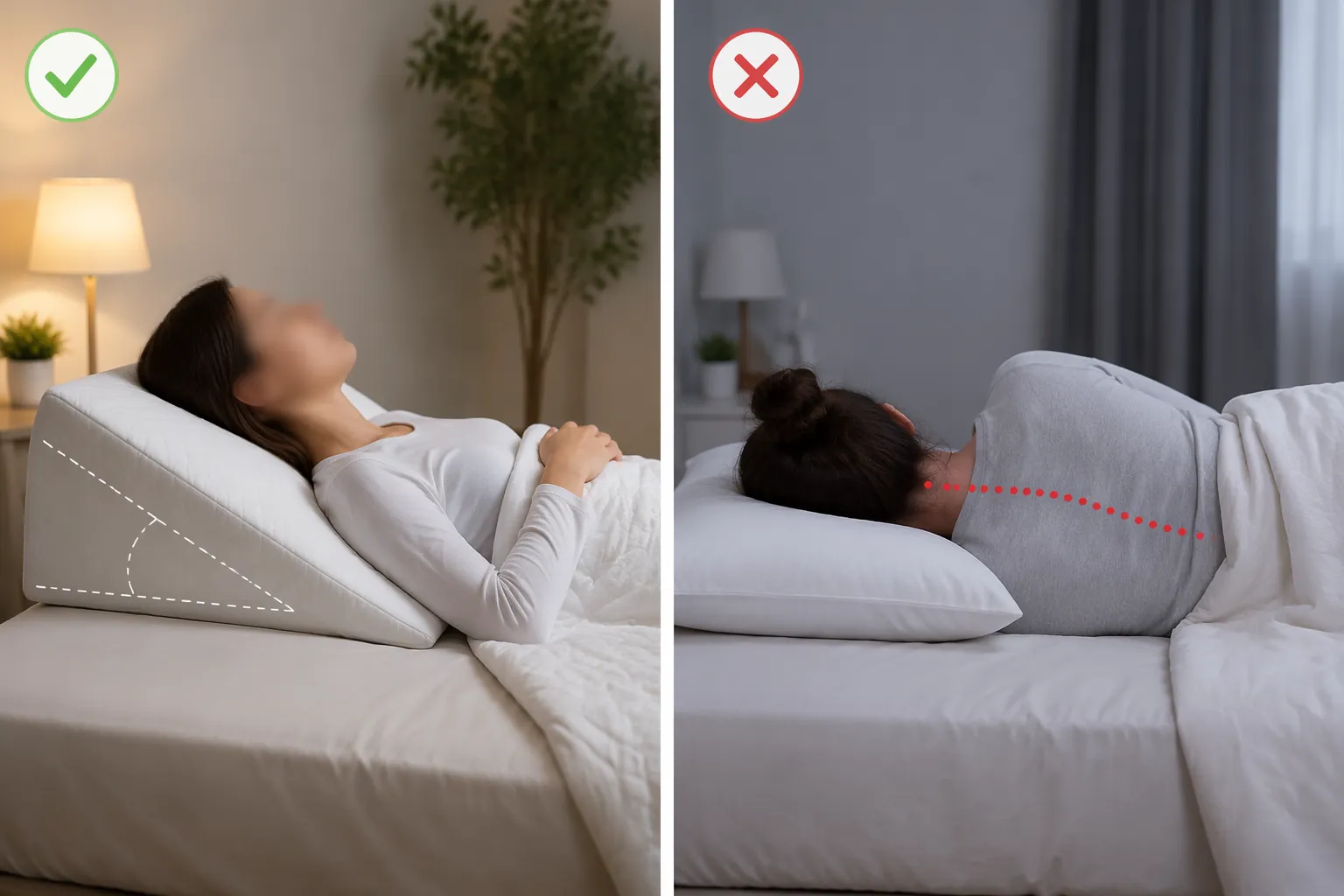
If you are trying to figure out how to sleep comfortably after gum graft surgery tonight, start with the position before you start arranging pillows: sleep on your back, keep your head above your heart at roughly a 30–45° incline, and do not sleep flat, on your stomach, or on the surgical side. Gum graft aftercare instructions from both Gumdoc.net and Lafayette Oral Surgery specifically warn against stomach sleeping and sleeping on the side where the graft was placed; if grafting was done on both sides, back-sleeping is the safe default for the first week [1][2].
The goal is not to make a hotel-perfect pillow nest. The goal is to create a setup you can fall asleep in without waking up with your cheek pressed into the graft, your head dropped flat, or your neck folded forward. Apex Surgical puts the instruction plainly: when sleeping after a gum graft, elevate your head to decrease swelling [3].
- Use a wedge pillow if you have one; if not, use 2–3 firm pillows stacked into a stable incline.
- Support the upper back and shoulders, not just the head.
- Place rolled blankets, firm pillows, or body pillows along both sides of your torso to make rolling harder.
- Keep the surgical side free from pressure, even if that means sleeping in a recliner for a few nights.
- Follow your own periodontist’s instructions if they are stricter than this.

Build the incline before you worry about comfort
A vague instruction like “sleep elevated” leaves too much room for failure. One extra pillow under the head may feel elevated for the first ten minutes, but by 2 a.m. it can slide away, flatten out, or leave the chin tucked toward the chest. That is not the same as keeping the head above the heart for the night.
A wedge pillow is usually the cleanest solution because it creates one continuous slope from the upper back to the head. Oral-surgery sleep guidance from 2nd Ave Family Dental and Nevada Oral & Facial Surgery favors a wedge or intentional angled setup over loose, haphazard pillow stacking because it holds elevation more consistently and is less likely to strain the neck over several nights [4][5].
Set the wedge so your shoulders are on the lower part of the slope and your head rests near the top. Your neck should feel long and neutral, not bent sharply forward. If your head is elevated but your upper back is still flat on the mattress, you have made a neck ramp, not a sleep position.
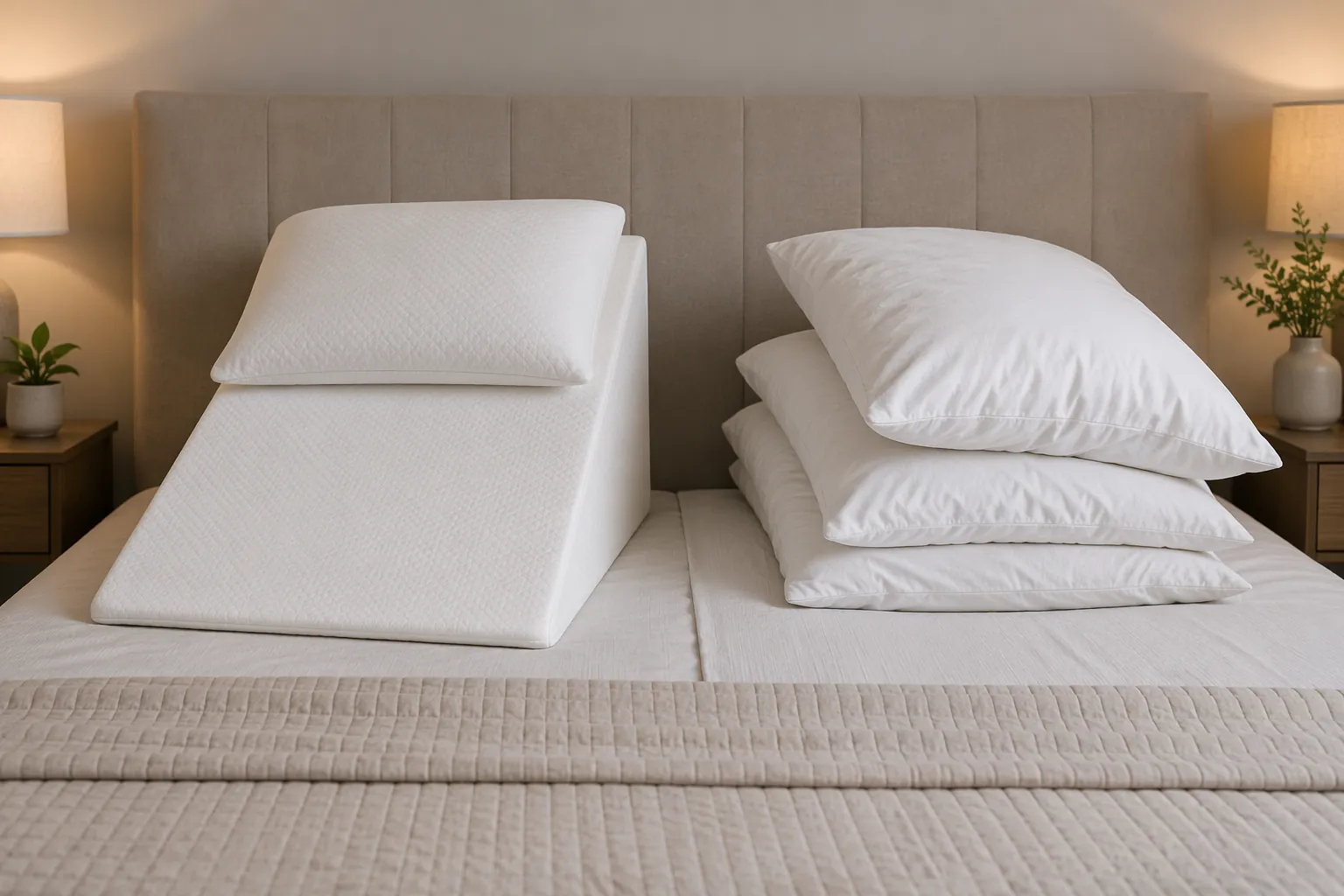
If you only have regular pillows
Use 2–3 firm pillows, but do not pile them directly under the skull like a tower. Start the stack behind the upper back, then let the top pillow support the head. The shape you want is a ramp, not a step. If the bottom pillow is soft, place a folded blanket or firmer pillow underneath to stop the stack from collapsing.
| Setup | How to arrange it | What can go wrong |
|---|---|---|
| Wedge pillow | Place it under the upper back, shoulders, neck, and head so the whole upper body rises together. | Too steep an angle can make the lower back slide or the chin tuck. |
| 2–3 stacked pillows | Build a broad ramp starting behind the shoulders, with the head supported at the top. | Loose pillows can shift, flatten, or create neck strain. |
| Recliner | Recline enough to keep the head above the heart while keeping the body on the back. | If the chair reclines too flat, add a small pillow behind the upper back or head. |
Once you are lying down, check three things. Your head should be higher than your heart. Your shoulders should be supported. Your mouth and cheek on the graft side should not be pressed into a pillow, blanket, hand, or mattress. That last part matters because the graft site is not just sore tissue; it is a healing surgical area that should be left alone unless your clinician has told you otherwise.
Stop the midnight roll before it happens
Back-sleeping is easy to promise while awake and harder to guarantee after you fall asleep. That is the part many aftercare sheets skip. If you normally sleep on your side or stomach, assume your body will try to return there when you are tired enough.
Make rolling physically inconvenient. Put a body pillow, firm pillow, or rolled blanket along each side of your torso, from the ribs to the hips. If the graft is on one side only, make the barrier on that side especially firm so you cannot easily drift onto it. If you have grafts on both sides, use barriers on both sides and treat back-sleeping as non-negotiable during the early recovery window.
This barrier method is a practical extrapolation from the back-sleeping instructions found in oral-surgery aftercare guidance, not a technique that has been separately tested for gum graft outcomes. It is still a sensible, low-risk way to solve the real overnight problem: you are not fully in charge of your sleep position once you are asleep.
When the bed setup keeps failing
Use a recliner if the bed turns into a wrestling match. A recliner keeps the upper body angled and makes side-sleeping or stomach-sleeping much harder. For a committed stomach sleeper, that may be safer than spending the night half-awake, rebuilding pillow stacks, and worrying every time the body rolls.
The recliner does not need to be elegant. It needs to keep you on your back, head above heart level, with no pressure on the surgical side. Add a small pillow behind the knees if your lower back complains. Add a thin neck pillow only if it supports the neck without pushing the chin down.
Why the first 48–72 hours feel like the test
The first few nights matter because swelling often gets worse before it gets better. Green Bay Periodontics, Dr. Scott Froum, and Cleveland Clinic all describe swelling after gum graft surgery as commonly peaking around 48–72 hours after the procedure [6][7][8]. That timing surprises people who expect day two or day three to feel automatically easier than day one.
Elevation is a simple physical countermeasure. Keeping the head above the heart uses gravity to reduce pooling around the surgical area, decrease pressure, and support fluid drainage. It is not magic, and it does not make swelling impossible, but it works with the expected swelling curve instead of letting your face lie flat through the worst of it [3][5].
Plan on elevated back-sleeping for at least the first 3 nights. Many patients should keep the same setup through nights 4–7 if swelling is still noticeable, if the graft site feels vulnerable, if both sides were treated, or if their periodontist gave first-week restrictions. Serenity Dental’s gum graft recovery timeline treats the first week as the active early recovery period, with symptoms and eating limitations still changing day by day [9].
A quick setup you can copy tonight
Before you take your evening medication or get too tired, build the sleep position while you can still think clearly. The worst time to solve pillow geometry is when your mouth is sore, your face feels tight, and you are afraid to turn your head.
- Put the wedge pillow on the bed, or stack 2–3 firm pillows into a broad ramp.
- Lie down on your back with your shoulders and upper back supported, not just your head.
- Adjust until your head is above your heart and your neck feels neutral.
- Place a pillow or rolled blanket along each side of your torso.
- Make the surgical side barrier firmer so you cannot easily roll onto it.
- Keep your hands away from your face if you tend to sleep with a hand under your cheek.
- If the arrangement slides, collapses, or lets you roll, move to a recliner instead of trying to “be careful” while asleep.
If you share a bed, give yourself more room than usual. A partner, pet, or child pressing into your side can defeat a carefully built setup. For a few nights, sleeping separately may be less disruptive than trying to protect the graft in a crowded bed.
If your graft type makes sleep more uncomfortable
Different gum graft techniques can feel different during recovery. A connective tissue graft or free gingival graft may involve tissue taken from the palate, while other approaches may use donor material or different surgical access; Cleveland Clinic describes several gum graft surgery types and recovery expectations [8]. A palate donor site can make the mouth feel more generally sore at night, especially when swallowing or finding a relaxed jaw position.
That discomfort does not change the sleeping rule. It may change how many pillows you need, whether a recliner feels easier, or whether you need to start the night earlier because settling in takes longer. The protected position remains the same: elevated, on the back, no pressure on the graft.
What this sleep setup does not replace
This is only the positioning piece of recovery. Your periodontist’s instructions on medication timing, ice or heat, rinsing, brushing, diet, activity, and warning signs should come from your surgical team. Do not use a pillow guide to override instructions written for your graft, your sutures, or your medical history.
If your clinician tells you to stay elevated longer than a week, avoid a particular side longer, or sleep in a more restricted position, follow that stricter plan. The safest general setup for the first few nights is clear; the final rule is still the one given by the person who saw the surgical site.
References
- Soft Tissue & Gum Graft Post-Operative Instructions, Gumdoc.net
- Gingival Grafts Post-Operative Instructions, Lafayette Oral Surgery
- Gum Graft Aftercare Instructions, Apex Surgical
- How to Sleep Comfortably After Oral Surgery, 2nd Ave Family Dental
- Why Doctors Recommend Sleeping Elevated After Oral Surgery, Nevada Oral & Facial Surgery
- Pre & Post-Op Care, Green Bay Periodontics
- Recovery for Gum Graft, Dr. Scott Froum
- Gum Graft Surgery, Cleveland Clinic
- Gum Graft Recovery: Day-by-Day Timeline, Serenity Dental
Read the full guide: How to rest after dental surgery for faster recovery