
Mechanism explainer
CBT-I for Comorbid Insomnia: Does It Work When You Have Another Condition?
CBT-I is the evidence-based first-line treatment for insomnia not only in otherwise healthy adults but across a wide range of comorbid conditions — including depression, PTSD, chronic pain, perimenopause, and older age. This guide explains what the research shows for each population, which protocol adaptations apply, and what genuine contraindications exist.

The Question Every Comorbid Insomnia Patient Asks First
If you have depression, PTSD, chronic pain, perimenopause, or any other ongoing condition alongside your insomnia, you have almost certainly asked a version of this question: "Does CBT-I actually work for someone in my situation, or is it only for people with straightforward insomnia?"
You may have also been told — by a clinician, a pamphlet, or a well-meaning search result — that your insomnia is secondary to your primary condition, and that once the depression or pain or hormonal disruption is managed, the sleep will follow. That framing has shaped how millions of people with comorbid insomnia have been treated, or more often, not treated.
This article answers the comorbid question population by population: what the evidence shows, how the protocol is adapted, and what genuine contraindications exist. If you want a full explanation of how CBT-I works as a general protocol before continuing, the complete CBT-I protocol guide covers the five components, the mechanisms, and the week-by-week structure in full. This article assumes that foundation and focuses entirely on what changes — and what the evidence shows — when a comorbid condition is present.
The "Secondary Insomnia" Myth and Why It Was Abandoned
For most of the twentieth century, clinical practice operated on a model that divided insomnia into two categories: primary insomnia, which had no identifiable cause, and secondary insomnia, which was attributed to a medical or psychiatric condition. The implication was clear — secondary insomnia was a symptom, not a disorder. Treat the cause, and the sleep would resolve on its own.
Multiple randomized controlled trials dismantled that model over the following decades. Study after study showed that insomnia persists even after successful treatment of depression, PTSD, and chronic pain. In many cases, the sleep disorder developed its own maintaining mechanisms — conditioned arousal, dysfunctional beliefs about sleep, and fragmented sleep architecture — that became independent of the original trigger.
The current clinical consensus, reflected in guidelines from the American Academy of Sleep Medicine, treats insomnia as a condition that warrants direct treatment regardless of comorbidity. The secondary insomnia label has been largely retired in favor of "comorbid insomnia" — a framing that acknowledges the coexistence of two conditions without implying that one is merely a symptom of the other.
What the Evidence Shows Overall: CBT-I in Comorbid Populations
The most comprehensive evidence synthesis on this question is a meta-analysis of 37 studies specifically examining CBT-I in comorbid insomnia populations, covering 1,379 subjects. The findings are striking in two respects: the effect sizes are large, and the gains are durable.
| Outcome Measure | Pre-Treatment Average | Change After CBT-I | Effect Size (Cohen's d) |
|---|---|---|---|
| Sleep Latency (SL) | Elevated baseline | Decreased ~26 minutes | 0.85 |
| Wake After Sleep Onset (WASO) | Elevated baseline | Decreased ~39 minutes | 0.92 |
| Total Sleep Time (TST) | Reduced baseline | Increased ~29 minutes | 0.43 |
| Sleep Efficiency (SE) | Below threshold | Improved ~13 percentage points | 1.20 |
| Insomnia Severity Index (ISI) | Moderate–severe range | Improved ~10 points | 2.10 |
Effect sizes above 0.8 are considered large in clinical research. The sleep efficiency and ISI improvements in particular approach or exceed what is typically observed in primary insomnia trials. The 18-month durability finding is especially meaningful: these are not short-lived gains that fade once the treatment structure is removed.
CBT-I for Depression
The relationship between insomnia and depression is bidirectional and well-established. Insomnia is both a symptom of depression and an independent risk factor for developing it. Critically, insomnia frequently persists even after depressive episodes are successfully treated — making it a residual problem that requires its own intervention.
The evidence for CBT-I as an augmentation strategy in depression is unusually strong. When added to antidepressant pharmacotherapy, CBT-I has been found to double the antidepressant treatment response rate and reduce suicidality by approximately half. In a separate trial by Manber and colleagues, adding CBT-I to antidepressant therapy produced a 54% insomnia remission rate compared to 29% for standard care alone.
A 2022 trial by Irwin and colleagues examined a longer-horizon question: whether CBT-I could prevent recurrence in patients with a history of depression. The results showed that CBT-I prolonged remission and nearly halved new-onset depression rates compared to controls — suggesting that treating residual insomnia may be one of the most actionable steps in depression relapse prevention.
- Standard CBT-I components apply without major structural modification for most depression presentations.
- The cognitive restructuring component is particularly relevant — depression-related catastrophizing about sleep and about the consequences of poor sleep responds well to the same cognitive techniques used in primary insomnia.
- Patients with severe depression and significant psychomotor retardation may need a more gradual introduction to sleep restriction, as the initial sleep compression phase requires active behavioral engagement.
- The suicidality reduction finding is specific to patients with both depression and insomnia — it is not a general antidepressant effect, but a consequence of directly treating the sleep disorder.
CBT-I for PTSD and Anxiety
Insomnia and PTSD are so tightly linked that sleep disturbance appears in the diagnostic criteria for PTSD itself. Hyperarousal — the same physiological state that maintains chronic insomnia — is also a core feature of PTSD. This overlap has led some clinicians to assume that CBT-I should wait until PTSD is treated first, or that the arousal level in PTSD makes sleep restriction too destabilizing to attempt.
The clinical trial data does not support that caution. In a five-week manual-based CBT-I trial with 73 women veterans — 30 of whom had probable PTSD — both groups showed significant improvements in insomnia, sleep quality, depression, anxiety, and mental health quality of life. The finding that challenges conventional clinical hesitation: women with probable PTSD showed greater improvements in diary sleep efficiency at post-treatment and total sleep time at three-month follow-up than those without PTSD.
Among participants with probable PTSD, 66.7% achieved clinically significant PTSD symptom reduction — defined as a reduction of 10 or more points on the PCL-5 — at post-treatment, with 60% maintaining that improvement at three-month follow-up. Improvements were observed across all PTSD symptom clusters, including intrusive symptoms and arousal/reactivity, which are typically the most treatment-resistant features.
This is preliminary evidence from a secondary analysis rather than a definitive causal trial, and the study was conducted in women veterans specifically. But the direction of the findings is consistent with what the broader comorbid insomnia literature shows: treating insomnia directly does not destabilize PTSD, and in many cases it improves it.
- Trauma-informed adaptations include pacing the introduction of sleep restriction, ensuring the provider explains the rationale for each component before implementing it, and giving the patient explicit control over the pace of the protocol.
- Nightmare-specific components — such as Image Rehearsal Therapy — can be integrated into or run alongside CBT-I for patients whose sleep disruption is primarily driven by recurrent trauma-related nightmares.
- For anxiety disorders without PTSD, standard CBT-I components apply with particular emphasis on the cognitive restructuring and relaxation components, which target the hyperarousal pathway directly.
- Provider hesitation to initiate CBT-I in PTSD patients is not supported by the evidence. The available data suggests that PTSD should not discourage CBT-I referral.
CBT-I for Chronic Pain
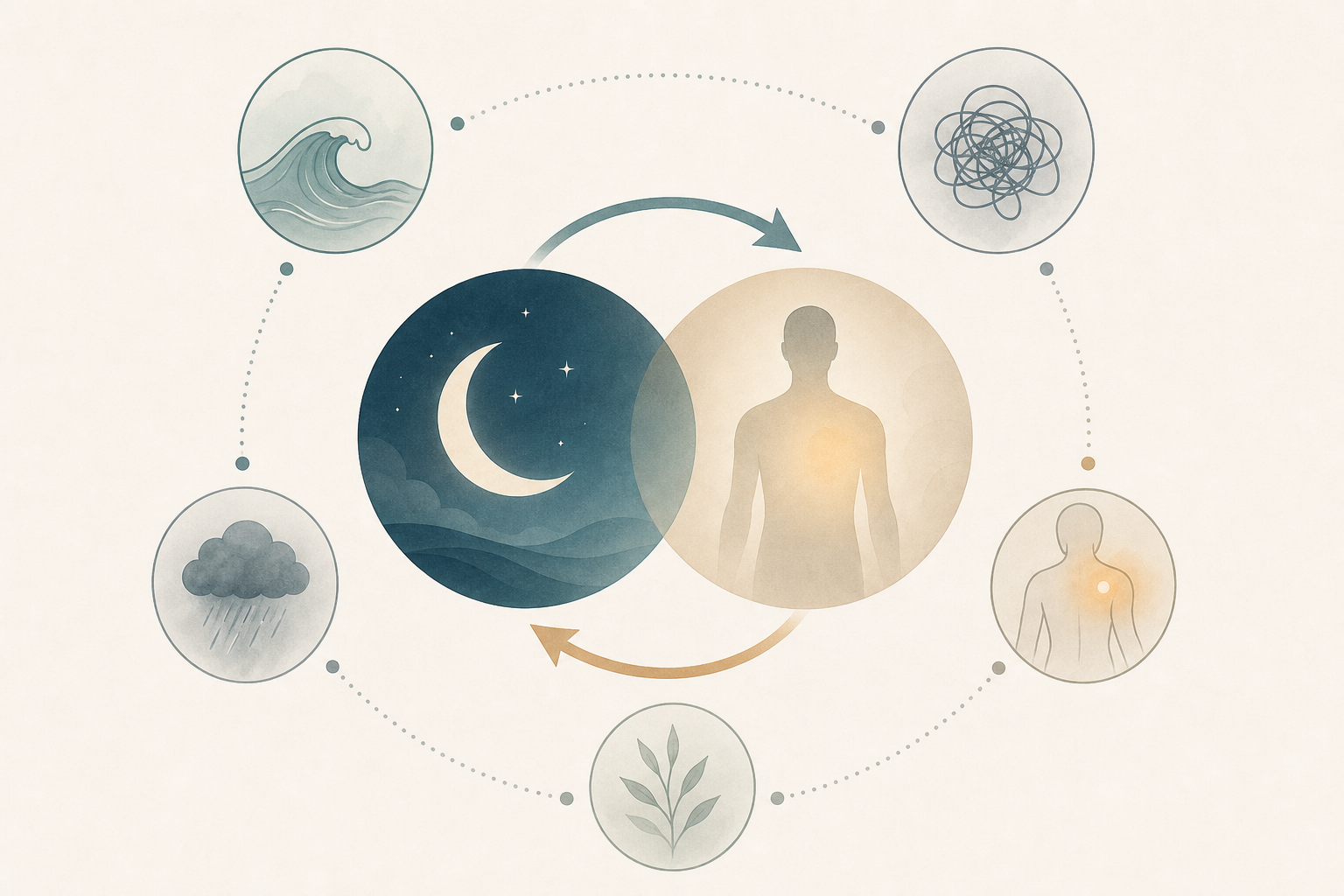
The relationship between sleep and pain is one of the most clearly documented bidirectional relationships in sleep medicine. Poor sleep lowers pain threshold — meaning the same stimulus is experienced as more painful after a night of disrupted sleep. And chronic pain disrupts sleep through arousal, position-related awakenings, and the psychological burden of a persistent pain condition.
CBT-I in chronic pain populations does not merely improve sleep as a secondary benefit of pain management. It works in the opposite direction: improving sleep produces clinically significant reductions in pain severity. Research by Tang and colleagues found that CBT-I led to measurable decreases in pain ratings as a secondary outcome of the sleep intervention — not as a result of any direct pain treatment.
Standard CBT-I components are effective in chronic pain, but several adaptations are required to account for the practical realities of a pain condition.
- Stimulus control rules — which typically include getting out of bed when unable to sleep — need to be adapted for patients with mobility limitations or significant pain on movement. The principle of breaking the bed-wakefulness association is maintained, but the specific behavioral instruction is modified based on the patient's physical capacity.
- Fall risk must be assessed before implementing sleep restriction in patients with chronic pain conditions that affect balance, coordination, or lower limb function. Gradual sleep compression may be preferred over abrupt time-in-bed reduction in these cases.
- Cognitive restructuring specifically addresses catastrophizing about the consequences of poor sleep on pain — a common cognitive pattern in this population that maintains both the insomnia and the pain experience.
- Relaxation components, particularly body scan and progressive muscle relaxation, may need to be modified to avoid positions or muscle groups that are acutely painful.
CBT-I for Perimenopause and Menopause
Insomnia is significantly more prevalent in menopausal women than in premenopausal women — affecting approximately 46–48% of menopausal women compared to 38% of premenopausal women, according to data from the SWAN study. The causes are multiple: hormonal changes affect sleep architecture directly, hot flashes cause nocturnal awakenings, and the psychological burden of the menopausal transition contributes to the hyperarousal that maintains insomnia.
A key clinical question for this population is whether CBT-I can improve sleep even when hot flashes continue. The evidence is clear: it can. In a telephone-based RCT by McCurry and colleagues, CBT-I produced an ISI reduction of 9.9 points compared to 4.7 points in the menopause education control group. Critically, 70% of CBT-I participants achieved no-insomnia ISI scores by week 8, rising to 84% by week 24. In the control group, those figures were 24% and 43% respectively.
| Outcome | CBT-I Group | Control Group |
|---|---|---|
| ISI reduction (points) | 9.9 | 4.7 |
| No-insomnia ISI score at 8 weeks | 70% | 24% |
| No-insomnia ISI score at 24 weeks | 84% | 43% |
| Sleep latency reduction | 54.4 → 22.9 min | Minimal change |
| WASO reduction | ~71 → ~34 min | Minimal change |
A pooled analysis from the MsFLASH consortium compared CBT-I against all pharmacological and non-pharmacological interventions for menopausal insomnia — including escitalopram, venlafaxine, yoga, estradiol, and exercise. CBT-I outperformed all comparators. In a separate trial by Drake and colleagues, CBT-I remission rates reached 54–84% compared to 4–33% for sleep hygiene education, with CBT-I patients achieving 40–43 more minutes of sleep per night at six-month follow-up.
- Environmental adjustments — bedroom temperature regulation, moisture-wicking bedding — are incorporated to reduce the sleep disruption caused by hot flashes, without treating the hot flashes themselves as the primary target.
- Cognitive therapy specifically addresses the arousal response to hot flashes: the catastrophizing thought pattern that a hot flash will inevitably prevent sleep, which itself elevates arousal and makes sleep harder to resume.
- Telephone-delivered and digital CBT-I have been validated by RCT in this population, making access feasible for women who cannot attend in-person sessions.
- The evidence supports CBT-I as the first-line intervention for menopausal insomnia even when vasomotor symptoms are ongoing. Waiting for hot flashes to resolve before treating insomnia is not supported by the outcome data.
CBT-I for Older Adults
Age alone is not a contraindication for CBT-I. Older adults respond to CBT-I, and the evidence for its efficacy in this population is well-established. The key adaptation is not in the cognitive or behavioral components but in the sleep restriction approach.
Standard sleep restriction therapy involves an abrupt reduction in time in bed to match current total sleep time, then gradually expanding the window as sleep efficiency improves. In older adults — particularly those with fall risk, cardiovascular conditions, or significant daytime fatigue — this abrupt approach carries safety concerns. Excessive daytime sleepiness in the early phase of sleep restriction can increase fall risk, which is a serious concern in this population.
The standard adaptation is sleep compression — a gradual rather than abrupt reduction in time in bed over several weeks. The same mechanism is engaged (building homeostatic sleep pressure, consolidating fragmented sleep), but the pace is slower and the initial sleep debt is less severe. This approach preserves the efficacy of the sleep consolidation strategy while managing the safety risks associated with acute sleep restriction in older adults.
- Sleep compression reduces time in bed gradually — typically by 15–30 minutes per week — rather than setting an immediate, restrictive window.
- Stimulus control instructions are maintained but adapted for mobility: the principle of leaving the bed during prolonged wakefulness is preserved, but the specific activity and location during out-of-bed time accounts for physical limitations.
- Daytime napping rules are applied with more flexibility in older adults, where some daytime rest may be medically appropriate, while still targeting the consolidation of nighttime sleep.
- Cognitive restructuring addresses age-related beliefs about sleep — the common assumption that poor sleep is an inevitable consequence of aging that cannot be improved — which, if unchallenged, undermines engagement with the behavioral components.
CBT-I During Pregnancy
For pregnant women with insomnia, the primary clinical question is often about safety rather than efficacy: what is safe to use during pregnancy? CBT-I is the preferred treatment for insomnia during pregnancy precisely because it carries no pharmacological risk to the developing fetus. The behavioral and cognitive interventions that make up CBT-I have no known adverse effects on pregnancy outcomes.
The efficacy data is also strong. Clinical trials by Manber and colleagues found a 62% full remission rate from insomnia in pregnant women who completed CBT-I — a remission rate comparable to what is observed in non-pregnant adults.
Specific adaptations for pregnancy-related insomnia include:
- Modified sleep restriction rules that avoid sleep deprivation risk, particularly in the third trimester when physiological sleep disruption from fetal movement and discomfort is highest. Sleep compression is typically used instead of abrupt restriction.
- Postpartum expectation management as an integrated component — preparing the patient for the sleep disruption that follows birth and distinguishing between insomnia disorder and the normal sleep fragmentation of early parenthood.
- Stimulus control adaptations for physical discomfort: the instruction to leave the bed during prolonged wakefulness is maintained in principle but adapted for the physical limitations of late pregnancy.
Genuine Contraindications and When CBT-I Must Be Modified
CBT-I is broadly applicable, but three situations require significant modification or careful sequencing. These are not reasons to avoid CBT-I altogether — they are reasons to ensure the right version of CBT-I is delivered, or that a specific component is deprioritized.
| Condition | Specific Concern | Required Adaptation | Evidence for Adapted Protocol |
|---|---|---|---|
| Bipolar disorder | Sleep restriction can precipitate hypomania or mania by inducing acute sleep deprivation | Sleep compression (gradual TIB reduction) replaces abrupt sleep restriction; this is the CBT-I-BP protocol | Harvey et al. (2015): CBT-I-BP reduces insomnia severity and significantly lowers hypomania and mania relapse rates |
| Seizure disorder | Sleep restriction is contraindicated; sleep deprivation lowers seizure threshold | Sleep restriction component is removed; stimulus control, cognitive, and relaxation components can proceed | No RCT data specific to seizure disorder; contraindication is based on established seizure physiology |
| Severe untreated obstructive sleep apnea | Untreated OSA fragments sleep through respiratory events; CBT-I cannot consolidate sleep that is being disrupted by airway obstruction | CPAP or other OSA treatment should be stabilized before initiating CBT-I; CBT-I is appropriate afterward for residual insomnia | CBT-I is effective for residual insomnia after CPAP stabilization; concurrent initiation is not supported |
The bipolar disorder adaptation deserves particular emphasis because the risk is specific and the consequence is serious. Standard sleep restriction therapy works by building homeostatic sleep pressure through a temporary reduction in time in bed. In bipolar disorder, that acute sleep reduction can trigger a hypomanic or manic episode. The CBT-I-BP protocol replaces abrupt restriction with sleep compression — achieving the same consolidation goal through a gradual process that avoids the acute deprivation phase. Harvey and colleagues demonstrated in 2015 that CBT-I-BP not only reduces insomnia severity but also significantly lowers the rate of hypomania and mania relapse — making it a clinically valuable intervention, not merely a safer version of an inferior one.
Finding a CBT-I Provider Experienced with Comorbid Presentations
The most significant barrier to accessing CBT-I is not the evidence — it is the shortage of trained providers. This shortage is more acute for comorbid presentations, where protocol adaptations require clinical experience beyond standard CBT-I training.
When screening a potential CBT-I provider, these questions are worth asking directly:
- "Have you worked with patients who have [your specific comorbid condition]?" — General CBT-I training does not always include comorbid-specific adaptations. A provider who has not worked with PTSD, chronic pain, or bipolar disorder may deliver an unadapted protocol.
- "Are you trained in behavioral sleep medicine?" — The Society of Behavioral Sleep Medicine (SBSM) certifies providers in Behavioral Sleep Medicine (CBSM). This credential indicates formal training in CBT-I beyond basic workshop attendance.
- "Do you use a manual-based protocol?" — Manual-based CBT-I has the strongest evidence base. Providers who describe a vaguely "CBT-informed" approach without a structured protocol may be offering a diluted version.
- "Do you offer telephone or video-based sessions?" — Telephone-delivered CBT-I has been validated by RCT for perimenopause and other populations. Digital CBT-I programs have also demonstrated efficacy in several populations and may be the most accessible option in areas with limited in-person providers.
If you cannot yet access a qualified provider, the foundational behavioral practices covered in the sleep hygiene fundamentals guide are a reasonable starting point — not as a substitute for CBT-I, but as preparation for it. Consistent sleep and wake times, reducing time in bed to match actual sleep time, and addressing caffeine and light exposure create the behavioral foundation that a structured CBT-I protocol builds on.
Supports these guides
Spot an error or have clinical feedback?
Because this article covers clinical, medication, or safety information, we use a moderated correction channel instead of open public comments. Let us know if something about “CBT-I for Comorbid Insomnia: Does It Work When You Have Another Condition?” needs a closer look.
Send feedback on this article