
Mechanism explainer
Can a Smart Ring Detect Sleep Apnea or Replace a Sleep Study? What the 2025 Clinical Evidence Says
Smart rings are popular sleep trackers, but can they diagnose sleep disorders? This article examines the clinical evidence—including the 2025 Herberger study—to explain why smart rings cannot replace polysomnography, the risks of relying on them for medical decisions, and when they can be a useful adjunct to share with your doctor.
The Question Every Smart Ring Owner Eventually Asks
You wake up, check your smart ring app, and see a sleep score that looks nothing like how you feel. Maybe the ring says you got eight hours, but you know you were awake for at least two of them. Or maybe the ring flags your oxygen levels and you start wondering: do I have sleep apnea? Could this tiny device on my finger tell me if I need a sleep study?
These questions are reasonable. Smart rings have become sophisticated wellness tools, and some now include features like SpO2 tracking and sleep apnea screening. But there is a critical gap between what a smart ring can measure and what a clinical sleep study can diagnose — and that gap matters when you are making decisions about your health.
What a Clinical Sleep Study (PSG) Measures That a Smart Ring Cannot
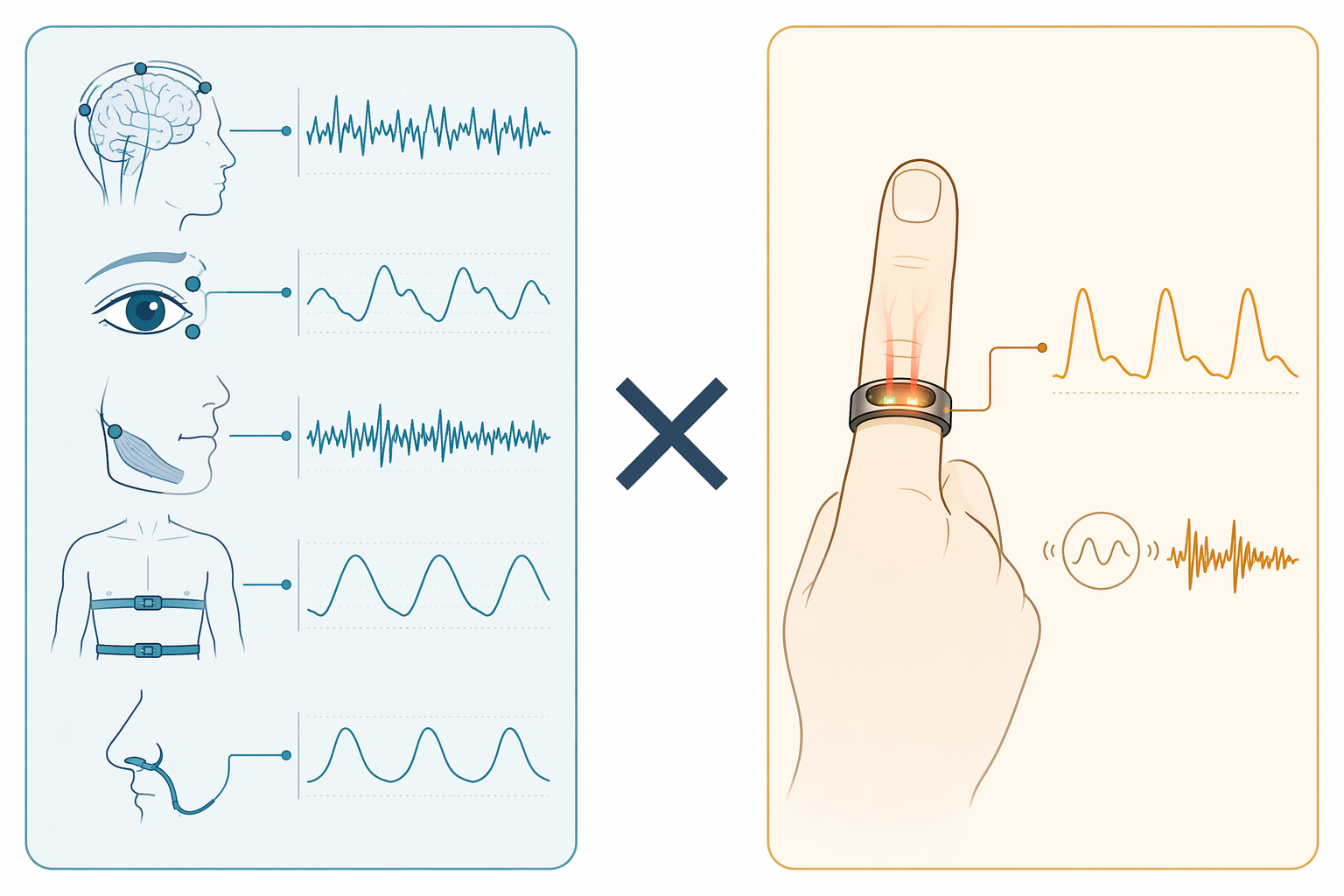
Polysomnography — the formal name for an in-lab sleep study — is the gold standard for diagnosing sleep disorders because it captures multiple physiological signals simultaneously. A smart ring, by contrast, relies almost entirely on photoplethysmography (PPG), which uses light to measure blood volume changes in the finger, plus an accelerometer for movement. That is a fraction of what a sleep study records.
Supports these guides
Spot an error or have clinical feedback?
Because this article covers clinical, medication, or safety information, we use a moderated correction channel instead of open public comments. Let us know if something about “Can a Smart Ring Detect Sleep Apnea or Replace a Sleep Study? What the 2025 Clinical Evidence Says” needs a closer look.
Send feedback on this article