
Mechanism explainer
How Sleep Quality Accelerates Sports Injury Recovery
Quality sleep drives tissue repair through four physiological pathways — growth hormone release, inflammation regulation, blood flow redistribution, and muscle protein synthesis. This article explains why chronic sleep restriction blunts every one of these processes, making sleep a causal factor in how quickly athletes heal from injuries.
An injured athlete can be impressively disciplined at noon and oddly casual at midnight. The rehab plan gets done. The calf raises are counted. The tendon-loading progression is logged. Then sleep gets treated like empty space around the real work.
That is the central mistake in how many athletes think about sleep during injury recovery. Sleep is not a pause from rehabilitation. It is one of the physiological states in which the body processes the raw materials rehab creates: mechanical signal, amino acids, immune regulation, blood supply, and hormonal timing. A damaged muscle, tendon, ligament, or joint capsule does not heal because an athlete is merely inactive for eight hours. It heals because several repair systems become more favorable during sleep.
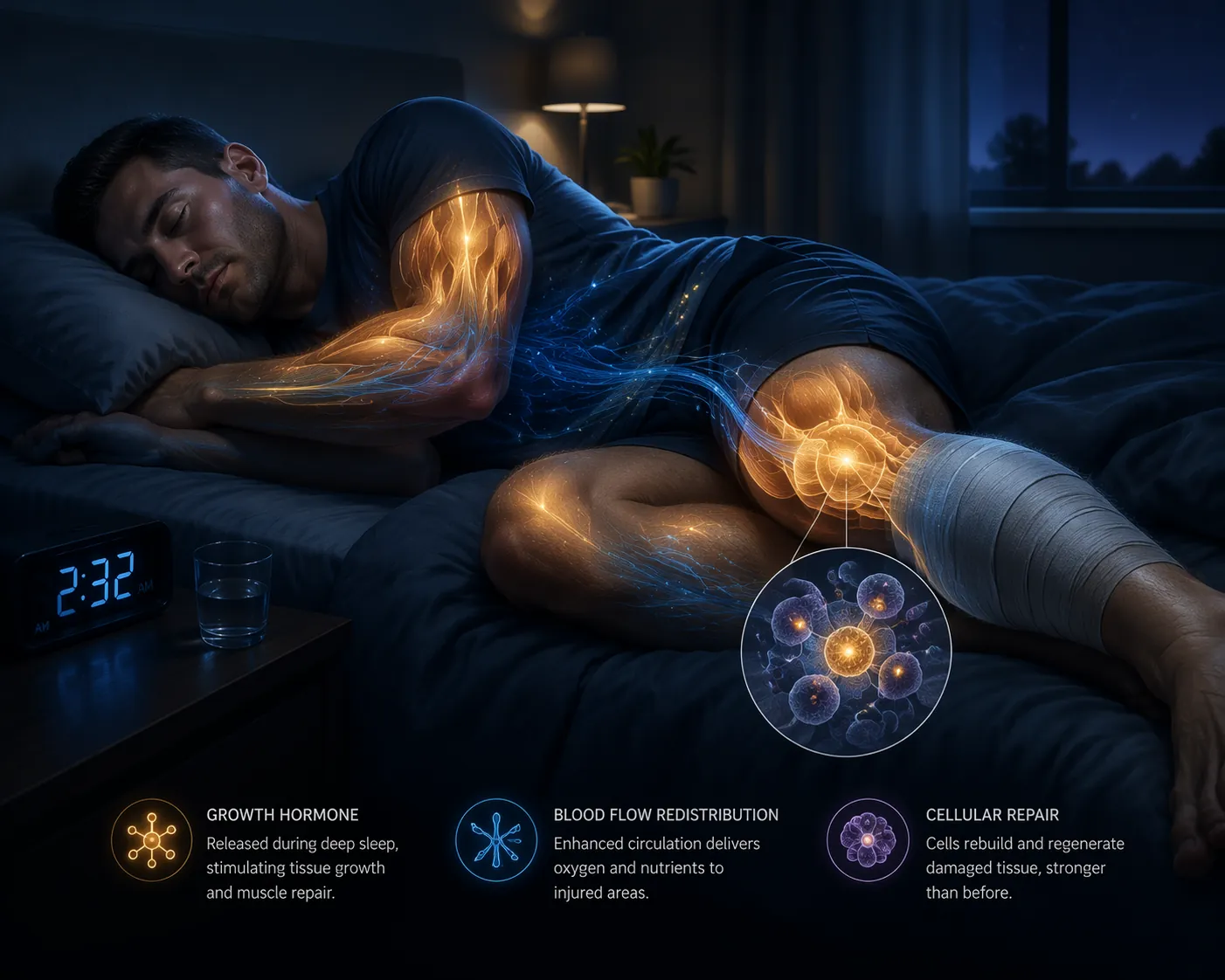
Four pathways carry most of the weight: growth hormone release during slow-wave sleep, regulation of inflammation, redistribution of blood flow toward muscle, and a more anabolic environment for muscle protein synthesis. When sleep is chronically restricted, those pathways do not simply become less tidy. They are blunted at the same time.
Deep Sleep Is When the Repair Signal Gets Loudest
The cleanest reason sleep belongs inside an injury-recovery plan is the N3, or slow-wave sleep, pathway. During this deepest stage of non-REM sleep, the pituitary gland releases the majority of daily growth hormone, and growth hormone supports muscle repair and protein synthesis. Sleep restriction reduces growth hormone secretion, which is one reason poor sleep becomes physiologically relevant rather than merely inconvenient during recovery.[1]
That matters because injured tissue is not only waiting for time to pass. It is remodeling. Collagen has to be laid down and reorganized. Muscle fibers have to repair damage. Surrounding tissue has to tolerate progressive loading again. Growth hormone does not perform all of that work by itself, but it is part of the endocrine environment that makes repair more likely to proceed well.
This is also why sleep quality matters, not just total hours in bed. A night that is fragmented by late caffeine, pain, stress, alcohol, travel, or repeated awakenings may contain less consolidated slow-wave sleep. The athlete may technically have been in bed long enough while still missing part of the stage most tied to growth hormone release.
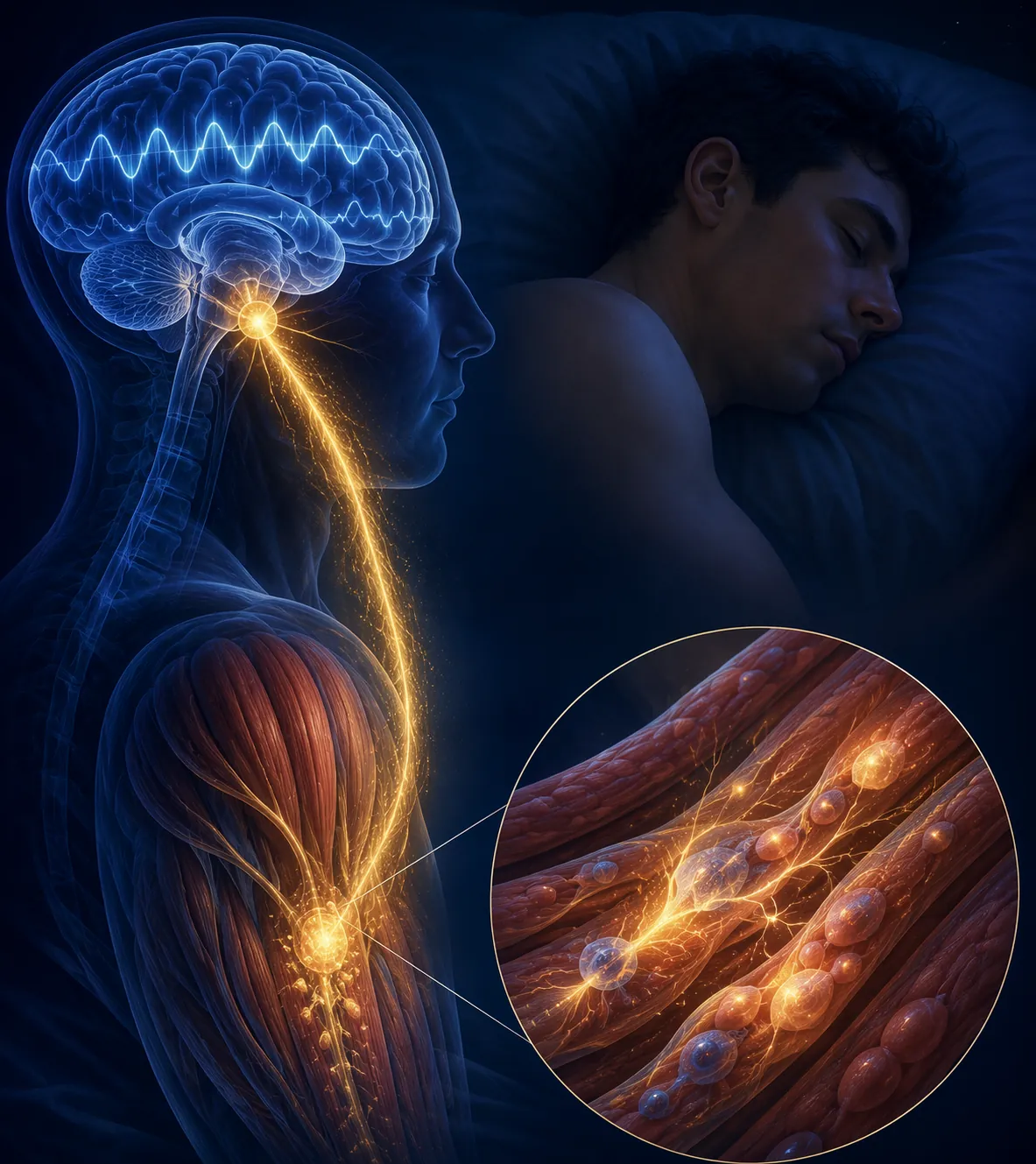
Mass General Brigham describes deep sleep as a key period for physical restoration, noting that blood flow to muscles increases and that a substantial share of sleep time needs to be spent in deep sleep for optimal muscle repair.[2] That statement should not be turned into a personal scoreboard from a consumer wearable. Sleep-stage estimates from devices can be noisy. The useful point is broader and more practical: repeatedly shallow, broken sleep is a different recovery environment from consolidated sleep that lets the body cycle through deep non-REM stages.
Inflammation Needs Timing, Not Just Suppression
Injured athletes often talk about inflammation as if it were an enemy to remove. That is too crude. Acute inflammation is part of the early repair process. It helps clear damaged cells and starts the signaling cascade that brings immune cells, fluid, and repair factors to the site. The problem is not inflammation itself. The problem is poorly regulated inflammation, especially when sleep loss pushes the body toward a more chronically pro-inflammatory state.
Sleep participates in that regulation. The athlete-recovery literature describes prolactin release during sleep as one contributor to immune and inflammatory modulation, while sleep deprivation is associated with elevated pro-inflammatory cytokines that can interfere with healing.[3] Cortisol also normally falls during early sleep, creating a hormonal setting that allows inflammatory regulation to operate more cleanly.[4]
Cytokines are not automatically bad actors either. They are signaling proteins. Some help coordinate repair; others, when persistently elevated, contribute to a tissue environment that is less favorable for rebuilding. The difference is timing and balance. A sprained ankle, a strained hamstring, or an irritated tendon does not need an immune system stuck in a state of low-grade alarm because the athlete keeps sleeping five broken hours a night.
This is where vague recovery advice often fails athletes. Telling someone to “rest” does not explain why the same athlete can be compliant with reduced training load and still undercut recovery by carrying high stress, fragmented sleep, and elevated nighttime arousal into bed. The tissue may be unloaded enough, but the internal chemistry can still be noisy.
Blood Flow Shifts Toward the Worksite
The blood-flow mechanism is less dramatic than growth hormone, but it completes an important piece of the repair picture. During deep sleep, blood flow increases to skeletal muscles, helping deliver oxygen and nutrients while the body is at rest.[2] For injured tissue, delivery matters. Repair requires substrates, not just signals.
This does not mean an athlete can sleep a torn structure back into health without appropriate loading, immobilization when indicated, surgery when necessary, or medical care. It means the hours after rehab are not biologically empty. A strength session or physical therapy appointment gives tissue a mechanical instruction. Sleep helps create the circulatory and hormonal conditions in which that instruction can be answered.
Protein Synthesis Needs an Anabolic Night
Muscle repair depends on protein turnover: damaged proteins are broken down, new proteins are built, and the balance has to favor rebuilding often enough for tissue to recover. Growth hormone supports protein synthesis, and sleep helps tilt the overnight environment toward repair.[1]
This is the piece athletes often understand in the gym but forget in bed. They will protect protein intake, plan post-training meals, and debate the timing of amino acids. Those choices can matter. But if sleep is chronically restricted, the hormonal environment that helps use those materials for rebuilding becomes less favorable. The amino acids are not magic. They need a body state that can turn them into tissue.
Chronic Restriction Pushes the Body the Wrong Way
One bad night before a follow-up appointment is not the same as a month of short, fragmented sleep during rehab. The injury-recovery problem is sustained restriction. When sleep is chronically limited, cortisol can remain elevated, growth hormone secretion can fall, inflammatory signaling can become more pro-inflammatory, and protein synthesis can be suppressed. That is a catabolic shift: more breakdown pressure, less rebuilding support.

Sleep-extension research gives a useful, if limited, window into the opposite direction. Studies that increased time in bed to about 10 hours reported increased IGF-I concentrations, a signal relevant to musculoskeletal recovery.[1] The evidence should be handled carefully: many sleep-extension studies are small, often with sample sizes in the range of 6 to 30, and much of the athlete research is in collegiate rather than professional populations.[1]
Still, the direction is physiologically coherent. More adequate sleep supports anabolic signaling; restricted sleep pushes the body toward a state that is less friendly to tissue repair. For an athlete in the boring middle of rehabilitation, that distinction matters. The daily gains are often invisible. A tendon does not announce that collagen organization improved overnight. A strained muscle does not report that protein synthesis outpaced breakdown. Sleep is one of the quiet places where those small margins accumulate.
| Repair pathway | What sleep supports | What chronic restriction can blunt |
|---|---|---|
| Slow-wave sleep and growth hormone | Major daily growth hormone release during N3 sleep | Growth hormone secretion and downstream repair signaling |
| Inflammation regulation | Prolactin activity, cytokine balance, and early-night cortisol suppression | Control of pro-inflammatory signaling |
| Blood flow redistribution | Increased skeletal-muscle blood flow during deep sleep | Oxygen and nutrient delivery to recovering tissue |
| Protein synthesis | A more anabolic overnight environment | Rebuilding of damaged muscle proteins |
The Injury-Specific Evidence Is Promising, but Not Unlimited
The mechanisms are strong enough to explain why sleep belongs in sports-injury recovery, but direct injury-specific evidence is still narrower than the physiology. A British Journal of Sports Medicine systematic review poster abstract reported that sleep affects concussion recovery time and re-injury risk during rehabilitation.[5] That is relevant, especially because concussion recovery is one of the places where sleep disturbance and return-to-play decisions collide.
It should not be overused as a headline claim. The BJSM source is a poster abstract rather than a full paper, so its figures and conclusions deserve caution.[5] It is better read as injury-specific confirmation that fits the physiology, not as the entire case for sleep. The stronger argument is the convergence: endocrine repair signaling, inflammatory regulation, circulatory support, and protein synthesis all move in directions that matter for healing.
Soft-tissue injuries also differ. A grade 1 muscle strain, a post-surgical ACL reconstruction, a chronic tendinopathy, and a concussion do not share one recovery clock. Sleep quality cannot erase tissue severity, surgical indications, age, nutrition, rehabilitation quality, or return-to-sport demands. It can, however, influence the internal conditions under which those other factors play out.
Where Sleep Fits Beside Rehab
Sleep should sit beside physical therapy, medical treatment, nutrition, and progressive loading, not above them. A torn ligament may need surgical evaluation. A stress fracture needs load management. A concussion needs medical oversight. A tendon needs a staged loading plan. Sleep does not replace any of that.
The useful adjustment is to stop treating sleep as the soft optional layer after the “real” recovery work. If the athlete wants practical next steps after understanding the mechanisms, the complementary guide on why athletes need sleep for injury recovery is the better place for strategy. If the injury involves bone rather than soft tissue, the related guide on sleep and broken bone recovery covers a neighboring repair problem.
The calibrated judgment is straightforward: chronic sleep restriction is not a neutral inconvenience during sports injury recovery. It suppresses multiple repair pathways at once. One poor night is survivable. Sustained poor sleep during rehabilitation is a different biological environment for injured tissue.
References
- Sleep Hygiene for Optimizing Recovery in Athletes, Vitale et al., 2019.
- Sleep and Athletic Performance, Mass General Brigham.
- The Sleep and Recovery Practices of Athletes, Doherty et al., 2021.
- Sleep: The Secret Ingredient of Injury Recovery, OrthoCarolina.
- Sleep and musculoskeletal injury: a systematic review, British Journal of Sports Medicine, 2021.
Supports these guides
Spot an error or have clinical feedback?
Because this article covers clinical, medication, or safety information, we use a moderated correction channel instead of open public comments. Let us know if something about “How Sleep Quality Accelerates Sports Injury Recovery” needs a closer look.
Send feedback on this article