
What to Do for Sleep If Your Allergy Med Is Recalled
A July 2026 recall of common antihistamines used as sleep aids has left many people without their go-to option. This guide helps pregnant, perimenopausal, ADHD, and older adult readers find a safe, evidence-backed alternative that fits their specific physiology — starting tonight.
Last reviewed: July 23, 2026. Recall status can change, so check the FDA recall page, the product label, and your pharmacist before making a decision tonight.
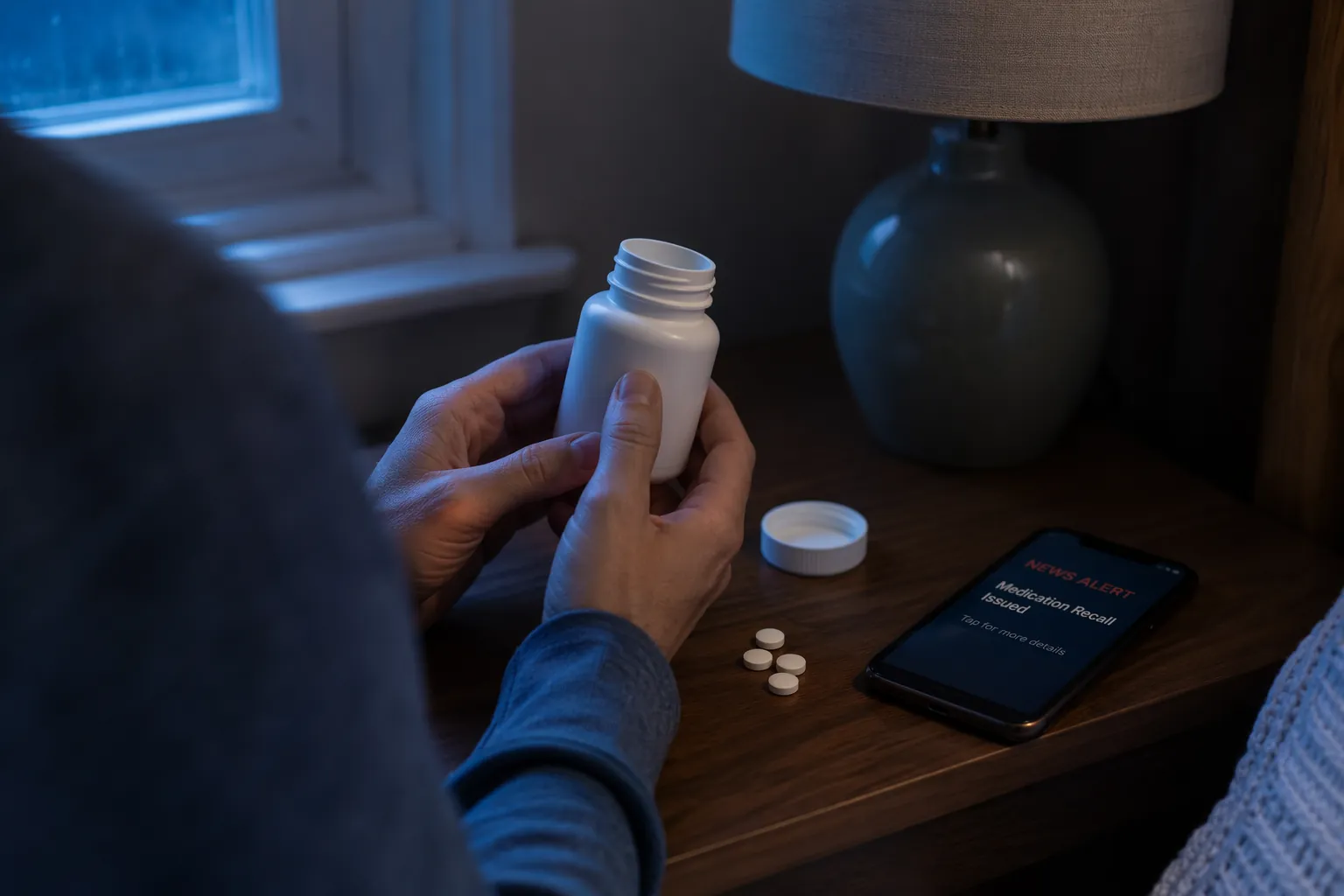
If you were using allergy medication to sleep, start with the bottle in your hand. Do not take another dose from a recalled lot. Do not automatically replace it with Benadryl, Unisom, or another sedating antihistamine just to get through the night. First sort out whether your product is actually affected, because the July 2026 headlines group together products with very different problems.
First, Check Whether Your Bottle Is Part of the Recall
The clearest immediate answer is this: if your cetirizine bottle is from Rising Pharma Holdings and the lot number is GY825029, GY825030, GY825031, or GY825032, stop using it and follow the recall instructions. The recalled product is cetirizine HCl 5 mg tablets, the generic form of Zyrtec, recalled after cross-contamination with ranitidine was reported. Brand-name Zyrtec is not included in this recall based on the public reports available as of July 21-23, 2026.[1]
If your bottle says fexofenadine HCl 180 mg, slow down before assuming your over-the-counter Allegra is affected. The reported fexofenadine recall involves Sun Pharmaceutical prescription-strength 180 mg tablets, lots DNF0922A, DNF0923A, and DNG0283A, covering 9,048 bottles that failed impurity or degradation specifications. That is not the same as a blanket recall of OTC Allegra.[2]
Benadryl headlines also need separating. The reported Benadryl liquid elixir recall involved about 2,300 bottles from Arsell and was tied to child-resistant packaging, not contamination of the medication itself. That still matters, especially in a home with children, but it is a different safety issue from the cetirizine cross-contamination notice.[3]
| Product mentioned in recall coverage | What to check | Plain-language meaning |
|---|---|---|
| Rising Pharma cetirizine HCl 5 mg | Lots GY825029-GY825032 | Stop using affected lots; brand-name Zyrtec is not reported as affected. |
| Sun Pharmaceutical fexofenadine HCl 180 mg | Lots DNF0922A, DNF0923A, DNG0283A | Prescription-strength product; do not assume all OTC Allegra is recalled. |
| Benadryl liquid elixir from Arsell | Packaging recall details | Child-resistant packaging issue, not the same as contamination. |
If you already took a dose from a recalled product, call your pharmacist or clinician for product-specific guidance. If you are pregnant, call your OB or pregnancy care team. If a child may have accessed Benadryl elixir because of packaging failure, or if anyone has concerning symptoms after taking a recalled medicine, use poison control or emergency care rather than waiting for a sleep article to settle the question.
Why Swapping to Another Antihistamine Is Usually the Wrong Reflex
The recall may feel like the loss of your sleep solution, but for many people the antihistamine was never doing as much as it seemed. Cetirizine causes drowsiness in only about 10-20% of users, so a person taking generic Zyrtec at bedtime may be treating allergies, benefiting from routine, or feeling a mild sedating effect rather than using a dependable sleep aid.[4]
Diphenhydramine, the sedating ingredient in Benadryl and many “PM” sleep products, has a different problem: tolerance. Sleep Foundation summarizes research finding that its sleep benefit can fade after about four consecutive days, becoming no better than placebo for sleep. Antihistamines can also reduce sleep quality by suppressing REM and deep sleep, so the person may be unconscious longer without getting better rest.[5]
Next-day impairment is not a moral failure or a sign that you are “sensitive.” Diphenhydramine’s half-life is about 9 hours in adults and about 13.5 hours in older adults, which makes morning grogginess pharmacologically predictable, especially when the dose is taken late or repeated nightly.[6]
That is why the safest question is not “Which allergy pill replaces this recalled one?” It is “What is the least risky bridge for my body tonight, and what should replace this habit over the next few weeks?”

If You Are Pregnant
Pregnancy is the place to be least casual about replacement pills. Some antihistamines, including doxylamine and diphenhydramine, are used by pregnant people, especially for nausea, and are generally considered low risk for occasional use in some contexts. But nightly antihistamine use as a sleep aid has not been well studied in pregnancy, and pregnancy sleep-aid safety is based largely on observational data rather than randomized trials that enroll pregnant participants.[7]
Tonight
If the recalled medication was treating allergy symptoms, ask your OB, pharmacist, or prescribing clinician what to use instead for allergies. If you were using it mainly to sleep, do not turn the recall into an unsupervised nightly Benadryl or Unisom routine. A single occasional medication decision in pregnancy is different from a pattern, and the pattern is what deserves medical review.
For tonight, prioritize the lowest-risk non-drug moves that match the actual problem: elevate the head of the bed for reflux or congestion, use pregnancy-safe nasal or environmental allergy strategies your clinician has already cleared, cool the room if heat is driving wake-ups, and keep the wakeful period quiet and boring rather than turning it into a medication search at midnight.
Melatonin is not automatically safe because it is sold as a supplement. Sleep Foundation notes that melatonin use in pregnancy remains unresolved, so it belongs in an OB-guided conversation rather than a panic purchase.[7]
Over the next few weeks
If insomnia is showing up more than occasionally, route the decision through pregnancy-specific care instead of general OTC sleep-aid advice. Restful Ground’s pregnancy sleep-aid safety guide and melatonin in pregnancy guide can help you prepare better questions for your OB, but they should not replace that conversation when you are taking something repeatedly.
The longer-term target is not white-knuckling. It is separating pregnancy discomfort, anxiety, reflux, restless legs, congestion, fetal movement, and conditioned insomnia, because those do not all respond to the same treatment. A sedating antihistamine can blur those causes just enough to delay the right fix.
If You Are in Perimenopause
Perimenopause insomnia is often treated as generic sleeplessness, but the pattern matters. If you were taking cetirizine, diphenhydramine, or doxylamine at night, it may have been covering a temperature problem: hot flashes, night sweats, lighter sleep, or early-morning waking after a vasomotor surge.
Tonight
If heat wakes you, solve for heat before sedation. Lower the room temperature, use lighter bedding, keep a change of sleepwear nearby, and avoid taking a new sedating antihistamine on top of alcohol, cannabis, or another sedative. If allergies are also present, ask a pharmacist about a non-recalled allergy option that treats allergy symptoms without being chosen mainly for drowsiness.
Magnesium glycinate or L-theanine may be reasonable for some adults who want a non-antihistamine bridge, but the evidence quality is not the same as a prescription therapy or CBT-I. Treat supplements as conditional: check interactions, kidney disease, blood pressure medications, and pregnancy possibility before using them.
Over the next few weeks
Track whether wake-ups come with sweating, flushing, palpitations, anxiety spikes, or a predictable early-morning pattern. That log changes the clinical conversation. If vasomotor symptoms are the driver, the better treatment may involve temperature strategy, evaluation for hormonal or nonhormonal menopause therapies, or anxiety treatment rather than a stronger sleep sedative.
A recall is a useful interruption here because it forces the distinction between being knocked out and sleeping well. If the old pill helped you ignore night sweats but left you flat in the morning, replacing it with another anticholinergic medication may preserve the wrong part of the routine.
If You Have ADHD
ADHD sleep deserves its own route, not a footnote. ADDitude reports that about 75% of adults with ADHD describe difficulty falling asleep, and many people with ADHD end up experimenting with antihistamines because they are available, fast, and do not require negotiating a new prescription at 11:40 p.m.[8]
The problem is the morning. A sedating antihistamine may make bedtime quieter but worsen next-day fog, task initiation, working memory, and emotional regulation. For an adult already managing ADHD, that hangover can look like a bad ADHD day rather than a medication effect.
Tonight
Do the recall check first; ADHD makes it easy to jump from headline to replacement without confirming lot number, strength, or product type. Put the recalled or uncertain bottle somewhere separate from your normal medication area until a pharmacist confirms what to do with it.
For sleep tonight, reduce stimulation without creating a new medication experiment: set one alarm, move the phone away from the bed after checking essential recall information, use a low-light task if you cannot sleep, and avoid stacking sedating antihistamines with alcohol, cannabis, benzodiazepines, opioids, or other sleep medications.
Low-dose melatonin is sometimes discussed for ADHD-related delayed sleep timing, but dose and timing matter. The expert-opinion options described in ADHD clinical discussions, including low-dose melatonin, clonidine, or unusual stimulant timing before bed, should be treated as clinician-guided strategies, not general DIY advice. ADDitude’s cited expert discussion includes options such as melatonin at 1 mg or less, clonidine 0.05-0.1 mg, and a paradoxical low-dose stimulant about 45 minutes before bed, but those are expert-consensus approaches rather than controlled-trial instructions for everyone.[8]
Over the next few weeks
Bring the sleep problem into the ADHD medication visit instead of treating it as a separate failure of willpower. Useful details include when your stimulant wears off, whether rebound restlessness starts in the evening, whether you feel sleepy but cannot disengage, and whether your sleep window shifts later on unstructured days.
Behavioral insomnia treatment can still work for ADHD, but it usually needs ADHD-aware execution: fewer steps, visible cues, external reminders, and a plan for what to do when the brain becomes alert at bedtime. If you need a broader adult triage frame, Restful Ground’s self-triage guide for adults who cannot sleep is a better next stop than cycling through sedating OTC products.
If You Are 65 or Older
For older adults, this recall should function as a stop sign, not a shopping prompt. Diphenhydramine and doxylamine are anticholinergic medications, and the American Geriatrics Society Beers Criteria list medications with strong anticholinergic effects as potentially inappropriate for many older adults because of risks including confusion, falls, urinary retention, constipation, and cognitive harm.[9]
The longer half-life matters here. If diphenhydramine lasts about 13.5 hours in older adults, a 10 p.m. dose can still be active late the next morning. That is when people are walking to the bathroom, taking blood pressure medication, driving, cooking, or trying not to fall.[6]
Tonight
Do not replace recalled cetirizine or fexofenadine with Benadryl, doxylamine, or a “PM” pain reliever unless your clinician specifically tells you to. If allergies are the issue, ask a pharmacist which non-recalled allergy treatment fits your medication list. If insomnia is the issue, the safest bridge may be a non-drug night plus a next-day call, especially if you have a history of falls, memory changes, glaucoma, prostate symptoms, constipation, heart rhythm problems, or multiple prescriptions.
If you already took a sedating antihistamine and feel groggy, treat the morning as impaired: stand slowly, use lights, avoid unnecessary driving, and tell someone if you feel confused or unsteady. The consequence of a bad sleep-aid choice at 72 is often not just a sleepy morning; it can be a fall.
Over the next few weeks
Ask for a medication review that includes OTC products, not only prescriptions. Many people do not think of Benadryl, Unisom, Tylenol PM, or Advil PM as part of the medication list because they are bought without a prescription. For an older adult, they absolutely count.
The preferred long-term direction is behavioral treatment, pain control if pain is waking you, treatment for sleep apnea or restless legs if symptoms fit, and deprescribing of high-risk sedatives where appropriate. A recalled bottle is inconvenient; a prevented fall is not a small benefit.
Where CBT-I Fits After the Recall
Cognitive behavioral therapy for insomnia, or CBT-I, is the common ground across these groups because it treats the sleep system rather than adding another sedating layer. It can include stimulus control, sleep restriction or sleep compression, cognitive work around wakefulness, and timing changes that rebuild sleep drive. Mayo Clinic’s guidance on antihistamines for sleep points readers away from routine antihistamine use and toward evaluation of the underlying sleep problem rather than long-term self-treatment.[10]
That does not mean CBT-I is a lecture to endure while you are desperate tonight. It means the next stable plan should not depend on whether a bottle is available, whether tolerance has set in, or whether tomorrow’s brain can absorb the drug hangover. For pregnancy, CBT-I avoids medication exposure. For perimenopause, it can sit alongside treatment of vasomotor symptoms. For ADHD, it can be adapted to cueing and delayed sleep timing. For older adults, it avoids anticholinergic burden.
If you are pregnant, Restful Ground’s CBT-I in pregnancy guide is the more relevant starting point than a generic sleep hygiene checklist. If you are comparing OTC products because you need a short bridge, use an ingredient-based guide such as Restful Ground’s OTC sleep-aid comparison rather than shopping by brand name.
What to Do Tonight If You Still Cannot Sleep
- Confirm the product, strength, manufacturer, and lot number before deciding the recall applies to you.
- Set aside any bottle that matches a recalled lot and contact a pharmacist, clinician, FDA recall page, OB, or poison control route as appropriate.
- Do not substitute another sedating antihistamine by reflex, especially if you are pregnant, 65 or older, taking other sedatives, or managing ADHD-related next-day fog.
- Use non-drug measures that match the likely driver: cooling for night sweats, congestion support for allergies, reflux positioning in pregnancy, or low-stimulation cueing for ADHD.
- If insomnia persists, move the problem into a clinician-guided plan rather than escalating OTC sleep aids.
A recalled allergy medication can ruin a night, but the bigger harm would be replacing one shaky sleep crutch with another one that fits your body even worse. Check the bottle. Separate the recalls. Use the safest short-term bridge for your situation. Then move the sleep plan away from nightly antihistamine sedation and toward treatment that still makes sense when there is no recall headline.
References
- Antihistamine allergy med cetirizine hydrochloride recalled. USA Today.
- Antihistamine Recall on 9,000 Bottles Gets Risk Level Update. Yahoo News.
- Cetirizine Allergy Drug Recalled Over Contamination. AARP.
- Does Zyrtec Make You Drowsy?. Doctronic.
- Can Benadryl Make You Sleep? Uses, Risks, and Side Effects. Sleep Foundation.
- Ask the Doctors — Is it safe to use an allergy drug as a sleep aid?. UCLA Health.
- Sleep Aids to Take While Pregnant. Sleep Foundation.
- ADHD and Sleep Problems: Why You're Always Tired. ADDitude Magazine.
- Medications on the Beers Criteria List. Cleveland Clinic.
- Sleep aids: Could antihistamines help me sleep?. Mayo Clinic.
Safety & eligibility read
Cross-check against other interventionsExplore the mechanism
Next step
Spot an error or have clinical feedback?
Because this article covers clinical, medication, or safety information, we use a moderated correction channel instead of open public comments. Let us know if something about “What to Do for Sleep If Your Allergy Med Is Recalled” needs a closer look.
Send feedback on this article