
Can This Banana Bread Recipe Help You Sleep Better?
Yes, a banana bread recipe can help some people sleep better, if it is built more like a small bedtime snack than a dessert loaf. The useful version uses ripe yellow bananas, dairy or yogurt, and almond flour or whole-grain flour, then keeps added sugar modest and timing consistent. No, bananas alone are not a sleep cure, and a warm slice at night should not be treated like medication.
The best-supported way to think about this is not “banana bread makes you sleep,” but “a predictable, gentle snack may support the body’s wind-down chemistry while also giving the evening a clean stopping point.” That difference matters, especially if you have tried enough sleep tips to know how quickly hope can turn into self-blame.
What the banana-at-bedtime study actually found
The most relevant human study is a 2024 randomized controlled trial by Keser and colleagues. Adults with insomnia consumed one banana, weighing 85–100 grams, at bedtime for 6 weeks. Their Pittsburgh Sleep Quality Index scores fell from 9.3 to 4.7, a statistically significant improvement in a scale where lower scores indicate better sleep quality.[1]
That is encouraging, but it is not a license to crown banana bread as an insomnia treatment. The trial included 21 participants, the groups were self-selected, and not every objective polysomnography measure improved significantly.[1] In plainer kitchen terms: this is enough evidence to make a careful bedtime snack worth trying for some people, not enough to promise that it will fix sleep.
It also tested a banana, not banana bread. Turning the finding into a recipe means the recipe has to respect the same logic: keep the portion small, place it near bedtime, and avoid turning the loaf into a high-sugar dessert that works against the original idea.
Why this loaf makes more sense as a nutrient matrix
A medium banana contains about 11 milligrams of tryptophan, along with magnesium, potassium, and vitamin B6. Those amounts are not dramatic on their own; the tryptophan content is modest compared with a high-protein food such as turkey, which is listed at about 252 milligrams per 100 grams. The better argument is that banana bread can combine several small supports in one calm, repeatable snack.
Tryptophan matters because it is part of the serotonin-to-melatonin pathway. Vitamin B6 participates in related neurotransmitter metabolism. Carbohydrates can help tryptophan transport by changing the competition between amino acids in the bloodstream. Magnesium and potassium are more about the body feeling physically settled: muscles, nerves, and nighttime tension rather than a sudden sedative effect.
Banana ripeness is not just a texture preference here. A paper in Acta Horticulturae reported that banana tryptophan and melatonin content varies by ripening stage, and yellow-stage bananas appear to be the better choice for tryptophan bioavailability.[2] That is why this recipe wants ripe yellow bananas, not green ones and not a collapsing, syrupy bunch that pushes the loaf toward candy.
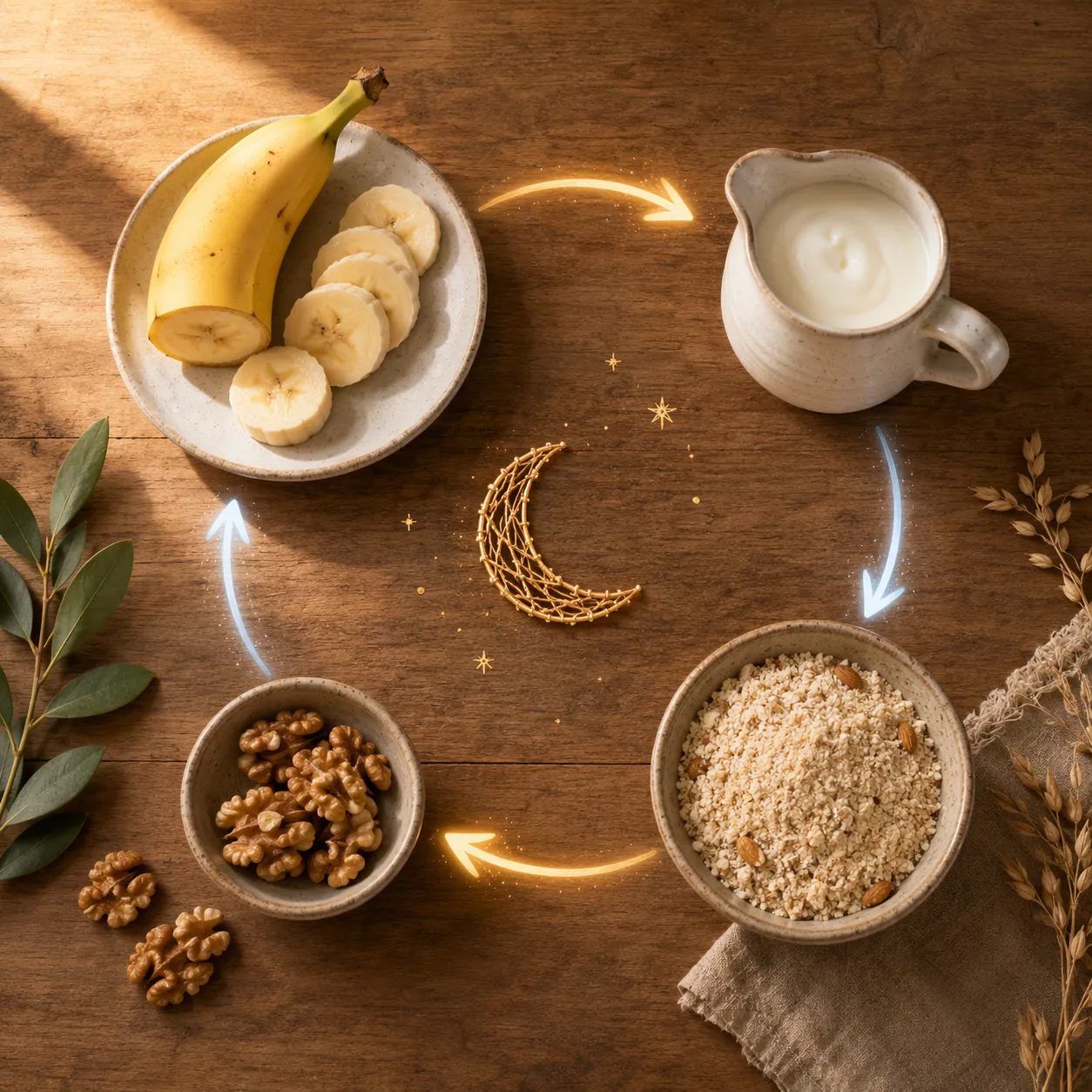
Dairy or yogurt earns its place for a similar reason. Milk-based foods add tryptophan and casein, while the flour choice controls how quickly the snack behaves in the body. The Sleep Foundation’s overview of foods and drinks that may promote sleep describes several food groups, including dairy, fruits, nuts, and complex carbohydrates, as plausible contributors to better sleep, while still treating diet as one part of a broader sleep pattern.[3]
A banana bread recipe to help you sleep better
This is intentionally a small, steady loaf: lightly sweet, soft enough to feel comforting, and balanced enough that one slice can sit beside a cup of tea without becoming a second dinner.
| Ingredient | Amount | Why it is here |
|---|---|---|
| Ripe yellow bananas | 3 medium, mashed | Provides banana flavor plus tryptophan, potassium, magnesium, and vitamin B6 |
| Plain Greek yogurt or milk | 1/2 cup | Adds dairy-based tryptophan and moisture |
| Eggs | 2 | Helps structure the loaf and adds protein |
| Olive oil or melted butter | 1/4 cup | Keeps the texture tender without relying on extra sugar |
| Whole-wheat pastry flour or oat flour | 1 cup | Adds slower-release carbohydrates than refined white flour alone |
| Almond flour | 1/2 cup | Adds softness, fat, and a nut-based bedtime-snack feel |
| Baking powder | 1 teaspoon | Lifts the loaf |
| Baking soda | 1/2 teaspoon | Helps browning and rise |
| Cinnamon | 1 teaspoon | Adds sweetness without much sugar |
| Salt | 1/4 teaspoon | Balances flavor |
| Maple syrup or honey | 1 to 2 tablespoons | Optional; keeps sweetness restrained |
| Chopped walnuts | 1/3 cup, optional | Adds texture and makes the slice more satisfying |
Method
- Heat the oven to 350°F. Grease a standard loaf pan or line it with parchment.
- Mash the bananas in a large bowl until mostly smooth. Whisk in the yogurt or milk, eggs, oil or butter, and maple syrup or honey if using.
- In a separate bowl, stir together the whole-grain flour, almond flour, baking powder, baking soda, cinnamon, and salt.
- Fold the dry ingredients into the wet ingredients just until no dry streaks remain. Stir in walnuts if you want them.
- Bake for 45 to 55 minutes, until the center springs back lightly and a tester comes out without wet batter.
- Cool before slicing. For bedtime, choose one modest slice rather than treating the loaf as an open invitation.
If you already cook from a whole-food, low-sweetener point of view, this sits in the same family as healthy recipes for better sleep without artificial sweeteners: ordinary food, chosen carefully, without pretending the pantry is a pharmacy.
When to eat it
The cleanest timing is during the wind-down window, close enough to bedtime that it becomes part of the evening cue, but not so late or so large that digestion becomes the event. For many people, that means one slice with milk, yogurt, or a non-caffeinated drink after the kitchen is otherwise closed.
The routine may be doing some of the work. A repeated snack reduces decision-making, marks the end of the day, and gives the body a familiar sequence: light food, lower light, fewer tasks, bed. That is not less real just because it is not pharmacology. It is also why changing the recipe every night, eating it while answering emails, or pairing it with a bright-screen scroll weakens the point.
The carbohydrate piece deserves a little respect. Carbs at dinner or near bedtime are often talked about as if they are automatically bad for sleep, but the practical question is dose, timing, and what else is on the plate. If that is your main concern, the discussion in Is Pasta at Dinner Actually Bad for Sleep? is the more useful lane to follow.
Who should be more careful
For most healthy adults, one small slice of this style of banana bread is a low-drama experiment. It is still food with carbohydrates, potassium, and calories, so “natural” does not mean neutral for everyone.
- Pregnancy or gestational diabetes: use extra caution with bedtime carbohydrates, even when the recipe is whole-food based. A smaller portion, protein pairing, or skipping the snack may be the safer choice if your clinician has given blood sugar targets.
- Perimenopause: this loaf may fit a calmer evening pattern, but it should not be sold as a hot-flash treatment. For the larger sleep-disruption pathway, see How Perimenopause Sleep Loss Accelerates Your Biological Age.
- ADHD: the useful part may be the repeatable cue, not a perfect sleep-hygiene performance. Make the routine easy enough that you can actually repeat it.
- Older adults or medication users: check the potassium and interaction context if you take medications such as MAOIs or beta-blockers that can affect potassium handling. The same interaction-aware thinking applies in What to Do for Sleep If Your Allergy Med Is Recalled.
- Chronic insomnia: use this as a comfort measure, not a substitute for clinical care, especially if sleep loss is persistent, worsening, or paired with mood, breathing, pain, or medication concerns.
The most honest answer is modest and still useful: this banana bread recipe may help you sleep better if it replaces a more chaotic bedtime snack, supports a steady wind-down routine, and is made with ingredients that make physiological sense. It is not a single-ingredient remedy, and it should not make anyone feel as if they failed because a slice of bread did not solve insomnia.
References
- Bedtime banana and milk intake on sleep and biochemical parameters, PMC, 2024
- ISHS article 1407_9, Acta Horticulturae
- Foods and Drinks That Promote a Good Night’s Sleep, Sleep Foundation
Read the full guide: Princess Diana's nighttime tips for better sleep