
Princess Diana's nighttime tips for better sleep
Princess Diana was not a sleep expert, and her private routine should not be treated as a clinical protocol. Still, the details reported by people around her are unusually specific: a bath before a 6:30 p.m. dinner, bed by 8 p.m., and waking around 7 a.m., even when the weekend allowed more room to drift.[1] That sequence is what makes the routine useful. It gives us something better than celebrity atmosphere: timing.
There is one caveat to keep in view from the start. An 8 p.m. to 7 a.m. sleep opportunity is 11 hours in bed, which is longer than the usual 7 to 9 hours recommended for most adults.[2] The point is not to copy Diana’s timetable. The better question is which parts of her evening resemble sleep hygiene principles that later research supports, and which parts need adjusting for ordinary adult life.
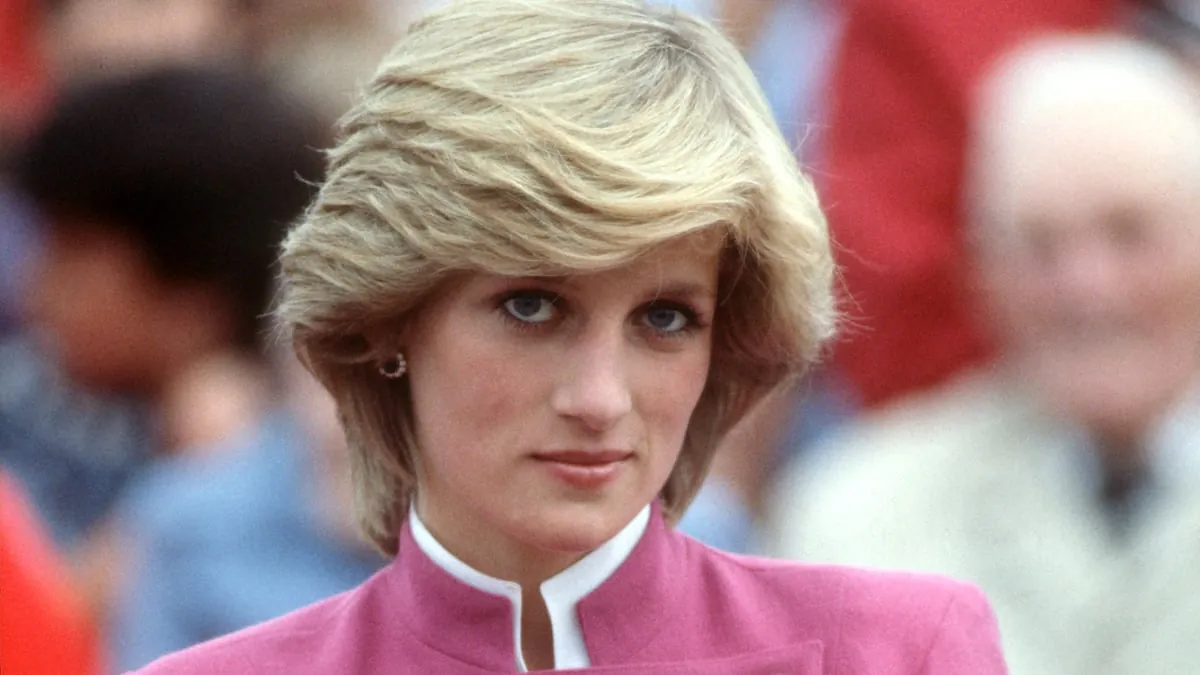
The routine, as reported, was simple
Former royal chef Darren McGrady has described Diana’s evenings as early and predictable: she bathed before dinner, came down with wet hair, ate around 6:30 p.m., went to bed by 8 p.m., and woke around 7 a.m.[1] Other accounts add two details that matter for sleep: quiet Saturday evenings with William and Harry, and a willingness to leave royal evenings before the Queen retired, despite the social awkwardness that created.[1][3]
| Reported habit | Sleep principle it resembles | What to take from it |
|---|---|---|
| Bath before dinner | Warm-water timing before sleep | Use warmth early enough that the body can cool afterward |
| Dinner around 6:30 p.m. | Avoiding heavy digestion close to bed | Aim for a larger buffer than Diana appears to have had |
| Bed by 8 p.m. | Protected sleep opportunity | Choose a realistic bedtime, not a royal one |
| Wake around 7 a.m. | Regular sleep-wake timing | Keep wake time steady, including weekends |
| Quiet evenings with her sons | Low-stimulation wind-down | Make the last part of the evening predictable and emotionally safe |
| Leaving late royal evenings early | Boundary-setting around sleep | Treat sleep as a real appointment, not leftover time |
The bath is the strongest sleep lesson
The most clinically interesting part of the routine is not the robe or the palace setting. It is the placement of the bath. McGrady’s timeline puts Diana’s bath before a 6:30 p.m. dinner and roughly 1.5 to 2 hours before her reported 8 p.m. bedtime.[1]
That window closely matches later evidence on passive body heating. A 2019 systematic review and meta-analysis of 17 studies found that a warm bath or shower at 104 to 108.5°F, or 40 to 42.5°C, for at least 10 minutes, scheduled 1 to 2 hours before bed, improved self-rated sleep quality and reduced sleep onset latency by about 36%.[4]

The mechanism is a little counterintuitive. Warm water does not help because the body stays hot. It helps because heat at the skin encourages blood flow toward the hands and feet, which supports the later drop in core body temperature. That cooling is one of the body’s natural signals for sleep onset.[5]
For a reader trying this tonight, the usable version is modest: take a warm bath or shower about 1 to 2 hours before bed, keep it comfortable rather than scalding, and give the body time to cool afterward. A rushed hot shower immediately before getting under heavy covers is not the same intervention.
An early dinner helps, but Diana’s timing was not ideal
The 6:30 p.m. dinner is easy to admire because it creates a cleaner evening than the modern pattern of late meals, late screens, and late unfinished work. But the timeline matters. If Diana was in bed by 8 p.m., her dinner-to-bed gap was roughly 1.5 hours.[1]
Many sleep hygiene recommendations advise finishing larger meals at least 3 hours before bedtime, especially for people prone to reflux or indigestion.[6] So this part of Diana’s routine points in the right direction without fully matching the usual guidance. Earlier dinner is useful; a very short gap between dinner and bed may not be.
The practical adjustment is simple: keep the spirit of the early meal, but widen the buffer if your body needs it. A light snack close to bed is a different matter from a large, rich dinner followed by lying flat.
The 8 p.m. bedtime is a boundary, not a prescription
An 8 p.m. bedtime sounds almost theatrical now, partly because many adults are still answering messages, loading the dishwasher, commuting, or trying to get children to sleep at that hour. In Diana’s case, it reads less like a universal target and more like a protected edge around the day.
That distinction matters. Sleep opportunity is the time you allow for sleep; sleep need is how much sleep your body actually requires. Diana’s reported 11-hour window was generous, but most adults are advised to aim for 7 to 9 hours of sleep, not 11 hours in bed as a default.[2]
A better takeaway is to choose a bedtime that protects enough sleep before your fixed wake time. If you need to wake at 6:30 a.m., the useful calculation is not “What would Diana do?” It is “What time must my evening start shutting down so I can get the sleep I actually need?”
The 7 a.m. wake time may matter more than the early bedtime
McGrady’s account says Diana woke around 7 a.m., including on weekends when she could have slept in.[1] That detail is less glamorous than the early bedtime, but it is more aligned with how sleep clinicians often think: the wake time anchors the rhythm.
Research on sleep regularity has linked more consistent sleep-wake timing with better health markers, while irregular timing is associated with poorer cardiometabolic and mental health outcomes.[7] That does not mean a steady wake time cures insomnia, depression, or metabolic disease. It means regular timing appears to be one meaningful part of the sleep-health picture.
For most adults, the gentlest place to start is the morning. Choose a wake time you can keep within a reasonable range across workdays and weekends, then let bedtime move earlier gradually if you are not getting enough sleep. Trying to force an early bedtime while sleeping late on weekends often creates more frustration than rest.
Quiet evenings were not just sentimental
The accounts of calm Saturday evenings with William and Harry are easy to flatten into royal-family nostalgia. Their sleep value is more practical: low stimulation, emotional safety, and predictability. Those are not decorative qualities in an evening routine. They reduce the number of things the nervous system has to solve right before bed.
A wind-down period does not have to look serene from the outside. It can be a repeated sequence: kitchen lights dimmed, school bags handled, phone charging outside the bed, one familiar show instead of scrolling, the same story with a child. The point is not perfection. It is lowering novelty and friction at the hour when the body is supposed to stop preparing for the next demand.
Leaving early was also a sleep habit
The most human part of the routine may be the social cost. Accounts of royal evenings describe Diana going to bed before the Queen, even though late evenings were part of the household rhythm; Sir William Heseltine later described “long royal evenings” as “agony” for her.[3] That is more useful than a vague lesson about self-care because it names the tradeoff: someone else may still be awake, expectant, or offended when you choose sleep.
For ordinary households, the equivalent might be leaving a group chat unanswered, declining one more episode, setting a work cutoff, or telling guests you are done for the night. Sleep hygiene often fails at exactly this point because the problem is no longer knowledge. It is permission.
What to borrow from the routine
Princess Diana’s nighttime routine works best as a memorable framework, not a timetable to imitate. The useful pieces are the order and the boundaries: warm water early enough to cool down afterward, dinner with enough space before bed, a realistic bedtime, a steady wake time, quieter evenings, and the willingness to leave something unfinished so sleep can begin.
- Try a warm bath or shower 1 to 2 hours before bed, especially if falling asleep is your main problem.
- Move heavier dinners earlier when possible, aiming for a longer buffer than Diana’s reported 1.5 hours.
- Set your wake time first, then build a bedtime that protects 7 to 9 hours of sleep opportunity for most adults.
- Make the last part of the evening predictable rather than impressive.
- Treat leaving, logging off, or ending the day as part of the routine, not a failure of discipline.
If you want the fuller version of these principles, Restful Ground’s sleep hygiene fundamentals guide goes deeper into timing, light, temperature, caffeine, alcohol, and wind-down routines. And if your sleep disruption is tied to pregnancy, perimenopause, ADHD, aging, pain, medication, anxiety, or another medical factor, sleep hygiene may help but may not be enough on its own; in that case, the routine should be a starting point, not the whole plan.
References
- Princess Diana Had the Ultimate Sleepy Girl Routine Long Before It Was Trending, Marie Claire.
- How Much Sleep Do We Really Need?, Sleep Foundation.
- Princess Diana broke royal protocol by going to bed before the Queen, Hello! Magazine.
- Before-bedtime passive body heating by warm shower or bath to improve sleep: A systematic review and meta-analysis, Sleep Medicine Reviews, 2019.
- Taking a warm bath before bed can help you sleep, National Institutes of Health, 2019.
- Is It Bad to Eat Before Bed?, Sleep Foundation.
- Sleep timing, sleep consistency, and health in adults: a systematic review, PubMed, 2020.
Read the full guide: Can This Banana Bread Recipe Help You Sleep Better?