
Which cooling sleep deals suit your life stage?
Searching for “best summer sleep essentials deals 2025” can make the problem look simpler than it is: find the biggest markdown, buy the coldest-sounding product, and hope the bedroom stops feeling hostile. That is a risky way to shop when the overheating is tied to perimenopause, pregnancy, ADHD-related sensory load, or aging. Cooling sheets, pillows, mattress toppers, pajamas, fans, and bed-cooling systems do different jobs. The first useful filter is not the sale banner. It is the reason your body is struggling to stay comfortable at night.
A cooler room still matters. A board-certified physician and certified clinical sleep health specialist quoted by Forbes gives 62-67°F as an ideal sleep-temperature range and suggests starting 2-3°F below your daytime comfort level when adjusting the bedroom for summer sleep.[1] But a room-temperature target does not tell you whether to buy linen sheets, a cooling pillow, breathable pajamas, a low-heat-retention topper, or an active bed-cooling device. That decision depends on what kind of heat problem you are trying to solve.
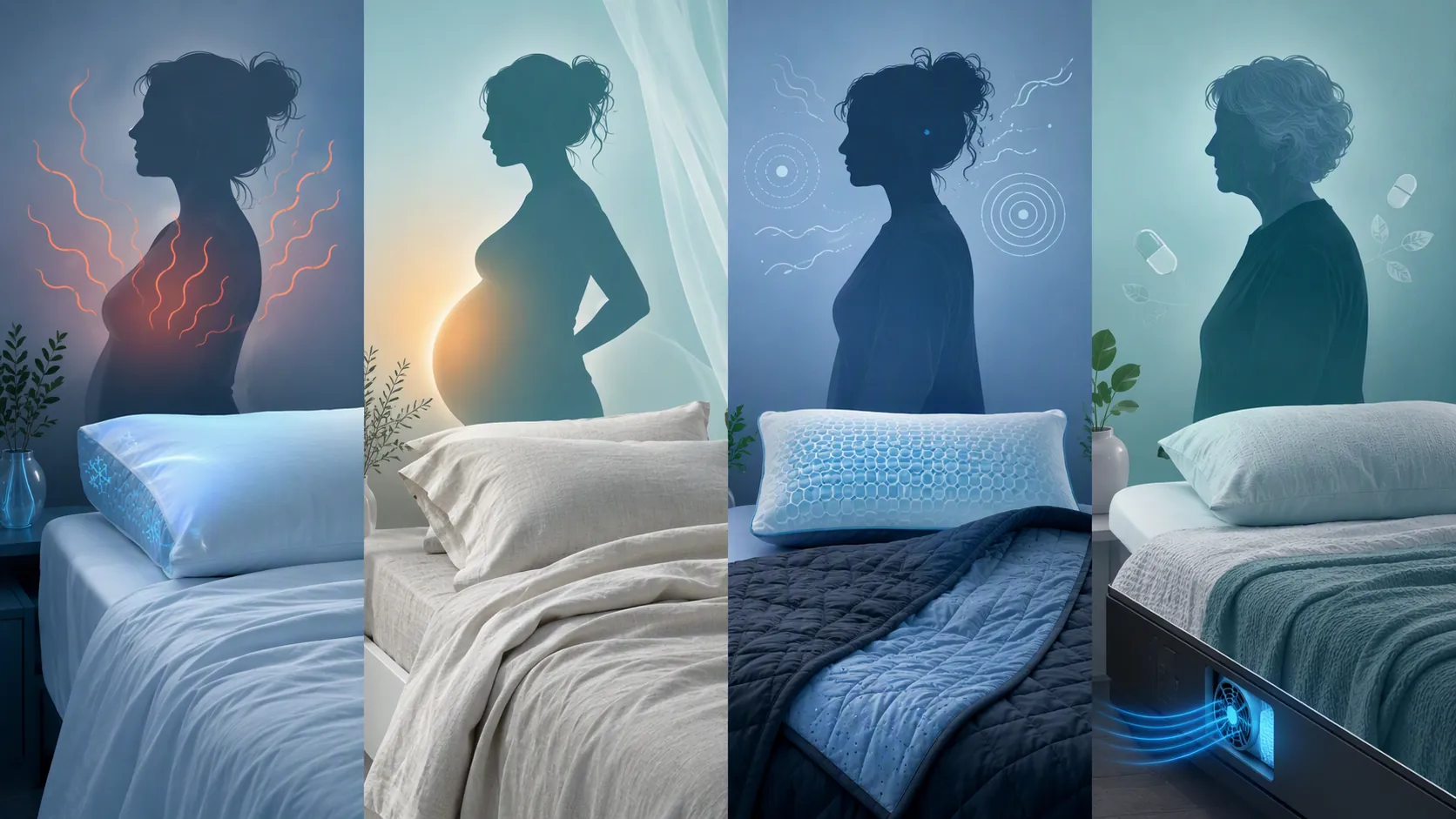
If hot flashes are waking you up
Perimenopause and menopause are where generic “hot sleeper” advice starts to fail. Cleveland Clinic reports that 3 in 4 people experience hot flashes and that up to 75% have night sweats; it explains the mechanism as an estrogen-related narrowing of the hypothalamic thermoneutral zone, so smaller temperature shifts can trigger a stronger heat-dumping response.[2] In plain bedroom terms, the problem is not just that the sheets are too warm. It is that the body can move abruptly from tolerable to drenched.
That points to products that reduce heat buildup and handle sweat without feeling clammy. Breathable, lightweight pajamas are more relevant than heavy “luxury” sleepwear. A cooling pillow can help because the head and neck often feel unbearably hot during a flash. A cooling mattress cover or pad may be worth considering if the mattress traps heat and keeps radiating it back after the hot flash passes. Cleveland Clinic specifically names lightweight pajamas in breathable fabrics, bedroom temperature reduction, and a trial of pillows and mattress covers filled with cooling gel as environmental strategies for nighttime hot flashes.[2]
For deal shopping, this is a category where waiting for a seasonal sale can make sense if you already know what you need. Cooling pillows, mattress covers, and quality breathable sleepwear often cost enough that a July 4th, Prime Day, end-of-summer, Labor Day, or Black Friday discount may be meaningful. The mistake is buying the most discounted “cooling” bundle when only one part of the bundle addresses the actual problem. If the mattress sleeps hot, a pillow discount will not fix the heat coming from below. If the worst moment is sweat-soaked fabric against the skin, a slick gel pillow may be less useful than breathable sleepwear and washable bedding layers.
If pregnancy is making sleep feel warmer than usual
Pregnancy changes the baseline. Sleep Foundation reports that basal body temperature rises throughout gestation, giving about 37.1°C at 8 weeks, and that at least 50% of pregnant women experience insomnia.[3] That does not mean every pregnant sleeper needs elaborate cooling technology. It does mean heat retention deserves to be taken seriously, especially when sleep is already being interrupted by discomfort, bathroom trips, reflux, or position changes.
The product match is usually simpler here than the marketing suggests: start with breathable natural or plant-derived fibers and avoid bedding that traps heat close to the body. Cotton percale, linen, and Tencel are the sheet categories most aligned with this mechanism. They are not magic medical devices; they are lower-risk material choices for a body running warmer over a sustained period. A breathable pillowcase and loose, lightweight sleepwear often belong in the same purchase decision as the sheet set, because the goal is to reduce heat retention across the surfaces touching the skin.
This is also a place to be cautious with aggressive cooling language. A product that feels icy for a few minutes in a showroom or review video may not be the best overnight choice for pregnancy if it adds bulk, restricts movement, creates pressure points, or is difficult to wash. Breathability, softness, easy laundering, and the ability to layer lightly are often more practical than a high-tech claim.
A summer deal is worth acting on when it lowers the price of a material you would have chosen anyway: a percale sheet set, linen bedding, Tencel sheets, or lightweight pajamas that can keep working after pregnancy. It is less compelling when the discount pushes you toward a specialized cooling device you would not otherwise have bought. Pregnancy is already expensive; a sale should reduce regret, not add another object that solves the wrong problem.
If ADHD makes summer bedtime feel overstimulating
For adults with ADHD, heat can become part of a broader sensory problem: the room feels too bright, fabric feels wrong, the body feels activated, and sleep onset slips later. The evidence should be handled carefully. A 2024 study discussed by Mindful Health included 179,846 children and found heat exposure linked with worsening ADHD symptoms, but that pediatric finding should not be treated as proof that a cooling pillow or bedding setup treats adult ADHD.[4]
The more responsible shopping frame is comfort and routine support. Cooling pillows may help if head and neck heat is one of the sensations that keeps pulling attention back to the body. Adjustable-weight blankets can be useful for people who like pressure but overheat under traditional weighted blankets; the key word is adjustable, because summer sensory needs can change night to night. A blackout-plus-cooling setup may also be more useful than either element alone if light and heat are both keeping the nervous system alert.
Deal timing matters most when the product can be returned or adjusted. If you are experimenting with texture, pressure, or cooling feel, a slightly smaller discount from a retailer with a usable return policy may beat a dramatic final-sale markdown. ADHD sleep purchases often fail for sensory reasons that are hard to predict from product photos: seams, slipperiness, fan noise, fabric drag, weight distribution, or the feeling of a pillow surface warming too quickly.
If you are buying for an older adult
For adults 65 and older, cooling purchases deserve a safety lens. CDC guidance notes that older adults can have delayed sweating onset, reduced evaporative cooling capacity, and are more likely to take medications that affect thermoregulation.[5] That makes “just buy cooler sheets” too thin as advice. Bedding can help, but it may not be enough when the room itself stays hot or the person’s cooling response is slower.
The more relevant categories are active cooling and low-heat-retention surfaces. A fan may help with air movement when it is safe and appropriate for the room conditions. A bed-cooling system may be worth considering for someone who repeatedly overheats in bed and cannot solve it with lighter bedding alone. A mattress topper should be judged by whether it reduces trapped heat rather than by how plush or thick it feels. Thick comfort layers can be lovely in winter and punishing in July.
Because medications and health conditions can change heat risk, this is the group where the product decision should not be isolated from the care context. Who checks the room temperature? Can the person operate the fan or cooling system safely at night? Does the device create cords, noise, condensation, or maintenance demands? Is the bedding light enough to move under easily? A deal on an active cooling product is only helpful if the older adult can actually use it without adding a new hazard.
Seasonal sales can be useful here because active systems and mattress components are often more expensive than sheets or pillowcases. But the threshold for buying should be higher: clear need, safe setup, manageable controls, and a realistic plan for maintenance. If those are not in place, the discount is not doing the caregiving work.
When seasonal discounts are actually useful
The major summer and holiday sale windows are real, but they are better used as checkpoints than commands. July 4th and Prime Day can be good for immediate summer relief. End-of-summer clearance and Labor Day can work if you can tolerate waiting. Black Friday may bring broader bedding and mattress promotions, but it arrives after the hottest months for many U.S. households.
Recent deal coverage gives useful price context without proving medical benefit. TODAY’s July 4th 2026 sleep-deals roundup reported bedding discounts up to 52% and named codes including JULY for 15% off a Pluto Pillow and SLEEP30 for 30% off Zoma mattresses.[6] Wirecutter’s Labor Day mattress-sale coverage documented sitewide mattress discounts in the 25-30% range.[7] SacBee’s May 2026 cooling-bedding coverage showed lower entry points, including a cooling throw blanket at $28, a bamboo blanket at $23, and silk pillowcases at $16.[8]
Those examples are pricing signals, not prescriptions. A sub-$30 blanket can be a sensible test if you need a lighter layer. It is not a substitute for addressing severe night sweats, unsafe room heat, or pregnancy sleep disruption. A 30% mattress discount may be financially meaningful, but only if the mattress or topper category is truly where the heat problem lives.
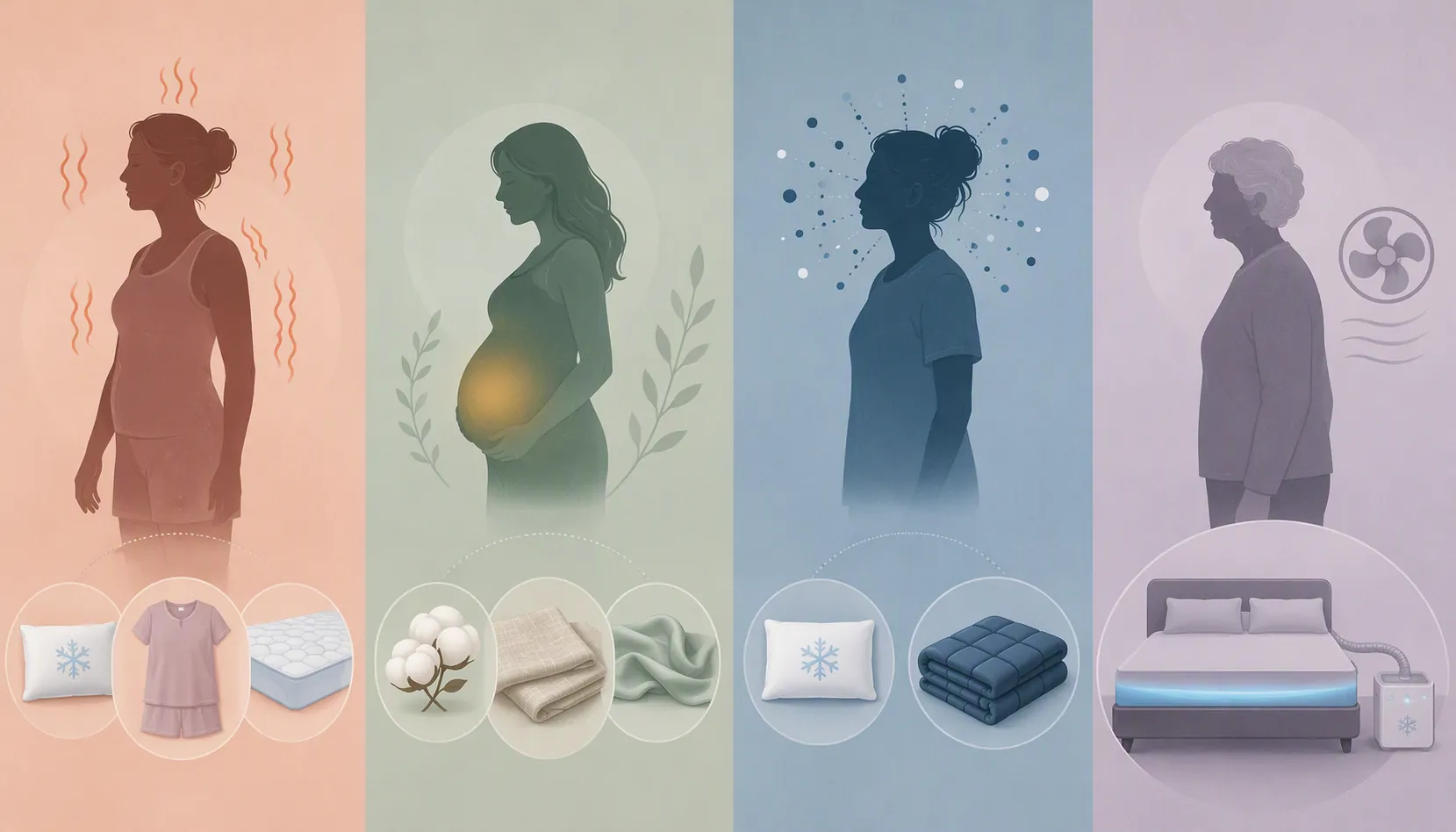
Quick match: physiology first, deal second
| Life stage or situation | Main thermoregulation issue | Most relevant cooling categories | When a deal is worth acting on |
|---|---|---|---|
| Perimenopause or menopause | Hot flashes and night sweats tied to a narrowed thermoneutral zone | Breathable sleepwear, cooling pillow, cooling mattress cover or pad, washable moisture-managing layers | Buy during a sale when the product addresses the part of the bed or body involved in the hot flash pattern |
| Pregnancy | Sustained higher basal body temperature and sleep disruption | Cotton percale, linen, Tencel sheets, breathable pillowcases, loose lightweight pajamas | Buy when the discount applies to breathable materials you would still want after the sale |
| Adult ADHD with heat-related sensory overload | Heat may add to sensory discomfort and delayed sleep onset, but product evidence is not ADHD-specific | Cooling pillow, adjustable-weight blanket, blackout curtains paired with cooler bedding, low-noise fan if tolerated | Buy when returns are practical, because texture, sound, weight, and surface feel are individual |
| Older adults 65+ | Delayed sweating, reduced evaporative cooling, and possible medication-related heat vulnerability | Fan or active bed cooling when appropriate, low-heat-retention topper, lighter bedding that is easy to move under | Buy when safety, controls, maintenance, and room conditions have been considered |
How to read cooling claims without overbuying
Consumer cooling bedding is not supported like a drug trial. The strongest chain of reasoning here is observational and consensus-based: established physiology explains why certain groups overheat; material choices can reduce heat retention, improve breathability, or move moisture; consumer testing and sale coverage can help with comfort and price. That is useful, but it is not the same as proof that a specific pillow, sheet set, or mattress pad will treat a medical symptom.
Be especially skeptical of vague claims such as “ice-cold,” “advanced cooling,” or “temperature balancing” when the product page does not explain the material, layer, airflow, washability, or return policy. For night sweats, ask how the fabric handles moisture. For pregnancy, ask whether the bedding breathes and layers easily. For ADHD-related sensory load, ask whether the feel, sound, and weight are tolerable. For older adults, ask whether the setup is safe and easy to control.
The practical threshold is simple: buy when the product category matches your physiology and the discount lowers the cost of something you would have chosen anyway. Skip the deal when the cooling claim is vague, the material does not match your problem, or the evidence is being stretched beyond what it can actually support.
References
- 6 Expert-Approved Tips On How To Sleep Cooler In The Summer, Forbes
- How To Reduce Hot Flashes at Night, Cleveland Clinic
- Pregnancy & Sleep, Sleep Foundation
- Does Summer Heat Make ADHD Worse?, Mindful Health
- Heat and Older Adults (Aged 65+), CDC
- Sleep deals July 4th 2026, TODAY, July 4th 2026
- Labor Day mattress sales 2025, Wirecutter, Labor Day 2025
- Best cooling bedding deals for hot sleepers this summer, SacBee, May 2026
Read the full guide: Sleep During a Typhoon: Tips for Your Life Stage