
How Diet, Circadian Rhythm, and Sleep Quality Are Connected
The relationship between what you eat and how you sleep is not a matter of folk wisdom alone — it is grounded in several well-characterized physiological pathways. Food intake influences sleep through at least four distinct mechanisms: the availability of precursors for melatonin and serotonin synthesis, the regulation of blood glucose throughout the night, the effect of meal timing on core body temperature, and the impact of specific nutrients on inflammatory signaling that can fragment sleep architecture.
The circadian system, which governs the sleep-wake cycle, is itself entrained by feeding cues. The suprachiasmatic nucleus — the brain's master clock — receives input not only from light exposure but also from metabolic signals triggered by meal timing. Eating late in the evening can shift circadian phase, delaying the onset of melatonin secretion and making it harder to fall asleep at a desired time. This is why dietary interventions for sleeplessness are not simply about adding a specific food; they are about aligning eating patterns with the body's internal timing system.
For adults at the evidence verification stage — those who have already encountered basic sleep hygiene advice and want to understand which nutritional approaches are backed by research — the key distinction is between whole-food interventions with clinical trial data and general dietary folklore. The sections that follow examine specific foods, drinks, and timing strategies that have been tested in controlled settings, along with the limitations of the evidence where they exist.
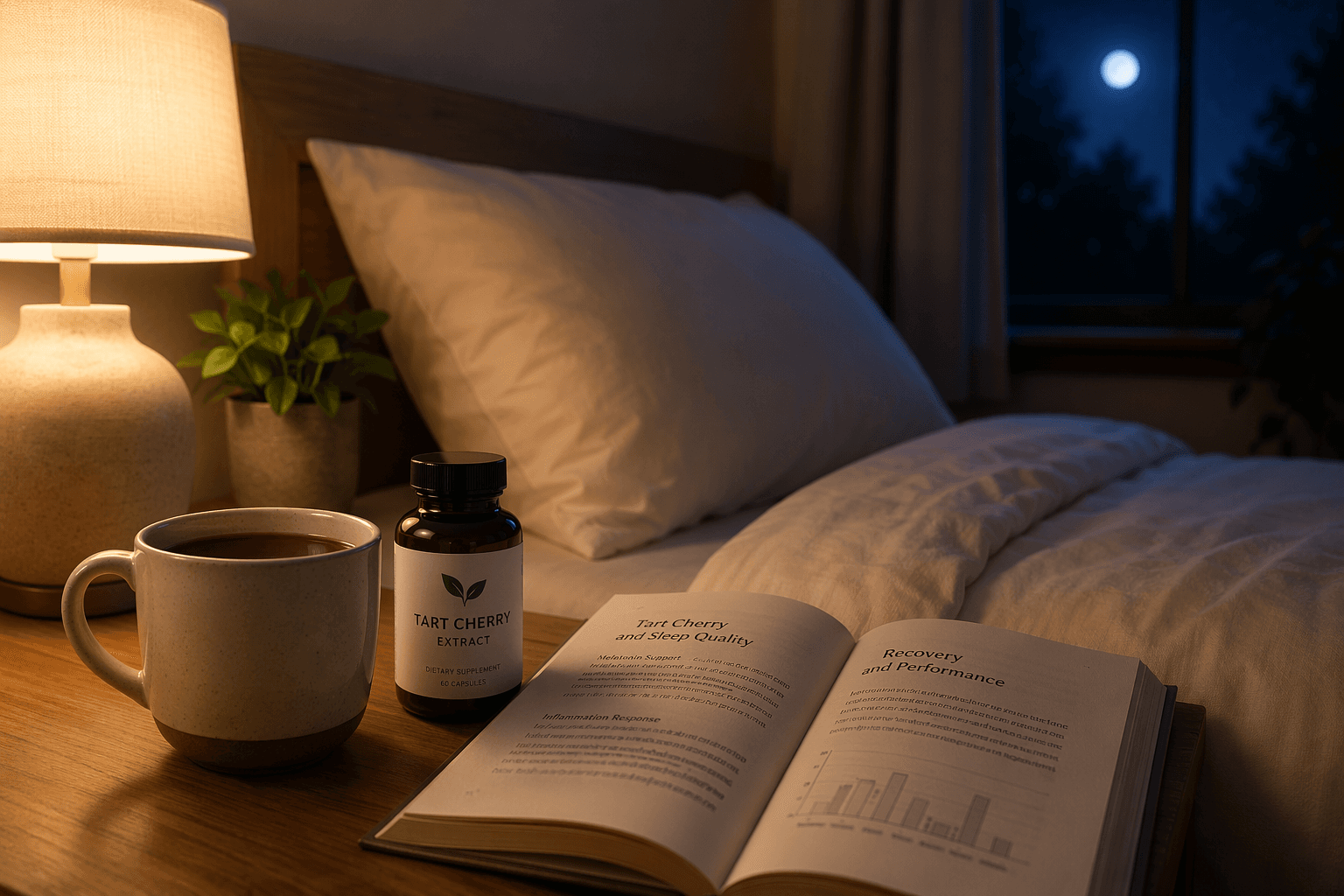
Tart Cherry Juice: Melatonin Content and Clinical Trial Data
Tart cherry juice is one of the few dietary interventions for sleeplessness supported by a randomized controlled trial. A 2012 study by Howatson and colleagues, published in the European Journal of Nutrition, found that consuming 30 mL of tart cherry juice concentrate daily for seven days produced statistically significant increases in total sleep time and sleep efficiency compared with a placebo. The study also reported reductions in sleep latency — the time it takes to transition from wakefulness to sleep — and improvements in subjective sleep quality ratings.
The proposed mechanism centers on the fruit's naturally occurring melatonin content. Tart cherries contain measurable amounts of melatonin, the hormone that signals the body to prepare for sleep. They also contain anti-inflammatory compounds, including anthocyanins and other polyphenols, which may reduce low-grade systemic inflammation that can interfere with sleep continuity. This dual action — providing a direct melatonin source while dampening inflammatory signaling — distinguishes tart cherry juice from single-nutrient supplements.
Practical implementation is straightforward: consume the concentrate or equivalent juice roughly 30–60 minutes before the desired bedtime. The effect appears to accumulate over several days rather than working as an acute sedative, so consistency matters more than timing precision. Tart cherry juice is generally safe for most adults, but individuals with diabetes should account for its natural sugar content, and those on blood-thinning medications should consult a clinician due to the fruit's vitamin K content.
Kiwi: Multiple Studies Supporting Improved Sleep Onset and Duration
Kiwi has emerged as another fruit with reproducible sleep-promoting effects in clinical research. Multiple studies, including trials using both fresh and dried kiwi, have reported improvements in sleep onset latency, total sleep duration, and sleep efficiency. The consistency of findings across different study designs strengthens the case that kiwi's effects are not attributable to placebo or confounding variables.
Several mechanisms likely contribute. Kiwi is a rich source of serotonin, a neurotransmitter that serves as a direct precursor to melatonin. It also contains high levels of antioxidants, particularly vitamin C and vitamin E, which may reduce oxidative stress that can disrupt sleep architecture. Additionally, kiwi provides folate, a B vitamin involved in the synthesis of neurotransmitters that regulate mood and sleep. The combination of these compounds in a whole-food matrix may produce effects that isolated supplements cannot replicate.
| Study Type | Kiwi Form | Reported Outcomes | Typical Serving |
|---|---|---|---|
| Randomized controlled trial | Fresh kiwi | Improved sleep onset, duration, and efficiency | 2 kiwis, 1 hour before bed |
| Clinical trial | Dried kiwi | Reduced sleep latency, increased total sleep time | 30 g dried kiwi, 1 hour before bed |
| Observational study | Fresh kiwi | Higher self-reported sleep quality scores | 1–2 kiwis daily as part of diet |
The practical recommendation from the available data is to consume one to two kiwis approximately one hour before bedtime. Both green and gold varieties appear effective, though most studies have used green kiwi. Kiwi is low in calories and has a low glycemic load, making it a suitable pre-bed snack that is unlikely to cause the blood sugar spikes associated with more carbohydrate-dense options.
Magnesium-Rich Foods vs. Supplements: A Whole-Food Approach
Magnesium is involved in over 300 enzymatic reactions in the body, including those that regulate the nervous system and muscle relaxation. A double-blind randomized controlled trial in 46 older adults found that taking 500 mg of magnesium daily for eight weeks significantly increased total sleep time and sleep efficiency while reducing Insomnia Severity Index (ISI) scores and sleep onset latency. These results are often cited to support magnesium supplementation for sleep, but the study used a pharmacological dose that is difficult to achieve through diet alone.
The whole-food approach to magnesium offers distinct advantages. Magnesium-rich foods — leafy green vegetables, nuts, seeds, legumes, and whole grains — provide the mineral within a matrix of fiber, vitamins, and other minerals that support absorption and reduce the risk of gastrointestinal side effects. High-dose magnesium supplements, particularly magnesium oxide, can cause diarrhea and abdominal cramping, and they may interact with certain medications including diuretics and antibiotics.
| Food Source | Approximate Magnesium Content (mg per serving) | Serving Size |
|---|---|---|
| Pumpkin seeds | 168 | 1 oz (28 g) |
| Almonds | 80 | 1 oz (28 g) |
| Spinach (cooked) | 78 | 1/2 cup |
| Cashews | 74 | 1 oz (28 g) |
| Black beans (cooked) | 60 | 1/2 cup |
| Edamame (cooked) | 50 | 1/2 cup |
| Banana | 32 | 1 medium |
| Yogurt (plain) | 30 | 1 cup |
Comments
Join the discussion with an anonymous comment.