Sleep Hygiene & Routines

Actionable, evidence-grounded guides covering behavioral sleep practices, habit frameworks, and structured routines — sleep hygiene fundamentals, stimulus control, relaxation techniques, wind-down sequences, morning light exposure, and multi-week improvement plans. This group serves readers who are not clinically impaired but want to optimize sleep quality or correct lifestyle-driven disruptions. It also contains the CBT-I protocol explainer as a structured multi-component guide. Content here explains the physiological mechanism behind each practice, not just the recommendation. Generic tip lists without mechanistic explanation are out of scope. Symptom triage belongs in Sleep Conditions; product recommendations belong in Sleep Devices or Sleep Aids.

Each guide explains the physiological mechanism behind the recommendation — not just the tip. Evidence quality is rated on every page: RCT-supported, observational, expert consensus, or anecdotal.

sleep hygieneCBT-Istimulus controlsleep restrictionwind-down routinecircadian rhythmlight exposurecaffeinechronotypesleep debthabit buildingevidence-based

CBT-I: First-Line Treatment for Chronic Insomnia

Cognitive Behavioral Therapy for Insomnia (CBT-I) is the AASM/ACP-endorsed first-line treatment. These guides cover the core components — sleep restriction, stimulus control, cognitive restructuring, and relaxation.

  • RCT-supported

    CBT-I: A Complete Protocol Guide to Cognitive Behavioral Therapy for Insomnia

    A mechanistically grounded walkthrough of the full CBT-I protocol for adults with chronic insomnia — covering all five components, the sleep efficiency titration rules, and a week-by-week breakdown of what to expect and why the treatment feels harder before it improves.

  • RCT-supported

    CBT-I for Comorbid Insomnia: Does It Work When You Have Another Condition?

    CBT-I is the evidence-based first-line treatment for insomnia not only in otherwise healthy adults but across a wide range of comorbid conditions — including depression, PTSD, chronic pain, perimenopause, and older age. This guide explains what the research shows for each population, which protocol adaptations apply, and what genuine contraindications exist.

  • RCT-supported, systematic review, expert consensus (AASM, AAFP)

    Sleep Hygiene Fundamentals and an Evidence-Based Bedtime Routine

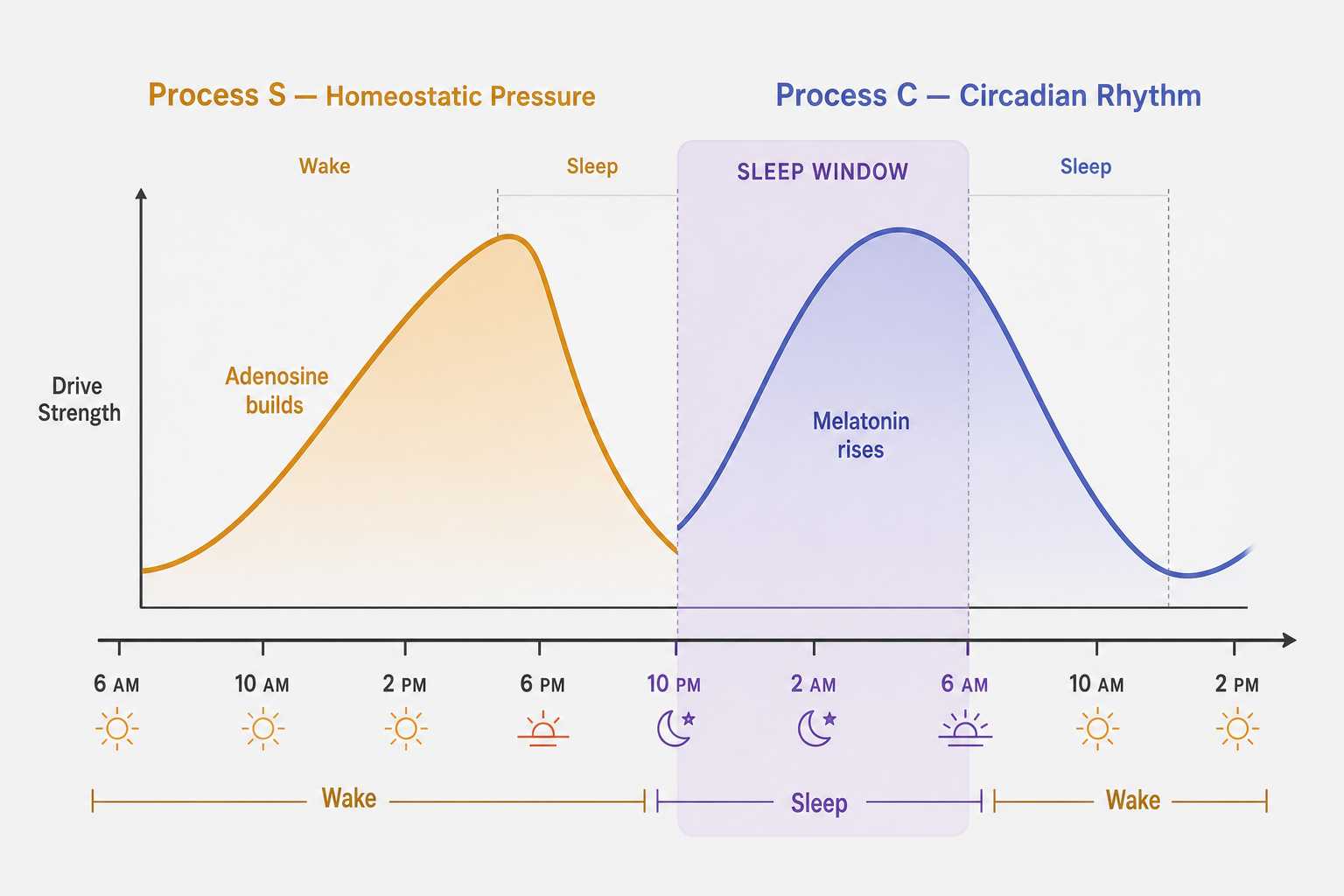
    A mechanistic guide for adults who have seen generic sleep tips and want to understand why each behavior works — covering the two biological processes that govern sleep, a prioritized evidence-ranked framework of core hygiene practices, a step-by-step 60-minute bedtime routine, and honest guidance on when sleep hygiene alone is not enough to address chronic insomnia.

  • RCT-supported

    Sleep Restriction Therapy: A Complete Step-by-Step Guide to CBT-I Sleep Consolidation

    Sleep restriction therapy (SRT) is the most mechanistically specific component of CBT-I, using a titrated sleep window to build homeostatic sleep pressure and consolidate fragmented sleep into durable, restorative rest. This guide explains the adenosine-based mechanism, walks through the two-week diary baseline, the initial window calculation, the weekly SE titration decision rules, safety contraindications, and what to realistically expect across the first weeks of treatment.

  • RCT-supported

    Sleep Restriction Therapy Not Working? A Troubleshooting Guide for Common Stalls

    For adults with chronic insomnia who have started sleep restriction therapy but are not seeing results, this guide identifies the six most common implementation errors, explains how to read your sleep diary for early progress signals, and provides clear criteria for when to escalate to supervised CBT-I.

  • RCT-supported

    Stimulus Control Therapy for Insomnia: The Conditioning Logic Behind Each Rule

    A mechanistically grounded guide to stimulus control therapy — the most empirically validated standalone behavioral treatment for chronic insomnia — explaining why each of the five Bootzin rules works, how conditioned arousal develops and is reversed, and how to implement the protocol correctly without the errors that undo it.

All Guides

  • CBT-I: A Complete Protocol Guide to Cognitive Behavioral Therapy for Insomnia
    Sleep Hygienebehavioral, cognitiveRCT-supported

    CBT-I: A Complete Protocol Guide to Cognitive Behavioral Therapy for Insomnia

    A mechanistically grounded walkthrough of the full CBT-I protocol for adults with chronic insomnia — covering all five components, the sleep efficiency titration rules, and a week-by-week breakdown of what to expect and why the treatment feels harder before it improves.

    Effect: 2–6 weeks; meaningful improvement typically by week 3, full consolidation by weeks 5–6
    Best for: chronic insomnia
    Read guide →
  • CBT-I for Comorbid Insomnia: Does It Work When You Have Another Condition?
    Sleep Hygienebehavioral, cognitiveRCT-supported

    CBT-I for Comorbid Insomnia: Does It Work When You Have Another Condition?

    CBT-I is the evidence-based first-line treatment for insomnia not only in otherwise healthy adults but across a wide range of comorbid conditions — including depression, PTSD, chronic pain, perimenopause, and older age. This guide explains what the research shows for each population, which protocol adaptations apply, and what genuine contraindications exist.

    Effect: 4–8 weeks
    Best for: chronic insomnia with comorbid depression, PTSD, anxiety, chronic pain, perimenopause, pregnancy, or older age
    Read guide →
  • Chronotype Guide: Are You a Morning Person or Evening Person?
    Sleep Hygienephysiological, behavioralRCT-supported, observational, GWAS-supported

    Chronotype Guide: Are You a Morning Person or Evening Person?

    Chronotype — your body's natural preference for sleep and wake timing — is a biologically real, genetically influenced trait distributed along a continuous spectrum, not a binary identity. This guide explains what drives your chronotype, how to assess it with validated tools, how it shifts across your lifetime, and what it means for building sleep habits that work with your biology rather than against it.

    Effect: 1–2 hours shift over 2–4 weeks with consistent light management
    Best for: general optimization, evening types with social jetlag, adolescents, adults seeking chronotype-aligned routines
    Read guide →
  • Circadian Rhythm and Light Exposure: How Light Affects Sleep
    Sleep Hygieneenvironmental, physiologicalRCT-supported, large cohort observational, expert consensus

    Circadian Rhythm and Light Exposure: How Light Affects Sleep

    Light is the most powerful signal controlling when your body clock tells you to sleep — and its effects depend on timing, intensity, and wavelength across the entire day, not just evening screen habits. This guide explains the biology behind light-driven circadian anchoring and translates it into a practical daily light protocol for adults who want deeper, better-timed sleep.

    Effect: 1–4 weeks for measurable sleep timing shifts; some effects within 1–2 nights
    Best for: general optimization, delayed sleep timing, indoor workers, jet lag, shift workers
    Read guide →
  • Evening Wind-Down Routine for Better Sleep: Evidence-Based Steps and Timing
    Sleep Hygienebehavioral, physiological, environmentalRCT-supported, systematic review, observational, expert consensus

    Evening Wind-Down Routine for Better Sleep: Evidence-Based Steps and Timing

    A reliable evening wind-down routine is not a collection of calming activities but a sequenced protocol aligned with three overlapping physiological transitions — autonomic nervous system downshift, core body temperature decline, and melatonin rise. This guide explains the biology behind each transition and provides a phase-gated 2-hour countdown with specific, evidence-grounded actions and timing rationale at each phase.

    Effect: 1–2 nights for acute physiological effects; 2–4 weeks for conditioned routine response
    Best for: general sleep optimization, lifestyle-driven sleep-onset difficulty, mild insomnia not yet at clinical threshold
    Read guide →
  • Sleep Hygiene Fundamentals and an Evidence-Based Bedtime Routine
    Sleep Hygienebehavioral, environmentalRCT-supported, systematic review, expert consensus (AASM, AAFP)

    Sleep Hygiene Fundamentals and an Evidence-Based Bedtime Routine

    A mechanistic guide for adults who have seen generic sleep tips and want to understand why each behavior works — covering the two biological processes that govern sleep, a prioritized evidence-ranked framework of core hygiene practices, a step-by-step 60-minute bedtime routine, and honest guidance on when sleep hygiene alone is not enough to address chronic insomnia.

    Effect: 1–2 nights for environment changes; 1–2 weeks for schedule and light management; 2–4 weeks for stimulus control
    Best for: general optimization, lifestyle-driven sleep disruption, adults without clinical insomnia
    Read guide →
  • Sleep Restriction Therapy: A Complete Step-by-Step Guide to CBT-I Sleep Consolidation
    Sleep HygienebehavioralRCT-supported

    Sleep Restriction Therapy: A Complete Step-by-Step Guide to CBT-I Sleep Consolidation

    Sleep restriction therapy (SRT) is the most mechanistically specific component of CBT-I, using a titrated sleep window to build homeostatic sleep pressure and consolidate fragmented sleep into durable, restorative rest. This guide explains the adenosine-based mechanism, walks through the two-week diary baseline, the initial window calculation, the weekly SE titration decision rules, safety contraindications, and what to realistically expect across the first weeks of treatment.

    Effect: 2–4 weeks
    Best for: chronic insomnia
    Read guide →
  • Sleep Restriction Therapy Not Working? A Troubleshooting Guide for Common Stalls
    Sleep HygienebehavioralRCT-supported

    Sleep Restriction Therapy Not Working? A Troubleshooting Guide for Common Stalls

    For adults with chronic insomnia who have started sleep restriction therapy but are not seeing results, this guide identifies the six most common implementation errors, explains how to read your sleep diary for early progress signals, and provides clear criteria for when to escalate to supervised CBT-I.

    Effect: 2–4 weeks
    Best for: chronic insomnia
    Read guide →
  • Stimulus Control Therapy for Insomnia: The Conditioning Logic Behind Each Rule
    Sleep HygienebehavioralRCT-supported

    Stimulus Control Therapy for Insomnia: The Conditioning Logic Behind Each Rule

    A mechanistically grounded guide to stimulus control therapy — the most empirically validated standalone behavioral treatment for chronic insomnia — explaining why each of the five Bootzin rules works, how conditioned arousal develops and is reversed, and how to implement the protocol correctly without the errors that undo it.

    Effect: 2–4 weeks
    Best for: chronic insomnia
    Read guide →