Sleep Aids & Supplements

Per-ingredient and per-product explainer pages for OTC sleep medications and dietary supplements — diphenhydramine, doxylamine, melatonin, magnesium glycinate, valerian root, L-theanine, and branded products (Unisom, MidNite, ZzzQuil). Each page covers: mechanism of action, recommended dosage range, evidence quality rating, FDA regulatory status, safety notes by population (elderly, pregnant, children, anxiety), and interaction risks. Comparison pages present ingredient-level tables for decision-stage readers. This group does not contain prescription sleep medications or clinical treatment protocols; those are referenced in Sleep Conditions. Content consistently distinguishes FDA-regulated drugs from dietary supplements and carries appropriate population-specific safety caveats.

⚠️ Important Before You Browse

This section covers two fundamentally different regulatory categories:

  • FDA-regulated OTC drugs (e.g., diphenhydramine, doxylamine) are approved for safety and efficacy for the stated use and carry specific dosage instructions and contraindications.
  • Dietary supplements (e.g., melatonin, magnesium, valerian root, L-theanine) are not FDA-approved for efficacy or safety in the same way. Evidence quality and risk profile vary significantly by ingredient.

Population-specific safety notes — for elderly adults, pregnant women, and people with anxiety or depression comorbidity — are prominently displayed on every ingredient page.

Read our medical disclaimer →

Ingredients & Products

  • Diphenhydramine as a Sleep Aid: How It Works, Safe Dosage, and Who Should Avoid It
    Sleep AidsFDA-regulated OTC drugRCT-supported for short-term use (2–14 days); efficacy diminishes rapidly due to tolerance; not supported for chronic insomnia

    Diphenhydramine as a Sleep Aid: How It Works, Safe Dosage, and Who Should Avoid It

    A mechanistically rigorous guide to diphenhydramine — the active ingredient in ZzzQuil, Unisom SleepTabs, and Benadryl — covering how it induces sedation, what the FDA-approved dosage is, how quickly tolerance develops, and which populations face meaningful safety risks that OTC availability tends to obscure.

    ⚠️ Adults 65+: avoid — 2023 AGS Beers Criteria Strong recommendation; men with BPH: avoid — urinary retention risk; closed-angle glaucoma: avoid — pupil dilation risk; asthma/COPD: use with caution; cardiac conditions: avoid — QT prolongation risk; concurrent anticholinergic medications: avoid combining; pregnancy: consult clinician; breastfeeding: avoid high doses
    Dosage: 25–50 mg taken approximately 30 minutes before bedtime; adults and children 12 and older; FDA OTC monograph parameters
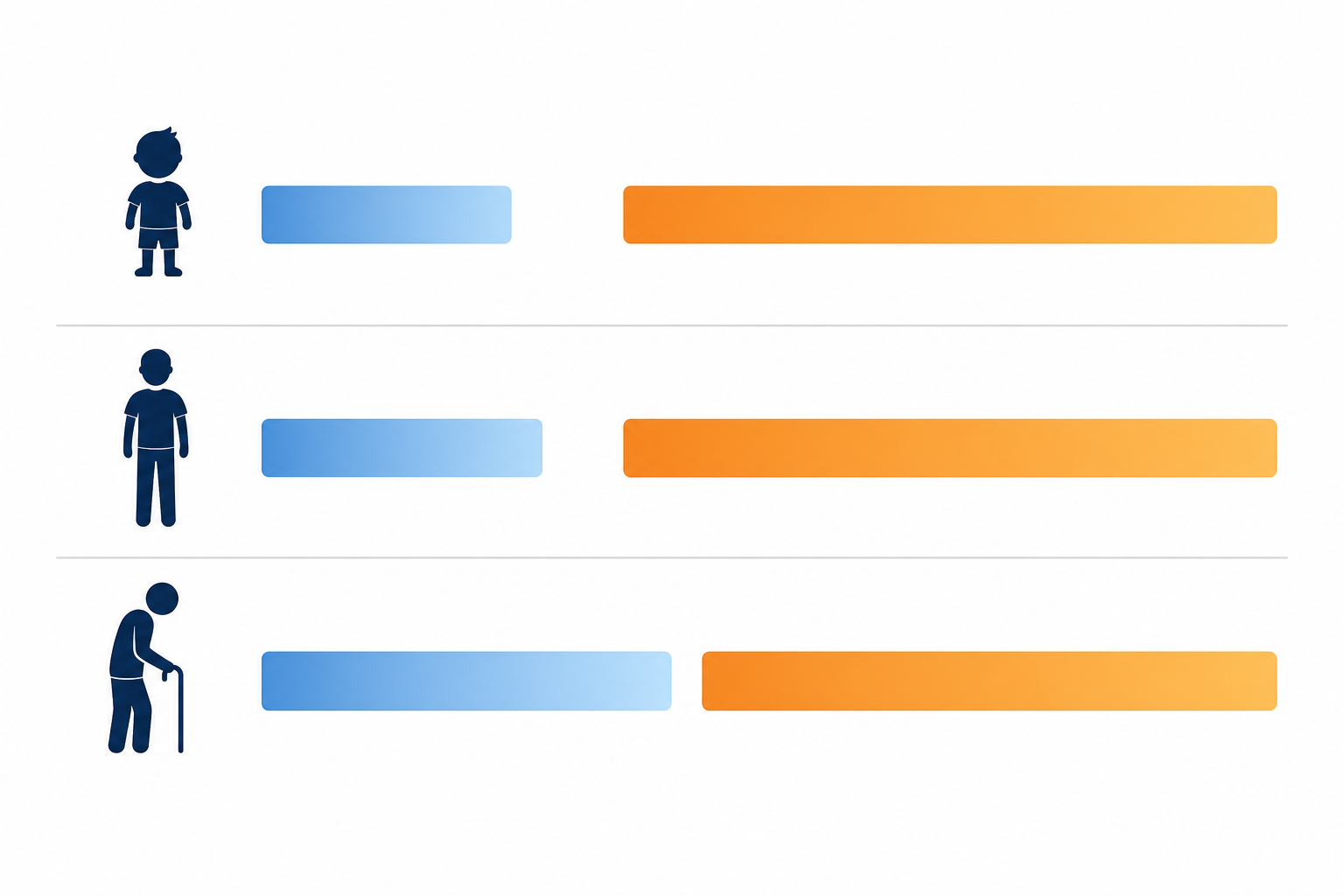
    Half-life: ~9 hours in healthy adults; ~13.5 hours in adults 65 and older
    Read ingredient page →
  • Diphenhydramine vs. Doxylamine: Mechanisms, Pharmacokinetics, and Safety for Short-Term Sleep
    Sleep AidsFDA-regulated OTC drug (both diphenhydramine and doxylamine are first-generation antihistamines approved as OTC sleep aids; doxylamine/pyridoxine combination is a separate Rx product)Limited — short-term RCTs with modest effect sizes; most trials conducted in healthy adults without clinical insomnia diagnoses; AASM does not recommend OTC antihistamines for insomnia as a class

    Diphenhydramine vs. Doxylamine: Mechanisms, Pharmacokinetics, and Safety for Short-Term Sleep

    A mechanistic comparison of the two most common OTC sleep antihistamines — diphenhydramine (ZzzQuil, Benadryl) and doxylamine (Unisom SleepTabs) — covering how they work, how their pharmacokinetics differ by age, what the clinical evidence shows about effectiveness and tolerance, and who should avoid each based on population-specific safety data including the 2023 AGS Beers Criteria.

    ⚠️ Adults 18–65: appropriate for short-term use up to ~4 weeks with next-day impairment caveats. Adults 65+: Avoid — both listed as potentially inappropriate by 2023 AGS Beers Criteria (Moderate evidence, Strong recommendation) due to anticholinergic burden, reduced clearance, falls, delirium, and dementia association. Pregnancy: Rx doxylamine/pyridoxine (Bonjesta/Diclegis) is FDA Category A for NVP only — OTC doxylamine alone for insomnia does not carry this status; diphenhydramine not first-line in pregnancy. Children under 12: not recommended for sleep use. Contraindicated in closed-angle glaucoma, BPH, urinary retention.
    Dosage: Diphenhydramine: 25–50 mg at bedtime. Doxylamine: 25 mg at bedtime.
    Half-life: Diphenhydramine (age-stratified, Simons et al. 1990): ~5.4h children, ~9.2h young adults, ~13.5h elderly. Doxylamine (OTC immediate-release): ~10–12h across age groups.
    Read ingredient page →
  • Doxylamine as a Sleep Aid: Safety, Dosage, and Who Should Avoid It
    Sleep AidsFDA-regulated OTC drug (antihistamine — doxylamine succinate)Limited — no qualifying doxylamine-specific RCTs identified in systematic review; available antihistamine sleep RCTs used diphenhydramine; modest subjective benefit for occasional sleeplessness supported by FDA approval of specific formulations

    Doxylamine as a Sleep Aid: Safety, Dosage, and Who Should Avoid It

    A doxylamine-specific evidence guide for adults considering or currently using Unisom SleepTabs or other doxylamine-containing OTC products — covering how it works, the FDA-approved dose, its longer-than-expected half-life, and the specific medical conditions and medications that make it inappropriate or dangerous.

    ⚠️ Adults 65+: Avoid (2023 AGS Beers Criteria, Strong recommendation, Moderate evidence) — anticholinergic burden, reduced clearance especially in elderly men, fall/delirium/dementia risk; MAOI users: contraindicated; narrow-angle glaucoma: contraindicated; BPH/urinary obstruction: contraindicated; severe asthma/COPD: contraindicated; stenosing peptic ulcer/gastric outlet obstruction: contraindicated; children under 12: not approved; pregnancy: physician consultation required for standalone sleep use
    Dosage: 25 mg (standard); up to 50 mg permitted — taken 30 minutes before bedtime; 7–8 hours planned sleep required; maximum OTC duration 2 weeks
    Half-life: ~10–12 hours in healthy adults under 65; extends to 12–15 hours in adults 65+; clearance further reduced in elderly men specifically
    Read ingredient page →
  • L-Theanine for Sleep: Evidence, Dosage, and Safety
    Sleep AidsDietary supplement; not an FDA-approved drug. FDA GRAS food-ingredient status (GRN 209) covers L-theanine at up to 250 mg/serving in specific food categories — this is not drug approval or endorsement of sleep efficacy.Fair — 2025 PRISMA-compliant systematic review (Ebajemito et al., 13 trials, n=550): 9/13 trials showed significant or trend-level benefits on sleep quality markers (latency, efficiency, disturbance, waking satisfaction), not total sleep duration; effect sizes small-to-medium; studies rated 'fair' due to small samples, incomplete power reporting, and design heterogeneity. Evidence for clinical insomnia is limited and mixed.

    L-Theanine for Sleep: Evidence, Dosage, and Safety

    An evidence-graded guide for adults evaluating L-theanine as a sleep supplement — covering how it works, what a 2025 systematic review of 13 trials actually shows about sleep quality versus duration, who is most likely to benefit, dosage guidance, and honest safety caveats including population-specific risks and the limits of current evidence.

    ⚠️ Pregnant/breastfeeding: insufficient safety data, avoid without clinician clearance. Elderly (65+): no Beers Criteria data, no dedicated geriatric trials, consult clinician. Children: one pediatric ADHD study only, not recommended without clinician guidance. Blood pressure medications: potential additive hypotensive effect, clinician consultation required. Sedatives/CNS depressants: additive effects plausible, clinician consultation required. Healthy adults 18–65: mild adverse events only (metallic taste, dry mouth) in trials; no serious adverse events; no safety data beyond 8 weeks of continuous use.
    Dosage: 200–450 mg/day; 200 mg/day is the most-studied starting dose; taken 30–60 minutes before bed in most trials. A standard cup of tea provides only ~25 mg — insufficient to replicate supplemental effects.
    Half-life: Not established in the reviewed clinical literature; plasma concentrations peak approximately 45–50 minutes post-ingestion. L-theanine does not cause next-morning grogginess or cognitive impairment in trials, consistent with a non-sedative mechanism.
    Read ingredient page →
  • Magnesium Glycinate for Sleep: Evidence, Dosage, Timing, and Safety Compared to Other Forms
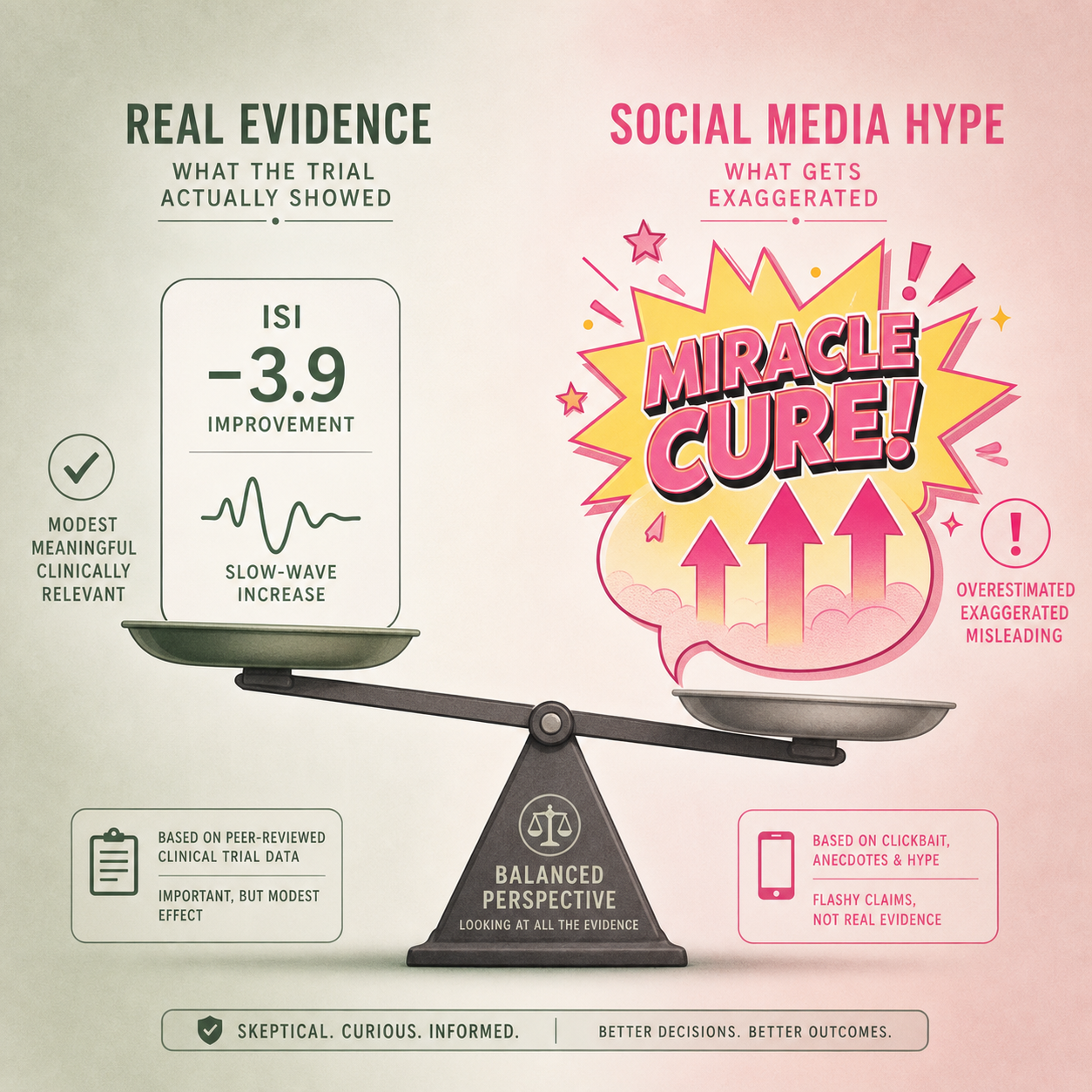
    Sleep AidsDietary supplementLow to very low quality — rated by NCCIH and Mah & Pitre 2021 systematic review (3 trials, 151 participants); most recent bisglycinate RCT (Schuster 2025) showed only 1.6-point ISI improvement over placebo, below the study's own 6-point clinical significance threshold

    Magnesium Glycinate for Sleep: Evidence, Dosage, Timing, and Safety Compared to Other Forms

    An evidence-anchored explainer for adults who have encountered magnesium glycinate as a sleep aid recommendation and want an honest assessment — covering what the clinical trials actually show, how glycinate compares to other magnesium forms, how to dose it correctly, who is most likely to benefit, and where it fits relative to first-line insomnia treatments.

    ⚠️ Kidney disease: clear contraindication — impaired renal function raises hypermagnesemia risk, physician required. Elderly: lower intake, reduced gut absorption, increased renal excretion, polypharmacy risk — consult clinician. Pregnant: pregnancy RDA differs (350–360 mg); UL of 350 mg/day from supplements applies equally — consult OB/GYN. Children: no established evidence for pediatric sleep use — consult pediatrician.
    Dosage: 200–400 mg elemental magnesium (not compound weight) per day from supplements; start at 100–200 mg; adult UL is 350 mg/day from supplements and medications only
    Half-life: Not established for magnesium glycinate specifically; magnesium is a mineral with renal-regulated homeostasis, not a drug with a discrete plasma half-life — next-day grogginess is not a reported concern
    Read ingredient page →
  • Magnesium Glycinate for Sleep: A Review of the 2025 Clinical Trial
    Sleep Aidsdietary supplementRCT-supported

    Magnesium Glycinate for Sleep: A Review of the 2025 Clinical Trial

    A detailed review of the first randomized trial testing magnesium bisglycinate specifically for sleep. We break down the modest but real improvements, the limitations, and what this means for anyone considering a magnesium supplement for better sleep.

    ⚠️ 93% reported no adverse events; GI side effects less than placebo. Consult healthcare provider if on medications or have kidney disease.
    Dosage: 200–400 mg elemental magnesium daily
    Read ingredient page →
  • Magnesium Glycinate vs. Melatonin for Sleep: Which One Matches Your Sleep Problem?
    Sleep AidsDietary supplement (both); melatonin is prescription-only in UK and several EU countries but OTC in the USMelatonin: moderate for jet lag and DSWPD, low for chronic insomnia; magnesium glycinate: low to very low (GRADE) overall, with modest effect sizes (SOL ~17 min reduction; ISI net benefit 1.6 points in 2025 RCT)

    Magnesium Glycinate vs. Melatonin for Sleep: Which One Matches Your Sleep Problem?

    Magnesium glycinate and melatonin work through entirely different mechanisms and are best matched to different types of sleep problems—this guide helps adults identify which supplement fits their situation, compares the clinical evidence honestly, and covers the 2025 safety signals that generic comparison articles have overlooked.

    ⚠️ Older adults: magnesium—reduced kidney clearance, use lower end of range (200 mg elemental), consult clinician if renal function uncertain; melatonin—2025 AHA cardiac signal warrants caution with long-term daily use, prefer 0.5 mg. Pregnancy: neither supplement has established safety; defer to clinician. Anxiety comorbidity: magnesium glycinate preferred over melatonin; consider L-theanine. Kidney impairment: magnesium glycinate requires clinician guidance due to reduced magnesium excretion.
    Dosage: Magnesium glycinate: 200–400 mg elemental magnesium/day (verify elemental content on Supplement Facts, not compound weight); melatonin: 0.5–1 mg for circadian use per AASM guidance
    Half-life: Melatonin: approximately 45–60 minutes (short half-life; minimal next-day grogginess at low doses); magnesium glycinate: no acute pharmacokinetic half-life applicable—sleep benefit develops over 4–8 weeks of consistent use
    Read ingredient page →
  • Melatonin Dosage Guide: Matching Dose and Timing to Your Sleep Problem
    Sleep AidsDietary supplement (US: not FDA-regulated as a drug; prescription-only in UK, EU, Australia)Moderate for sleep onset (2024 RCT meta-analysis, n=1,689); medium for jet lag eastward; low-moderate for DSPD; low and inconclusive for shift work; insufficient for chronic insomnia per AASM 2017 and ACP 2016

    Melatonin Dosage Guide: Matching Dose and Timing to Your Sleep Problem

    The standard advice to take 1–3 mg of melatonin 30 minutes before bed ignores the fact that sleep onset difficulty, jet lag, delayed sleep phase disorder, and shift work each require different doses, timing windows, and formulations. This guide maps the clinical evidence onto each use case and explains why verifying your supplement's label accuracy is a necessary first step before any dosing protocol can be reliably followed.

    ⚠️ Older adults: use lowest effective dose (0.3–1 mg), reduced hepatic clearance increases grogginess and fall risk. Children: medical supervision required; CDC reported 530% rise in pediatric poison control exposures 2012–2021. Pregnant/breastfeeding: avoid. Hepatic/renal impairment: use with caution under medical supervision.
    Dosage: Sleep onset: 0.5–4 mg; jet lag: 0.5–3 mg; DSPD phase advance: 0.5 mg; shift work: ~3 mg; adult ceiling: 10 mg
    Half-life: 1–2 hours (immediate-release); extended-release sustains plasma levels over several hours
    Read ingredient page →
  • Melatonin for Sleep: Evidence, Dosage, and Safety by Population
    Sleep AidsDietary supplement (US); prescription drug in EU, Canada, and UKStrong for DSWPD, N24SWD, REM sleep behavior disorder; moderate for jet lag and shift work; weak for chronic primary insomnia (AASM 2017 recommended against)

    Melatonin for Sleep: Evidence, Dosage, and Safety by Population

    A mechanistic and evidence-graded guide to melatonin as a sleep aid — covering what it actually does in the body, what the clinical research shows by indication, how much to take across different life stages, and why safety profiles differ substantially for children, older adults, pregnant women, and perimenopausal women.

    ⚠️ Children: avoid under age 2, clinical supervision required, 530% rise in overdose reports 2012–2021, gummy formulations highest-risk; Older adults: slowed CYP1A2 clearance extends half-life, fall risk documented; Pregnant/breastfeeding: avoid — crosses placenta, transfers to breast milk, insufficient human safety evidence; Perimenopausal: biological rationale strong, robust RCT evidence limited
    Dosage: Adults: 0.5–5 mg (hypnotic), 0.5–3 mg (circadian shifting); Children: 0.25–0.5 mg starting dose; Adults ≥55: 2 mg prolonged-release; 0.3 mg reaches physiological concentrations — OTC doses of 5–10 mg are supraphysiological
    Half-life: Approximately 1–2 hours in healthy adults; prolonged in older adults due to reduced CYP1A2 clearance; 17–21 hours in preterm neonates
    Read ingredient page →
  • Valerian Root for Sleep: Evidence, Dosage, and Safety
    Sleep AidsDietary supplement (not FDA-approved drug; no pre-market safety or efficacy review required)Limited — inconsistent across trials; no confirmed efficacy for diagnosable insomnia (2024 umbrella review); subjective improvement possible but not confirmed by objective polysomnographic measures; AASM 2017 weak recommendation against

    Valerian Root for Sleep: Evidence, Dosage, and Safety

    A balanced, evidence-based assessment of valerian root as a sleep aid — covering how it works, what the clinical research actually shows (including why the evidence is mixed), dosage guidance, formulation quality issues, and population-specific safety cautions for adults weighing this dietary supplement against its inconsistent clinical record.

    ⚠️ Pregnancy/breastfeeding: not recommended (insufficient safety data). Elderly (65+): use with caution; additive sedation raises fall risk. Children under 3: avoid. Children ages 3+: limited data; clinical guidance recommended. Adults on CNS depressants: consult clinician before use.
    Dosage: Whole root/rhizome: 450–1,060 mg/day (some trials to 1,410 mg); hydroalcoholic extract: 300–600 mg/day; taken 30–120 min before bed; repeated use over 4–8 weeks (single doses unlikely to produce significant effects)
    Half-life: Not well established in clinical literature; next-day drowsiness and mental dullness reported as mild side effects in some users
    Read ingredient page →
Related content groups