
Should you run a fan during a heat wave power outage?
Do not run a fan during a heat-wave power outage just because moving air feels better. Use it conditionally: if the room is still below about 90°F, a fan can help you sleep more comfortably. Once the indoor temperature reaches the 90°F range, especially if the air is dry or the person in the room is older, pregnant, perimenopausal, has a heart condition, may not sweat well, or cannot reliably judge symptoms, the fan should stop being the main plan.
The Centers for Disease Control and Prevention gives the cleanest bedside warning: use fans only when indoor temperature is below 90°F, because above that a fan can increase body temperature rather than lower it.[1] That does not mean the fan becomes poisonous at one exact degree. It means that when the room is hot enough, the question changes from “does this feel cooler?” to “is this helping the body dump heat?”
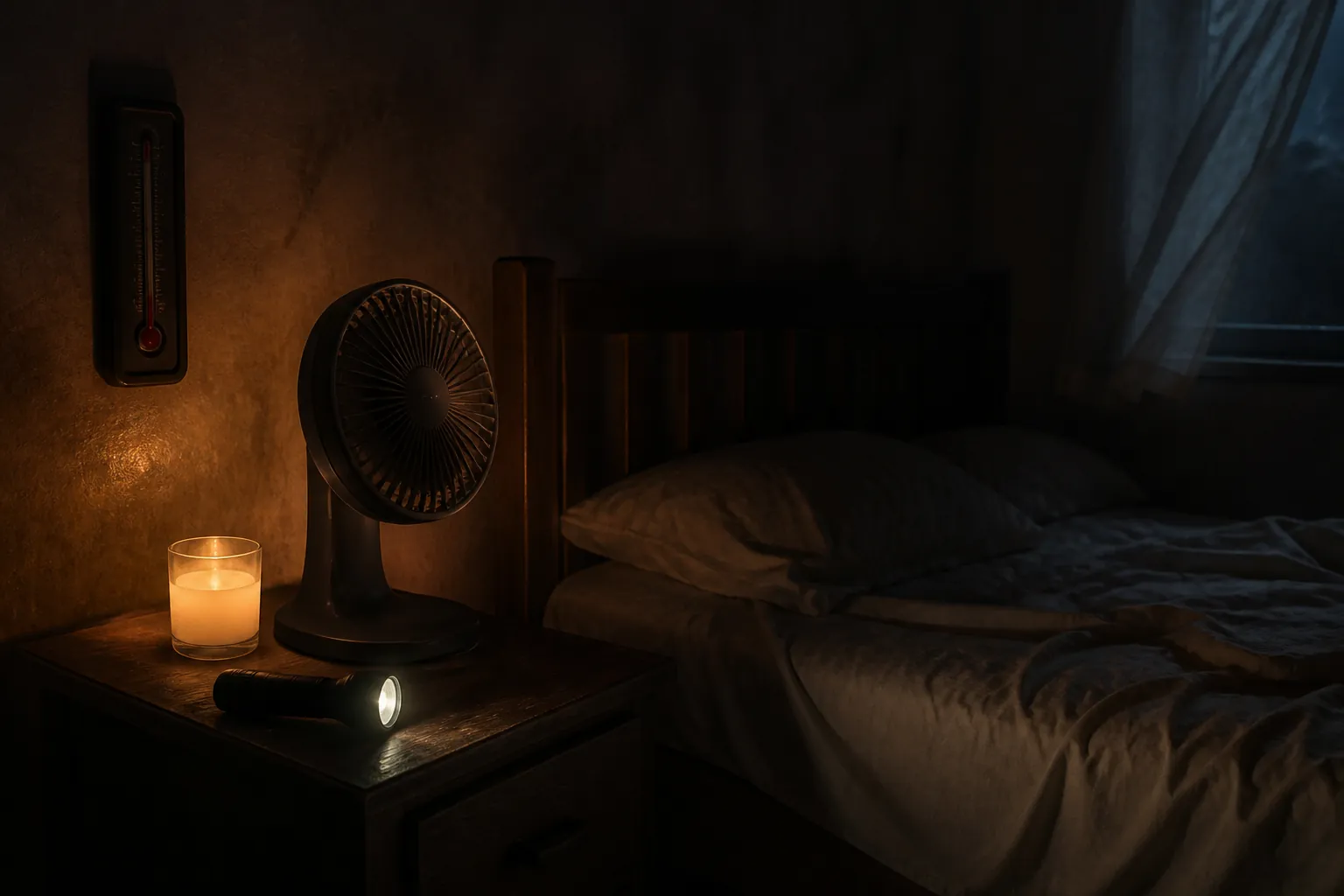
The decision rule for a hot room without AC
If you are trying to decide how to sleep during a heat wave power outage, start with three checks before you point the fan at the bed: the indoor temperature, the air conditions, and the person’s heat risk. The rule is deliberately plain, because nobody makes their best decisions at 2 a.m. in a sealed-up bedroom.
| Tonight’s condition | How to treat the fan | Safer move |
|---|---|---|
| Indoor temperature is below 90°F, and the sleeper is not in a higher-risk group | Reasonable as a comfort tool | Use the fan with light clothing, open airflow if available, and keep checking the room |
| Indoor temperature is near 90°F or climbing into the low 90s | Do not treat the fan as enough | Use wet skin plus airflow, a cool shower, and the coolest available sleeping spot |
| Indoor temperature is in the 90°F danger range, especially with dry heat | Assume fan-only cooling may become harmful | Prioritize wetting the skin if the person can sweat and tolerate it, or relocate to a cooler place |
| The sleeper is older, has heart disease, is pregnant or perimenopausal, may have reduced sweating, is confused, or cannot leave easily | Use extra caution even before the room feels unbearable | Cool the body actively and make an early plan for a cooling center or another cooler location |
| The room stays hot and the person is not recovering | Stop trying to solve it with more airflow | Leave for a cooler building if one is available |
The 90°F line matters because it is easy to underestimate indoor heat during a blackout. Walls, attic spaces, upper floors, and closed rooms keep radiating heat long after sunset. A fan can make that room feel less suffocating while the body is still struggling to release heat. That gap between comfort and safety is where bad advice gets people into trouble.
Humidity and dryness change the decision. In humid heat, sweat has a harder time evaporating, so moving air may feel useful but may not cool the body enough. In very dry, very hot air, evaporation can happen more easily, but the fan is also blowing hot air across skin. If the air temperature is high enough, the body may gain heat from that airflow instead of losing it. That is why the practical danger zone is better treated as a range around 90°F and into the low-to-mid 90s, not as a magic switch.
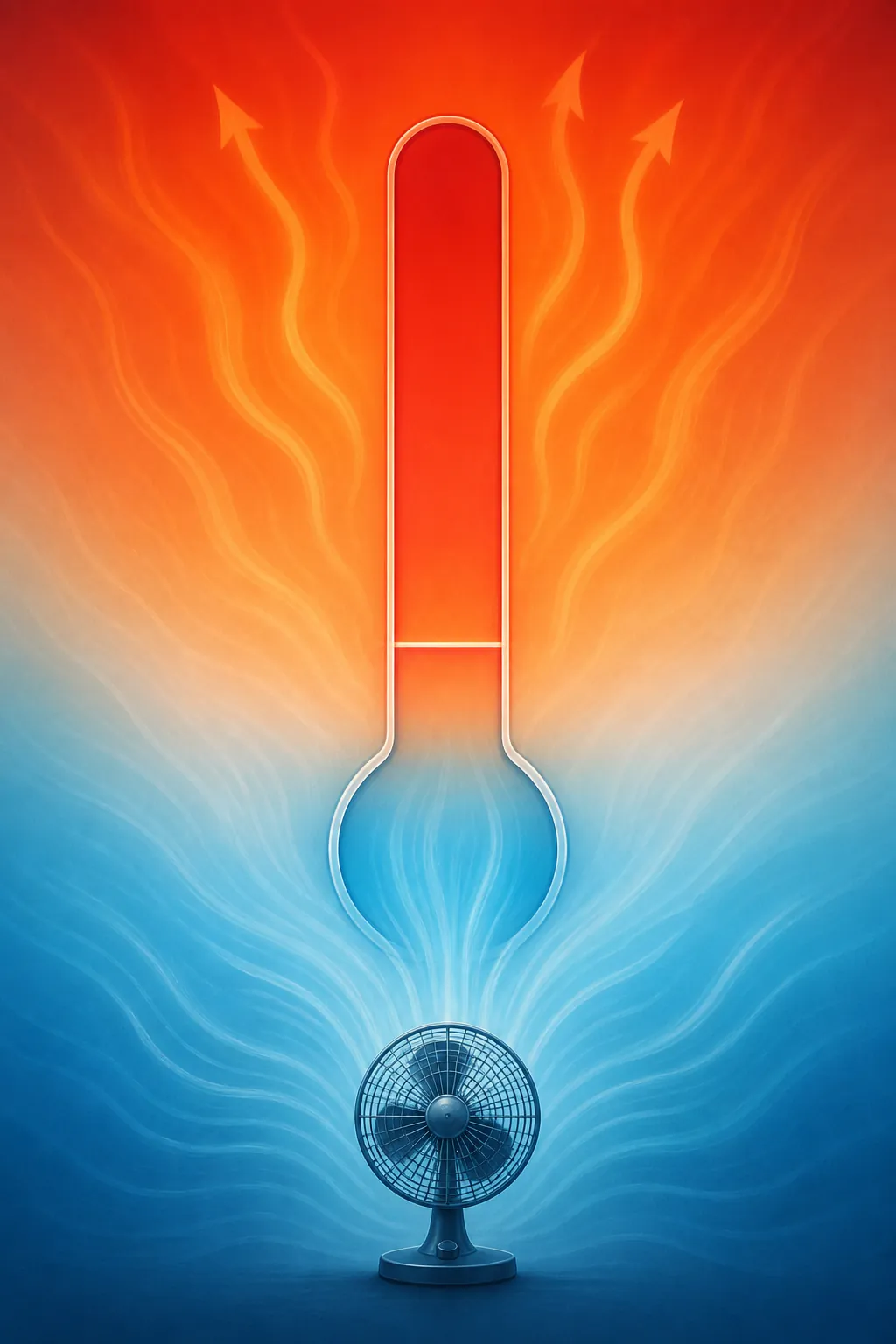
Why a fan can feel helpful while becoming the wrong tool
A fan does not cool a room. It cools a person only when the body can lose heat to the moving air, mainly through sweat evaporation and heat transfer from skin. Below the danger range, that can be enough to make sleep possible. Above it, the same fan can become a heater aimed at a tired body.
That is the fan contradiction in one sentence: moving air can reduce the sensation of heat before it reliably reduces heat strain. The body may feel less sticky, the face may feel cooler, and the room may feel less stagnant. None of that proves core heat risk is falling.
This is where older adults and people with reduced sweating deserve more caution than the average “sleep cool” list gives them. If a person cannot sweat effectively, cannot drink and respond normally, takes longer to notice overheating, or cannot easily get up and move somewhere cooler, the fan’s comfort signal is less trustworthy. The CDC’s below-90°F fan warning is especially important in that kind of room, because waiting until someone looks obviously ill may mean waiting too long.[1]
For a caregiver, the useful question is not whether the person says the fan feels good. Ask whether their skin is cooling, whether they are alert, whether the room is still heating, and whether you have a cooler place available before the situation becomes urgent. If you are deciding for an older parent, a pregnant partner, a perimenopausal partner, or someone whose body is already reacting unpredictably to heat, build in a wider safety margin.
When the fan is no longer enough, change what the fan is doing
The first replacement is not necessarily “no fan.” It is “no fan on dry skin in a hot room.” If the person can sweat, is alert, and can tolerate dampness, use the fan to move air across wet skin instead of simply blowing hot room air at them.
Wet a cloth with cool water and wipe the neck, forearms, legs, and face. Re-wet as it dries. If you have a small battery fan, aim it across the damp skin, not straight into the eyes or mouth. This changes the job of the fan: it is no longer pretending to cool the room; it is helping water evaporate from the body surface.
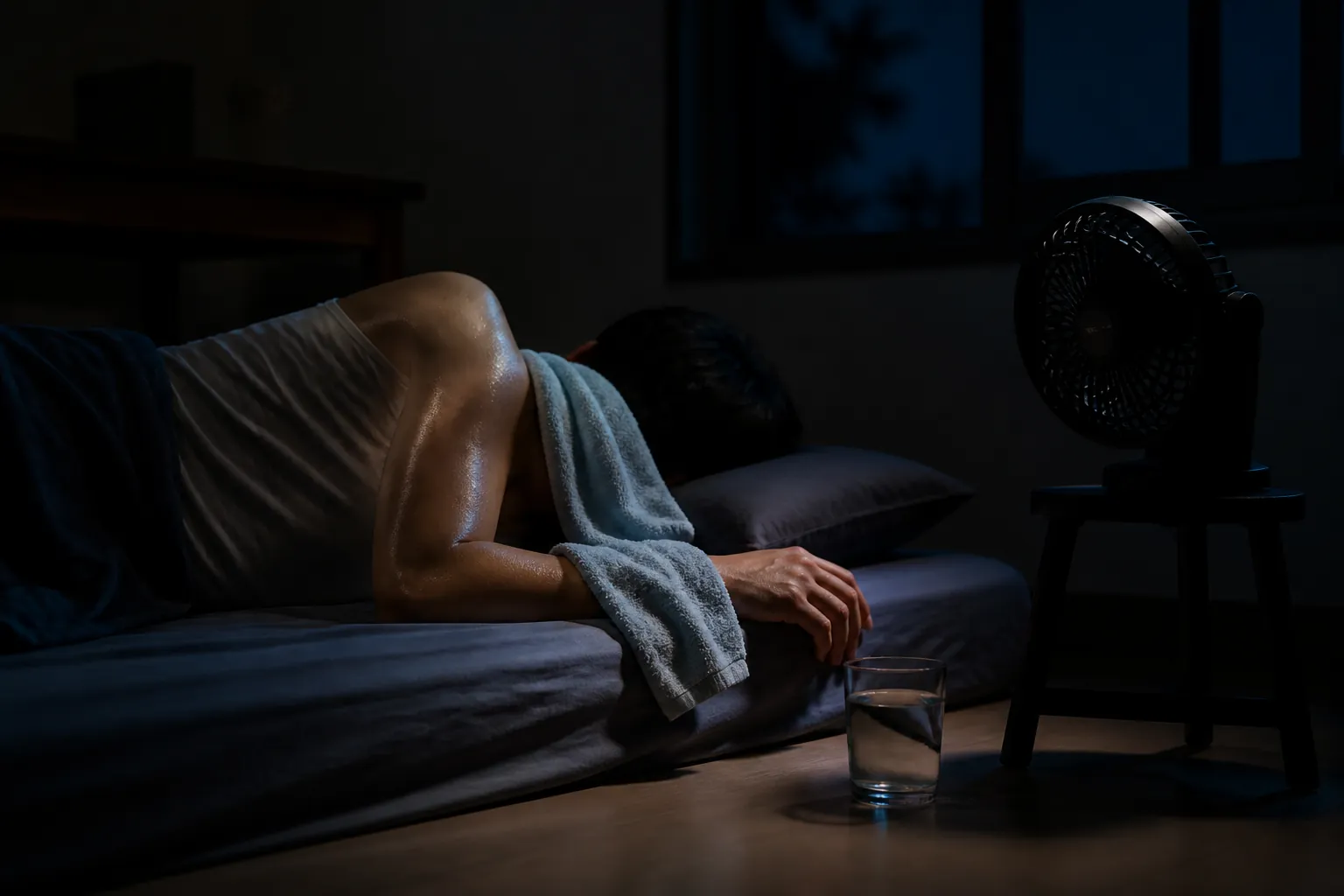
Keep this modest and watch the person. The goal is steady relief, not chilling, shivering, or soaking bedding until sleep becomes impossible. For someone frail, confused, or unable to describe how they feel, do not rely on this as a long overnight solution in a room that remains in the danger range.
Use a cool shower before the room wins
A cool shower can lower the body’s heat load before bed or during the night. It does not need to be icy. In a blackout, icy water may be unavailable anyway, and an extreme cold shock is not the point. The useful version is simple: cool the skin, dry lightly or leave some skin damp, then rest where airflow can pass over the body.
Do this earlier than pride wants to. Once someone is nauseated, confused, very weak, or no longer sweating normally, the problem is no longer sleep comfort. It is heat safety.
Sleep low, not pretty
If the upper bedroom is holding heat, move down. A mattress, cot, or blanket on the lowest available floor is often a better blackout-night setup than staying in the usual bed because the bedroom feels more normal. Basements, first floors, and interior rooms may stay cooler than upper rooms, especially after a long hot day.
Do not spend the night rearranging the house if someone is already struggling. Move the person, the water, the phone, the flashlight, medications, and the small fan if it is still useful. Leave the perfect sleep setup for a night when the power works.
When the right sleep strategy is leaving
There is a point where the safest way to sleep during a heat wave power outage is not to sleep at home. If the indoor temperature is staying in the 90°F range, the person is in a higher-risk group, or the wet-skin and cool-shower plan is not keeping them comfortable and alert, start treating relocation as the plan, not the backup.
A cooling center, a neighbor’s powered home, a public building, or a relative’s place with working air conditioning can be the difference between an uncomfortable night and a dangerous one. This is especially true for someone who cannot leave quickly once symptoms worsen. The time to decide is while the person can still walk, communicate, and tolerate the trip.
A fan belongs in a blackout kit. So do damp cloths, water, a thermometer, a flashlight, and a plan for where to go. But the fan is conditional. Below about 90°F, it may help. Near and above that range, especially for vulnerable people or in dry heat, more moving hot air is not the safer answer. Wet the skin, cool the body, move lower, and leave when the room is no longer a place where the body can shed heat.
References
- About Heat and Your Health — Centers for Disease Control and Prevention
Read the full guide: How to sleep during a power outage in extreme heat