
How to sleep during a power outage in extreme heat
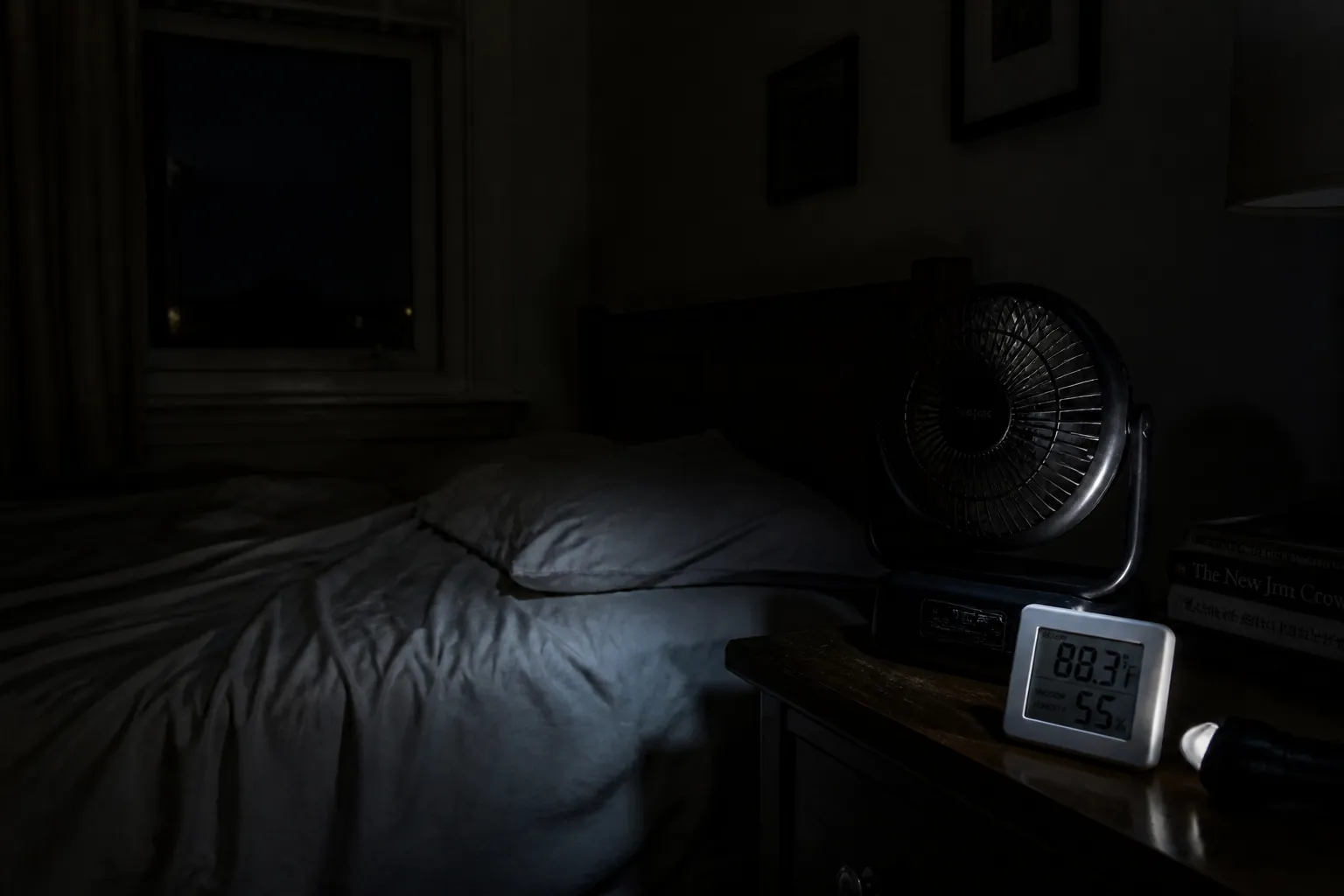
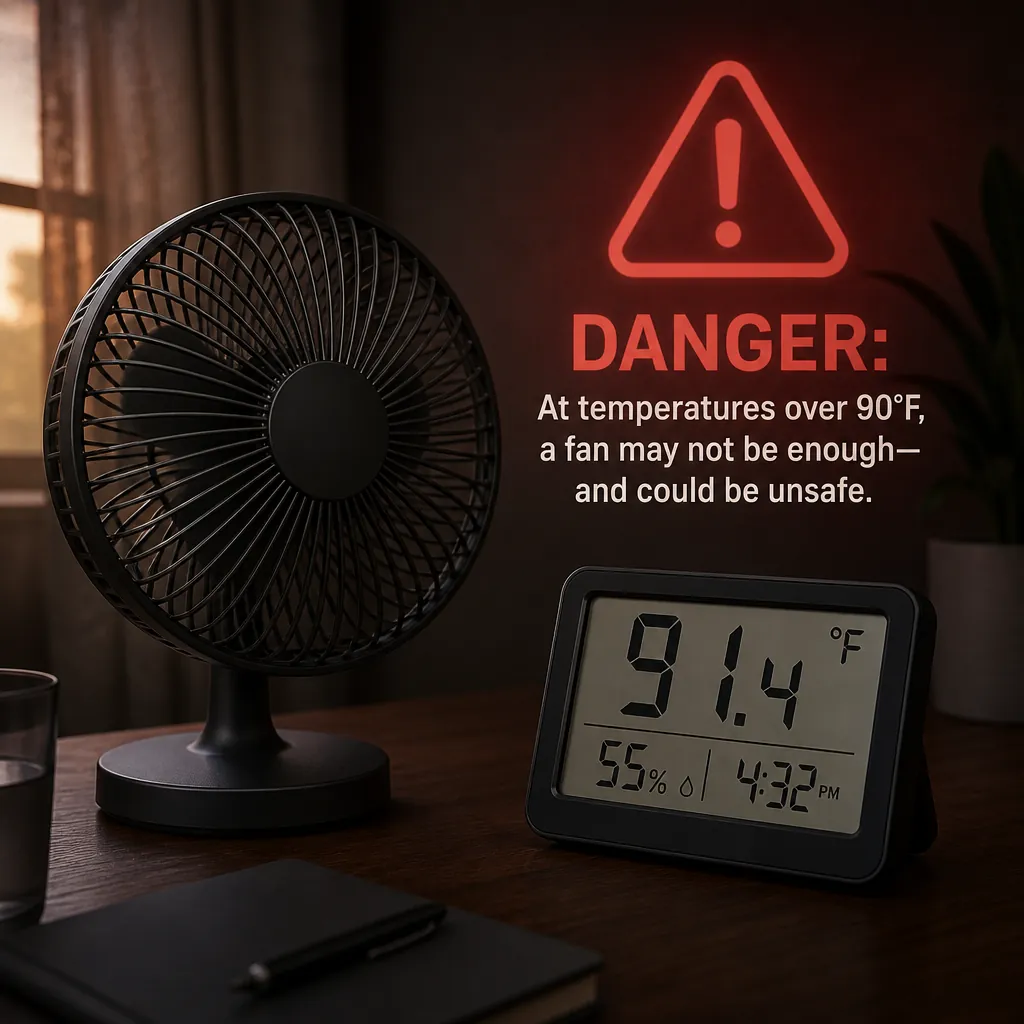
If the power is out during a heat wave, the first question is not which sheet feels coolest. It is whether the room is still a safe place to sleep. Once the indoor temperature is above 90°F, the plan changes: the CDC warns that an electric fan can increase body temperature rather than cool you at that point, especially in a closed, hot room.[1] If the forecast says the night will not drop below 75°F, take that seriously too; Duke Heat Policy Innovation Hub director Ashley Ward has warned that nights staying above that level are associated with “extraordinary outcomes” for heat illness and mortality.[2]
That is the red line for sleeping during a power outage in extreme heat: below it, you can use cooling tactics while watching symptoms closely. At or above it, especially for an older adult, a pregnant person, or someone who depends on CPAP, the safer sleep strategy is relocation to a cooling center, a powered home, a hotel, or another cooler safe place.
The 1 a.m. decision: stay put or leave
Heat at night is more dangerous than many families treat it, because sleep removes the usual self-checks. A person who says they are “fine” at 9 p.m. may be confused, nauseated, or too weak to move by 2 a.m. The room may also keep getting hotter after sunset if the walls, roof, and pavement are releasing heat into a sealed home.
Use a real thermometer in the room where the person is sleeping. Do not rely on how the hallway feels, how the house usually cools, or whether a fan is moving air. If the bedroom is above 90°F, leave if you can do so safely. If the bedroom is climbing toward that mark and the overnight low is expected to stay above 75°F, do not wait for the person at highest risk to prove they are in trouble.
- Leave now if the indoor sleeping area is above 90°F, because fan use can become unsafe rather than protective.[1]
- Leave earlier for high-risk sleepers if the night is forecast to stay above 75°F and the home has no reliable cooling.[2]
- Call 911 for heat-stroke signs: confusion, loss of consciousness, very high body temperature, or hot red skin, especially if sweating has stopped.[3]
- Do not ask an older adult, pregnant person, or CPAP user to “tough it out” so everyone can avoid an inconvenient trip.
What you can do before the room crosses the line
Before the room becomes unsafe, the goal is to lower body heat, reduce heat entering the room, and preserve enough phone and battery power to make decisions. These measures buy time. They do not cancel the evacuation threshold.
| Action | Use it when | Stop relying on it when |
|---|---|---|
| Cool cloths on neck, armpits, groin, and wrists | The person is alert, drinking, and the room is still below the danger threshold | Symptoms are worsening or the room is above 90°F |
| Cool shower or sponge bath | Water is available and the person can do it safely without falling | The person is dizzy, weak, confused, or alone without help |
| Loose clothing and breathable bedding | You are trying to reduce trapped heat while monitoring the room | The room itself is too hot to recover overnight |
| Window management | Outdoor air is cooler than indoor air, or you can block sun during the day | Opening windows brings in hotter air or unsafe conditions |
| Evaporative cooling | Air is dry enough for evaporation to help | Humidity is high or the method makes the room feel hotter and damp |
A damp cloth and moving air can feel useful in dry heat. In humid heat, sweat and water evaporate poorly, so the same trick may do little. In a closed room above 90°F, do not keep adding fan tricks after the safety line has already been crossed.
Keep the bed simple: a light sheet, loose clothing, no heavy mattress topper if it traps heat, and no alcohol as a sleep aid. If you want the broader physiology of hot-weather sleep rather than the outage version, see why hot weather wrecks sleep and which remedies help. If the outage came with a thunderstorm, the priorities change again; this storm-related power outage sleep guide covers that scenario.
Older adults need a check-in plan, not just a glass of water
Age belongs near the top of the plan. More than 80% of annual heat-related deaths in the United States occur among people over 60, according to Harvard Medicine’s discussion of Climate Central data.[4] That does not mean every older adult is fragile. It means the margin for a bad night is smaller, especially when chronic illness, mobility limits, and medications are part of the picture.
The CDC notes that older adults are more likely to have chronic medical conditions and to take medications that affect how the body handles heat. Diuretics, beta-blockers, and antihistamines are specifically named in heat-safety guidance, and people taking water pills should ask a doctor how much to drink during hot weather because standard hydration advice may not fit them.[5]
For caregivers, the sleep plan starts before bedtime. Write down the room temperature, the person’s medications, when they last drank, whether they have urinated recently, and whether they seem like themselves. Then check again. A phone call is better than nothing, but it is weak protection if the person has hearing trouble, cognitive impairment, or the habit of saying they are fine because they do not want to be a bother.
- Set a check-in time before the caregiver gets too tired to think clearly.
- Ask observable questions: “What does the thermometer say?” “When did you last pee?” “Can you walk steadily to the bathroom?”
- Move the person before symptoms become dramatic if the room is approaching the 90°F threshold.
- Keep a medication list with the person if they go to a cooling center or emergency department.
Heat illness often moves in stages. The Red Cross describes heat cramps, then heat exhaustion with signs such as cool, pale, clammy skin, nausea, dizziness, headache, and weakness, and then heat stroke, which can include a body temperature of 104°F or higher, confusion, loss of consciousness, and hot red skin.[3] Waiting for heat stroke before leaving is not toughness. It is a failed plan.
Pregnancy changes the heat calculation
Pregnancy already raises the workload on the cardiovascular system. In a power outage, that matters because the body is trying to cool itself at the same time it is supporting the pregnancy. Mayo Clinic guidance warns pregnant people to avoid overheating and notes that a core body temperature above 102°F can be concerning; excessive heat exposure has also been linked with risks including preterm birth, low birth weight, and stillbirth.[6]
The practical boundary is plain: if a pregnant person feels faint, cannot keep fluids down, has concerning symptoms, or is in a room that is crossing the heat threshold, do not soothe the situation with vague reassurance. Move to a cooler place and call the clinician’s after-hours line if symptoms are unclear. Emergency symptoms should be treated as emergency symptoms, not as ordinary pregnancy discomfort.
Hydration matters, but it is not a magic shield. Mayo Clinic advises pregnant people to drink at least 64 ounces of water daily, with more needed in hot weather or with activity.[6] During an outage, that means water should be within reach at night, not in a dark kitchen where a dizzy person has to walk alone.
- Sleep on the coolest safe level of the home, often the lowest floor.
- Use cool cloths and a cool shower only if standing and walking are safe.
- Keep water, phone, shoes, medication, and prenatal records together in case leaving becomes necessary.
- Use the same evacuation threshold as everyone else, but with less delay if symptoms appear.
For weather emergencies where heat is not the only problem, pregnant readers in tornado-prone areas may also want pregnancy-specific tornado warning sleep guidance. The important habit is the same: decide ahead of time which symptom or threshold ends the debate.
CPAP users have to do the battery math before bedtime
A CPAP plan that says “get a battery” is unfinished. Runtime depends on the machine, pressure settings, battery capacity, leaks, temperature, and whether heated comfort features are running. One CPAP clinic’s guidance estimates that CPAP machines draw about 30 to 60 watts without heated humidification and about 90 to 150 watts with heated humidification; it also describes dedicated lithium-ion CPAP batteries as commonly providing about 8 to 16 hours and UPS units about 4 to 8 hours.[7] Treat those as planning ranges, not promises.
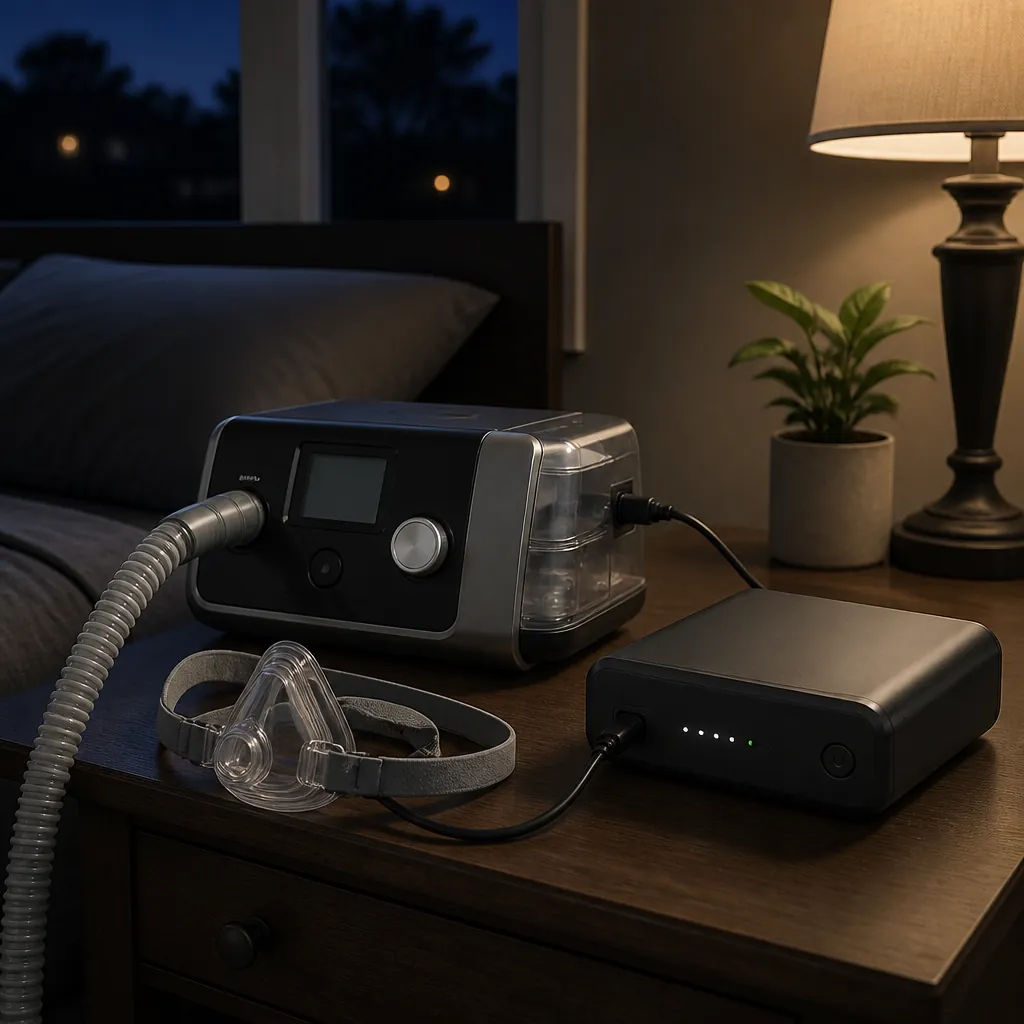
Start with the label or manual for your own machine and battery. Find the device wattage or power draw, the battery’s watt-hour rating, and whether your setup needs a DC cable or inverter. If your clinician says it is appropriate for you, turning off heated humidification and heated tubing can substantially reduce power draw. Do that before the battery is already low, not after the machine shuts down.
| CPAP outage step | Why it matters |
|---|---|
| Know your machine’s power draw | Runtime estimates are only useful if they match your actual device and settings. |
| Disable heated humidification if medically appropriate | Heating features can raise wattage and shorten battery life. |
| Charge the battery before heat season storms | A battery stored half-empty is not an overnight plan. |
| Test the setup on a normal night | You need to know whether the mask, cable, and battery work together before an outage. |
| Plan where to go if power will not return | Many backup systems may not cover a long heat outage. |
The gap between medical-device needs and outage length is not theoretical. A study discussed in The Conversation found that most home medical device batteries last only 3 to 8 hours, while more than half of U.S. counties had at least one outage lasting longer than 8 hours between 2018 and 2021.[8] That is exactly why the destination plan matters: a battery may get someone through the first part of the night, not the whole emergency.
If CPAP power fails, positional measures such as side sleeping or a wedge pillow may reduce obstruction for some people, but they are fallback harm reduction, not a substitute for prescribed therapy. A person with severe sleep apnea, significant oxygen issues, heart disease, or marked daytime sleepiness should not be left to improvise through a hot night without medical advice or a cooler powered location.
Why this deserves preparation before the next outage
Heat-season outages are becoming a more common part of summer planning. Climate Central reported a 60% rise in major heat-season power outages compared with a 2000–2009 baseline, though its analysis covers major outages affecting at least 50,000 customers and may miss smaller local failures.[9] For a household with a high-risk sleeper, even a local outage is enough.
The preparation list is short because it has to be usable when everyone is tired: a room thermometer, charged phones and power banks, water, medication list, flashlight, transportation plan, cooling-center information, and CPAP battery equipment if needed. If severe weather is forecast before the heat arrives, this bedroom preparation sequence for thunderstorms can help with the pre-outage setup.
When sleep advice stops being the right tool
Below the danger line, it is reasonable to make the room darker, lighter, cooler, and easier to rest in. Older adults need medication-aware hydration and check-ins. Pregnant people need a lower threshold for calling a clinician or relocating when symptoms appear. CPAP users need backup power that has been tested against their real machine, not a hopeful box in a closet.
Once the room is above 90°F, or the night offers no recovery because temperatures stay above 75°F, the job is no longer to sleep better in that room. It is to leave for a cooler safe place.
References
- CDC Power Outage Protection. CDC.
- How to Stay Cool in a Heat Wave Without AC. PBS News. June 2026.
- Red Cross Extreme Heat Safety. American Red Cross.
- Effects of Heat on Older Adults. Harvard Medicine.
- CDC Heat and Older Adults. CDC.
- Staying Safe in Heat During Pregnancy. Mayo Clinic.
- CPAP During Power Outages. Dream Sleep Respiratory.
- Power Outages Threaten Medical Device Users. The Conversation.
- Heat Season Power Outages. Climate Central.
Read the full guide: How to sleep during a power outage thunderstorm