
Flood Threat Anxiety and Insomnia Tips to Break the Loop Tonight
If a flood warning, evacuation order, road closure affecting your route, or direct instruction from local officials is active right now, sleep is not the first task. Put shoes, keys, medications, documents, chargers, pets, and mobility needs where they can move with you, keep the official alert source on, and follow local guidance. These flood threat anxiety and insomnia tips are for the other hard night: the watch, forecast, heavy-rain, or post-trigger night when you have checked the facts, you have a basic plan, and your body still will not let the house go quiet.
That reaction deserves more respect than “just relax.” A University of York analysis reported that people affected by flooding were nine times more likely to experience long-term mental health problems; that figure came from UK flood events between 1968 and 2016, so it should not be treated as a universal rate for every place or storm, but it does show why rain can become more than weather after water has risen once [1]. A Korean study of disaster victims found that 23% reported poor sleep quality, and PTSD was the strongest predictor of both poor sleep and reliance on sleep medication [2]. In other words, the sleeplessness is not a personality flaw. It can be part of the threat system staying on duty.
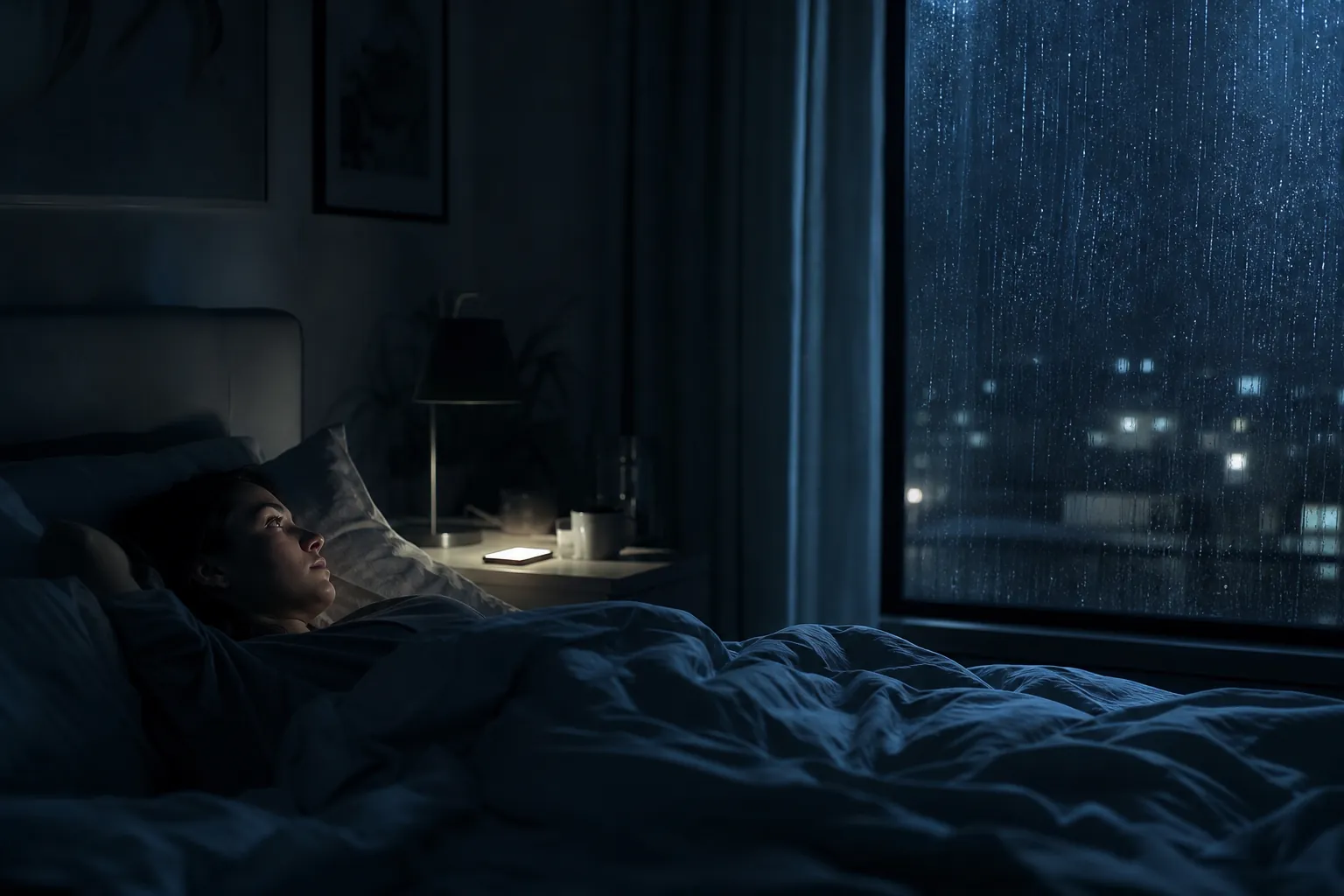
First decide whether this is a monitoring night or a sleeping night
Before trying to calm down, make the safety decision as plainly as possible. The nervous system will not be persuaded by a lavender-scented bedtime routine if part of you still believes nobody is watching the water.
- If an official warning or evacuation instruction is active: stay awake enough to receive and act on guidance. This is vigilance doing its job.
- If there is a watch, forecast, or heavy rain but no instruction to act: choose the alert source that would wake you, set it up, and stop trying to personally replace the warning system.
- If the danger has passed but your body is still reacting to rain, sirens, damp smells, or the sound of gutters: treat the night as a trauma-trigger night, not as ordinary insomnia.
The National Weather Service frames advance storm preparation as a way to reduce uncertainty and put people more in control [3]. That matters at bedtime because uncertainty is what keeps the mind reopening the same tabs: river gauge, radar loop, local road posts, neighborhood chat, window, ceiling, phone, repeat.
Why rain can keep you awake after the rational check is finished
The part of you doing mental evacuation math may know the probability is low. The part listening for a change in rainfall is not calculating probability in the same way. Night anxiety is tied to hyperarousal, including amygdala-driven threat detection, and that state works directly against sleep onset [4]. Sleep requires some surrender of monitoring. Flood threat anxiety asks for the opposite: listen harder, remember faster, prepare to move.
This is why ordinary sleep hygiene can feel insulting when rain is falling. Turning off a screen may help if the screen is feeding you dramatic weather coverage. It does not answer the body’s real question: if I stop watching, who will notice the danger? Until that question has a concrete answer, breathing exercises often become one more task performed by a still-alert brain.
The loop is also self-reinforcing. Rain or an alert tone cues threat. Threat keeps the body scanning. Scanning delays sleep and makes sleep lighter. A fragmented night leaves tomorrow’s emotional threshold lower, so the next forecast can feel more urgent even if the objective risk has not changed. The Korean disaster-sleep findings do not prove this exact sequence for every flood-prone sleeper, but they do support the larger point: after disaster exposure, poor sleep and trauma symptoms belong in the same conversation [2].
The nighttime sequence: contain the threat, then ask the body to stand down
Do the practical part before the calming part. The order matters. If you try to breathe first while still wondering whether the phone volume is high enough, the brain will keep assigning you unfinished safety work.
| Order | What to do | Why it helps tonight |
|---|---|---|
| 1 | Choose one official alert channel | Removes the need to keep checking multiple sources |
| 2 | Write the action threshold | Turns vague danger into a specific next step |
| 3 | Set the phone so it can wake you | Lets the alert system monitor while you sleep |
| 4 | Stop video weather coverage and repeated searching | Cuts off escalating sensory and media input |
| 5 | Buffer the rain sound | Reduces the trigger that keeps pulling attention back |
| 6 | Use grounding and 4-4-6 breathing in bed | Gives the body a downshift after the plan is contained |
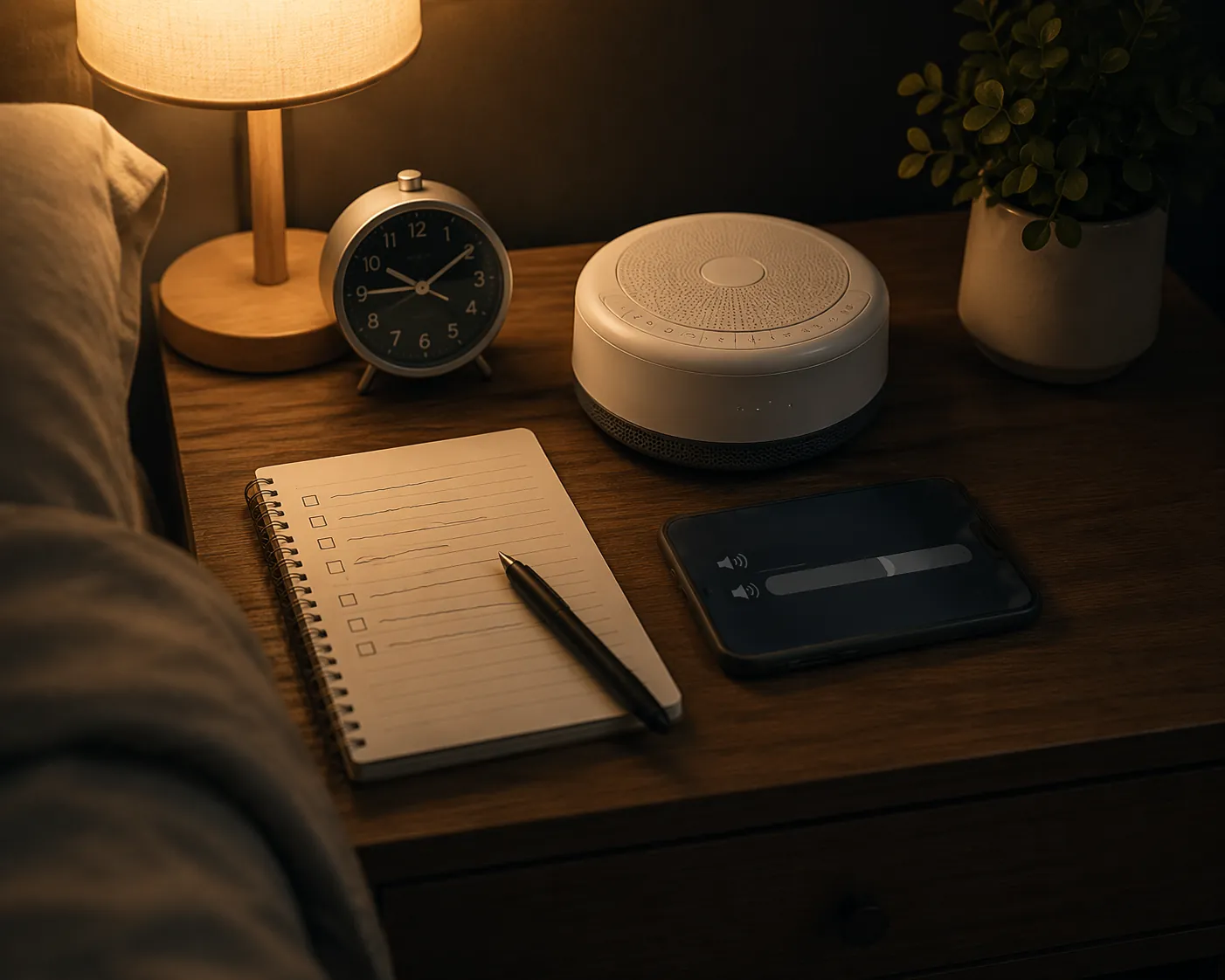
Make the plan short enough that you can actually put it away
A useful flood-night plan is not a binder. At 1 a.m., the plan should fit on one note card or one phone note. Weather-anxiety guidance often uses a “make a plan, then put it away” approach because planning can calm uncertainty, while endless planning can become another form of threat rehearsal [5].
Write only what the night needs:
- My alert source tonight is: ______.
- My phone volume is: on / loud enough / able to override sleep settings if needed.
- My phone location is: close enough to wake me, not in my hand.
- If the alert changes, my first action is: ______.
- The items I would take first are: ______.
- The person or place I would contact if I need help is: ______.
Keep the threshold behavioral, not emotional. “If I feel scared, I will check again” leaves fear in charge of the night. “If the official alert changes, I will get up, put on shoes, and follow the route I chose” gives the job to a defined signal. Fear may still be present, but it no longer has to invent a new safety procedure every few minutes.
Then place the written plan somewhere visible but not active: on the bedside table, under the phone, or beside the lamp. The gesture is small, but the message is specific: this has been handled for now. If the situation changes, the alert will interrupt you. Until then, searching is no longer the safety plan.
Replace video weather with one text-based check
Video weather coverage can be useful before a decision, but it is often too stimulating for a nervous system already listening for danger. Baylor College of Medicine advises limiting pre-storm media exposure and notes that screen-based weather consumption, especially news and video coverage, can intensify anxiety more than simpler updates [6].
For the sleeping-night version, do one final text-based check from the official source you chose. Do not run the radar loop one more time “just to settle yourself” if the last several checks have not settled you. A radar loop can feel like information while functioning like a slot machine for threat cues: one more refresh, one more color change, one more interpretation.
Set the phone so it can wake you, then get it out of your hand
The phone has two different roles tonight. It is allowed to be an alarm. It is not allowed to be a handheld command center after the plan is complete.
Check the volume, emergency alert settings, charger, and placement once. Put it close enough that an alert would wake you, but far enough that checking it requires a deliberate reach or getting out of bed. Face-down on the nightstand is often better than glowing in your palm. If you share a room, say out loud what you have set: “The alert is on. If it changes, we get up.” Hearing the plan spoken can help stop the mind from reopening it silently.
Use sound to cover the trigger, not to pretend nothing is happening
For many people, the problem is not only the thought of flooding. It is the sound: rain on the roof, gutters changing pitch, tires on wet pavement, the sudden hard sheet of water against a window. Those sounds can keep asking the amygdala to re-evaluate the room.
A white-noise machine, fan, air purifier, steady rain-neutral sound, or low brown-noise track can create a buffer. The point is not to block an official alert or make you unaware of danger. The point is to reduce the small variations in rain noise that keep pulling attention back to the window. Keep the alert channel loud enough to wake you; make the background sound steady enough that ordinary rainfall stops becoming a minute-by-minute report.
If you live with someone else, agree before bed whose phone is responsible for alerts. Two people half-monitoring often produces two anxious bodies. One clear alert setup is usually calmer than a room full of devices chirping with duplicate notifications.
Now do the in-bed downshift
Once the plan is written, the alert is set, the phone is placed, and the sound buffer is on, then it makes sense to use grounding. Grounding techniques are commonly recommended for weather-related anxiety because they bring attention out of threat rehearsal and back into the present body [5][7].
Try this sequence without trying to force sleep:
- Name five things you can feel from bed: sheet, pillow, mattress, sock, blanket.
- Name four things you can see, even if the room is dark: door shape, curtain edge, clock glow, shadow.
- Name three things you can hear besides rain, or within the sound buffer: fan, breath, house hum.
- Name two things you can smell or taste: toothpaste, detergent, tea, plain air.
- Name one thing that is true right now: “I have a plan,” “The alert is on,” or “I am in bed and waiting for a real signal, not a fear signal.”
Then use 4-4-6 breathing for a few minutes: inhale for four, hold for four, exhale for six. Keep the exhale longer than the inhale, but do not strain. If counting makes you more alert, drop the numbers and simply lengthen the out-breath. If a thought interrupts — What if the creek rises? Did I check the basement? — answer it with the plan, not a debate: “If the alert changes, I get up. Until then, I am off duty.”
If you wake again to rain
Waking once does not mean the sequence failed. It may mean your body heard the trigger and checked whether you were still safe. Keep the response boring and consistent.
- Do not open weather video from bed.
- Do not renegotiate the whole plan unless an official alert has changed.
- Look at the written card if needed.
- Confirm the phone is still where it belongs.
- Restart the sound buffer if it stopped.
- Repeat the grounding sequence from the body outward.
The discipline here is not “calm down.” It is refusing to make fear do a job that belongs to an alert system and a written plan. If you do need to check because a real alert sounded, check and act. If you woke because rain got louder, return to the threshold you already chose.
What this can and cannot do
A bedtime sequence cannot make flooding harmless. It cannot erase previous loss, repair a house, make evacuation simple for someone with mobility limits, or guarantee that every storm will stay outside the door. If flood memories are repeatedly taking over your nights, if you are avoiding sleep whenever rain is forecast, or if you are relying more and more on alcohol, sedatives, or constant checking to get through the night, that is a reasonable time to seek trauma-informed mental health care.
For tonight, the goal is smaller and more credible: decide whether sleep is safe, assign monitoring to the right source, reduce the sensory and media cues that keep the threat system firing, and give your body a repeated signal that it no longer has to use insomnia as the safety plan.
References
- ‘We don’t sleep when it’s raining’: the mental health impact of flooding, The Guardian, Dec. 30, 2020
- Poor Sleep Quality and Its Associated Factors among Disaster Victims in Korea, PMC, 2021
- Storm Anxiety, National Weather Service
- Anxiety at Night: Causes and Tips for Relief, Sleep Foundation
- Finding Calm in the Storm: How to Cope with Weather-Related Anxiety, Nashville Psych
- Navigating pre-storm anxiety, Baylor College of Medicine
- Storm anxiety: How to manage tornado season stress, CoxHealth
Read the full guide: Why Do Heat and Storms Together Disrupt Sleep So Much?