
Are Hand Warmers Safe for Cold Feet in Bed?
Short answer: hand warmers are not safe all-night foot warmers in bed. If you are looking for safe hand warmers for cold feet in bed, the safer rule is to treat any active hand warmer as a remove-before-sleeping device: use it briefly while awake, use it to pre-warm bedding and take it out, or skip it overnight and insulate your feet with loose bed socks.
There are three very different situations that often get blurred together:
- Briefly warming cold feet before sleep: lower risk, because you are awake, can feel the heat, and can remove the warmer.
- Pre-warming the bed: also lower risk if the warmer is removed before you get in or before you fall asleep.
- Sleeping with an active heat source pressed near your feet: the situation to avoid, especially under blankets or against bare skin.
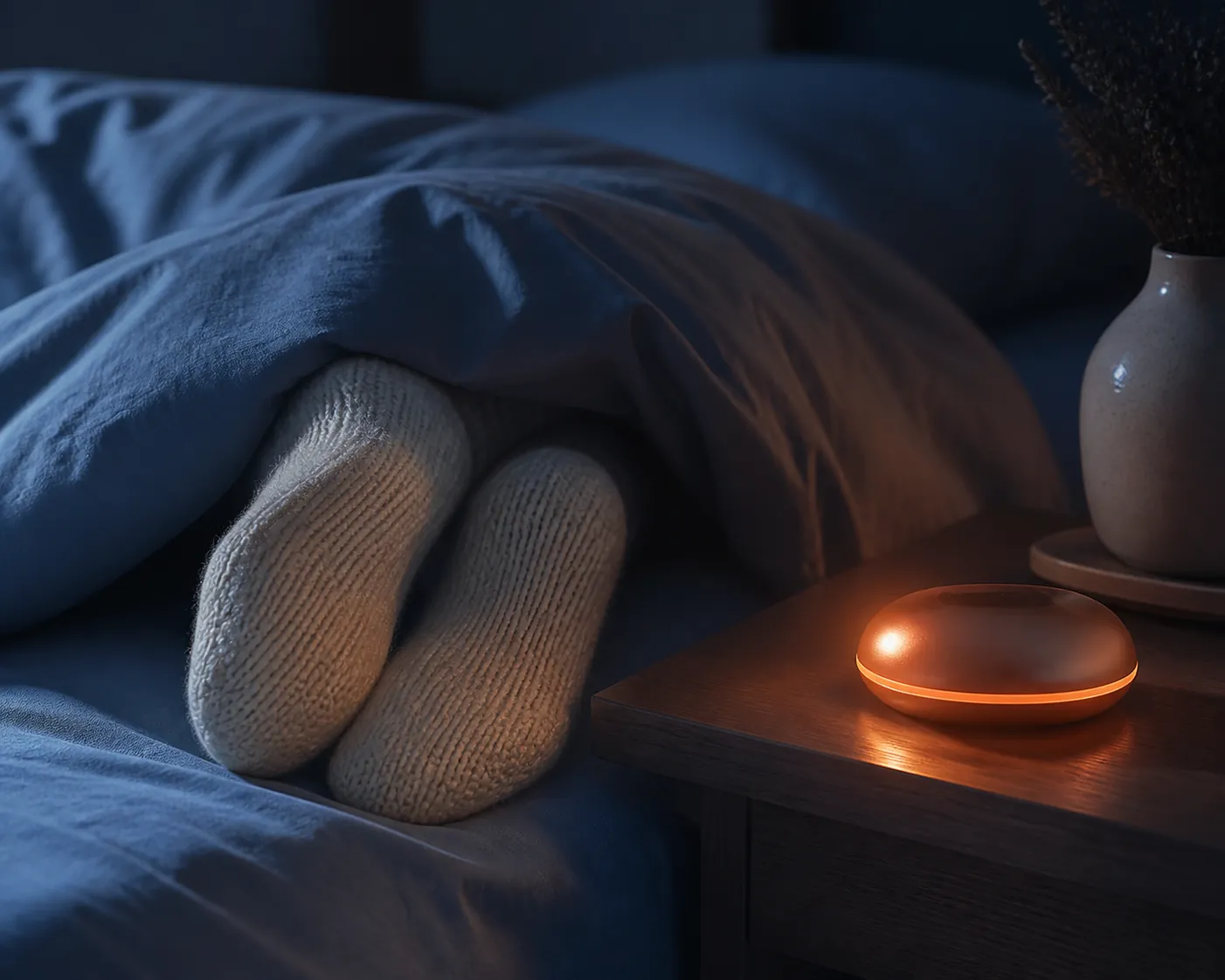
The difference is not whether the warmer feels pleasant at 10:30 p.m. The safety question is what happens after 30 minutes or several hours, when the warmer is trapped under bedding, pressed against skin, and the person using it is no longer checking their feet.
The 2026 recall changed this from a vague worry to a concrete warning
On July 30, 2026, the U.S. Consumer Product Safety Commission announced the recall of about 1.5 million OCOOPA rechargeable hand warmers after 1,480 overheating reports, including 350 burn injuries, 15 fires, and one death involving an 83-year-old consumer in San Diego who died after a fire involving one of the recalled warmers while sleeping in a camper van [1].

That recall does not mean every hand warmer is defective, and it does not mean a hand warmer can never be used responsibly. It does mean a rechargeable heat device sold as portable warming gear has a documented record of overheating, burns, fires, and a fatal fire while a consumer was asleep. That is enough to keep it out of the bed once monitoring stops.
Chemical disposable warmers deserve the same bedtime boundary for a different reason. Even without a battery, they are designed to keep producing heat for a period of time. In a coat pocket, the user is awake, moving, and able to pull the warmer away. Under a duvet, against the side of a foot or heel, the body has fewer chances to notice the problem early.
Why sleep makes a comfortable heat source more dangerous
Burns in bed are not only a matter of dramatic heat. Low-temperature burns can happen when modest heat is held against the skin long enough. A clinical review on low-temperature burns describes cell necrosis occurring with one hour of exposure at 45°C, while much hotter exposure can damage tissue far faster; in the same 43-patient series, electric pads were the most common cause, 69.8% of burns were third-degree, and frequent injury sites included the lower leg, buttock, foot, and heel [2].
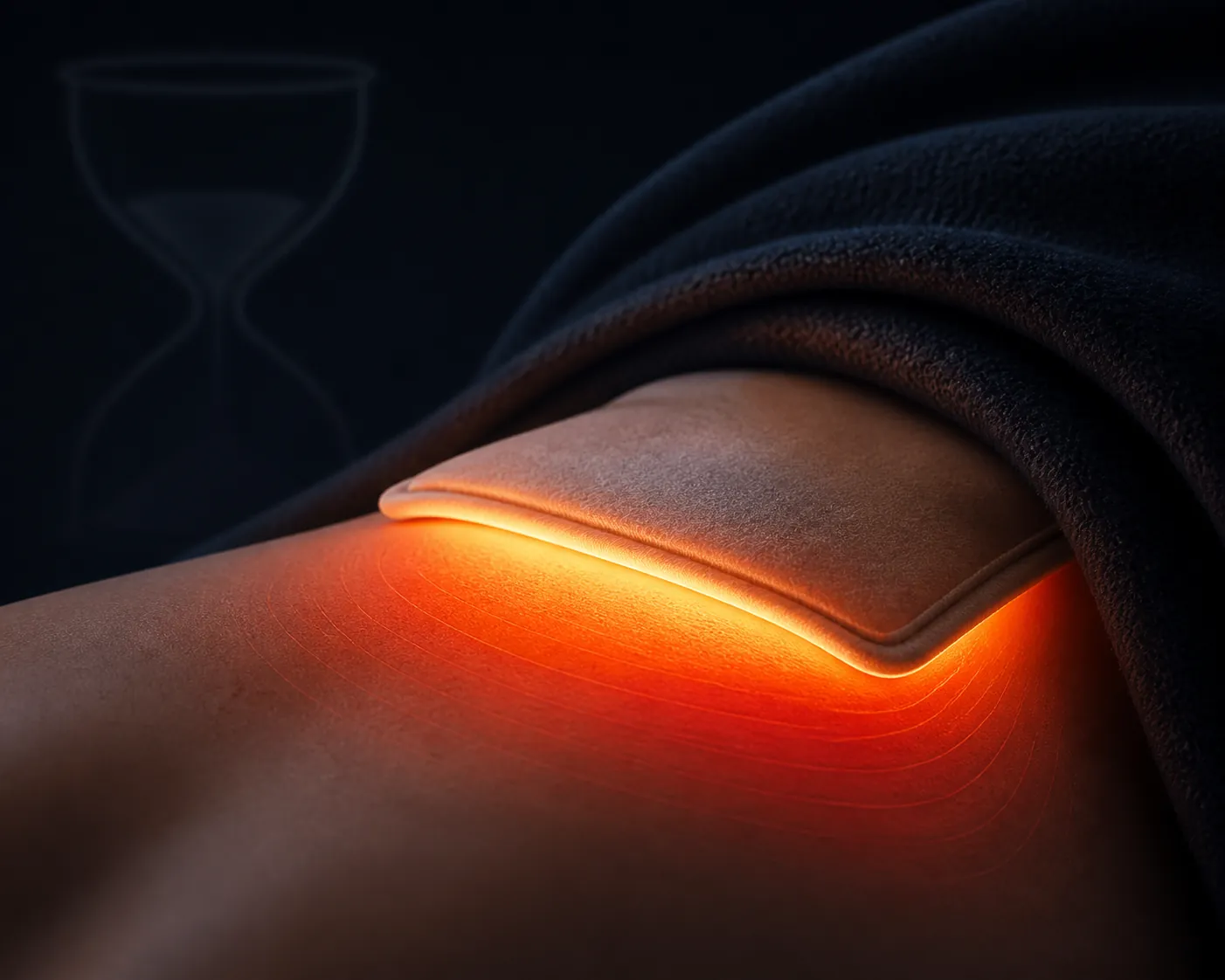
The foot and heel matter here. A heel can rest on a warmer with body weight behind it. A blanket can hold the warmer in place. A sock can reduce the sharp signal of heat while still allowing heat to accumulate. Once asleep, the user is not making the small adjustments that keep awake skin safer: pulling away, checking for redness, moving the warmer, or deciding that pleasant warmth has become too much.
This is especially important for older adults, people with reduced sensation in the feet, people who take sedating medications, and anyone who may not wake easily. The danger is not only that the warmer gets extremely hot. It is that a tolerable heat source can become an injury when time, pressure, insulation, and reduced awareness line up.
The labels already warn against treating warmers like bedding
Product warnings are not decorative. A HotHands retail package warning reproduced by GIANT Food Stores says the warmer’s maximum temperature may reach 158°F/70°C, tells users to remove it if it is too hot, to check skin periodically, and not to sleep with the warmer directly against skin [3]. Those instructions are hard to follow after falling asleep.
Microwave wheat or grain packs are a separate category with their own problem. Fire and Rescue NSW warns that wheat-filled heat packs can ignite and says they are not designed to warm beds [4]. Heating pads and electric blankets are bedding-adjacent products, but they still require caution; the Electrical Safety Foundation International says heating pads and electric blankets cause about 500 U.S. fires per year, almost all involving blankets more than 10 years old [5].
Risk-ranked options for cold feet at bedtime
The useful comparison is not which warmer stays hot the longest. For bedtime, a longer heat time can be a liability. The better question is whether the heat source is still active after the user falls asleep.
| Option | Bedtime safety judgment | How to use it, if at all |
|---|---|---|
| Rechargeable hand warmer in bed | Avoid for sleep. The 2026 OCOOPA recall shows that rechargeable hand warmers can be involved in overheating reports, burn injuries, fires, and one death [1]. | If used, keep it as a pre-sleep or awake-only warmer. Do not leave it under bedding or against feet while sleeping. |
| Disposable chemical hand warmer near feet | Avoid for sleep, especially against skin. Package warnings can include high maximum temperatures and instructions to check skin periodically and not sleep with the warmer directly against skin [3]. | Use briefly while awake, preferably over fabric, then remove it from the bed before sleep. |
| Microwave wheat or grain pack | Not a bed-warming appliance. Fire guidance warns these packs can ignite and are not designed to warm beds [4]. | Use only according to the product instructions and remove it before sleep; do not bury it in bedding as a long warming source. |
| Heating pad or electric blanket | Caution item, not a casual workaround. Fire risk is documented, especially with older electric blankets [5]. | Follow the manufacturer’s instructions, use auto-off where available, avoid damaged or old products, and be extra cautious for anyone who may not sense heat well. |
| Warm footbath before bed | Safer active warming because the heat source is gone before sleep. | Warm the feet before getting into bed, dry them well, then switch to passive insulation. |
| Loose bed socks or passive insulation | Safest overnight approach in this comparison because it does not add an active heat source. | Choose socks that are warm but not tight, and avoid anything that restricts circulation or traps an active warmer against the skin. |
The ranking may feel stricter than many winter-comfort tips, but it follows the exposure. A hand warmer used in a mitten during a walk is watched by an awake person. A hand warmer tucked near toes at midnight is being left to run in the one place where the user is least able to supervise it.
Warm feet can still be part of falling asleep
Giving up hand warmers in bed does not mean accepting icy feet. Foot warming has a plausible sleep benefit when it is done safely. In a crossover study of bed socks in a cool environment, wearing bed socks was associated with sleep-onset latency falling by about 7.5 minutes, total sleep time increasing by about 32 minutes, awakenings dropping from about 16.3 to 8.8, and sleep efficiency rising by about 7.6% [6].
That study does not prove that every person will sleep better in socks, and it does not turn socks into a treatment for every cause of cold feet. It does show that the safer option is not merely timid. Passive foot warming can support the same bedtime goal—warmer feet and easier sleep onset—without asking a sleeping person to police an active heat source.
A safer bedtime routine for cold feet
If cold feet are keeping you awake, set up the warmth before sleep rather than during sleep. The simplest routine is:
- Warm your feet while awake. Use a warm footbath, a brief external warmer, or a heated product only while you can feel and monitor it.
- Remove the active heat source. Take the hand warmer, heat pack, or pad out of the bed before you fall asleep.
- Dry and cover your feet. Damp skin cools quickly, so dry feet well after a footbath and put on loose, breathable bed socks.
- Keep insulation passive overnight. Use socks, bedding layers, or a warmer room setup instead of a device that keeps generating heat against skin.
For someone else—a parent, partner, patient, or anyone with reduced foot sensation—the standard should be even more conservative. If they cannot reliably notice heat, remove heat, and inspect their own skin, they should not be sleeping with a heat pack at their feet.
What about warming the bed first?
Pre-warming is different from sleeping with the warmer. If a device is used to take the chill off the sheets, the safer boundary is clear: put it in before bed while you are awake, keep it away from direct skin contact, and remove it before getting in or before falling asleep. Do not slide a hand warmer down to the foot of the bed and count on remembering it later.
The same logic applies to a heating pad or electric blanket. These products are closer to bedding than outdoor hand warmers are, but they are still electrical heat sources. Use only products in good condition, follow the instructions for sleep or preheat settings, and be wary of older blankets, damaged cords, missing controls, or any setup that leaves heat concentrated under one body part.
The practical rule is simple enough to remember when you are tired: warm the feet before bed, insulate them during sleep, and remove active heat before sleeping.
References
- OCOOPA Direct Recalls 1.5 Million Rechargeable Hand Warmers Due to Risk of Serious Injury or Death from Fire and Burn Hazards; One Death Reported; Imported by Shenzhen Street Cat Technology — U.S. Consumer Product Safety Commission, July 30, 2026
- Early Intervention for Low-Temperature Burns: Comparison between Early and Late Hospital Visit Patients — PMC
- HotHands Hand Warmers 2 ct pkg — GIANT Food Stores
- Wheat Filled Heat Packs — Fire and Rescue NSW
- Electric Blanket Fire Prevention — Electrical Safety Foundation International
- Effects of feet warming using bed socks on sleep quality and thermoregulatory responses in a cool environment — PMC
Read the full guide: Heat wave sleep safety tips for every body