
Heat wave sleep safety tips for every body
If your bedroom is hot tonight, treat sleep as a cooling problem first and a comfort problem second. Your body normally needs to shed heat to fall asleep; when the room stays too warm, that temperature drop gets harder. Sleep Foundation describes core body temperature falling by about 2°F as sleep begins, and notes that a room above 77°F can interfere with that process.[1]

What to do tonight if the room is too hot
Start with the room you can cool most, not the room where you usually sleep. A downstairs room, shaded side of the home, or living room floor may be safer than a bedroom that held heat all day. If you have air conditioning in only one room, sleep there. If you do not, reduce heat exposure before bedtime and keep checking whether your cooling method is still helping.
- Move to the coolest available room, especially if your bedroom is still above 77°F near bedtime.
- Drink water before bed and keep water nearby, but avoid turning the night into repeated large drinks that disrupt sleep.
- Use a cool shower, damp cloth, or cool packs wrapped in cloth on the neck, armpits, or groin before trying to sleep.
- Block daytime sun, open windows only when outdoor air is cooler than indoor air, and avoid adding heat from cooking or unnecessary electronics.
- If your home stays dangerously hot, look for an air-conditioned public place, cooling center, or a safer place to sleep.
A fan is useful only within limits. The National Weather Service says fans are effective below 90°F, but above that point they can accelerate dehydration and should not be treated as a substitute for air conditioning in extreme heat.[2] That line matters at 2 a.m., when a fan can still feel like action even after the room has stopped being safe.
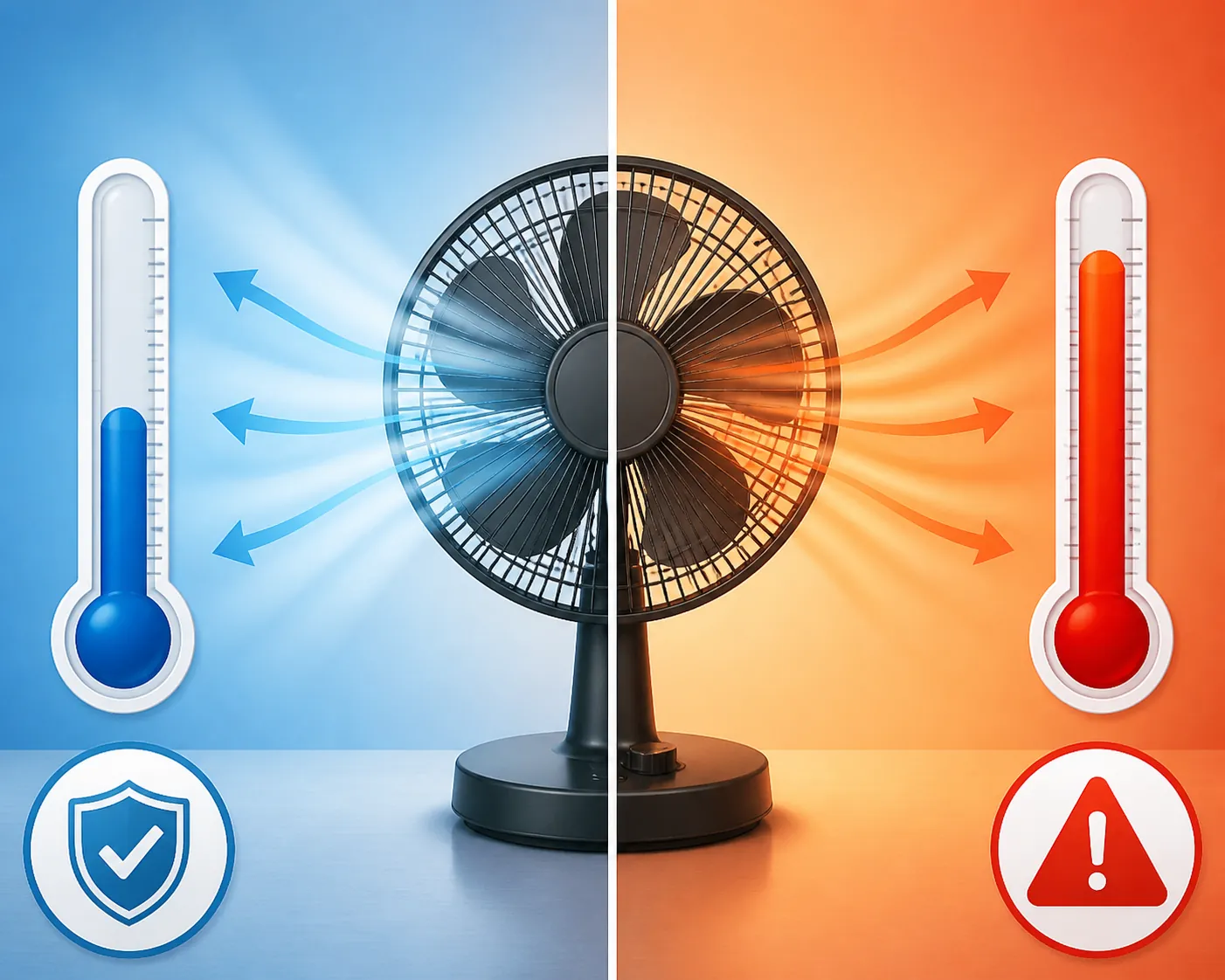
If you are trying to cool a room without air conditioning, keep the setup simple: create airflow only when the air is cooler than the room, put a damp cloth or cool pack on your body rather than relying on a fan alone, and move if the room keeps climbing. For a more detailed no-AC plan, see how to sleep cool without air conditioning tonight.
When it is no longer just a bad night's sleep
Heat exhaustion can look like heavy sweating, weakness, dizziness, nausea, headache, or fainting. Stop trying to push through the night if those symptoms appear. Move to a cooler place, loosen clothing, sip water if the person is awake and able to drink, and use cool cloths while monitoring closely.[3]
Heat stroke is an emergency. Call for emergency help if someone has confusion, loss of consciousness, a body temperature of 104°F or higher, or stops sweating despite the heat.[3][2] While waiting, move the person to a cooler place and start cooling with whatever is available. Do not wait to see whether sleep helps.
| If you notice this | Treat it as |
|---|---|
| Hot room, restless sleep, sweating, thirst, but clear thinking | A cooling and hydration problem to correct now |
| Dizziness, nausea, weakness, headache, heavy sweating, faintness | Possible heat exhaustion; cool down and monitor closely |
| Confusion, passing out, stopped sweating, or 104°F+ body temperature | Possible heat stroke; call emergency services |
Why hot nights damage sleep so quickly
The bedroom does not have to feel unbearable to interfere with sleep. In a 2023 study of older adults, sleep efficiency dropped 5% to 10% as nighttime temperature rose from 77°F to 86°F.[4] That number is not a universal cutoff for every sleeper, but it explains why a room that feels merely sticky at 10 p.m. can become a long, broken night by 3 a.m.
The practical lesson is plain: do not wait until you feel ill to lower heat exposure. If the room is warm enough to block the body's normal cooling, sleep quality may fall before any dramatic symptom appears. That is especially true for people whose bodies already have less margin because of age, medication, pregnancy, hormonal symptoms, or sensory barriers.
Who needs a more specific heat-wave sleep plan
The same hot bedroom does not create the same risk for every body. Use the general checklist first, then route yourself or someone you care for into the guidance that matches the real complication: medication, pregnancy, vasomotor symptoms, or neurodivergent sensory needs.
Older adults, especially when medications are involved
For an older adult, the question is not just whether the room is uncomfortable. It is whether the body can sweat, move blood to the skin, stay hydrated, and recognize danger quickly enough. The CDC's clinical guidance says medications can increase heat risk by affecting sweating, blood flow, hydration, kidney function, electrolyte balance, or alertness.[5]
Common medication groups that may matter during heat include diuretics, beta blockers, ACE inhibitors or ARBs, SSRIs or SNRIs, antipsychotics, anticholinergics, CNS stimulants, and antihistamines.[6] Yale Climate Connections also notes that GLP-1 receptor agonists may increase dehydration risk, which makes fluid intake and symptom monitoring more important during heat waves.[7]
Do not stop a prescription on your own because of a hot night. The safer move is to check the medication list before the heat peaks, ask the prescribing clinician or pharmacist what to watch for, and make a concrete cooling plan. During an advisory, an older adult living alone should have someone check in, especially in the evening and again the next day if the home stayed hot overnight.
Pregnancy
Pregnancy changes the heat equation because baseline body temperature can run higher and the consequences of overheating are not limited to sleep. Tommy's advises pregnant people to stay cool in hot weather, drink at least 1.6 liters of fluid per day, and use a fan when the temperature is below 95°F.[8] The fan threshold is slightly different from the general National Weather Service 90°F line, but the shared point is the same: moving hot air is not enough once conditions become extreme.
The US EPA states that heat exposure during pregnancy is associated with risks including preterm birth, low birth weight, and stillbirth, and that even one day of high heat may increase the risk of hypertensive disorders of pregnancy.[9] A hot night is not automatically an emergency, but pregnancy lowers the tolerance for vague reassurance. If cooling steps are not working, symptoms are developing, or there is any concern about fetal movement, blood pressure symptoms, dehydration, or contractions, contact a clinician or urgent care service rather than waiting for morning.
If you are pregnant and also dealing with perimenopausal symptoms in a household member, shared cooling priorities can conflict: one person may need stronger airflow, another may need less sensory stimulation, and everyone may be short on sleep. The broader household planning guide, California heat wave sleep tips for pregnancy and perimenopause, is the better next read for that situation.
Perimenopause and night sweats
Perimenopause deserves more than a generic reminder to keep the room cool. Vasomotor symptoms can bring hot flashes and night sweats into the same hours when the body is trying to lower core temperature for sleep. The American Heart Association's hot-weather sleep guidance explicitly names menopausal women among people affected by hot-weather sleep disruption.[10]
The evidence here should be kept in its lane. The materials support a plausible compounded burden: ambient heat can interfere with sleep cooling, and menopausal symptoms can add internal heat surges and sweating. They do not prove a single measured effect for every perimenopausal sleeper during every heat wave. That uncertainty does not make the problem imaginary; it means the plan should be practical and adjustable.
If this is your pattern, focus on fast recovery after a sweat episode: dry sleep layers, a spare top within reach, a cool cloth, and bedding you can remove without rebuilding the whole bed. For deeper guidance, read how to cool both heat waves and hot flashes for sleep. If your area is under an advisory tonight, use how to sleep in a heat advisory when you're perimenopausal for the more immediate version.
ADHD and sensory or medication barriers
For ADHD adults, the sleep problem may not be solved by telling someone to make the room cooler and drink water. Heat can add sensory irritation, disrupt routines, and make it harder to notice thirst, fatigue, or the point when a coping strategy has stopped working. Stimulant medications can also affect thermoregulation, so medication timing and heat exposure deserve attention during heat waves.[11]
Some ADHD-focused guidance points to 68°F to 72°F as a possible comfort range for cognitive function, but that claim comes from a narrower evidence base and should be treated as suggestive, not a universal sleep prescription.[11] The more useful adjustment is to remove decisions from the hottest part of the night: set water out early, choose the coolest acceptable sleep clothes before bedtime, pre-place earplugs or a quieter fan if fan noise is a problem, and decide in advance what room you will move to if the bedroom stays hot.
The three decisions to make before bed
Before you try to sleep through a heat wave, answer these three questions while you are still clear-headed: Where is the coolest safe place I can sleep? At what point will I stop relying on the fan or this room? Who in this household, building, or family has extra risk because of age, pregnancy, medication, perimenopause, or ADHD?
That is the part generic heat advice often misses. The first mechanism is shared: heat blocks the body's sleep-onset cooling. The next decision is individual, because the same hot room lands differently in a body managing blood pressure medication, pregnancy, night sweats, stimulant timing, sensory overload, or simply another hour of poor sleep.
References
- The Best Temperature for Sleep — Sleep Foundation.
- During a Heat Wave — NOAA/National Weather Service.
- Extreme Heat Safety — Red Cross.
- Study links rising temperatures to reduced sleep in U.S. adults — USC Keck School of Medicine.
- Heat and Medications – Guidance for Clinicians — CDC, September 2025.
- 8 Types of Medications That Can Make It Harder to Handle the Heat — AARP, July 2026.
- These common medications may increase your risk during heat waves — Yale Climate Connections, April 2026.
- Coping with hot weather in pregnancy — Tommy's, June 2026.
- Heat and Pregnancy — US EPA.
- Keep your cool – and stay healthy – with these hot-weather sleep tips — American Heart Association, August 2025.
- Does Summer Heat Make ADHD Worse? — Mindful Health.
Read the full guide: How a power grid emergency affects your sleep during a heat wave