
How to Sleep During a Denver Heatwave
To sleep during a Denver heatwave, start before the bedroom feels unbearable: keep sun out all afternoon, keep windows shut while outdoor air is hotter than indoor air, open up once the outside temperature drops after dark, use fans to pull cooler air through the apartment instead of just blasting your face, and add moisture to the moving air because Denver’s dry heat makes evaporative cooling useful. That playbook is different from generic heatwave advice because Denver can punish you at 4 p.m. and still hand you cooler air after sunset.
The catch is that July 2026 has made the nights less forgiving. Denver-area heatwave reporting has described dangerous triple-digit heat and near-record temperatures, with overnight lows around 74–76°F during the hottest stretch.[1] When the low only drops into the mid-70s, an upstairs bedroom, west-facing rental, or brick building can hold heat long after the sidewalk cools. The goal is not perfect sleep. The goal is to lower the room and your body enough that sleep becomes possible without missing heat-illness warning signs.

Why Denver Heat Messes With Sleep Differently
Heat disrupts sleep because your body normally needs to shed heat at night. If the bedroom stays hot, your core temperature has a harder time dropping, sleep becomes lighter, and you wake more often. A large Nature Communications study using more than 23 million sleep records in China found that each 10°C rise in temperature was associated with a 20.1% increase in the odds of insufficient sleep and about 10 fewer minutes of sleep per night.[2] That does not mean Denver sleepers should copy the numbers directly; buildings, air conditioning access, acclimatization, and local climate differ. It does mean the complaint is not imaginary. Hot nights measurably cut into sleep.
Denver adds its own geometry. Local no-AC cooling guides point to the same practical problem renters already know: many apartments and older homes were not built around central air, and west- or south-facing rooms can collect heat for hours.[3] At the same time, Denver’s dry summer air, often discussed around the 30–35% humidity range, gives wet towels, damp sheets, and evaporative cooling more bite than they would have on a muggy coastal night.[4][5]
The other Denver advantage is the diurnal swing. The Front Range can see a 30–40°F difference between daytime highs and nighttime lows, which makes window timing matter more than it does in places where the night stays soupy and still.[5] But timing is the whole point. “Open a window” at 3 p.m. can turn a bedroom into a convection oven. “Open a window” during wildfire smoke, poor air quality, or in a first-floor room that does not feel secure is not a plan either.
Run the Apartment Like a Heat Trap You Are Trying to Beat
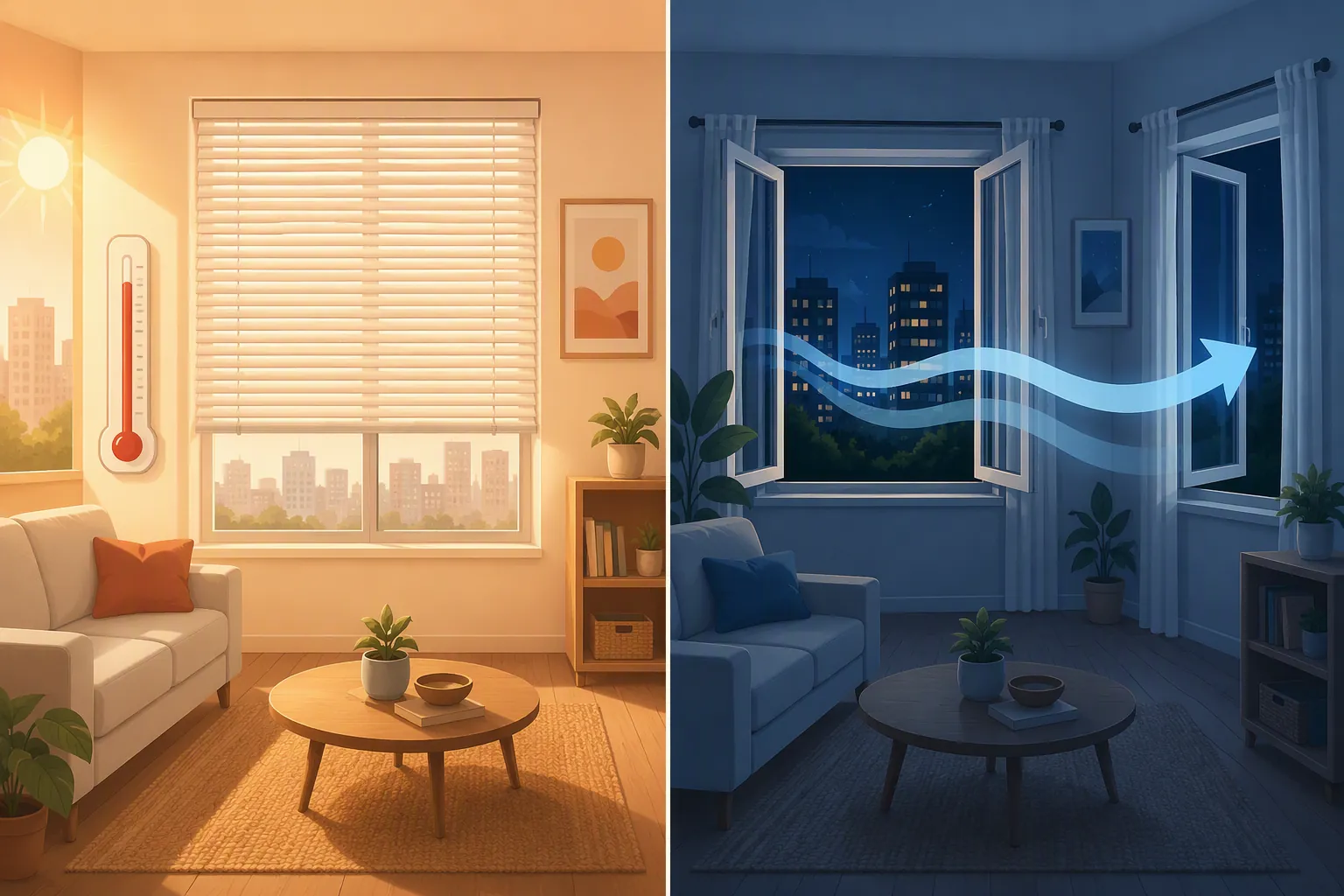
The night starts in the afternoon. If your bedroom gets sun after 2 p.m., bedtime cooling begins before dinner: close blinds, curtains, and shades on the sunny side; keep windows shut while outdoor air is hotter than the room; turn off unnecessary lights and electronics; and avoid running the oven. Local Denver cooling advice consistently starts with blocking heat before it enters, because once walls, floors, and bedding absorb heat, a small fan has a much harder job.[3][4]
| Time | What to do | Why it matters in Denver |
|---|---|---|
| Late morning through afternoon | Close blinds and windows on the hot side; block direct sun. | Stops the room from storing heat before the evening. |
| Early evening | Check outdoor temperature, air quality, and security before opening windows. | The outside may still be hotter than the room, even if the sun is lower. |
| After outdoor air drops below indoor air | Open selected windows and use fans to create a cross-breeze. | Uses the Front Range nighttime drop instead of fighting it. |
| Before bed | Cool your body, dampen fabric lightly, and set water within reach. | Dry air and altitude can make dehydration creep up overnight. |
| If the room stays very hot | Stop relying on fan tricks alone; look for cooling access. | High indoor heat changes the problem from comfort to safety. |
If you rent, you may not be able to add insulation, install exterior shades, or change the windows. Still, small barriers help. A light-colored curtain liner, temporary reflective shade, or even cardboard-backed foil in a window you do not need for daylight can reduce radiant heat. Keep the bedroom door open during the day only if the rest of the home is cooler; if the hallway or kitchen is hotter, close the bedroom off and protect it like a smaller zone.
The most common mistake is letting the cool morning air escape and then inviting afternoon heat inside. If the apartment is cooler at 9 a.m. than the air outside, shut it down early. You can reopen later. Denver gives you a second chance after dark; it does not owe you a cool room if you aired it out through the hottest part of the day.
Use the Night Air, But Wait Until It Is Actually Cooler
Window timing is the Denver trick that deserves more respect. Do not open everything just because the sun has dropped behind the buildings. First compare indoor and outdoor temperature. If the outdoor air is still warmer, keep the heat outside and run only what helps you tolerate the room safely. Once outside air drops below the indoor temperature, open windows on opposite sides of the home if you can. Even a cracked bedroom window paired with a wider living-room window can move air if there is a path between them.
A box fan works best when it has a job. If the room is hotter than outside, put one fan in or near a window blowing hot indoor air out, then open another window on the cooler or shaded side to pull air in. If you have two fans, one can exhaust hot air while the other helps push cooler air through the sleeping area. In a single-window bedroom, point the fan outward for a while to dump trapped heat, then turn it toward you once the room has cooled somewhat.
Stuck windows complicate this. If only one window opens, use the door. A fan at the bedroom doorway can pull cooler air from a hallway or living room after those windows open. If the upstairs neighbor’s unit bakes all day, the shared hallway may not help; if the basement or shaded side of the building cools faster, that air is worth borrowing. The point is to move the coolest available air toward the sleeping surface, not to create wind for its own sake.
There are caveats. If smoke, ozone, or poor air quality is present, opening windows may trade heat stress for breathing stress. If you are on a ground floor, facing an alley, or sleeping alone and do not feel secure, do not let heat advice bully you into an unsafe setup. Open windows in stages, use stops or locks if you have them, and favor windows that are harder to access from outside. If the power is out too, the no-AC tactics in How to Sleep Without AC When the Power Goes Out are a useful adjacent playbook.
Where Fans Help, and Where They Stop Being Safe
Fans help most when they either exchange air or speed evaporation from skin and fabric. They do less when they only push hot room air around. The safety line matters: CDC heat-health guidance says electric fans may provide comfort, but when temperatures are in the high 90s they will not prevent heat-related illness, and fan use can increase body temperature when indoor air is above 90°F.[6] That is especially relevant on Denver heatwave days reaching 100°F or more.
So use fans with a thermometer, not just hope. If the room is under 90°F and the air is dry, fan plus moisture can feel dramatically better. If the room is above 90°F, especially for an older adult, pregnant person, baby, medically fragile person, or someone who is already dizzy or nauseated, the fan is not the main intervention. Cooling the body with water, moving to a cooler location, or seeking air-conditioned space becomes more important.
For bedroom placement, keep the strongest airflow near the bed only after you have tried to dump the room’s stored heat. A rattly box fan in the window can exhaust air for the first part of the evening, then move to a chair near the bed later. If noise keeps you awake, put the fan farther away and aim it across damp fabric rather than straight at your head. Air movement over moisture is often quieter than high-speed wind on your face.
Make Dry Air Do Some Work
Evaporative cooling is where Denver has an actual advantage. In humid weather, a wet towel can just become a clammy towel. In dry air, water evaporates faster, and evaporation pulls heat from the surface it leaves. That is why a damp washcloth on the neck, a lightly damp top sheet, or a towel hung near moving air can cool better here than the same trick would in a sticky climate. Local Denver sleep and home-cooling guides specifically point readers toward dry-heat tactics such as ventilation, shade, breathable bedding, and moisture-assisted cooling.[3][4][5]
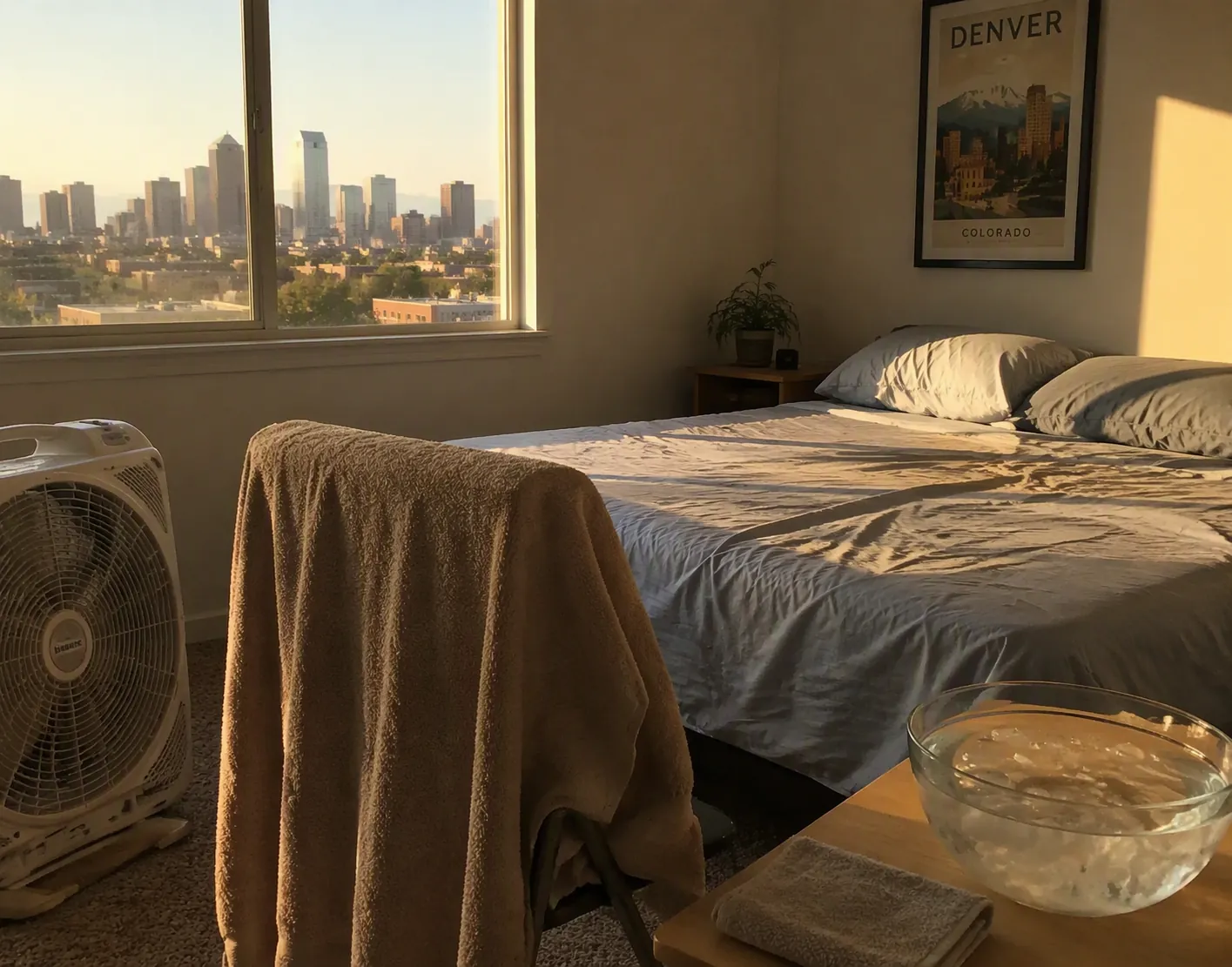
Keep it controlled. You want damp, not soaked. A wet sheet that drenches the mattress can trap heat later, create mildew problems, or make you wake chilled after the temperature finally drops. Try one of these instead: mist the top sheet lightly and let a fan move across it; wear a damp cotton bandana around your neck; put a cool, wet washcloth on wrists, neck, or inner elbows; or hang a damp towel over a chair in the fan’s path, leaving enough space so the fan is not blocked.
A shallow bowl of ice water in front of a fan can offer a small cool zone, but it is not an air conditioner. It helps most if you sit near it while winding down or aim the airflow across your upper body before sleep. Once the ice melts, the effect fades. Frozen water bottles wrapped in a thin towel can last longer and are less spill-prone; place one near your feet, behind your knees, or beside your torso rather than directly on bare skin.
If you have a swamp cooler or portable evaporative cooler, Denver’s dry air is the reason it can be useful. But it still needs airflow. Crack a window according to the unit’s instructions so humidified air can leave instead of turning the room muggy. If the outdoor air is smoky or the indoor temperature remains unsafe, do not treat evaporative cooling as a guarantee; it is a tool, not a shield.
Cool the Body Before You Ask It to Sleep
A lukewarm or slightly cool shower before bed can help, especially if you do not dry off completely before standing near moving air. Very cold showers feel good for a minute but can make some people feel more alert, and shivering is the opposite of what you want. The practical target is simple: damp skin, moving air, lighter bedding, and no heavy meal still sitting in your stomach.
European Insomnia Network expert recommendations for heat periods emphasize behavioral adjustments such as keeping the sleeping environment cool, avoiding heavy meals and alcohol, using appropriate bedding and clothing, and protecting sleep timing where possible.[7] Those are not magic sleep-optimization rules; they are ways to reduce the heat load your body has to manage at night. In Denver, alcohol is especially unhelpful because it can worsen dehydration and fragment sleep just when dry air is already taking moisture from you.
Bedding should be boring and breathable: cotton or linen sheet, light sleepwear, no memory-foam heat cave if you can avoid it. If the mattress holds heat, sleep on top of a folded cotton blanket or spare sheet rather than sinking into foam. If the bedroom is upstairs and the living room is cooler, consider moving for the night. Pride has no place in a heatwave; the coolest safe surface wins.
Hydration Is Not Wellness Decoration Here
At 5,280 feet, in dry air, during a hot night, dehydration can sneak in before thirst feels dramatic. You lose moisture through breathing and sweat; a fan can increase evaporation; alcohol and some medications can make the balance worse. Keep water by the bed, but do most of your drinking earlier in the evening so you are not waking every hour to use the bathroom.
If you have been sweating heavily, plain water may not be enough. Add salty food with dinner or use an electrolyte drink if that is already safe for you. People with kidney disease, heart failure, blood-pressure restrictions, or fluid limits should follow medical guidance rather than internet heatwave advice. For everyone else, the useful sign is not a perfect ounce count; it is whether urine is very dark, whether you feel lightheaded when standing, whether your mouth is dry, and whether a headache is arriving with the heat.
Perimenopause can make this harder. Night sweats, hotter sleep, and more fragile sleep continuity can turn a bad bedroom into a miserable one. If that is part of the pattern, the heatwave-specific advice in Why Heatwaves Wreck Perimenopause Sleep More Than They Used To and Heat Dome Night Sweats? Why CBT-I Helps Perimenopause Sleep may be more relevant than generic “cool bedroom” advice.
When Bedroom Tricks Are Not Enough
There is a point where the problem stops being sleep quality and becomes heat safety. CDC guidance lists heat-related illness concerns including high body temperature, dizziness, nausea, headache, weakness, heavy sweating, and confusion, and urges people to take heat illness seriously rather than waiting it out.[6] If someone is confused, fainting, unable to cool down, or showing signs of heat stroke, that is urgent.
Check the people whose rooms run hotter: upstairs bedrooms, top-floor apartments, older adults, pregnant people, infants, people with chronic illness, and anyone taking medications that affect sweating, hydration, or temperature regulation. A quick text to the neighbor above you is not nosy during a heat dome. It is logistics. If their apartment is still roasting near midnight, they may need a cooler room, a cooling center, a friend’s couch, or a plan for the next night before exhaustion stacks up.
For households without reliable cooling, make a threshold before you are too tired to think: if indoor temperature stays above 90°F, if a vulnerable person cannot cool down, if poor air quality prevents window ventilation, or if sleep loss is piling up across several nights, move to an air-conditioned place if you can. The safety planning in How to Sleep Safely Without Power Until Restoration is useful even when the power is on, because the same vulnerable-body thresholds apply.
A Denver Heatwave Bedtime Plan for Tonight
- Before sunset, close the sunny-side blinds and windows, especially west-facing rooms that keep baking after work.
- Around evening, compare indoor and outdoor temperatures; wait to open windows until outside air is cooler, unless indoor heat is already unsafe.
- Once it cools outside, create a cross-breeze: exhaust hot air from one window and pull cooler air from another, shaded, or lower part of the home.
- Use dry-air cooling: damp washcloth on neck or wrists, lightly misted sheet, damp towel near a fan, or wrapped frozen bottle near the body.
- Drink earlier in the evening, add electrolytes or salty food if you have been sweating heavily, and keep water by the bed.
- If the room stays above 90°F or someone shows heat-illness symptoms, stop treating this as a sleep-hack problem and get to cooler air.
Denver’s dry air and nighttime temperature drops can make a hot bedroom more workable than generic heatwave advice suggests. They do not make the heat harmless. Use the cool window carefully, block the sun early, let evaporation help, drink like altitude matters, and know when the safest sleep strategy is leaving the hot room.
References
- Heat dome settles over Colorado, bringing dangerous triple-digit heat and near-record temperatures, Denver7.
- Nature Communications sleep and temperature study, Nature Communications.
- How to Make Your Denver Apartment Cooler Without AC, Cornerstone Apartments.
- Keep Your House Cool Summer, REenergizeCO.
- Why Do I Sleep So Hot? Denver Cooling Solutions, Sleep Basil.
- About Heat and Your Health, CDC.
- European Insomnia Network expert recommendations, Journal of Sleep Research.
Read the full guide: How to Sleep During a Tornado Warning When Pregnant