
How to Watch the Perseid Meteor Shower Without Losing Sleep
If you mean how to watch the July 2026 meteor shower without losing sleep, the most sleep-protective answer is already the least romantic one: don’t optimize around July now. The July 30–31 Southern Delta Aquariids and Alpha Capricornids double peak has passed, and it was a poor bargain anyway. The American Meteor Society listed both showers peaking on July 30–31, 2026, with the Southern Delta Aquariids at ZHR 25, the Alpha Capricornids at ZHR 5, and the moon 98% full, with activity “severely compromised.” [1]
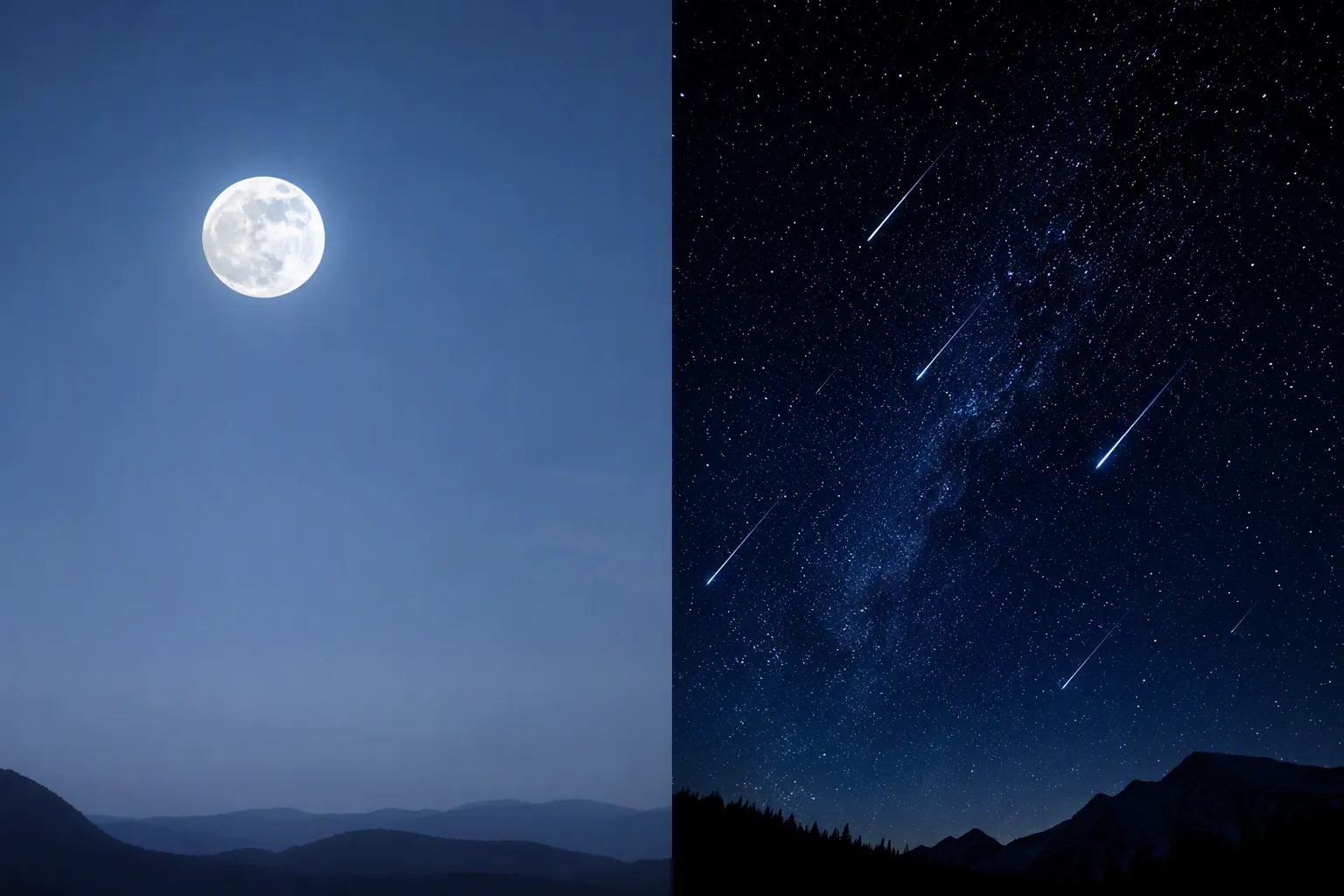
Moonlight is the great equalizer in the least useful way: it does not care whether you are a night owl, an early bird, a parent with a 6:30 a.m. alarm, or someone whose brain finally starts answering email at 11:45 p.m. A nearly full moon washes out faint meteors for everyone. The better 2026 summer sky is the Perseid peak on Aug. 12–13, which falls under a new moon on Aug. 12. [2]
That moves the real question from “Can I see meteors after midnight?” to “Is this particular after-midnight window worth the sleep cost for my body clock?” Those are not the same question, although the internet often treats them as twins who share a calendar app.
The useful 2026 answer: aim for the Perseids, then decide by chronotype
The Perseids are worth discussing because the astronomy is finally on your side. The American Meteor Society notes that major meteor showers are best seen after midnight, and Space.com places the 2026 Perseid peak on Aug. 12–13 under new-moon conditions. [1][2] That does not mean everyone should stand in a field until 3 a.m. and call it wellness. It means the sky is good enough that your sleep biology becomes the deciding factor.
For many ADHD adults and natural evening types, that distinction matters. APSARD’s Sandra Kooij describes ADHD adults as having melatonin onset about 90 minutes later, with falling asleep taking at least 3 hours compared with about 2 hours in controls. [3] That is not permission to erase your sleep needs. It is a reason to stop pretending that midnight lands in the same biological place for everyone.
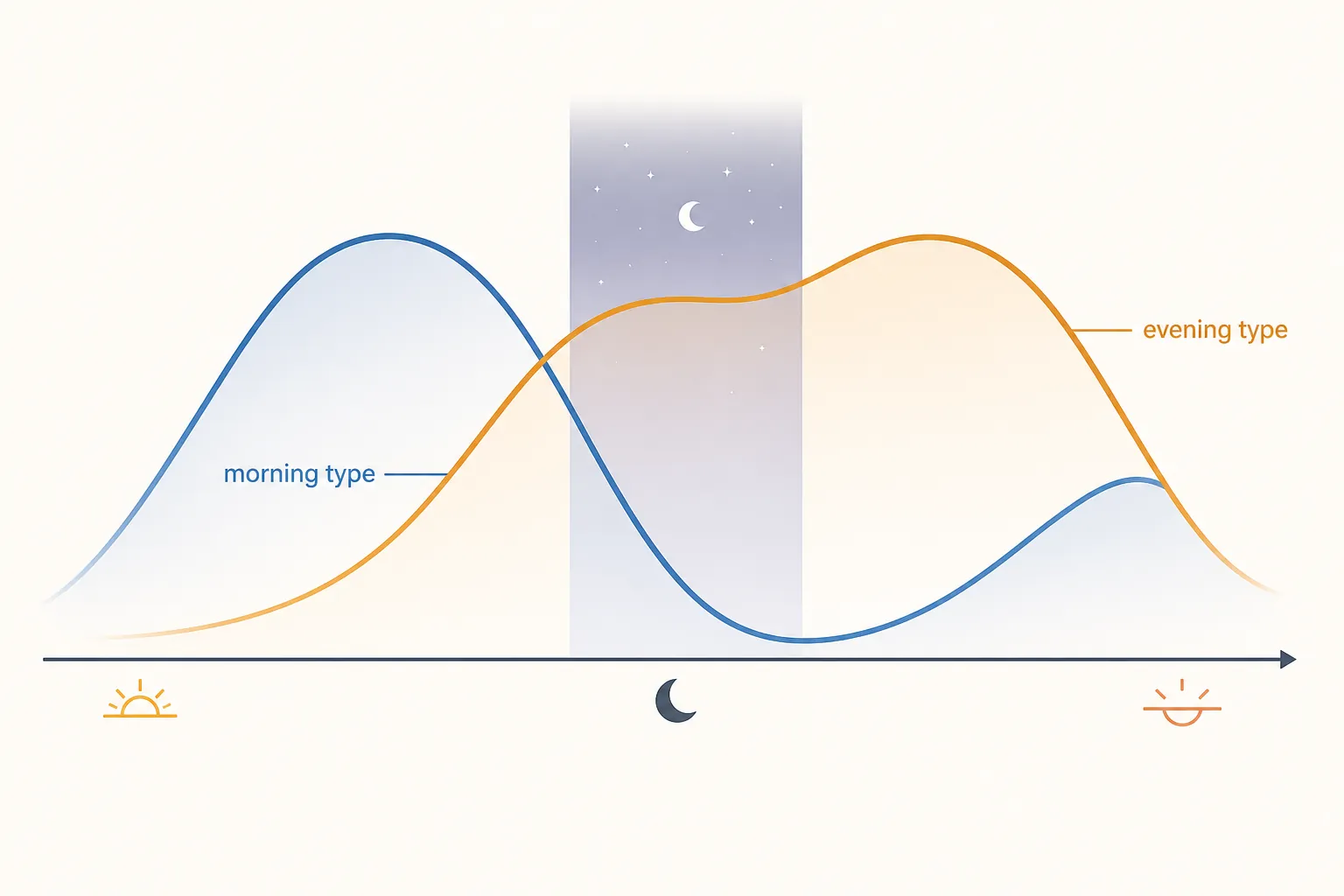
For a later-shifted sleeper, the Perseid viewing window may overlap with a time when they are still reasonably alert. For a morning type, the same clock time may fall closer to the body’s low point. Same meteor shower, different bill.
Your chronotype verdict
| If this sounds like you | Best Perseid plan | The sleep catch |
|---|---|---|
| Natural evening type or ADHD adult who is usually alert late | Stay up for a pre-limited watch window after midnight | Do not let a biologically easier late night become an all-night vigil |
| Morning type who fades hard before midnight | Skip, or use a very short alarm window only if the next morning is forgiving | Expect grogginess; sleep inertia is not a moral flaw |
| Any chronotype with a fixed early obligation | Use the shortest possible window or skip | The alarm clock outranks the meteor shower |
| Anyone who would need to drive home sleepy | Skip or sleep where you are | No meteor is worth drowsy driving |
Evening types and many ADHD adults: a bounded stay-up can make sense
If your usual pattern is later sleep onset, later alertness, and a second wind that other people find suspiciously inconvenient, the Aug. 12–13 Perseid peak is the rare meteor plan that may fit your body instead of fighting it. The after-midnight recommendation is still inconvenient, but it is not automatically a circadian ambush.
The cleanest version is not “stay up and see what happens.” Pick a watch window before you leave the house. For example, you might decide on a modest after-midnight block, set a departure alarm, and make the end of the window non-negotiable. The point is to spend your alert late-night energy on the sky, not on accidentally adding a second movie, a snack run, and a 4 a.m. debate about whether your phone camera can capture meteors. It probably cannot, and now everyone is colder.
This is especially important for ADHD adults because a later body clock and a stimulating event can be a very persuasive team. The APSARD sleep-timing evidence supports taking delayed sleep seriously; it does not support pretending the next day disappears. [3] If you have work, caregiving, school drop-off, medication timing, or a commute in the morning, the plan has to include the morning version of you, who will be less enchanted by your astronomical values.
Morning types: skipping is a valid plan, not a failure of wonder
Morning types often get offered the worst bargain in meteor advice: go to bed, set an alarm for the middle of the night, wake up from deep sleep, stand outside, then behave like a functional citizen a few hours later. That can be done. It is not free.
If you are reliably sleepy early, the defensible plan is either to skip the Perseid peak or to use a strictly capped alarm window only when the following morning is unusually soft. A capped alarm window means you are not “getting up for the night.” You are doing a short wake-up, stepping outside or going to a pre-chosen nearby dark spot, watching briefly, and returning to bed before your brain gets convinced that the day has begun.
Grogginess after that alarm should be expected. It does not mean you are bad at meteor showers. It means you interrupted sleep at a biologically unfriendly time. Build the morning around that reality or choose sleep with a clear conscience.
Fixed morning schedule: your chronotype gets overruled
A natural night owl with no morning obligation can make a very different decision from a natural night owl with a 7 a.m. meeting and a highway commute. Likewise, an early bird on vacation has more room to experiment than an early bird responsible for a toddler at sunrise. Chronotype tells you how expensive the late window is likely to feel; your next-day obligations tell you whether you can afford it.
If the next morning is fixed, shorten the watch or skip. Do not borrow alertness from a morning that has no flexibility.
The sleep-protection protocol for any meteor night
The goal is not to watch meteors without any sleep cost. If you are awake during your usual sleep window, there is a cost. The goal is to keep one good sky event from becoming a two-night sleep problem.
- Choose the night carefully. For summer 2026, that means the moonless Perseid peak on Aug. 12–13, not the already-past, moon-washed July double peak. [1][2]
- Pre-set the end of the viewing window. Decide before you are outside, bundled up, and emotionally attached to “just ten more minutes.”
- Keep the setup boringly easy. The farther, colder, more complicated, and more social the outing becomes, the more likely it is to sprawl.
- Protect the following night. Do not compensate for one late night with another late night “because the week is already weird.” That is how a meteor shower becomes a sleep schedule.
- Make drowsy driving a hard no. If the plan requires you to drive home when sleepy, the plan is bad. Watch from home, sleep at the viewing location if it is safe and appropriate, ride with a fully alert driver, or skip.
The ordinary meteor-viewing advice still applies in the background: darker skies help, patience helps, and your eyes need time away from bright light. But in a sleep decision, those details come second. A perfect dark-sky site that leaves you unsafe on the road is not a better plan than a less dramatic view from your yard.
A simple way to make the call
Use the sky first, then your body clock, then your morning.
- Sky: July 30–31 is over and was compromised by a 98% full moon; Aug. 12–13 is the better 2026 summer target. [1][2]
- Chronotype: evening types and many ADHD adults may be able to use the after-midnight window with less disruption; morning types should be much more conservative. [3]
- Morning: if you have a fixed early obligation, cap the outing sharply or skip.
- Safety: if sleepiness could affect the trip home, do not drive.
That leaves a perfectly respectable set of answers. Night owls can reasonably plan a bounded Perseid watch. ADHD adults with delayed sleep timing can treat their later alertness as biology, while still protecting the next day. Early birds can skip without apologizing to the cosmos. And nobody needs to pretend a washed-out July peak was the one worth losing sleep over.
References
- Meteor Shower Calendar 2026-2027, American Meteor Society
- Perseid meteor shower 2026 — When, where and how to see it, Space.com
- Are You a Night Owl? About ADHD and Late Sleep, APSARD
Read the full guide: How to Watch the July 2026 Meteor Shower Without Ruining Your Sleep