
Sleep Apnea in Women: Frequently Asked Questions
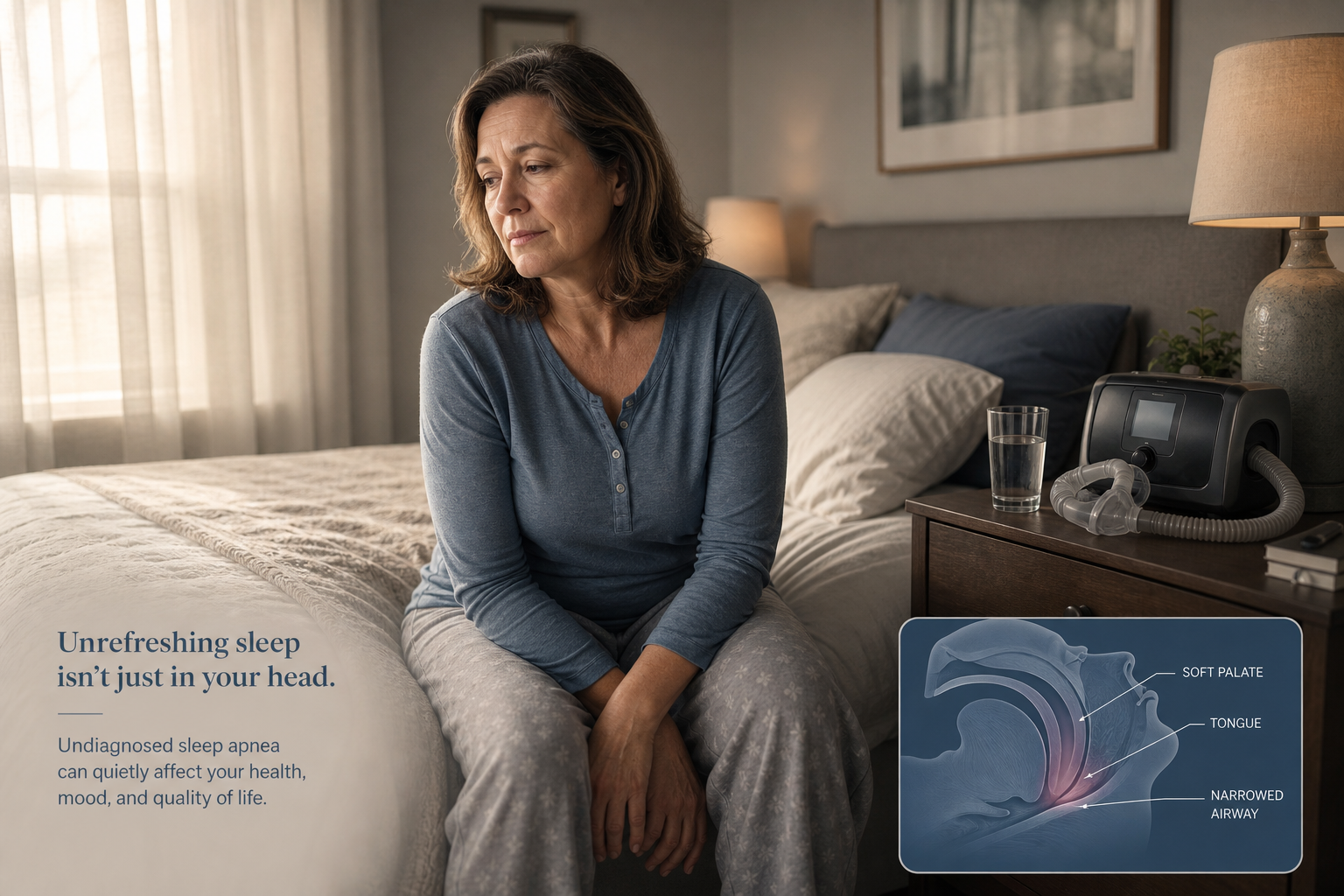
Why a Women-Specific Sleep Apnea FAQ
If you have already read a general sleep apnea FAQ — covering symptoms, AHI thresholds, CPAP basics, and when to see a doctor — this article is not a repeat of that. It exists because the general version cannot serve you adequately if you are a woman, particularly one in perimenopause or postmenopause.
The clinical reality is this: sleep apnea in women presents differently, is screened for with tools designed around male populations, and is treated without enough attention to female-specific biology. The result is that up to 75% of women with obstructive sleep apnea remain undiagnosed — not because the condition is rare, but because the clinical system is not looking for it in the right way.
This FAQ targets women aged 35–60 who are experiencing unexplained fatigue, recurrent nighttime waking, morning headaches, or mood changes that have been attributed to hormones or stress — and who have not yet considered sleep apnea as a possible cause. It also addresses women already diagnosed with OSA who want to know whether their diagnostic workup was adequate and whether their treatment plan reflects what the evidence says about female physiology.
Recognition: Why Sleep Apnea Is So Often Missed in Women
Why is sleep apnea missed in up to 75% of women?
The diagnostic gap has several overlapping causes. First, clinicians have historically associated OSA with a recognizable male profile: middle-aged, overweight, visibly sleepy, and reported by a bed partner to snore loudly and stop breathing. Women rarely fit this picture, even when their OSA is severe.
Second, the symptoms women most commonly report — fatigue, insomnia, morning headaches, frequent nighttime urination, mood disturbance, memory problems, and depression — are easily attributed to perimenopause, stress, or anxiety. These explanations are not wrong on their face, but they become a diagnostic endpoint rather than a starting point, and OSA never gets ruled out.
Third, the screening and diagnostic tools used in clinical practice were developed predominantly in male cohorts. They are calibrated to detect the male pattern of OSA, which means women with the female pattern can pass through screening with a clean result — and still have significant disease.
What do sleep apnea symptoms actually look like in women?
The contrast with the male presentation is clinically meaningful. Women with OSA are more likely to report:
- Persistent fatigue that sleep does not relieve
- Difficulty falling back to sleep after waking during the night (sleep-maintenance insomnia)
- Morning headaches, especially upon waking
- Nocturia — waking two or more times per night to urinate
- Mood disturbances, irritability, and depressive symptoms
- Nightmares or vivid, disturbing dreams
- Memory and concentration difficulties
Loud snoring and witnessed apneas — the hallmarks of male OSA — are far less common in women. Research indicates that up to 40% of premenopausal women with OSA do not report snoring, nocturnal choking, or witnessed apneas at all. Nocturia, notably, is reported by approximately 60% of women with OSA compared to about 41% of men — yet it does not appear in any current OSA screening questionnaire.
Can insomnia actually be sleep apnea?
Yes — and this connection is particularly important for women. Sleep-maintenance insomnia (waking repeatedly during the night and struggling to return to sleep) is one of the most common presentations of OSA in women, and it is routinely misread as primary insomnia.
The mechanism is straightforward: when an airway obstruction causes an arousal, the person wakes — often briefly and without awareness of why. If this happens repeatedly across the night, the subjective experience is insomnia, not apnea. Women are more likely than men to have arousals as the primary response to airway obstruction, rather than the full apnea events that are easier to detect and report.
Why do women score lower on sleepiness scales even when their OSA is significant?
The Epworth Sleepiness Scale (ESS) — one of the most commonly used clinical screening tools — asks respondents to rate their likelihood of dozing in various situations. Women with OSA tend to score lower on the ESS than men with equivalent disease burden, not because they are less affected, but because their OSA manifests as fatigue, mood disturbance, and insomnia rather than overt daytime sleepiness. A low ESS score in a woman with other OSA symptoms should not be used to dismiss further evaluation.
Biology and Risk: How Hormones Shape OSA Across the Female Lifespan

How do estrogen and progesterone protect against sleep apnea?
Progesterone directly increases the activity of the genioglossus muscle — the primary dilator muscle of the upper airway that keeps the throat open during sleep. Higher progesterone levels mean greater muscle tone and a more stable airway. Estrogen receptors are present in pharyngeal muscles and contribute to airway stability through a related but distinct mechanism. Estrogen also promotes deeper, more consolidated sleep (increasing time in N3 slow-wave sleep), which reduces the sleep fragmentation that worsens respiratory instability.
Together, these hormonal effects give premenopausal women a degree of biological protection against airway collapse during sleep that men do not have. This is one of the reasons OSA is approximately twice as common in men during the reproductive years.
What happens at perimenopause and postmenopause?
As estrogen and progesterone levels decline through perimenopause and fall sharply at menopause, that protective airway tone is lost. Sleep fragmentation increases as estrogen withdrawal destabilizes sleep architecture. The result is a significant increase in OSA risk — and after menopause, OSA prevalence in women approaches 50%, reaching levels comparable to men in the same age group.
Timing matters too. Early menopause (before the typical age range) increases OSA risk by approximately 21%. Surgical menopause following bilateral oophorectomy — which causes an abrupt rather than gradual hormonal decline — roughly doubles the risk of developing OSA.
Does PCOS increase sleep apnea risk?
Yes, significantly. Polycystic ovary syndrome (PCOS) is the one pathological condition that meaningfully raises OSA risk in women of childbearing age, even after adjusting for body weight. The mechanism involves two factors: reduced progesterone (due to irregular or absent ovulation) and hyperandrogenism (elevated androgens), which promotes airway collapsibility. PCOS approximately doubles OSA risk in this population.
What about sleep apnea during pregnancy?
Pregnancy increases OSA risk through both anatomical and hormonal changes. Weight gain, increased nasal congestion, and upper airway edema narrow the airway. Progesterone levels are high (which is protective) but the structural changes can outweigh that benefit, particularly in the third trimester.
OSA during pregnancy is clinically important beyond sleep quality: it is associated with gestational hypertension, gestational diabetes, and preeclampsia. If you are pregnant and experiencing significant snoring, recurrent nighttime waking, or unrefreshing sleep, this warrants discussion with your obstetric provider — not dismissal as normal pregnancy discomfort.
Can my menstrual cycle affect sleep apnea symptoms?
Yes. Because progesterone levels fluctuate across the menstrual cycle — peaking in the luteal phase and dropping before menstruation — airway muscle tone and OSA severity can vary by cycle phase. This has a practical implication: if you undergo a home sleep test during the low-progesterone phase of your cycle (around menstruation), your results may reflect a more severe OSA picture than at other times. Conversely, testing during the luteal phase may produce a milder result. This variability is rarely accounted for in standard clinical practice.
Diagnosis: Why Standard Tests Often Fail Women
Why does the STOP-BANG questionnaire underperform for women?
STOP-BANG is the most widely used OSA screening questionnaire in clinical and pre-surgical settings. It scores eight risk factors: Snoring, Tiredness, Observed apneas, high blood Pressure, BMI over 35, Age over 50, Neck circumference, and male Gender. The problem for women is structural.
Male sex is built in as a positive risk point. The neck circumference threshold (greater than 40 cm) was derived from male populations. And the symptom questions — snoring, observed apneas — are the symptoms women are least likely to report. The result is a tool that achieves 87% sensitivity in men at the standard cut-off of ≥3, but only 55% sensitivity in women — meaning it misses roughly half of affected women when applied as designed.
Lowering the threshold to ≥2 improves sensitivity in women to approximately 88.5%, bringing it in line with male performance. If you are being screened for OSA and a clinician is using STOP-BANG, it is reasonable to ask whether a lower threshold is being applied given your sex.
What is REM-dominant OSA and why does it matter for women?
In most men with OSA, breathing events occur relatively evenly across sleep stages. In women, OSA events are disproportionately concentrated in REM sleep — the stage associated with vivid dreaming and the deepest muscle relaxation. This is called REM-dominant OSA.
REM-dominant OSA has two important implications. First, because REM sleep is concentrated in the second half of the night, a woman's AHI (apnea-hypopnea index) may appear low on a short or early-ending home sleep test, even if her actual REM-phase events are significant. Second, breathing pauses during REM sleep are thought to carry a greater cardiovascular impact than equivalent events in non-REM sleep — meaning the health burden of REM-dominant OSA may be higher than the overall AHI number suggests.
What is a RERA, and can a home sleep test detect it?
A respiratory effort-related arousal (RERA) is a brief awakening caused by increasing respiratory effort — the airway is narrowing and the body wakes itself before a full apnea or hypopnea occurs. RERAs represent real sleep disruption and real disease burden, but they require EEG (brainwave monitoring) to detect, because they are defined by the arousal itself rather than by oxygen desaturation or airflow cessation.
Home sleep tests do not include EEG. They measure airflow, oxygen saturation, respiratory effort, and heart rate — but they cannot detect RERAs. Because women's OSA disproportionately involves RERAs, flow limitations, and hypopneas (partial rather than complete airway obstruction), home sleep tests systematically underestimate OSA severity in women in ways that do not apply equally to men.
When should I request an in-lab sleep study instead of a home test?
In-lab polysomnography (PSG) captures EEG, EMG, eye movement, airflow, oxygen saturation, respiratory effort, and body position simultaneously — giving a complete picture that home tests cannot provide. For women, PSG is particularly important in several scenarios:
- Your home test result was negative or inconclusive but your symptoms strongly suggest OSA
- You have significant insomnia alongside suspected OSA (COMISA — discussed in the treatment section)
- You are postmenopausal and symptomatic, given the higher prevalence and atypical presentation in this group
- You have been told your AHI is borderline (5–10 events per hour) but your daytime symptoms are disproportionately severe
- Your symptoms include frequent vivid nightmares, suggesting REM-phase disruption that a home test may have missed
| Diagnostic Tool | What It Detects | Key Limitation for Women |
|---|---|---|
| STOP-BANG questionnaire | High-risk OSA profile based on 8 factors | Only 55% sensitivity in women at standard ≥3 cut-off; male-weighted structure |
| Epworth Sleepiness Scale | Subjective daytime sleepiness | Women score lower despite comparable disease burden; underestimates impact |
| Home sleep test (HSAT) | Airflow, oxygen saturation, respiratory effort | No EEG — cannot detect RERAs or arousal-based events; underestimates severity in women |
| In-lab polysomnography (PSG) | Full sleep architecture, EEG, RERAs, all respiratory events | Gold standard; required for accurate diagnosis when female-pattern OSA is suspected |
Treatment: What Works Differently for Women
Does CPAP work for women, and are there differences in how it is used?
CPAP (continuous positive airway pressure) is effective for women with OSA — and in some dimensions, the benefits are more pronounced than in men. Research shows that after six months of CPAP use, women experience greater improvements in anxiety, depression, overall well-being, and vitality than men with comparable baseline severity.
There are, however, meaningful sex-specific differences in how CPAP should be calibrated and used:
- Pressure requirements: Women require lower PAP pressure than men for equivalent AHI control. Sex is the only independent predictor of PAP titration levels in multivariate analysis — meaning a pressure setting calibrated from male norms may be higher than a woman needs.
- Algorithm sensitivity: Women-specific auto-CPAP algorithms (such as AutoSet for Her) are more sensitive to flow limitations — the partial obstructions more common in women — compared to standard APAP algorithms.
- Mask fit: Standard CPAP masks were historically designed for male facial geometry. Women may experience better comfort and compliance with masks specifically fitted for female face shapes.
- Adherence factors: Social and intimacy concerns — feeling self-conscious wearing a mask with a partner present — disproportionately affect women's CPAP adherence and should be addressed directly rather than treated as a minor complaint.
What is COMISA, and why does it change the treatment order?
COMISA stands for co-occurring insomnia and sleep apnea. It is not a rare edge case — it is a common clinical presentation, and it is more prevalent in women than in men. COMISA carries a higher risk of adverse cardiovascular outcomes and all-cause mortality than either condition alone.
The treatment sequence matters critically. Starting CPAP without first addressing insomnia typically reduces CPAP tolerance and adherence. A person who already struggles to fall or stay asleep will often find the mask, pressure, and noise of CPAP intolerable when insomnia is active. The recommended approach for COMISA is to begin Cognitive Behavioral Therapy for Insomnia (CBT-I) before or concurrently with CPAP, not after CPAP has already failed.
Are oral appliances a good option for women?
Oral appliances — specifically mandibular repositioning devices (MRDs), which advance the lower jaw to keep the airway open during sleep — perform notably well in women relative to men. Female sex is an independent predictor of MRD efficacy across mild, moderate, and severe OSA. One analysis found that women had an odds ratio of 12 for achieving an AHI below 10 with an oral appliance, compared to an odds ratio of 2.5 in men — a substantial difference in expected response.
For women with mild-to-moderate OSA who find CPAP intolerable, have COMISA requiring treatment sequencing, or prefer a non-pressurized option, an oral appliance fitted by a qualified dental sleep medicine specialist is a well-supported first-line alternative — not a fallback for CPAP failures.
Is Zepbound an option for me?
Zepbound (tirzepatide) received FDA approval in December 2024 specifically for the treatment of moderate-to-severe obstructive sleep apnea in adults with obesity. It is the first medication approved for OSA in the United States.
Eligibility is specific: Zepbound is indicated for adults who have both moderate-to-severe OSA and obesity (BMI ≥30), and it is used alongside a reduced-calorie diet and increased physical activity. It is not approved for mild OSA, and it is not an option for people with OSA who do not also have obesity.
In the clinical trials supporting approval, participants experienced an average of 25 fewer breathing events per hour and lost an average of 45 pounds (approximately 18% of body weight) after one year. Approximately 42% of participants achieved remission or resolution of OSA symptoms. Participants using both Zepbound and CPAP experienced greater AHI reduction and weight loss than those on Zepbound alone.
What about hypoglossal nerve stimulation?
Hypoglossal nerve stimulation (HNS) — an implanted device that stimulates the nerve controlling the tongue to keep the airway open during sleep — is an established option for moderate-to-severe OSA in patients who cannot tolerate CPAP. Research suggests that women show greater adherence to HNS therapy than men, though the reasons are not fully established. HNS is not a first-line treatment and involves a surgical implantation procedure; it is typically considered after CPAP and oral appliance options have been evaluated.
What about hormone replacement therapy?
Given that estrogen and progesterone protect the airway, it is a reasonable question whether hormone replacement therapy (HRT) could treat or prevent OSA in postmenopausal women. The current evidence is inconclusive. Some studies suggest benefit; others do not show a consistent effect on AHI. Both the published clinical literature and current expert guidance are clear: a recommendation of HRT as a primary therapy for OSA cannot be made. HRT may be appropriate for other menopausal symptoms and should be discussed with a gynecologist or menopause specialist, but it should not be relied upon as OSA treatment.
The four female OSA phenotypes: why first-line treatment varies
Researchers have identified four distinct clinical profiles among women with OSA, each with a different recommended first-line approach. Understanding which phenotype fits your presentation helps explain why a treatment that works well for one woman may not be the right starting point for another.
| Phenotype | Key Features | Recommended First-Line Approach |
|---|---|---|
| Classic sleepy | Prominent daytime sleepiness, snoring more likely, male-pattern presentation | CPAP |
| Ischemic heart disease | Cardiovascular comorbidity, often older, frequently underdiagnosed | CPAP with cardiovascular monitoring; early screening prioritized |
| Elderly comorbid paucisymptomatic | Older women, multiple comorbidities, few subjective sleep complaints | CPAP; requires careful evaluation as symptoms are often attributed to age |
| Insomnia / COMISA | Prominent insomnia, mood disturbance, fatigue; low sleepiness scores | CBT-I before or alongside CPAP; oral appliance as alternative |
Advocacy: How to Talk to Your Doctor About This
How do I raise sleep apnea when my doctor keeps pointing to menopause or stress?
The framing matters. Rather than presenting it as a disagreement with your doctor's assessment, frame it as an additional question that has not yet been answered. Menopause and stress may genuinely be contributing to your symptoms — but they do not rule out OSA, and in perimenopausal and postmenopausal women, the two commonly co-occur.
Useful language in a clinical encounter:
- "I understand menopause can explain some of what I'm experiencing, but I'd like to rule out sleep apnea specifically — I've read that OSA is often missed in women at this stage of life and can look like insomnia and fatigue rather than snoring."
- "I wake up multiple times a night and feel unrefreshed in the morning regardless of how many hours I sleep. I'd like a sleep study to evaluate whether airway obstruction could be involved."
- "I've had a home sleep test that came back borderline — can we discuss whether an in-lab study would give a more complete picture, given that home tests can miss the type of events more common in women?"
What should I ask a sleep specialist?
When you see a sleep specialist, the following questions are specific enough to signal that you are informed and to prompt more thorough evaluation:
- "Given that I'm a woman and STOP-BANG has lower sensitivity at the standard cut-off, are you applying a lower threshold to my screening?"
- "My symptoms include frequent nighttime waking and morning fatigue rather than snoring — could this be a REM-dominant or RERA-dominant pattern that a home test might miss?"
- "I also have significant insomnia — have you assessed me for COMISA, and should CBT-I be part of my treatment plan before or alongside CPAP?"
- "If CPAP is recommended, are you using a women-specific algorithm, and has my pressure been titrated based on my own physiology rather than male-population norms?"
- "Would I be a good candidate for an oral appliance given that women tend to respond well to mandibular repositioning devices?"
When should I push for in-lab testing instead of a home test?
You should advocate for in-lab PSG rather than a home test if any of the following apply:
- Your home test was negative or borderline but your symptoms are significant and persistent
- You have both insomnia and suspected OSA (COMISA presentation)
- Your symptoms are predominantly in the second half of the night (suggesting REM-phase events)
- You are postmenopausal with unexplained fatigue, nocturia, or mood disturbance that has not responded to other interventions
- You have been told your AHI is low but your functional impairment is high — a discrepancy that often reflects RERA burden not captured by home testing
When is a second opinion warranted?
A second opinion is reasonable if your symptoms clearly suggest OSA and your current provider has declined further evaluation based on a low STOP-BANG score or a negative home test alone. It is also warranted if you have been prescribed CPAP but no one has assessed you for COMISA, if your CPAP settings have never been adjusted from an initial generic prescription, or if you have tried and failed CPAP but have not been offered an oral appliance or discussed other options.
Quick Reference: Key Answers at a Glance
| Question | Key Answer |
|---|---|
| How often is OSA missed in women? | Up to 75% of women with OSA are undiagnosed, primarily due to atypical symptom profiles and male-calibrated screening tools. |
| What are the most common OSA symptoms in women? | Fatigue, sleep-maintenance insomnia, morning headaches, nocturia, mood disturbance, and depression — not loud snoring or witnessed apneas. |
| Can insomnia be sleep apnea? | Yes. Recurrent nighttime waking (sleep-maintenance insomnia) is a common OSA presentation in women and is frequently misdiagnosed as primary insomnia. |
| When does OSA risk rise most sharply in women? | At perimenopause and postmenopause, when estrogen and progesterone levels fall and airway muscle tone is lost. Early or surgical menopause increases risk further. |
| Does PCOS increase OSA risk? | Yes — PCOS approximately doubles OSA risk in women of childbearing age, independent of body weight. |
| How reliable is STOP-BANG for women? | Only 55% sensitive at the standard ≥3 cut-off. Lowering to ≥2 improves sensitivity to ~88.5%. A low score does not rule out OSA in women. |
| When should I request in-lab PSG instead of a home test? | When home test results are inconclusive, when COMISA is present, when symptoms suggest REM-phase or RERA-dominant OSA, or when functional impairment is high despite a low AHI. |
| What is COMISA and how does it affect treatment? | Co-occurring insomnia and sleep apnea. More common in women. Requires CBT-I before or alongside CPAP — starting CPAP without treating insomnia reduces adherence and outcomes. |
| Are oral appliances effective for women? | Yes — women show substantially better response rates than men. Female sex is an independent predictor of oral appliance efficacy for mild-to-moderate OSA. |
| Who is eligible for Zepbound? | Adults with both moderate-to-severe OSA and obesity (BMI ≥30), used alongside diet and exercise changes. Not approved for mild OSA or for people without obesity. |
| Is HRT a treatment for sleep apnea? | No. Evidence is inconclusive; HRT cannot be recommended as a primary OSA therapy. |
The pattern across all of these answers is the same: the standard clinical pathway for sleep apnea was built around a male presentation, and women who understand where it falls short are better positioned to ask the right questions, push for the right tests, and receive treatments that actually match their biology and clinical profile.