
How to Sleep During a Dangerous Heat Wave
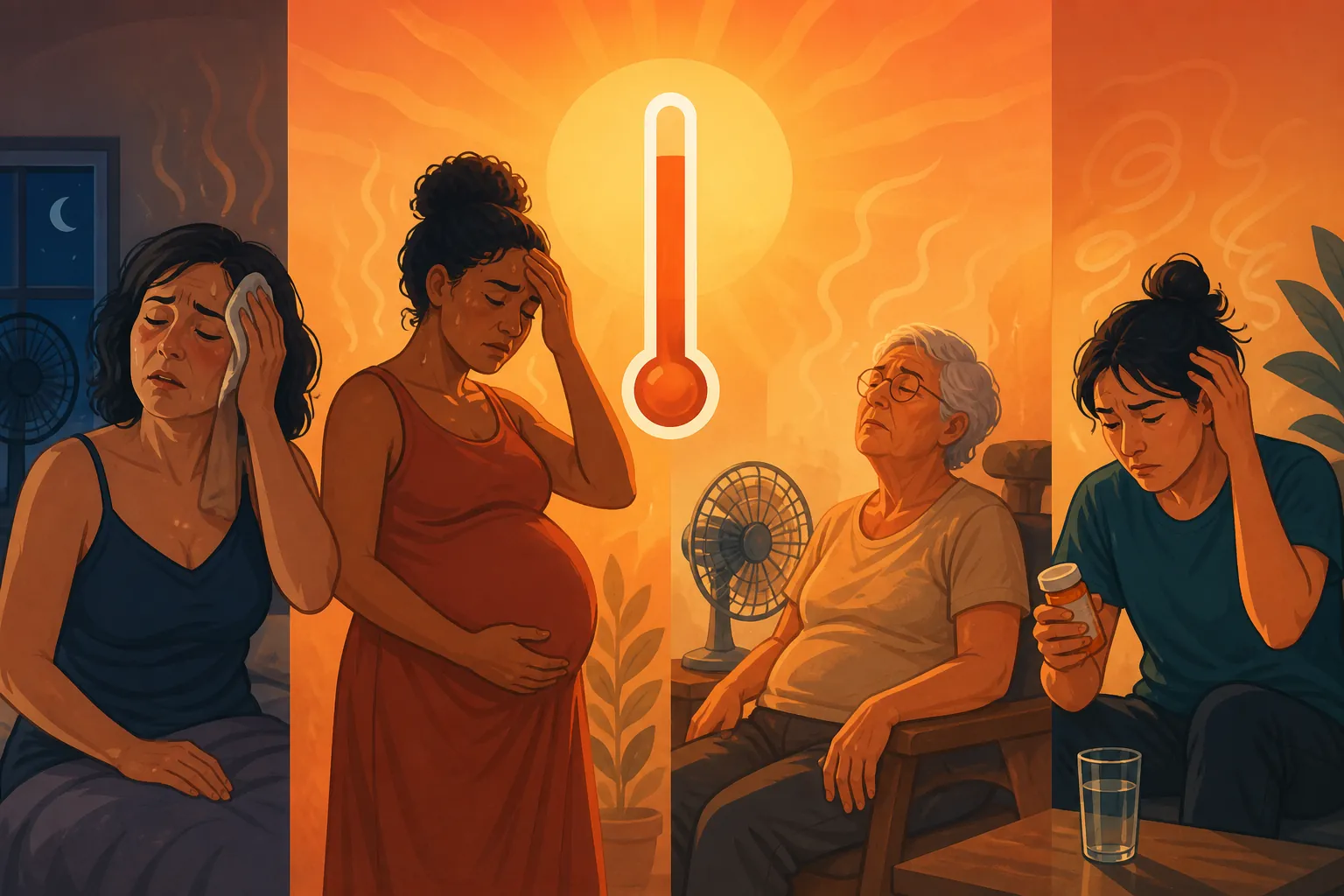
During a dangerous heat wave, the goal is not perfect sleep. It is to lower heat load enough to get through the night safely, and to know when a bad night has become a medical problem. That distinction matters most for people whose bodies are already doing extra thermal work: pregnant people, perimenopausal women with hot flashes or night sweats, older adults, and adults taking medications that interfere with cooling, including some people with ADHD.
Heat disrupts sleep because the body normally needs to shed heat before sleep. One sleep researcher summarized the usual drop as about 0.5°C to 1°C in core temperature, and a commonly cited ideal bedroom range is around 17°C to 19°C, which is plainly not available to many people during a heat emergency without air conditioning or a cooled public space. Modeled work has also projected 50 to 58 hours of annual sleep loss by 2099 under warming scenarios, but that projection is best read as a population warning, not a bedside instruction for tonight. [1]

The practical problem is timing. If the walls, mattress, and room air have been absorbing heat all afternoon, a cold drink or a dramatic shower at midnight may be too small and too late. Passive cooling work summarized in 2026 emphasized shading, night ventilation when outdoor air is cooler, and reducing indoor heat from appliances before bedtime rather than trying to rescue an already overheated room after it has stored heat all day. [2]
Start Cooling Before Bedtime
In a dangerous heat wave, cooling has to start earlier than sleep advice usually starts. The bedroom is only one part of the thermal environment. The daytime choices that matter are the ones that keep indoor heat from building up in the first place.
- Block sun during the day: close curtains, blinds, or shades on sun-facing windows before the room heats up.
- Ventilate only when it helps: open windows when outdoor air is cooler than indoor air, often late evening, overnight, or early morning; close them again when outdoor heat rises.
- Move heat-making tasks earlier or skip them: ovens, dryers, long stove use, and unnecessary electronics can add heat to rooms you later need for sleep.
- Choose the safest cooled space available: that might be a room with air conditioning, a lower floor, a cooling center, a library, a mall, or a relative’s home.
- Plan for the person at highest risk: a pregnant person, an older adult on diuretics, or someone who cannot reliably sense thirst should drive the cooling plan for the household.
Forced ventilation can be useful when it moves cooler air through a space, and the European Insomnia Network describes it as one of the most efficient cooling approaches short of air conditioning. But ventilation is not the same as safety. Moving hot air across skin can help sweat evaporate only under the right conditions, and it does not remove the need for fluids, shade, medication caution, and escalation when symptoms appear. [3]
Why Generic Heat-Wave Sleep Tips Can Misfire
The familiar list—drink water, use a fan, take a cold shower, sleep downstairs—sounds reasonable because it is built around a healthy adult who can sweat, feel thirst, get up safely at night, and adjust the environment without help. Many heat-vulnerable people do not fit that template.
Medication is a major reason. CDC clinician guidance lists several drug classes that can interfere with heat tolerance through dehydration, reduced sweating, altered thirst, lower blood pressure, electrolyte changes, or impaired thermoregulation. The list includes diuretics, beta blockers, ACE inhibitors, anticholinergics, antipsychotics, SSRIs, and stimulants, among others. [4]
That does not mean anyone should stop a medication on their own during a heat wave. It means the usual advice is incomplete. A person taking a diuretic may not be helped by vague instructions to “hydrate more” if they also need fluid or sodium limits. A person taking a stimulant may need a heat plan that includes timing, cooling access, and symptom monitoring, not moralizing about routines. A person taking an anticholinergic may not sweat normally, so waiting to feel sweaty before acting can be a poor warning system.
Pregnancy: Treat a Hot Night as More Than Discomfort
Pregnancy changes the margin of safety. CDC clinical guidance notes that pregnant people are more likely to get heat exhaustion, heat stroke, or other heat-related illness because the body has to work harder to cool both the pregnant person and the developing baby. The same CDC overview connects heat exposure with dehydration risk and adverse birth outcomes, including preterm birth and low birthweight. [5]
This is where “just get through one bad night” becomes the wrong standard. The safer question is whether the pregnant person can keep core temperature and hydration in a safer range overnight. If the sleeping space remains hot after sunset, prioritize access to a cooled place over perfect sleep hygiene. A cool public building in the evening, a cooled bedroom elsewhere, or a temporary stay with someone who has air conditioning may matter more than blackout curtains or a bedtime ritual.
Cold showers need care. Cool or lukewarm water can lower skin temperature and feel relieving, but very cold water can trigger shivering in some people, and shivering generates internal heat. A safer bedtime approach is usually a brief cool rinse, damp cloths on the neck or forearms, light clothing, and a plan to leave the hot space if symptoms develop.
Electrolyte drinks are not automatically better than water in pregnancy. People with hypertension, kidney disease, preeclampsia concerns, gestational diabetes, nausea, or fluid instructions need individualized advice. During an active heat wave, the practical step is to ask the obstetric care team what fluid, salt, and symptom thresholds apply before the hottest night arrives.
Perimenopause: External Heat Meets Internal Heat Surges
Perimenopause deserves caution even though the heat-wave sleep literature is thinner here than it should be. The European Insomnia Network paper discusses vulnerable groups and women’s sleep across the lifespan, but it does not establish perimenopause as a directly studied heat-wave category in the same way it discusses older adults, pregnancy, children, and psychiatric conditions. [3]
The concern is still physiologically plausible and clinically familiar: vasomotor symptoms can create sudden internal heat, flushing, sweating, and awakenings, while the room itself is already too hot for normal heat loss. A hot flash in a cool room is disruptive. A hot flash in a room that never cooled after sunset can become a bigger recovery problem because the body has less opportunity to dump heat afterward.
The standard misfire is advice that treats night sweats as a bedding problem only. Moisture-wicking sleepwear, layered sheets, and a fan may reduce discomfort, but they do not solve dangerous ambient heat. If hot flashes are frequent during a heat wave, start cooling the room during the day, keep a change of dry sleepwear nearby to prevent chill after sweating, and avoid relying on alcohol as a sleep aid; it can worsen sleep fragmentation and may make heat management harder.
For people using SSRIs for mood symptoms or vasomotor symptoms, heat planning should include medication awareness. CDC lists SSRIs among medications that can affect heat tolerance, including through sweating and thermoregulation pathways. [4]
Older Adults: Do Not Wait for Thirst or Sweating
Older adults are often the people left holding the most practical risk: they may live alone, sleep in older housing, avoid using air conditioning because of cost, or insist they feel “fine” while their body is not cooling well. The European Insomnia Network identifies older adults as a heat-vulnerable group because aging affects thermoregulation and sleep, and the medication burden is often higher in this population. [3]
The thirst signal is not enough. Older adults may have blunted thirst, reduced sweating, lower cardiovascular reserve, mobility limits, and medication effects that make heat harder to detect and harder to correct. A caregiver who waits for an older parent to complain of thirst, sweat heavily, or ask for help may wait too long.
| Medication or medication group | Heat-wave sleep concern |
|---|---|
| Diuretics | Can increase dehydration and electrolyte risk; vague advice to drink more may conflict with heart, kidney, or blood pressure instructions. |
| Beta blockers | Can reduce cardiovascular responses that help the body shed heat. |
| ACE inhibitors | Can contribute to fluid and blood pressure concerns during heat exposure. |
| Anticholinergics | Can reduce sweating and make overheating harder to sense. |
| Antipsychotics | Can impair thermoregulation and awareness of heat illness. |
| SSRIs | Can affect sweating and thermoregulation. |
For an older adult, the safest sleep plan may look less like a bedtime routine and more like a check-in system. Confirm the indoor temperature trend, whether windows should be open or closed, whether the person has access to a cooled location, what fluids are allowed, and who will call or visit in the evening and morning. If they use a walker, oxygen equipment, incontinence supplies, or multiple nighttime medications, plan the cooler sleeping location around those needs rather than assuming they can simply move downstairs at midnight.
ADHD: Heat Safety Is Also a Medication and Executive-Function Issue
For adults with ADHD, the risk is not that they “forget common sense.” The risk is that heat planning requires exactly the kind of sequencing, timing, supply management, and interoceptive noticing that can become harder under stress and poor sleep. Add stimulant medication, an SSRI, or another heat-relevant medication, and the standard advice becomes too thin.
CDC guidance lists stimulants among medications that can increase heat risk, and it also lists SSRIs, which many adults may take for anxiety, depression, or other conditions alongside ADHD. [4]
The safer substitution is to externalize the plan before the room gets hot. Put water where you will actually see it. Set alarms for closing shades, opening windows only when outdoor air is cooler, charging devices, and moving to a cooled place. Pack medication, phone charger, ID, and a change of clothes in one bag if you may need to leave for a cooling center or another home. If appetite drops on stimulant medication, do not let that turn into a day of little food and little fluid before a hot night.
Do not change stimulant or SSRI dosing without the prescribing clinician’s advice. During a heat wave, the immediate safety move is to ask whether your medication plan needs heat-specific precautions and to make cooling access easier than improvisation.
What to Do Tonight
Use the evening to reduce heat load, not to chase a perfect sleep setup. If you have air conditioning, prioritize the bedroom of the person at highest risk. If you do not, compare indoor and outdoor air before opening windows; night ventilation helps only when it brings in cooler air.
- By late afternoon, block sun and stop adding indoor heat from cooking, laundry, and unnecessary electronics.
- In early evening, identify the coolest safe place: the lowest shaded room, a cooled room, a neighbor’s home, or a public cooling site.
- Before bedtime, take a cool or lukewarm rinse if it helps, but avoid getting so cold that you shiver.
- Use light bedding and sleepwear; keep dry clothes nearby if sweating or hot flashes are likely.
- Place fluids within reach, but follow medical instructions if you have pregnancy complications, heart failure, kidney disease, blood pressure limits, or fluid restrictions.
- Set a check-in for anyone at higher risk, especially an older adult, pregnant person, or someone taking heat-relevant medications.
Fans need a specific caveat. WHO warns that electric fans may provide comfort but can increase heat stress when temperatures are above 40°C. In extreme heat, a fan blowing very hot air at someone who cannot sweat effectively may create false reassurance rather than safety. [6]
If the fan is moving cooler evening air through the room or improving evaporation in a moderately hot room, it may help. If the room remains dangerously hot, the better decision is to move to a cooled environment, not to aim more hot air at the bed.
If You Cannot Cool the Room
Do not spend the whole night proving you can tolerate it. Move earlier if you can. A cooled lobby, community cooling center, library, mall, faith community building, or relative’s home may be the safer sleep intervention. For someone pregnant, older, medically fragile, or medication-sensitive, leaving an overheated room is not overreacting.
If you are caring for someone else, make the leaving plan concrete: transportation, medications, mobility aids, chargers, water, keys, and a destination that is actually open. Heat decisions become worse when they are postponed until confusion, dizziness, or exhaustion has already started.
Danger Signs Override Sleep Advice
Heat illness can progress quickly, and sleepiness can mask deterioration. WHO estimates that heat causes about 489,000 deaths each year and reports an 85% increase in heat-related mortality among people older than 65 between 2000-2004 and 2017-2021. The same fact sheet notes that heatstroke can have a high case-fatality rate. [6]
| Possible heat exhaustion | Possible heatstroke or emergency signs |
|---|---|
| Heavy sweating, weakness, dizziness, headache, nausea, muscle cramps, clammy skin, fast pulse | Confusion, fainting, seizure, loss of consciousness, very high body temperature, hot dry skin or a sudden stop in sweating, severe worsening symptoms |
| Move to a cooler place, loosen clothing, sip fluids if safe, use cool cloths, and seek medical advice if symptoms do not improve promptly | Call emergency services immediately; cool the person while waiting and do not delay because it is nighttime |
For a pregnant person, an older adult, someone with heart, kidney, neurologic, or psychiatric illness, or someone taking heat-relevant medication, use a lower threshold for getting help. Confusion is never just “being tired.” Fainting is not a sleep problem. A person who cannot keep fluids down, cannot cool down, or seems unlike themselves should not be managed with another round of bedtime tips.
A dangerous heat wave is the wrong time to treat all sleepers as interchangeable. The practical question is who in the room has the least thermal margin, what might make standard cooling advice unsafe for them, and when the plan needs to shift from sleeping at home to getting cooled medical or emergency help.
References
- Why heatwaves disrupt our sleep, and how we can protect it, Le Monde, July 11, 2026
- In a heatwave, passively cooling your home is surprisingly effective, ScienceDaily, July 29, 2026
- The impact of climate change on sleep disorders and sleep medicine, Journal of Sleep Research, 2023
- Heat and Medications Guidance for Clinicians, CDC, 2025
- Clinical Overview of Heat and Pregnancy, CDC
- Climate change: Heat and health, World Health Organization, July 2026