
How to Sleep Safely During a Power Outage After a Storm
If the power has just gone out after a storm and bedtime is close, do the dangerous checks before the comfort checks. A portable generator is not a nightstand appliance, a garage appliance, or a porch appliance: the U.S. Consumer Product Safety Commission says portable generators cause an average of nearly 100 carbon-monoxide poisoning deaths per year in the United States, and generators should be run outdoors at least 20 feet from the home, with exhaust pointed away from the building.[1] The CDC is just as blunt about another common mistake: never heat a home with a gas range or oven.[2]
After that, the question “how do I sleep during a power outage after a storm?” becomes more manageable. Clear carbon monoxide and fire risks. Choose one room where everyone can be checked easily. Make that room workable for heat or cold. Keep the routine quiet enough for sleep. If the room cannot stay safe, stop trying to sleep there and move to a safer place.
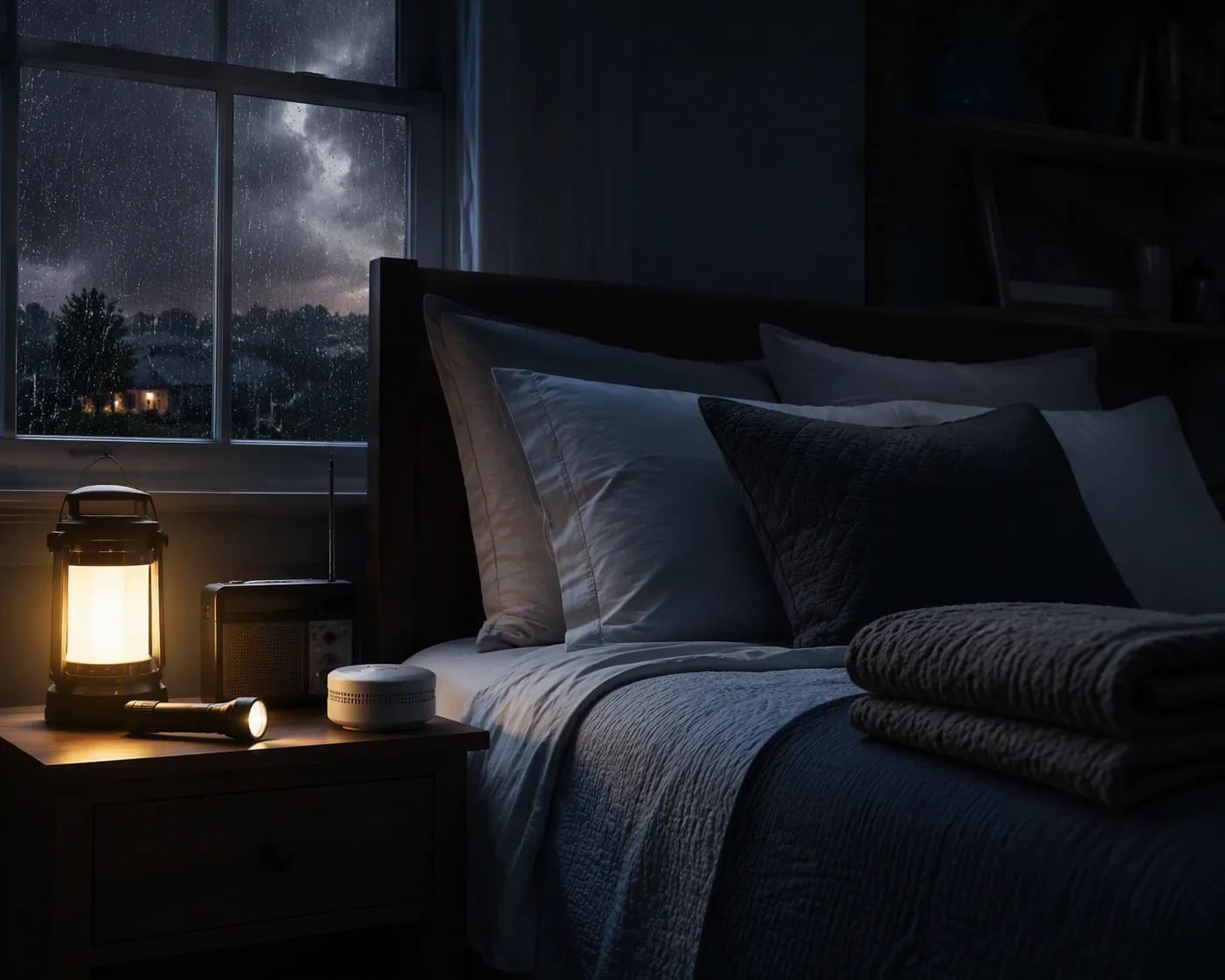
The first ten minutes decide whether the night is safe
Before anyone crawls under a blanket or tries to cool off on the floor, one person should do a quick walk-through. This is not a full emergency-preparedness project. It is the minimum scan that keeps a bad night from becoming a medical emergency.
| Check | What to do before sleeping |
|---|---|
| Generator or fuel-burning equipment | Keep it outside, at least 20 feet from the home, with exhaust pointed away from doors, windows, and vents.[1] |
| Heat source | Do not use a gas range or oven to heat the home.[2] |
| Light source | Use flashlights, lanterns, or other battery-powered light where possible rather than open flames.[3] |
| Carbon monoxide detection | If you have a battery-powered CO alarm, place working protection near sleeping areas, especially when any fuel-burning risk exists; pediatric guidance specifically points to a battery-powered UL 2034 carbon monoxide detector near sleeping areas during winter outages.[4] |
| Medical equipment | Check anyone using powered breathing equipment, oxygen-related equipment, or refrigerated medication before the household settles down. |
| Food | Keep refrigerator and freezer doors closed unless you truly need something; an unopened refrigerator keeps food cold for about 4 hours, a full freezer for about 48 hours, and a half-full freezer for about 24 hours.[2] |
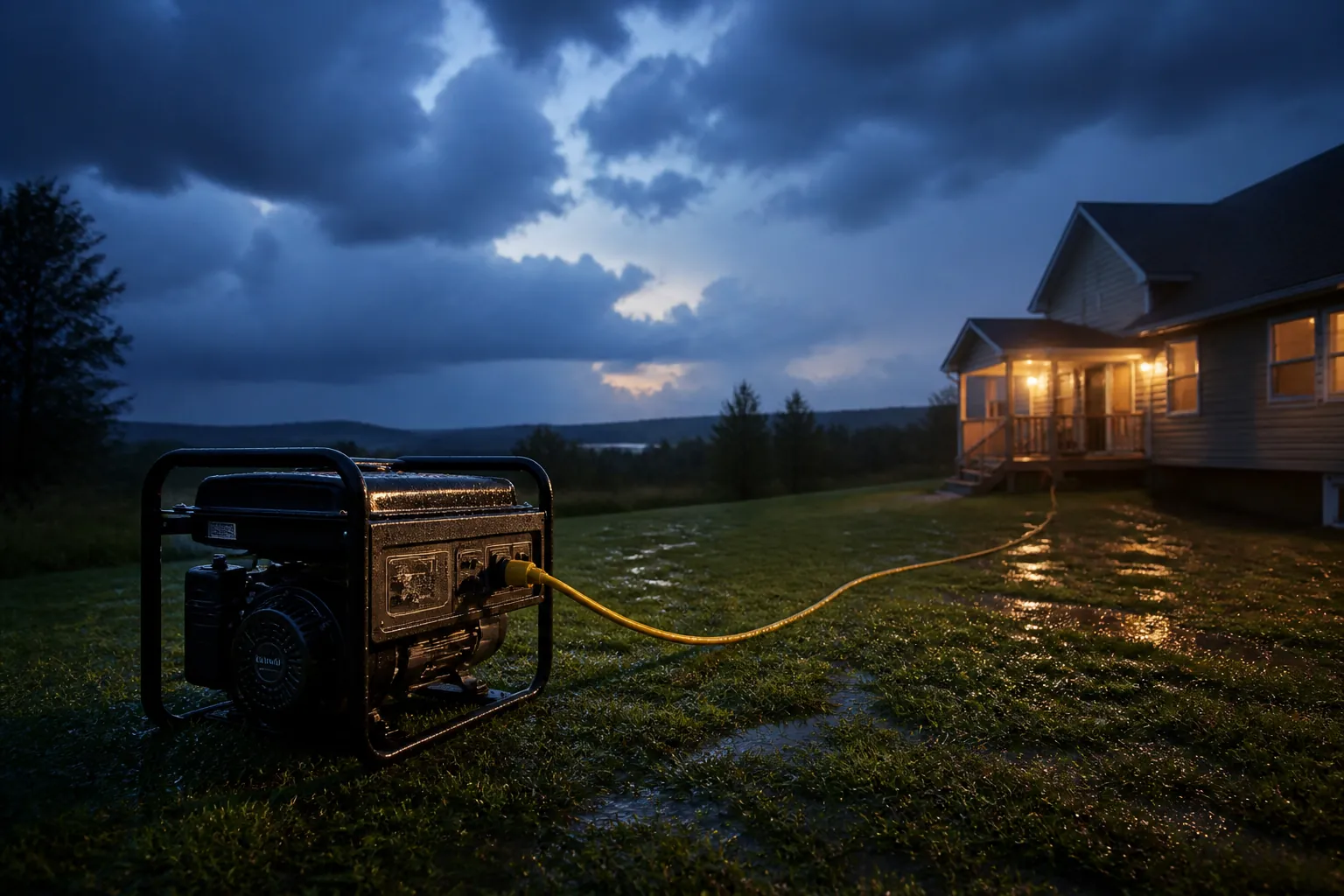
The CO check belongs this high in the night plan because carbon monoxide is invisible and can be fatal while people are asleep. If a generator is closer than the 20-foot boundary, inside a garage, under an overhang, near a window, or aimed toward the house, bedtime waits. Move the equipment or leave the area until the hazard is corrected.
Fire risk deserves the same impatience. A candle might feel calmer than a headlamp, but a storm outage already gives you reduced visibility, tired people, pets, children, and cluttered walking paths. Put flashlights low where people can find them, keep one in the sleep room, and keep another near the bathroom route.
Do the medical-device check before people get drowsy
A CPAP user should not discover the plan only after lying down. ResMed explains that a CPAP machine simply shuts off when power is lost; it also notes that full-face masks have an anti-asphyxia valve, and that its own RPS II battery can provide up to 13 hours of use after 4 hours of charging.[5] That runtime is ResMed-specific. It should not be treated as a promise for other machines, pressure settings, humidifiers, heated tubing, or batteries.
The practical bedtime question is simpler: does the person have a charged battery, a car-adapter plan, or device-specific backup guidance? The American Lung Association recommends battery and car-adapter backup planning for people with lung disease who rely on powered equipment, and it also notes that refrigerated medications should be kept below 46°F.[6] If the outage is likely to last and a necessary device or medication cannot be supported, shelter or medical guidance is part of the sleep plan, not a separate errand for tomorrow.
Move everyone into one defensible sleep room
Once the hazards are controlled, stop treating the house as if every bedroom has to work. Pick one room that is easiest to keep safe, easiest to reach in the dark, and easiest for the household night manager to monitor. That might be a downstairs room in summer, an interior room in winter, or the room closest to a bathroom for an older adult.
Bring in water, medications that need to stay with the person, flashlights, a phone reserved for alerts, a battery radio if you use one, simple bedding, and any baby or medical supplies that will be needed overnight. Shut the refrigerator and freezer again. The less wandering the household does after midnight, the fewer chances there are for falls, open doors, and repeated temperature loss or heat gain.
This is also where you decide who needs eyes on them: infants, older adults, anyone pregnant, anyone with respiratory disease, anyone using powered medical equipment, and anyone who already seemed overheated, chilled, confused, or unusually weak before bedtime. The point of one room is not coziness. It is accountability.
If the outage is hot, build the coolest low-tech room you can
For a summer storm outage, the best sleep room is usually the lowest safe level of the home. Heat rises, and HealthPartners includes sleeping on the lowest floor among its no-air-conditioning sleep strategies.[7] Close off rooms you are not using, keep the chosen room dark, and reduce activity before bed. A room full of people charging around with flashlights warms up fast.
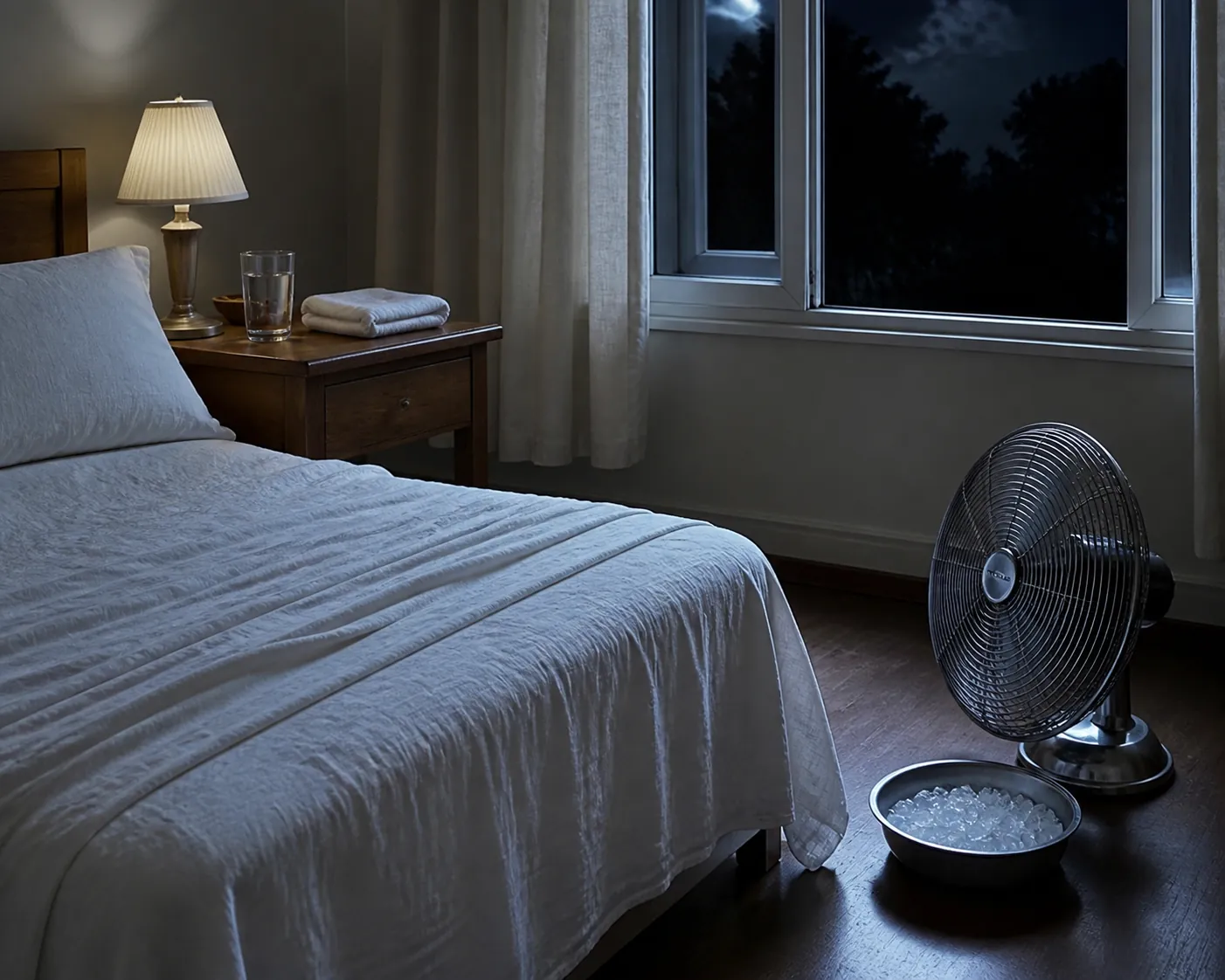
Use the bed to release heat, not trap it. Thin cotton or linen sheets are better than heavy synthetic bedding. HealthPartners points to breathable sheets, a cool shower, and, if available, a fan blowing across a pan of ice as ways to make sleep easier without air conditioning.[7] British Red Cross heat guidance also recommends sleeping at the lowest level, using thin cotton sheets, taking a lukewarm shower, and cooling pulse points with a damp cloth or similar cooling method before bed.[8]
A fan can make a person feel better, especially if the air is not dangerously hot and there is a safe way to run it from a battery or generator-supplied circuit. But a fan is comfort equipment, not proof that the room is medically safe. The CDC warns that fans do not prevent heat-related illness, and it notes that adults 65 and older do not adjust as well as younger people to sudden temperature changes.[9]
That limit matters at bedtime. If an older adult, baby, medically fragile person, or anyone else cannot cool down, do not keep adding small tricks and hoping sleep will solve it. Move to an air-conditioned shelter, cooling center, relative’s home, or other safe cooled place if one is available.
For comfort, HealthPartners gives one useful boundary: it says sleep can be disrupted below 65°F or above 75°F.[7] Treat that as sleep-comfort guidance, not an emergency cutoff. A room at 77°F may be annoying for one healthy adult and unsafe for another person depending on age, health, humidity, hydration, and how long the outage lasts.
A hot-room setup that does not need wall power
- Sleep on the lowest safe floor.
- Use cotton or linen sheets, or sleep with minimal bedding.
- Take a cool or lukewarm shower before bed if water is safe and available.
- Use a damp cloth, cool socks, or a cloth at pulse points for short-term relief.
- If you have a safe battery-powered fan, use it for comfort, not as your only heat-safety plan.
- Keep the room dark and quiet; unnecessary lights, movement, and phone use make it harder to settle.
If the outage is cold, conserve heat without creating a new hazard
A winter outage asks for a different kind of discipline. Do not improvise with combustion indoors. Do not heat the kitchen with the oven. Do not bring outdoor cooking equipment inside. After that, the goal is to make one room hold body heat and bedding heat as long as possible.
Consumer Reports’ winter-outage guidance emphasizes practical heat conservation: close off unused spaces, dress in layers, use blankets, and reduce drafts where you can do so safely.[10] Choose a smaller room if possible, keep doors closed, and put extra blankets under people as well as over them; a cold floor can steal heat from the body all night.
Layer clothing before layering desperation. A base layer, socks, a hat for adults who tolerate it, and dry loose layers are safer than waiting until someone is shivering hard under one heavy blanket. Keep one flashlight reachable without anyone having to stand up and search in the cold.
Infants need special care because adult bedding solutions can create sleep hazards. HealthyChildren, from the American Academy of Pediatrics, advises keeping babies warm during a winter power outage while still protecting safe sleep, and it specifically recommends a battery-powered UL 2034 carbon monoxide detector near sleeping areas.[4] Do not bury a baby under loose blankets because the room is cold; use pediatric safe-sleep guidance and relocate if the home cannot stay warm enough.
The cold-side decision point is not a bedroom-temperature ideal. It is whether the people in the room can stay warm, dry, responsive, and safely asleep without risky heat sources. If someone is showing signs that make you worry about hypothermia, the next step is emergency help or a warmer shelter, not another blanket and a promise to check again in the morning.
Keep just enough bedtime routine to let sleep happen
Once the room is safe and the temperature plan is honest, make the night feel as normal as the conditions allow. Keep the usual bedtime order if it still works: bathroom, medications, baby feeding, teeth, lights low, quiet voice. HealthPartners includes white noise and avoiding phone scrolling among its no-AC sleep suggestions, and both ideas carry over well to outage nights if they do not interfere with emergency alerts.[7]
Phones are tools during an outage, but they are also little anxiety machines. Set one device for weather, utility, or local emergency alerts, then stop passing the bright screen around unless new information changes what the household should do. If you have a battery radio, it can keep one person informed without lighting up the room every few minutes.
If the room is physically safe but the storm noise or fear is what is keeping you awake, use a calmer sleep-anxiety approach rather than endlessly rechecking the same window. This guide on sleeping during typhoon anxiety is more focused on the fear-and-alertness side of storm nights.
When staying home stops being the sleep plan
A power outage night can be uncomfortable and still manageable. It stops being manageable when the safety checks fail: a generator cannot be placed safely, there is no working carbon monoxide protection where it is needed, a necessary medical device has no backup, refrigerated medication cannot be protected, the heat cannot be controlled, or the cold is pushing people toward hypothermia risk.
If carbon monoxide and fire risks are controlled and one room can be kept safely cool or warm, sleep is mostly a setup problem. If heat illness or hypothermia risk cannot be controlled at home, the safe sleep plan is relocation to shelter, not another outage hack.
References
- Winter Storms Aren’t Over: CPSC Warns of Deadly Carbon Monoxide Risks and Fires During Power Outages, U.S. Consumer Product Safety Commission
- What to Do to Protect Yourself During a Power Outage, Centers for Disease Control and Prevention
- Power Outage, American Red Cross
- How can I keep my baby warm when the power goes out?, HealthyChildren.org
- CPAP batteries and adaptors, ResMed
- Power Outage Preparation, American Lung Association
- Tips for sleeping without air conditioning, HealthPartners
- How to keep cool at night, British Red Cross
- Heat and Older Adults Aged 65+, Centers for Disease Control and Prevention
- 5 Ways to Stay Warm During a Winter Power Outage, Consumer Reports
Read the full guide: How to sleep during a power outage thunderstorm