
How to Sleep in a Southern California Heat Wave at 65+
Last reviewed: July 31, 2026.
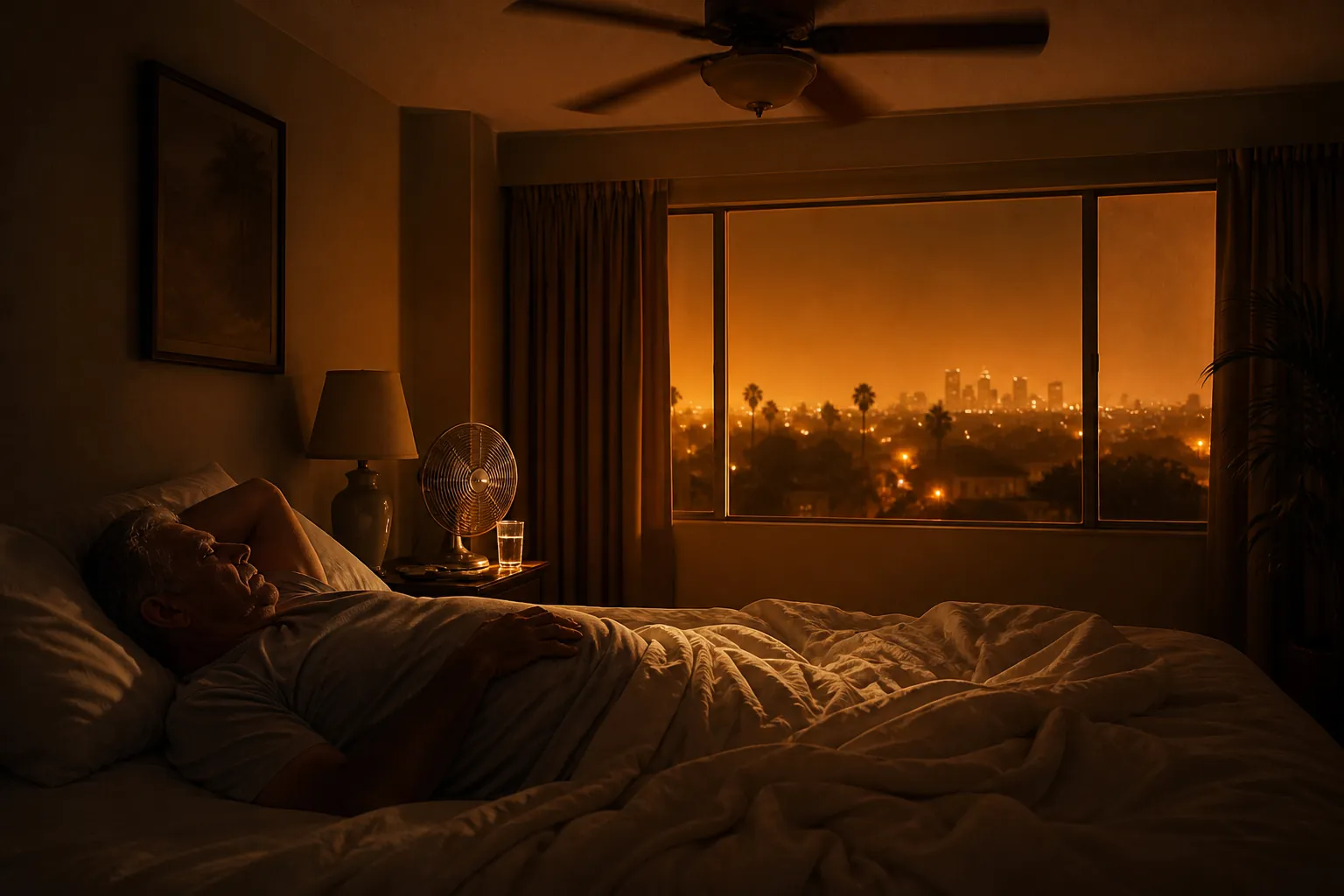
On July 22, 2026, the Los Angeles Times reported a Southern California heat wave running 8–12°F above normal, with muggy nights keeping homes from recovering after sunset and the peak expected around July 23. That detail matters for sleep: if you are 65 or older in Los Angeles, Orange, Riverside, or San Bernardino County, and your home never really cooled overnight, you may be starting the next day already behind, not merely uncomfortable. [1]
The short answer for tonight
To sleep in a Southern California heat wave at 65+, do not treat the bedroom like a normal summer sleep problem. Lower the heat load before bedtime, sleep in the coolest room you can make, use public cooling resources if your home stays hot, and be cautious with fan-only advice once the indoor air is around 90°F or hotter. For older adults, the goal is not a perfect sleep-lab bedroom. It is enough cooling to keep the body from drifting into heat illness while you try to rest.
For a broader heat-sleep overview, use the general heat-wave sleep guide. If your immediate problem is no AC, unreliable power, or a bedroom that will not cool, keep the no-AC and grid-emergency guides close too: staying cool at night in extreme heat, sleeping during a heat wave, no-AC cooling tactics, and power-grid emergency sleep tips. The older-adult heat problem is also different by region; the St. Louis older-adult heat-wave sleep article is a sibling version, while this one stays with Southern California conditions and California resources.
Why heat can hit harder after 65
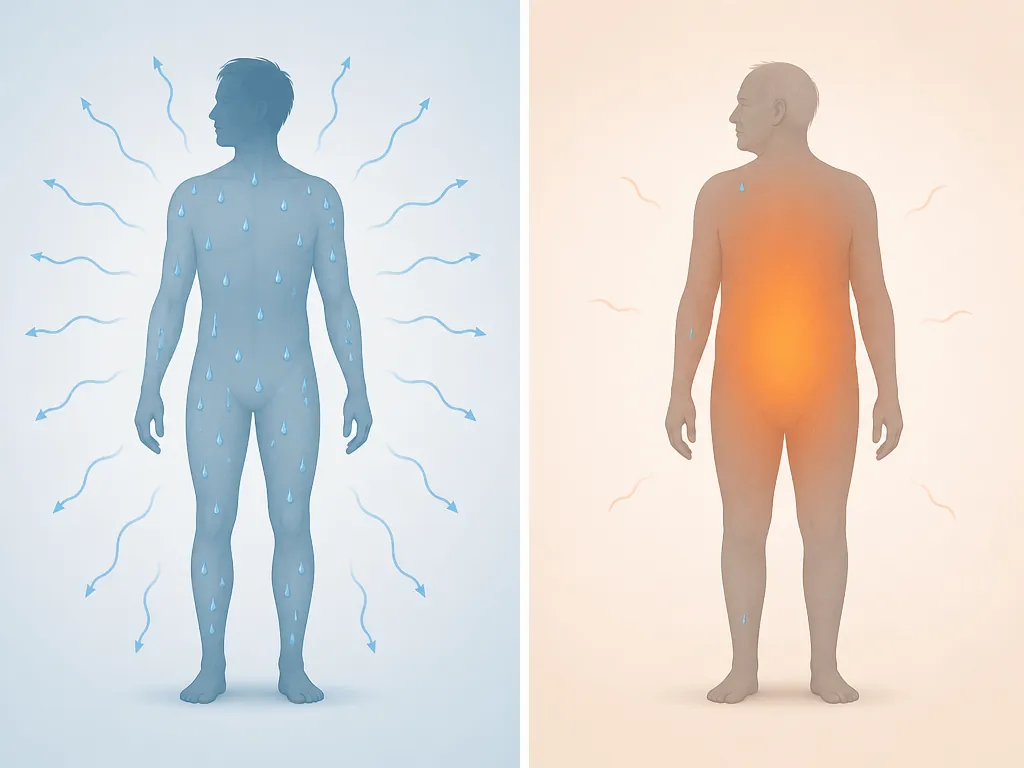
This is the part that gets skipped when advice stops at “take a cool shower” or “turn on a fan.” Older bodies often do not shed heat as quickly. Harvard Medicine Magazine describes two of the reasons: reduced sweat output and less efficient blood flow to the skin. Sweat is not just a nuisance on the pillow; it is one of the body’s cooling systems. Blood flow to the skin is another. When both are blunted, the heat you collected all afternoon can stay with you into the night. [2]
That is one reason heat is not an equal-opportunity stressor. Harvard Medicine reports that people over 60 account for 80% of roughly 12,000 annual heat-related deaths in the United States. That figure is not about frailty as a personality trait. It is about physiology, housing, medications, chronic illness, isolation, and how fast a hot room can outrun the body’s ability to compensate. [2]
Medications deserve their own pause. Do not change a dose on your own before bed; that can create a different danger. But do treat these classes as heat-wave risk flags to review with a prescriber or pharmacist:
- Diuretics, because they can affect fluid balance and dehydration risk.
- Beta-blockers, because they can affect the cardiovascular response the body uses during heat stress.
- Anticholinergics, because they can interfere with sweating.
- Some antidepressants, because some can interfere with temperature regulation or hydration-related safety.
The practical question is not “Should I drink more water?” in the abstract. It is “Given my heart, kidney, blood pressure, bladder, and medication situation, what is my safe heat-wave fluid plan?” California’s older-adult heat guidance also emphasizes medication awareness and contacting a clinician about heat-related concerns rather than improvising alone. [3]
A safer Southern California sleep plan for tonight
Start earlier than bedtime. Once a Riverside or San Bernardino bedroom has baked through the afternoon, it may still be radiating heat at 10 p.m. The best plan lowers your heat exposure before you lie down, then keeps your sleeping area from climbing again.
| If this is your situation | Do this first tonight |
|---|---|
| You have working AC | Cool the sleeping area before bedtime and, if possible, over-cool the home overnight during safer utility conditions. |
| You have one room that stays cooler | Make that room the sleeping room, even if it is not your usual bedroom. |
| You have no reliable AC | Create a cool corner, block heat gain, use cool cloths, and plan time in a cooling center before the home becomes dangerous. |
| The room is around 90°F or hotter | Do not rely on a fan alone. Move to a cooler indoor place, call 211, or seek help from family, neighbors, or local cooling resources. |
| You feel ill, confused, faint, or stop sweating in severe heat | Treat this as a medical warning, not a sleep problem. |
If you have AC, use it as a safety tool, not just a comfort tool
California’s Department of Aging recommends over-cooling the home overnight when air conditioning is available. That does not mean making the whole house icy. It means using the cooler hours to pull heat out of the walls, mattress, and bedroom air before the next afternoon starts. If you are trying to conserve energy or money, concentrate cooling where you will actually sleep and recover. [3]
A practical sequence: close blinds and curtains before the sun hits the windows, keep unnecessary appliances off, cool the bedroom or one sleeping room in the evening, and move bedding to that room before you are exhausted. Thin sheets, a low pillow, and a mattress surface that is not holding afternoon heat will help more than decorative sleep-hygiene advice.
Build one cool corner if the whole home will not cool
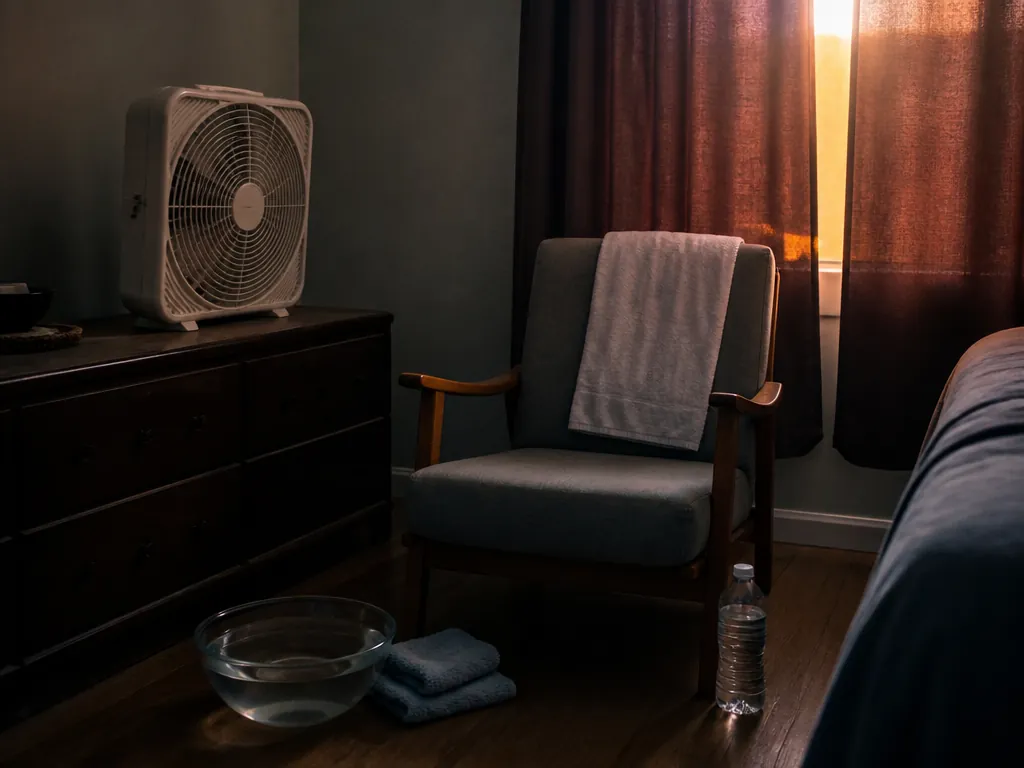
The California Department of Aging’s “cool corner” idea is useful because it does not pretend everyone can make an entire apartment comfortable. Pick the room or corner with the least sun exposure, the fewest electronics, and the best chance of air movement. Put the chair, cot, recliner, or mattress there before the hottest part of the day if you can. [3]
- Block sun early with curtains, shades, cardboard, or another safe window covering. Waiting until the room is already hot is less effective.
- Move lamps, chargers, computers, and other heat-producing items away from the sleeping corner.
- Keep cool washcloths, a spray bottle, and drinking water within reach so you do not have to keep walking through a hot home at night.
- Use a fan to move cooler air toward you only when the room air is still reasonably cool. If outdoor air is hotter, do not pull it in just because a window is available.
- Sleep lower if it is safe for you to get up again; heat collects higher in a room.
The fan warning is worth saying plainly. A fan can make sweat evaporate and can feel wonderful when the air is not too hot. But once indoor air is around 90°F or hotter, fan-only cooling can become a false comfort for an older adult, especially if sweating is limited or dehydration is already starting. At that point, the next step is a cooler indoor location, not a stronger breeze.
Cool the body gently before bed
A cool—not ice-cold—shower or foot soak can help bring skin temperature down before bed. So can a damp washcloth on the neck, wrists, or chest. If you get chilled, dizzy, or unsteady, stop and sit safely. Heat-wave advice often assumes good balance, easy bathroom access, and a body that responds predictably. At 70, those assumptions are not always fair.
Keep fluids nearby, but do not turn “drink more water” into a private medical experiment if you take diuretics, have heart failure, kidney disease, low sodium history, or fluid restrictions. Ask your clinician or pharmacist what your hot-weather plan should be. If that sounds like an errand for tomorrow, make the safer choice tonight: reduce heat exposure first, use cooling resources, and avoid alcohol before bed because it can worsen dehydration and sleep quality.
Cooling centers belong in the sleep plan
A cooling center is not a last resort after a bad night. For an older adult whose home does not cool, a few afternoon or early-evening hours in a cooler public space can lower the heat load before bedtime. California’s Department of Aging recommends using cooling centers during extreme heat, and county operations can change during a heat wave, so verify hours and transportation before you head out. [3]
| County | How to check tonight |
|---|---|
| Los Angeles County | Call 211 or check the current county/city cooling-center listings before going. Ask about hours, transportation, pets, and accessibility. |
| Orange County | Call 211 or check current county and city cooling-center updates. Confirm the location is open during the active heat event. |
| Riverside County | Call 211 and ask for the nearest cooling center, especially if your indoor temperature stays high after sunset. |
| San Bernardino County | Call 211 or verify county cooling-center hours before travel; inland conditions can stay dangerous late into the evening. |
If you are a caregiver making the 9 p.m. decision, do not wait for the bedroom to feel unbearable. Ask three plain questions: Is the room still hot after sunset? Is the person more tired, dizzy, nauseated, confused, or weak than usual? Are medications or medical conditions making dehydration or poor temperature regulation more likely? If the answer is yes, move toward cooling help earlier.
What bedroom temperature should you aim for?
Cooler bedrooms generally support sleep, but the exact “ideal” number is not settled across public guidance. Cleveland Clinic describes 60–67°F as an ideal sleeping range, while the Sleep Foundation gives 65–68°F. HealthPartners also discusses the problem of bedrooms getting too warm for sleep, including the upper-70s range as a point where sleep can suffer. [4][5][6]
During a July Southern California heat wave, especially inland, that kind of target may be unrealistic. Do not let a perfect number distract from the safer question: is the sleeping area meaningfully cooler than the rest of the home, and is it cool enough that the person can rest without developing heat-illness symptoms?
Use clever cooling tricks only if they fit the room
Wet curtains, damp towels, or plant-fiber cooling traditions can work in some climates and homes, but they are optional tools here, not the center of the plan. In parts of Southern California with muggy nights, adding moisture may make a room feel worse. In a small apartment, damp fabric can also create slip, mildew, or electrical hazards if placed carelessly. If a simple damp cloth on the body helps, use it. If the room itself is too hot, do not decorate the danger.
The same goes for ordinary sleep hygiene. Keep the room dark, avoid heavy meals and alcohol close to bed, and reduce screens if you can. But if the bedroom is still hot, those habits will not substitute for cooling the person and the space.
Heat exhaustion vs. heat stroke: know the line
Heat exhaustion can look like heavy sweating, weakness, dizziness, headache, nausea, muscle cramps, cool or clammy skin, or unusual fatigue. Move the person to a cooler place, loosen clothing, use cool cloths, and seek medical advice if symptoms do not improve or if the person has significant medical risks. California’s older-adult heat guidance treats these symptoms as warning signs that need prompt cooling attention. [3]
Heat stroke is an emergency. Confusion, fainting, loss of consciousness, seizure, very high body temperature, or hot skin during severe heat should prompt urgent medical help. Call 911. Do not try to sleep it off. Do not wait to see whether the room feels better after midnight. [3]
If you suspect a medication is making heat harder to tolerate, call the prescriber or pharmacist and ask for a heat-wave review. Do not skip, split, or stop prescribed medication on your own. Tonight, the safer levers are the physical ones: lower the heat load, use the coolest available room, treat cooling centers as part of the plan, and move quickly if symptoms cross from sleeplessness into illness.
References
- Heat wave smothering Southern California nears its peak — Los Angeles Times, July 22, 2026
- The Effects of Heat on Older Adults — Harvard Medicine Magazine
- Extreme Heat Safety for Older Adults — California Department of Aging
- What’s the Best Temperature for Sleep? — Cleveland Clinic
- The Best Temperature for Sleep — Sleep Foundation
- The best temperature for sleep: Why the right temp matters — HealthPartners
Read the full guide: How to Sleep During a Heat Wave Without AC