
How to Sleep During a Heat Wave Without AC
Hot nights wreck sleep because falling asleep is partly a heat-loss event. As night begins, the body normally lowers core temperature by roughly 0.5–1°C, and a hot bedroom makes that drop harder; experimental and review evidence links heat exposure with more wakefulness and less slow-wave and REM sleep.[1] That is why the answer to how to sleep during a heat wave without AC is not a pile of novelty hacks. The useful question is simpler: what helps your body shed heat safely tonight?
Temperature targets are real, but they are not one magic number. The Sleep Foundation describes about 65–68°F as a good bedroom range for many adults.[2] The National Sleep Foundation range, cited by the American Heart Association, is 60–67°F.[3] A field study of community-dwelling older adults found the best sleep in a warmer band, around 20–25°C, and also found sleep worsened as bedrooms rose from 25 to 30°C; that evidence is specific to older adults, not a universal adult rule.[4] During a heat wave without AC, the immediate goal may be much more modest: make heat leave the body faster and avoid crossing into unsafe indoor heat.
The safety line matters. The CDC cautions that fans may help when indoor temperatures are below about 90°F, but above that point a fan can increase body temperature by blowing hotter air over the skin.[5] Below that line, air movement, damp skin, lukewarm showers, and strategic ventilation can buy real relief. Near or above it, the problem is no longer just poor sleep.

The no-AC plan for tonight
Start earlier than bedtime if you can. A bedroom that has absorbed sun all afternoon will still be radiating heat when you are trying to sleep. The sequence below is organized by heat flow: keep heat out, move cooler air in when it exists, move air across the skin when it is safe, and cool the body directly before bed.
| When | What to do | Why it helps |
|---|---|---|
| Afternoon and early evening | Block sun with curtains, blinds, shades, or temporary window covering on the hottest side of the home. | Stops the room from storing extra heat before bedtime. |
| When outdoor air is cooler than indoor air | Open windows and create cross-ventilation if it is safe to do so. | Replaces trapped indoor heat with cooler air. |
| When indoor temperature is below about 90°F | Use a fan across the room or across damp skin, not as a cure-all. | Air movement helps sweat and moisture evaporate; the CDC fan limit still applies.[5] |
| Before bed | Take a lukewarm shower, use damp cloths on the neck or wrists, or cool hands and feet. | Targets the body’s heat-loss pathways without shocking the body cold. |
| At bedtime | Sleep lower in the home, reduce bedding, keep water nearby, and avoid alcohol, caffeine, and late exertion. | Reduces heat load and protects the already fragile sleep window. |
Keep the room from becoming a heat battery
If the sun is still hitting the room, close curtains or blinds and block direct light. This is unglamorous, but it is one of the few no-AC actions that changes the room’s heat load before the sleep crisis starts. If you have reflective shades, use them. If you do not, even a temporary covering on a sun-facing window can reduce the amount of heat the room absorbs.
Do not keep windows open all day just because the air feels “fresh.” If outdoor air is hotter than indoor air, open windows can make the room worse. Close the hottest side of the home during the day, then reopen windows when outdoor air falls below indoor air and security, smoke, pollen, and noise conditions allow it. The British Red Cross gives similar practical advice: keep sunlight out during the day and use cooler night air when possible.[6]
Ventilate only when the outside is helping
At night, compare the feel of the hallway, the window, and the bedroom before committing to a setup. If the air outdoors is cooler, create a path: one window open where cooler air can enter, another exit point if you have one, and a fan positioned to move air through the room rather than straight at your face all night. In a single-window room, placing a fan near the window can sometimes help exhaust warm room air or pull in cooler air depending on the direction and outdoor temperature.
If the outdoor air is still hotter, ventilation may not help. In that case, shift attention to the body: damp cloths, a lukewarm shower, lighter bedding, and a cooler sleeping location inside the home.
Use fans as evaporation tools, not as magic AC
A fan can help when it moves air over skin that can evaporate sweat or moisture. That is why a fan often works better with a lightly damp cloth, dampened forearms, or a lukewarm shower than it does in a sealed, hot room with dry skin. Practical heat-wave sleep recommendations from the European Insomnia Network include fans as low-energy tools, noting they may use up to about 50 times less electricity than air conditioning.[7]
But the CDC limit is not optional. If the indoor temperature is around 90°F or higher, do not treat a fan as your main safety plan. Moving hot air across the body can add heat instead of removing it.[5] The popular “fan plus bowl of ice” trick may feel briefly pleasant if the room is not dangerously hot, but it should not distract from the real decision: whether the indoor temperature is still in the fan-safe range and whether you have symptoms of heat illness.
Move your sleeping spot before you are desperate
Heat rises, and top-floor rooms often hold the day’s heat long after sunset. If you have a lower floor, basement, interior room, shaded side of the home, or even a cooler hallway, move there early enough that you are not carrying bedding around while overheated at 1 a.m. A mattress on the floor in a cooler room can be a better heat-wave bed than a perfect bed in a sealed upstairs room.
This is also where households sometimes need to be blunt. If one room is safer for an older adult, pregnant person, child, or someone with a medical condition, give that person the cooler spot. Heat is not equally risky for every body.
Take a lukewarm shower, not an ice-cold shock
A lukewarm shower before bed can lower heat strain without provoking the jolt that many people get from very cold water. The European Insomnia Network’s heat-wave recommendations specifically favor lukewarm showers as a practical pre-sleep cooling measure.[7] Cold showers can feel satisfying for a minute, but if they leave you alert, shivering, or followed by rebound warmth, they have not served sleep.
After the shower, do not towel off to bone-dry perfection. Let a little moisture remain on the skin if you are in a fan-safe room. Evaporation is doing some of the work.
Put damp cloths where blood flow is close to the surface
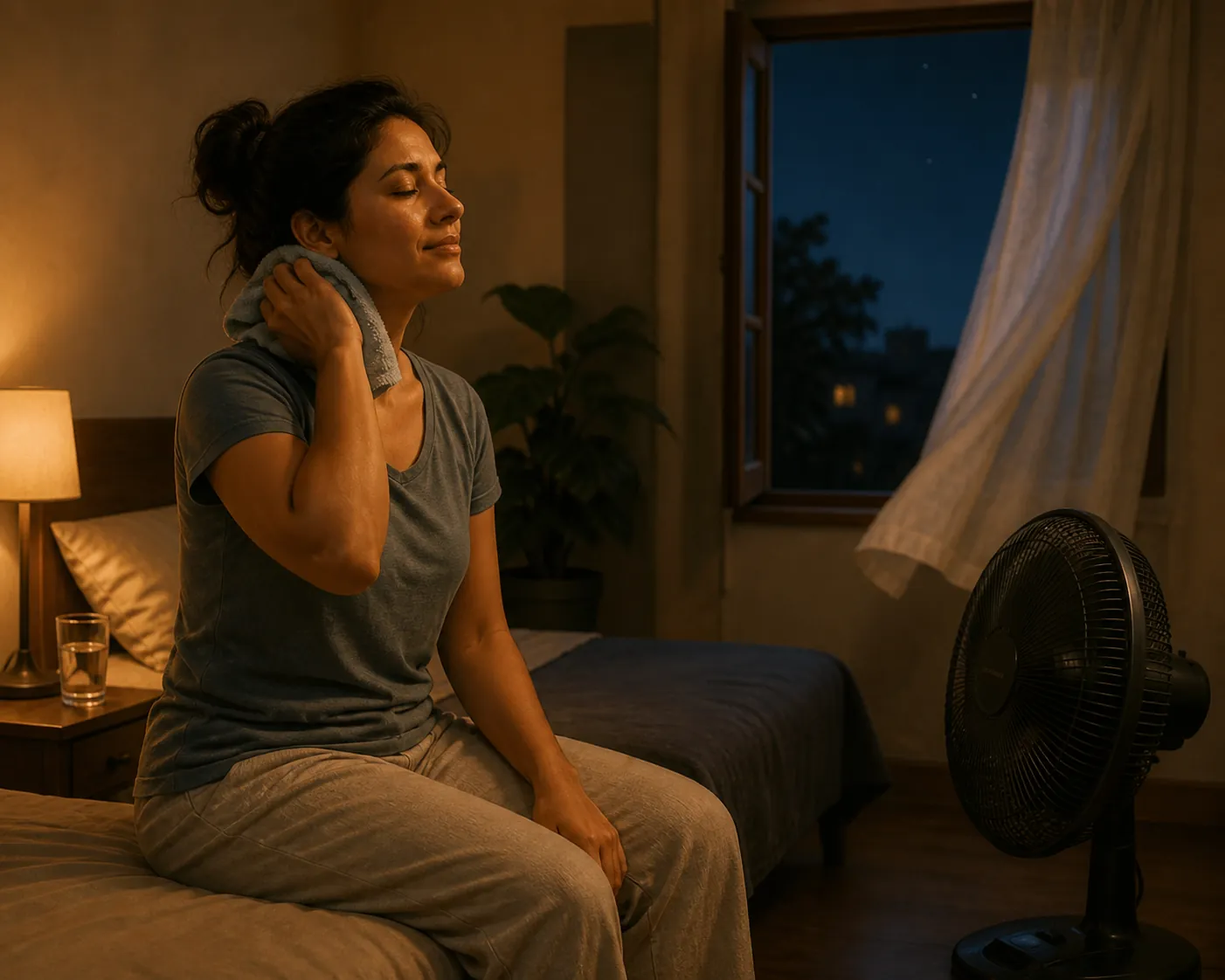
A cool, damp cloth on the back of the neck, wrists, or upper chest is not folklore when it is used for evaporation and local cooling. Keep the cloth damp rather than dripping. Rotate it when it warms. If you have a fan and the indoor temperature is below the CDC threshold, let air move across the damp cloth rather than blasting hot air at your face.
Hands and feet are also useful targets. Running wrists under lukewarm-to-cool water, soaking feet briefly in cool water, or sleeping with feet uncovered can help dissipate heat without chilling the whole body. The point is not to make yourself cold. It is to give heat somewhere to go.
Drink enough, but do not turn bedtime into a bathroom loop
Dehydration makes heat harder to tolerate, but chugging a large amount of water right before bed can trade heat wakeups for bathroom wakeups. Drink steadily through the evening. Keep water within reach. If you have been sweating heavily, eating normally and replacing fluids earlier in the evening is usually more useful than trying to fix the whole day at bedtime.
Alcohol is a bad heat-wave sleep aid. It can fragment sleep and may worsen heat vulnerability; caffeine late in the day can also make an already difficult sleep onset harder. The European Insomnia Network cautions against alcohol and caffeine around hot-weather sleep.[7]
Do less in the last hour
Late-night cleaning, heavy exercise, repeated trips up and down stairs, and tense troubleshooting can all raise body heat and arousal. If you need to move rooms, set up the fan, fill a water bottle, or dampen cloths, do it before the last hour if possible. In the last stretch, choose boring: shower, cloth, water nearby, lights down, no alcohol, no “one more thing” project.
What the temperature numbers can and cannot tell you
The usual sleep-temperature ranges are useful as orientation, not as a moral assignment. If your bedroom is 82°F during a heat wave and you have no AC, being told to reach the mid-60s is not a plan. It does explain why sleep feels biologically blocked: the room is working against the normal heat drop that helps sleep begin.
Different sources give different ranges because methods, populations, and contexts differ. The Sleep Foundation’s 65–68°F guidance and the National Sleep Foundation’s 60–67°F range are general bedroom-environment targets.[2][3] The older-adult field study is different: researchers analyzed 10,900 person-nights from community-dwelling older adults and found sleep efficiency fell by 5–10% as bedroom temperature rose from 25°C to 30°C, with about 60 minutes less sleep from 22°C to 30°C.[4] That study is valuable because it shows what happens in real bedrooms, but it should not be stretched into a claim that every adult has the same ideal temperature.
Warm nights are also not a niche annoyance. NPR reported a Climate Central analysis in July 2026 estimating that warm nights cost people about 56 hours of sleep per year, with about 5 of those hours attributable to climate change, and that the burden falls especially hard on people without reliable cooling access.[8] That figure is context, not a bedside instruction. The bedside instruction remains: cool the body, reduce room heat where possible, and watch the safety boundary.
When heat stops being a sleep problem
If the indoor temperature is approaching 90°F, reassess. A fan may no longer be protective, especially if the air is very hot and you are not able to keep skin moist and hydrated. Look for a cooler place before symptoms escalate: a cooling center, a public building during open hours, a friend’s home, a shaded lower-level space, or another safe location with cooling.
Heat exhaustion warning signs can include heavy sweating, weakness, dizziness, headache, nausea, muscle cramps, and fainting. Heatstroke signs can include confusion, loss of consciousness, very high body temperature, and hot red skin that may be dry or damp. The CDC treats heatstroke as a medical emergency.[5]
- Stop trying to sleep it off if you are confused, fainting, vomiting repeatedly, or unable to cool down.
- Seek urgent medical help for heatstroke signs, including confusion or loss of consciousness.
- Move to a cooler place if the indoor temperature is near or above 90°F and your only cooling tool is a fan.
- Check on people who may not recognize or communicate heat illness quickly: older adults, disabled people, pregnant people, children, and anyone living alone.
- If you take medications that affect hydration, sweating, blood pressure, alertness, or heat tolerance, ask a clinician or pharmacist about heat-wave precautions. Do not stop prescribed medication on your own.
A blackout or broken AC changes the calculation because the room can keep warming after bedtime. If power is out, conserve phone battery, track indoor heat if you can, and make a cooling-location plan earlier than you think you need one. For that specific scenario, use the power-grid emergency sleep guide.
Fast answers for the 1 a.m. version of this problem
Should I take a shower?
Yes, if you can do it safely and calmly. Make it lukewarm rather than icy. Afterward, let a little moisture remain on the skin and lie near safe air movement if the indoor temperature is below about 90°F.
Should I open the windows?
Open them if outdoor air is cooler than indoor air and the outdoor conditions are safe. If the outside is hotter, smoky, unsafe, or unbearably noisy, windows may cost more than they give.
Should I sleep downstairs or on the floor?
If the lower space is cooler, yes. Do not preserve the normal bedroom routine at the expense of heat load. A temporary sleep setup in the coolest safe part of the home is often the better choice.
Should I use a fan all night?
Use a fan only within the safety boundary. Below roughly 90°F indoors, a fan can help, especially with damp skin or ventilation. Around or above 90°F, the CDC warns that fan use can raise body temperature, so you need a cooler environment rather than stronger airflow.[5]
Should I leave the house?
Leave for a cooler safe place if indoor heat is approaching the fan limit, if the room is getting hotter, if you have red-flag symptoms, or if someone in the home is at higher risk. This is not failure to “handle” a hot night. It is heat-illness prevention.
Where to go next
If you need the shortest possible bedside version, use the 1-a.m. cooling FAQ. For the deeper physiology behind why heat fragments sleep, read why hot weather disrupts sleep. For evidence-ranked cooling strategies during advisories, use sleep during a heat advisory. If a hack sounds too clever to trust, check heat-wave sleep myths and alternatives.
If conditions are extreme, especially around 110°F or during an emergency, go to the extreme-heat red-lines guide. Older adults should use the older-adult heatwave sleep guide; pregnant readers should use the pregnancy and extreme-heat sleep guide; and readers dealing with hot flashes or perimenopause symptoms should use the perimenopause heat-wave sleep guide and the post-heat-wave recovery guide.
Without AC, the goal is not to make the room pleasant. It is to help the body shed heat safely. Once indoor heat approaches the CDC fan threshold or heat-illness symptoms appear, the question is no longer how to sleep better; it is how to get cooler before the body is in trouble.
References
- The Temperature Dependence of Sleep, Frontiers in Neuroscience, 2019
- Best Temperature for Sleep, Sleep Foundation
- Keep your cool and stay healthy with these hot-weather sleep tips, American Heart Association, August 19, 2025
- Nighttime ambient temperature and sleep in community-dwelling older adults, 2023
- About Heat and Your Health, Centers for Disease Control and Prevention
- Keep cool at night, British Red Cross
- How to deal with sleep problems during heatwaves: practical recommendations from the European Insomnia Network, Journal of Sleep Research, 2023
- Hot nights cost us sleep. Climate change is making it worse, NPR, July 22, 2026
Read the full guide: How to Sleep During a Dangerous Heat Wave