
Sleep Through Thunderstorm Anxiety with These Three Room Fixes
At 1:17 a.m., thunderstorm anxiety rarely waits for a reasonable thought. The body hears the clap, sees the flash, or feels too exposed in the bed, and the flinch arrives before any calm explanation can catch up. The useful question is not “How do I stop being afraid of storms tonight?” It is smaller and kinder: what can the bedroom change before the next clap?
Use three barriers. If the storm wakes you through sound, change the sound field. If it wakes you through light, reduce contrast or block the flash. If it wakes you through bodily alarm, add pressure and enclosure. None of this proves the storm is safe, and it does not treat a phobia by itself. It gives the nervous system fewer sharp inputs to fight while you are half asleep.
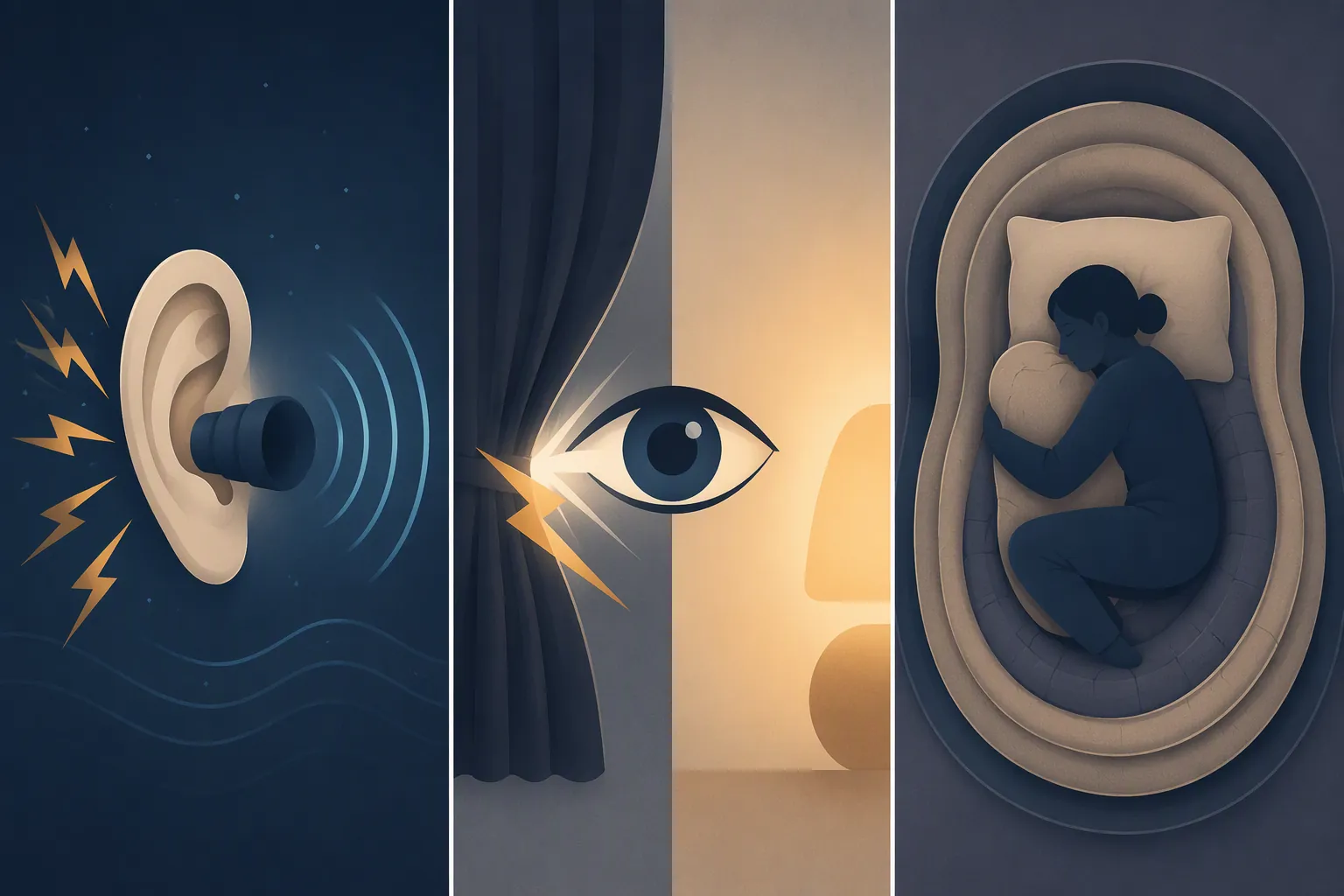
First Barrier: Change the Sound Field
Thunder is hard to sleep through because it is not steady. A fan hums. Rain patters. Thunder interrupts. That irregular crash is the part that wakes the body, especially when the room is otherwise quiet. So the sound fix has two jobs: dampen the peak and smooth the background.
Earplugs handle the first job. If you already have them, choose the pair that seals best rather than the pair that merely feels soft. A higher noise reduction rating can take the edge off a clap, but it will not make thunder vanish. That distinction matters at night: the goal is not silence; it is making the loudest moment less violent to the sleeping brain.
Ambient sound handles the second job. Move a fan closer. Turn on a sound machine. Use a phone speaker if that is what you have, but place it where it fills the room rather than blasting beside your ear. Continuous sound gives thunder less empty space to crash into.
Brown noise is worth trying if white noise feels too sharp. White noise has a hiss that some people find alerting. Brown noise sits lower and heavier, which can blend more naturally with distant thunder. That does not make it a clinical treatment for storm fear. It simply makes it a sensible test: if the thunder sounds like sudden low-frequency impact, a lower-frequency masking layer may be easier to tolerate than a brighter one.
- If thunder jolts you awake: use earplugs plus a steady sound layer, not one or the other.
- If earplugs make you feel too sealed off: lower the plug strength and raise the room sound slightly.
- If white noise feels piercing: try fan noise, rain audio, pink noise, or brown noise.
- If you need to hear alerts or another person: do not fully block sound; aim for dampening, not isolation.
Second Barrier: Stop Lightning From Snapping the Room Awake
Lightning is not only bright. It is contrast. A fully dark room can make a flash feel like a camera going off behind your eyelids. Once the body startles, the brain starts looking for the next one.
There are two clean strategies, and they solve different problems. If the flash itself is the problem, block it: close curtains, add blackout curtains if you have them, and use a sleep mask. If the contrast is the problem, soften the room: leave a dim, warm night-light or small lamp on so lightning does not turn the bedroom from black to white in a single instant.
Do not over-light the room. Bright light can make it harder to stay sleepy. The sweet spot is enough glow to reduce the shock of a flash, not enough light to tell your brain it is morning.
Third Barrier: Make the Bed Feel Less Exposed
The least obvious part of thunderstorm anxiety is physical exposure. Lying still in a dark room can feel strangely defenseless, even when the rational part of the mind knows the walls and roof are doing their job. The body wants edges. It wants pressure. It wants some signal that it is held in place.
This is where deep pressure and cocooning can help. A weighted blanket, a heavier comforter, a tucked-in top sheet, or pillows pressed along the sides of the body can give the nervous system a steadier physical signal than an open mattress does. Broader sleep and anxiety research links anxiety with sleep disruption, and weighted blankets are commonly discussed as a deep-pressure tool in that wider context, but the evidence should not be stretched into a thunderstorm-specific cure claim.[1]
If you already own a weighted blanket and it feels comfortable, put it on before the storm reaches its loudest stretch rather than dragging it out after you are already alert. If it makes you hot, trapped, short of breath, or restless, take it off. Pressure only helps when the body reads it as safe.
No weighted blanket is required. Pull a regular blanket snug around your shoulders. Put a pillow behind your back and another against your chest. Wear a hoodie with the hood up if it makes the space around your head feel more protected. Tuck the blanket under your feet if your body relaxes when the bed has clear boundaries. These are small signals, but at night small signals can arrive faster than reasoning.
Set the Room Before the Next Cell Arrives
The best time to set this up is before you are startled. Once the storm has already woken you, every extra decision becomes another reason to stay awake. Keep the sequence plain.
- Start the sound layer: fan, sound machine, rain audio, pink noise, or brown noise at a steady volume.
- Choose the earplug plan: full dampening if you can safely use it, lighter dampening if you need to hear alerts or another person.
- Pick one light strategy: blackout curtains and sleep mask, or a dim warm light to reduce contrast.
- Build pressure and enclosure: weighted blanket if comfortable, or pillows, tucked bedding, a hoodie, and a snug blanket.
- Put essentials within reach: water, tissues, glasses, medication you already take at night, phone charger, and any weather-alert device you rely on.
- Remove avoidable interruptions: silence nonessential notifications, close rattling blinds, move loose objects away from windows, and keep the path to the bathroom clear.
This setup is for ordinary thunderstorm sleep disruption, not for deciding whether it is safe to sleep through a dangerous weather event. If there is a tornado warning, flood warning, hurricane threat, or local instruction to move shelter, safety comes first. For broader severe-weather nights, use the site’s guide to sleeping through severe storms. If the question is whether sleep is appropriate during a flood warning, start with the hazard-assessment framework instead.
When Room Fixes Are Not Enough
A modified bedroom can reduce startle. It can make thunder less sharp, lightning less shocking, and the bed less exposed. That may be enough for a rough night.
It is not enough if storm fear is spreading beyond storm nights. Astraphobia is a fear of thunder and lightning, and clinical descriptions include intense fear, avoidance, and anxiety symptoms around storms.[2] If forecast days already ruin sleep, if you monitor radar compulsively, if you avoid ordinary plans because storms might happen, or if sleep stays broken despite room changes, it is reasonable to look for professional support rather than keep redesigning the bedroom.
For some people, grounding skills can also help during the awake part of the panic, especially when the body needs a simple task to come back to the room.[3] But tonight’s room setup still has value. It gives the first flinch less to grab onto.
References
- Anxiety and Sleep, Sleep Foundation, https://www.sleepfoundation.org/mental-health/anxiety-and-sleep
- Astraphobia, Cleveland Clinic, https://my.clevelandclinic.org/health/diseases/22101-astraphobia
- 13 Grounding Techniques, Cleveland Clinic, https://health.clevelandclinic.org/grounding-techniques
Read the full guide: What to Do Tonight to Sleep Through a Severe Thunderstorm