
How to Sleep When the Heat Index Reaches 100
If the heat index is 100°F, your first job is not to perfect your sleep routine. It is to help your body dump enough heat to fall asleep safely. Move to the coolest room you can access, preferably the lowest floor. Get out of heavy bedding. Use a cool shower, damp cloth, or ice pack on pulse points. Sip water rather than chugging a large bottle at bedtime. And if the indoor temperature is above 90°F, do not treat a fan blowing directly on you as reliable cooling; the CDC warns that fans are ineffective above that point and may increase body temperature by moving hot air over the body.[1]
That last caveat matters because a lot of hot-weather sleep advice stops at “use a fan.” A fan can help when it pulls in cooler outdoor air, pushes hot air out, or moves air across damp skin in a room that is not dangerously hot. It is not the same thing as air conditioning. If your upstairs bedroom still feels like an oven at 1 a.m., the more useful question is whether the room can be made cooler, whether your skin can evaporate sweat, and whether you have any signs that heat stress is moving beyond discomfort.

Why a 100°F heat index keeps you awake
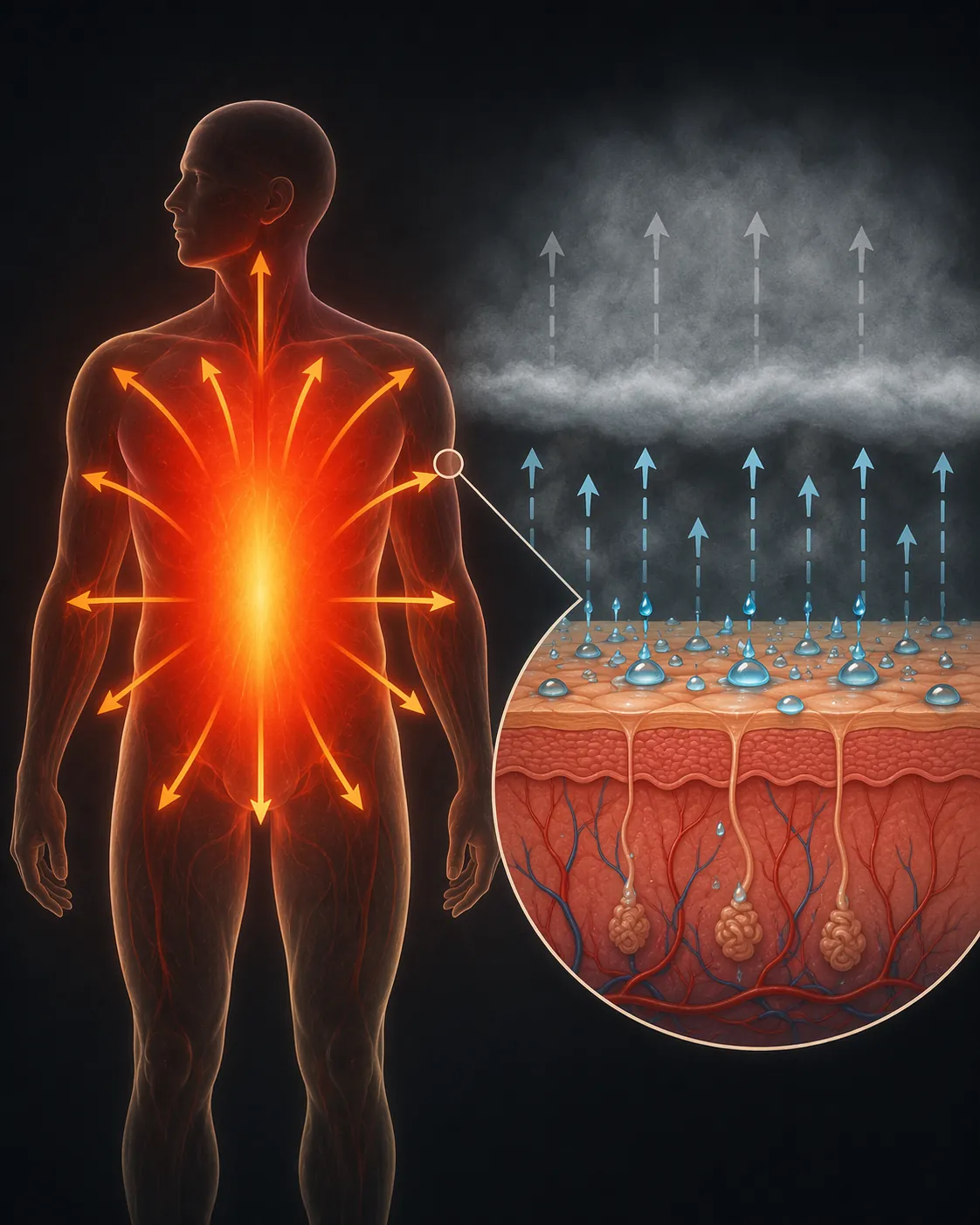
Sleep onset depends on a real temperature shift inside the body. Core body temperature normally drops by about 0.5–1°C, or roughly 1–2°F, as the body prepares for sleep; thermal stress can interfere with that drop and increase wakefulness while reducing deeper sleep stages.[2] So if you are lying there sweating through a shirt and feeling wired, that is not a moral failure or a lack of discipline. Your body may be trying to start sleep without being able to complete one of the basic physical conditions that makes sleep easier.
The “heat index” part is important because humidity is not just an unpleasant add-on. Sweat cools you when it evaporates. When the air is humid, sweat sits on the skin longer and evaporation slows, which means the body loses one of its main cooling routes. This is why a damp, still bedroom can feel worse than the thermometer alone suggests.
Even temperatures that sound less dramatic than a 100°F heat index can measurably disturb sleep. The American Heart Association reported research showing sleep efficiency dropping 5–10% when ambient temperature increased from 77°F to 86°F.[3] And the body does not simply “get used to it” after a few bad nights: a thermal-environment review describes research in which heat-related sleep disruption did not adapt even after five continuous days of heat exposure.[2]
A cooling sequence for tonight
Start with the actions most likely to lower heat load before you ask your body to sleep. The order matters less than the goal: cool the room where possible, cool the skin, keep sweat able to evaporate, and avoid adding more heat from digestion, alcohol, or late exertion.
| When | What to do | Why it helps |
|---|---|---|
| Late afternoon or early evening | Close curtains or shades before the room heats up; keep sun-facing windows covered. | Reduces stored indoor heat before bedtime. |
| When outdoor air becomes cooler than indoor air | Open windows for cross-ventilation if it is safe to do so; use fans to move cooler air in and hot air out. | Moves heat out instead of just circulating hot bedroom air. |
| 30–90 minutes before bed | Take a cool, not icy, shower and let the skin cool gradually afterward. | Helps remove surface heat without leaving you shivering or alert. |
| At bedtime | Use a light breathable sheet, cool pulse points, and avoid heavy bedding. | Supports heat loss from skin and sweat evaporation. |
| If the room remains above 90°F indoors | Do not rely on a direct fan as the main cooling method; seek a cooler room or cooler location. | Above 90°F, fan-only cooling can become unsafe.[1] |
Cool the room before it stores the day’s heat
The best nighttime cooling often starts before night. If the room gets direct sun, close curtains, shades, or blinds before the heat builds. NPR’s 2026 extreme-heat guidance notes that cellular shades can block up to 80% of solar heat, but the basic principle still helps if all you have is a curtain, a blanket over a window, or a sun-facing room you can abandon for the night.[4]
At night, reverse the strategy only when the outdoor air is cooler than the indoor air. Open windows on opposite sides of the home if you can do so safely. Put one fan near a cooler-air source and another facing outward in a warmer window if you have two. The point is not to create a dramatic setup; it is to exchange trapped hot air for cooler air. If the hallway, living room, or lowest floor is cooler than the bedroom, sleep there. Heat rises, and upstairs rooms often remain punishing long after the outdoor temperature starts to fall.
Use limited air conditioning strategically
If you have a window unit, portable AC, or a system you cannot afford to run all night, use it where it changes the actual sleep environment. Cooling one small room with the door closed is more useful than trying to take the edge off an entire apartment. If you can pre-cool the room before bed, do it before the walls, mattress, and upstairs air have fully soaked up heat. If you have to choose between cooling while awake in the evening and cooling the first part of the sleep period, prioritize the room when you are trying to fall asleep and when core temperature needs to drop.
Take a cool shower, then give your body time
A cool shower before bed can be more useful than lying under a fan waiting for relief. Keep it cool rather than painfully cold. You are trying to lower skin heat and make the next hour easier, not shock yourself awake. Afterward, wear loose, light sleepwear or let the skin dry in moving air if the room is not dangerously hot. If the air is humid, a towel-dry plus breathable fabric may feel better than staying wet and clammy.
Cool pulse points without turning the bed into a project
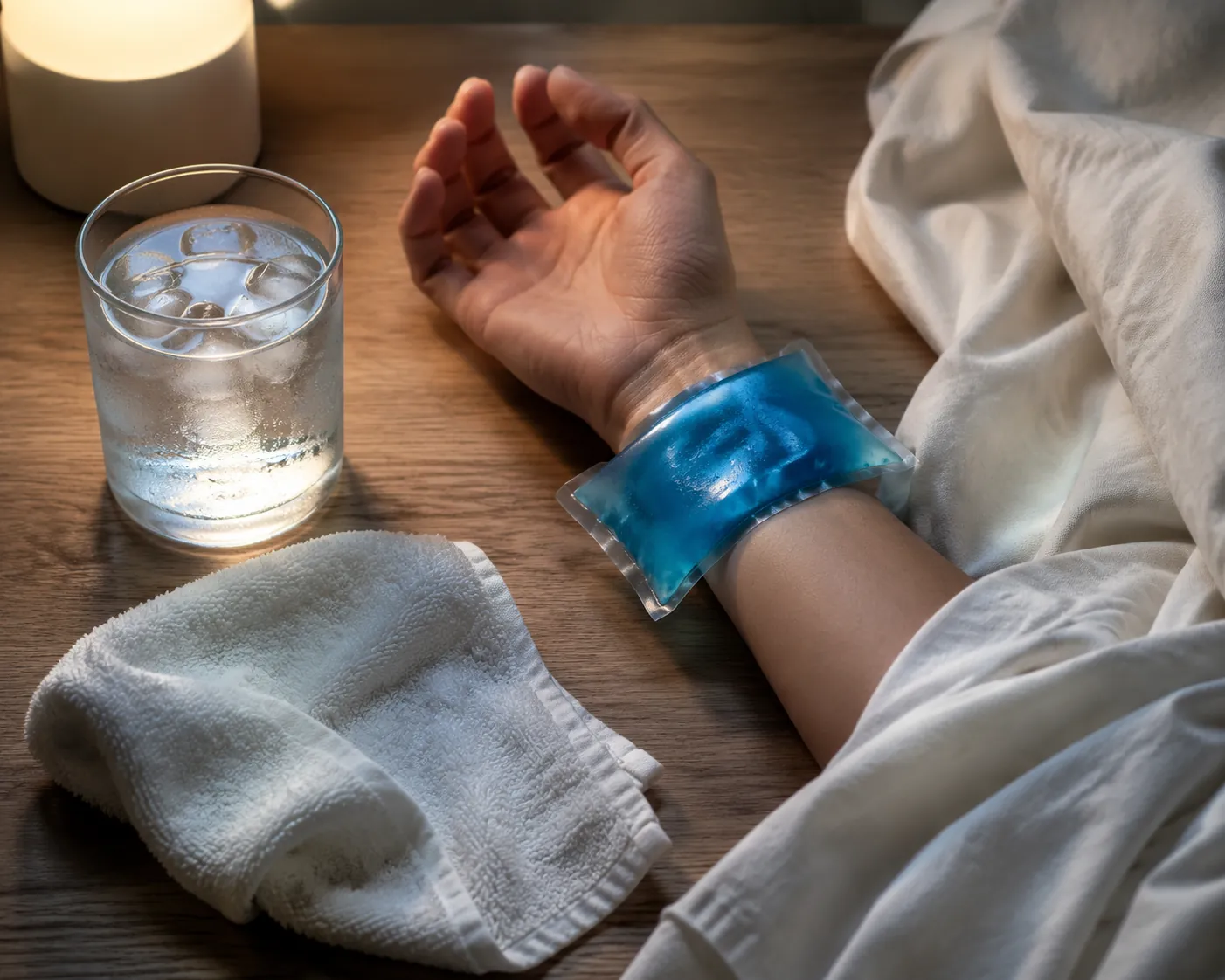
Use a cold pack, wrapped ice pack, or cool damp cloth on places where blood vessels run close to the skin: the neck, wrists, ankles, behind the knees, or the upper chest. Keep a barrier between ice and skin. You do not need a full-body cold plunge at 1 a.m.; a few targeted cooling points can reduce the feeling of heat enough to stop the spiral of sweating, tossing, and checking the clock.
A frozen pillowcase or chilled pillow cover can also help briefly, especially at sleep onset. Treat it as short-term relief, not a whole-night cooling system. If it becomes damp and warm, swap it out or remove it rather than lying on a humid surface that traps heat.
Use breathable bedding, but do not assume naked is cooler
Thin cotton or linen bedding is usually more forgiving than heavy synthetic layers. A light sheet can be useful even when it seems logical to sleep uncovered, because it can absorb a little sweat and provide a surface for evaporation; HealthPartners specifically cautions against assuming that sleeping naked with no sheet is the best hot-weather option.[5] If your mattress traps heat, put the lightest breathable layer between you and the mattress rather than adding thick padding.
Hydrate steadily, not all at bedtime
Drink water through the day and evening. A large bedtime water load may leave you waking repeatedly to urinate, which does not help sleep or heat recovery. If you wake thirsty, take small sips of cool water. If you are sweating heavily, have been outdoors, or are caring for someone vulnerable, hydration should start well before bedtime, not when the bedroom has already become unbearable.
The fan rule: useful for air exchange, risky as hot-air “cooling”
A fan helps when it improves heat loss. That can mean pulling cooler night air into a room, pushing hotter indoor air out, or increasing evaporation from skin when the room is warm but not dangerously hot. It can also help if you place a bowl or pan of ice water in front of it and the setup is genuinely sending cooler air toward you. These are different from aiming a fan at your body in a room where the air itself is above 90°F.
The CDC’s warning is blunt because the mechanism is blunt: once indoor air is too hot, a fan can act less like cooling and more like a convection oven, moving hot air over skin faster.[1] If the room is over 90°F, especially with high humidity, the fan should be part of a ventilation or evacuation plan, not the safety plan by itself.
If you do not have a thermometer, use practical signs. Is the fan making sweat evaporate and skin feel less hot, or is it just blowing hot air onto a flushed, nauseated, or dizzy person? Is the hallway cooler? Is the stairwell cooler? Is there a lobby, cooling center, neighbor’s apartment, car with AC, or public place available before symptoms get worse? This is the point where comfort advice has to give way to heat safety.
What to avoid when the heat index is this high
Skip alcohol as a sleep aid in high heat. It may make you feel drowsy, but it can widen blood vessels, raise heart rate, impair thermoregulation, and worsen sleep quality.[5] The same night is not the time for vigorous late exercise, a heavy meal close to bed, or extra evening caffeine. These all ask the body to do more work when it is already struggling to shed heat.
Do not overcorrect with elaborate gadgets unless they clearly cool the air, the skin, or the sleeping surface. A wet towel, a cold pack, a shaded window, and a move to the lowest floor can outperform a complicated arrangement that still leaves you breathing hot, humid air.
When “bad sleep” becomes heat illness
Heat-related illness can show up at night, and it should not be filed under insomnia. Get medical help or move immediately to a cooler location if you or someone you are caring for has confusion, a rapid heartbeat, nausea, inability to keep fluids down, headache, very dark urine, or lack of sweating despite extreme heat. The CDC identifies heat-related illness as a serious risk in hot conditions, and symptoms that affect thinking, hydration, or the body’s ability to cool itself deserve urgent attention.[1]
Be more cautious if the person is an older adult, pregnant, living with a chronic condition, taking medications that affect fluid balance or heat tolerance, or unable to communicate symptoms clearly. Caregivers should check the actual room, not just the thermostat setting somewhere else in the home. A nursery, attic bedroom, or upstairs rental room can remain hot while another part of the home feels tolerable.
People in perimenopause or menopause may also be dealing with night sweats or hot flashes on top of environmental heat. That does not change the basic heat-safety rule: first make the sleeping space and body cooler, then fine-tune the sleep strategy. Life-stage-specific guidance is useful, but it should not delay leaving a dangerously hot room.
The decision point
If the room can be cooled enough, use the passive sequence: block daytime sun, move to the lowest floor, ventilate only when outdoor air is cooler, take a cool shower, use light breathable bedding, cool pulse points, and hydrate steadily. If the room cannot be cooled, especially if indoor air is above 90°F or symptoms are appearing, the goal is no longer “how to sleep when the heat index is 100.” The goal is finding a cooler place before the night becomes unsafe.
References
- About Heat and Your Health — CDC.
- Effects of thermal environment on sleep and circadian rhythm — PMC, 2012.
- Keep your cool – and stay healthy – with these hot-weather sleep tips — American Heart Association, 2025-08-19.
- Keep cool in extreme summer heat without air conditioning — NPR, 2026-07-15.
- Tips for sleeping in hot weather without AC — HealthPartners.
Read the full guide: How to Sleep Without AC When the Power Goes Out