
Can You Watch the Southern Delta Aquariids and Still Sleep?
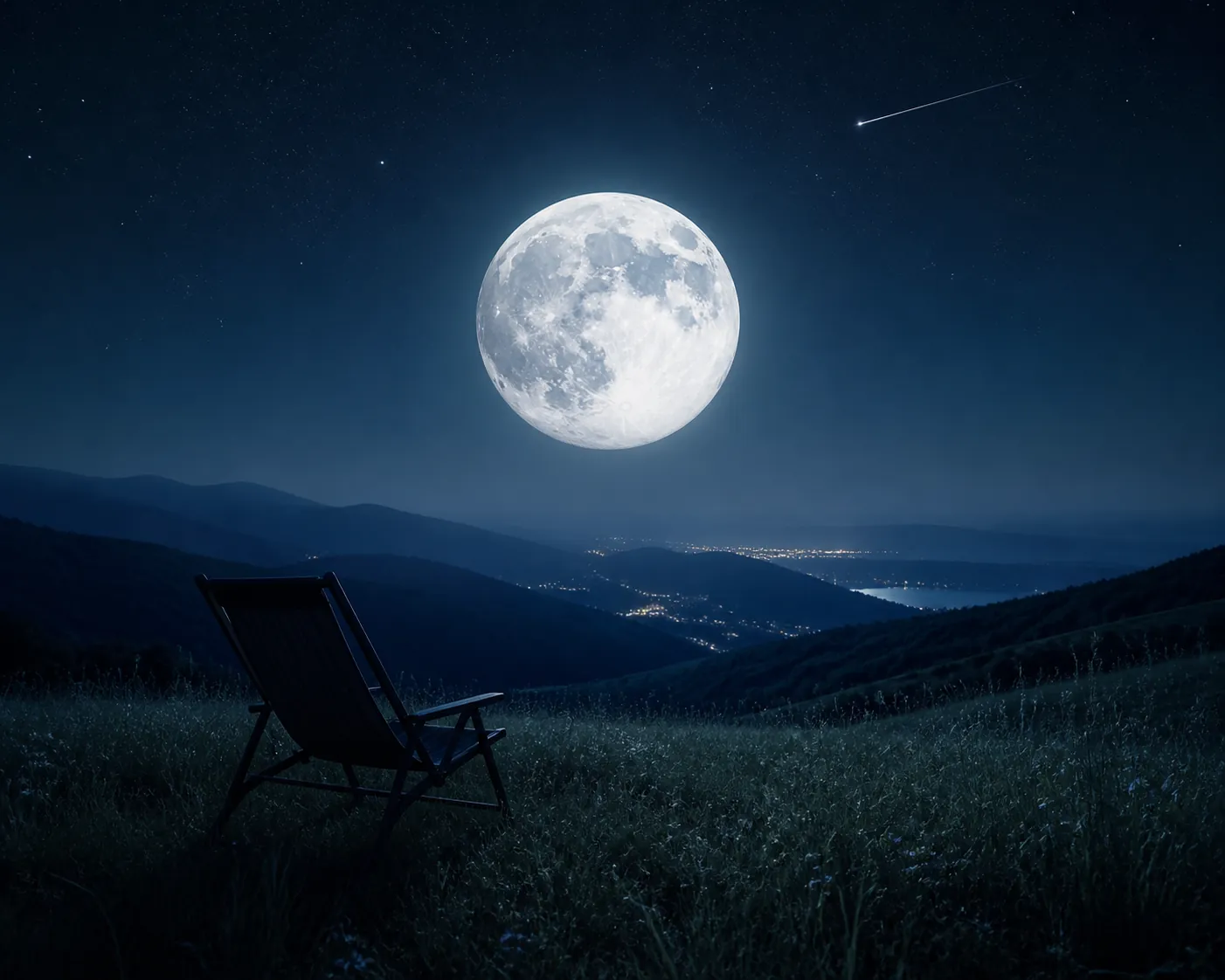
Yes, you can watch the Southern Delta Aquariids and still sleep in 2026 — but the best viewing and sleep advice points away from the advertised peak night. The July 30–31 peak follows the July 29 full moon, with the moon about 98% full; under those conditions, the expected visible rate drops to roughly 2–3 meteors per hour from dark sites, and NASA Meteoroid Environment Office lead Bill Cooke was quoted saying the meteors will be “very difficult to see.” [1][2]
That is a poor bargain: go outside after midnight, lose sleep, and still let moonlight erase most of what you came to see. The better move is to use the moon-free pre-dawn mornings in the week before the July 29 full moon, which EarthSky recommends for seeing the most Delta Aquariids in 2026. [3]
The sleep-smart night is also the sky-smart night
Meteor-shower advice often treats “peak” as if it settles the question. It does not. A peak under a nearly full moon is not the same viewing event as a peak under a dark sky. In 2026, the moon is the deciding condition.
The useful viewing window comes before the full moon: after midnight into the pre-dawn hours during the week before July 29. That timing gives you two advantages at once. You are looking when the shower is active and the sky is darker, and you are not forcing yourself into the worst-lit version of the event just because a peak date looked impressive in a headline.
| 2026 choice | What the sky gives you | What it costs your sleep |
|---|---|---|
| Moon-free pre-dawn mornings before July 29 | The better-supported viewing window for the Delta Aquariids in 2026 | Still early, but easier to plan as one controlled early alarm |
| July 30–31 peak night | About 2–3 visible meteors per hour from dark sites under a 98% full moon | A late-night outing with a diminished show |
| Early August after the peak | The shower may still be active, but the best 2026 window has passed | Worth treating as optional, not as something to chase at any cost |
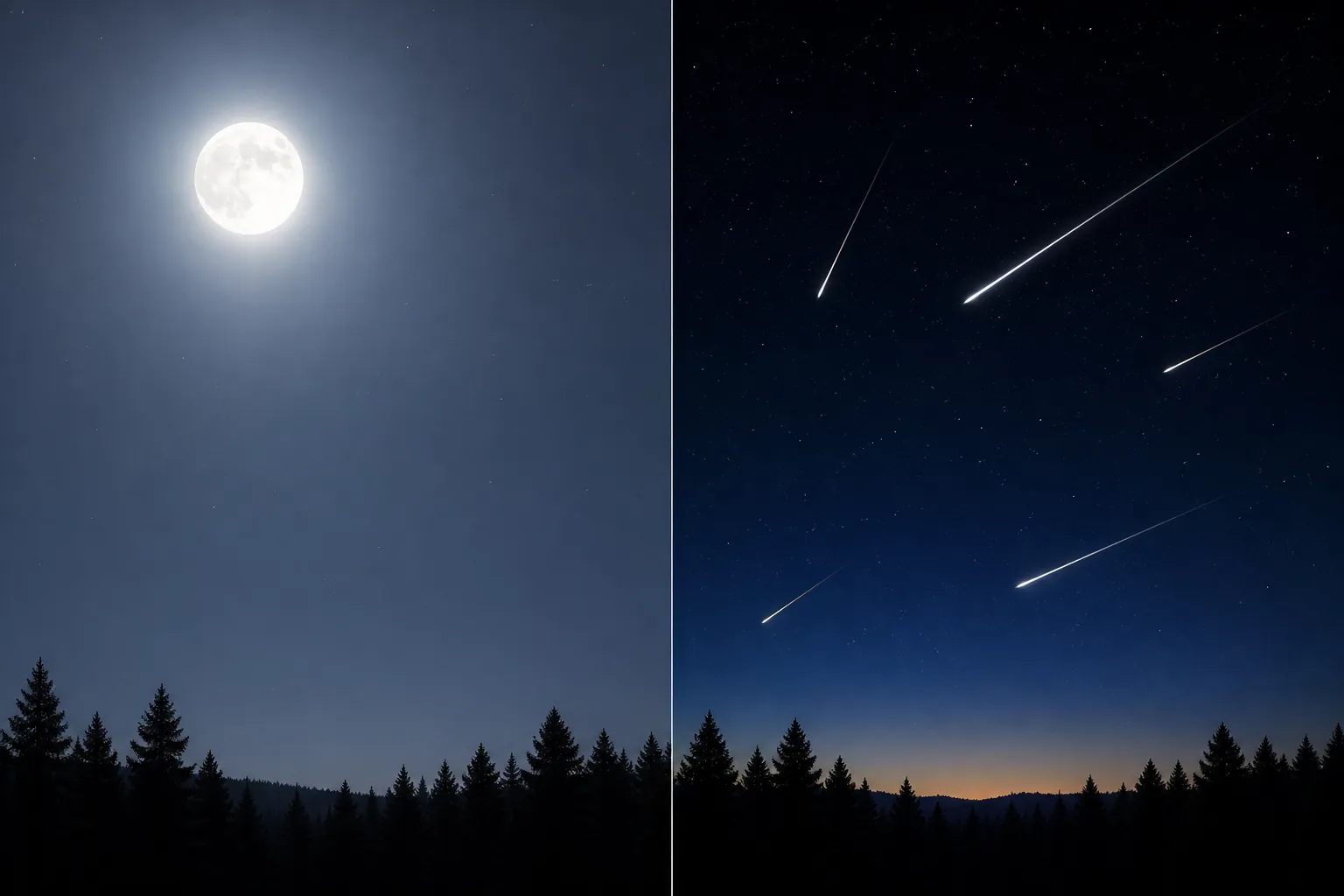
This is not “missing the shower.” It is choosing the version of the shower that has a fairer chance of being visible. The Delta Aquariids do not become meaningful only at the mathematical peak. In a moon-compromised year, a slightly earlier, darker morning can beat the official peak for an ordinary viewer standing in a real sky.
What to expect if you choose the earlier mornings
Plan this like an early, quiet appointment with the sky, not like an all-night vigil. The useful window is after midnight before dawn. If you can get to a darker place, arrive with enough time for your eyes to adjust and then actually let them adjust. Bright phone checks are especially wasteful here: they damage your night vision and make it easier to wake yourself up more than the outing requires.
A simple plan is enough:
- Pick one moon-free pre-dawn morning before July 29 rather than treating every night as a possibility.
- Set one alarm, not a chain of alarms that fragments the whole night.
- Keep lights low from the moment you wake up; if you need a screen, dim it and use it briefly.
- Give yourself a real viewing block, then stop. Lingering indefinitely is how a planned outing turns into avoidable sleep loss.
- Protect the next night in advance: no heroic second attempt unless the first one was cut short for a clear reason, such as clouds.
The expectation should be modest even in the better window. Meteor showers are not fireworks shows, and the Delta Aquariids are often best appreciated with patience. But modest is not the same as futile. A dark pre-dawn sky gives the shower room to appear; a 98% full moon takes much of that room away.
If you still go out on peak night, keep the damage bounded
There is no need to turn one late-night meteor attempt into a moral failure. If July 30–31 is the only night you can go, or if you already stayed up, the sleep cost is real but usually best treated as a small sleep-debt event, not as a permanent schedule collapse.
The useful calibration is this: Sleep Foundation reports that losing one hour of sleep can take about four days to repay, and fully eliminating sleep debt can take up to about nine days. [4] That does not mean you need nine dramatic nights of recovery after one meteor outing. It means the lost sleep is not erased by pretending it did not happen, and it is better repaid steadily than chased with a chaotic oversleep.

Contain the outing before it starts. Decide when you are leaving, when you are coming back in, and what you will not do afterward. The worst version is not simply staying up; it is staying up, scrolling under bright light, sleeping unpredictably the next day, and then treating the following night as optional too.
A cleaner recovery plan looks like this:
- Do not make the viewing window open-ended. A shorter dark-sky session is better than a long, moon-washed wait.
- Keep the return home boring: low light, no “just checking” bright screens, no turning the outing into a second evening.
- Give the following night priority. If you lost sleep, that is the night to make boring, dark, and protected.
- Avoid stacking late nights. One odd-hour skywatch can be repayable; turning it into a streak is a different problem.
A practical decision rule for 2026
If you want the best chance of seeing Southern Delta Aquariids in 2026 with the least unnecessary sleep loss, go before the July 29 full moon during the moon-free pre-dawn windows. If you are looking at the July 30–31 peak because it sounds official, lower your expectations sharply: the nearly full moon makes the show hard to justify for most tired adults.
If you already stayed up, treat the lost sleep as a repayable debt. Protect the next night, keep light exposure calm, and avoid making one late outing the start of a disrupted week. If your sleep is already fragile because of pregnancy, perimenopause, ADHD, age-related sleep vulnerability, or another recurring pattern, use deeper population-calibrated sleep guidance rather than general meteor-shower advice.
References
- AMS weekly outlook — American Meteor Society.
- CNN report quoting NASA Meteoroid Environment Office lead Bill Cooke — CNN.
- EarthSky recommendation for moon-free Delta Aquariid mornings — EarthSky.
- Sleep debt — Sleep Foundation.
Read the full guide: How to watch tonight's double meteor shower and still sleep