
How to watch tonight's double meteor shower and still sleep
Fast answer: how to watch the double meteor shower tonight without ruining sleep
For the night of Aug. 1–2, the sleep-smart answer is: take one 20–30 minute look after midnight, ideally in the hours before dawn, or skip it. The “double meteor shower” is real, but the best night has already passed, the moon is bright, and tonight is not worth an all-night vigil.
Skip tonight if your sky is cloudy, heavily light-polluted, dominated by moonlight, or if tomorrow morning cannot absorb a bad sleep outcome. If the sky is clear, you are genuinely curious, and tomorrow is flexible, set one alarm, look once, then go back to bed.
Why tonight is a modest meteor night, not a spectacle
The Southern Delta Aquariids and Alpha Capricornids are both active now, but both peaked on July 30–31, 2026. The American Meteor Society lists the Southern Delta Aquariids as active roughly July 12–Aug. 23 and the Alpha Capricornids as active roughly July 3–Aug. 15, with both peaking July 30–31 this year.[1]
The realistic count is the part that changes the decision. For this window, the AMS activity outlook gives roughly 2–3 Southern Delta Aquariids per hour, about 3 Alpha Capricornids per hour, about 3 early Perseids per hour, and about 10 sporadic meteors per hour before dawn from mid-northern latitudes.[2] Those are already modest rates before the moon takes its cut.
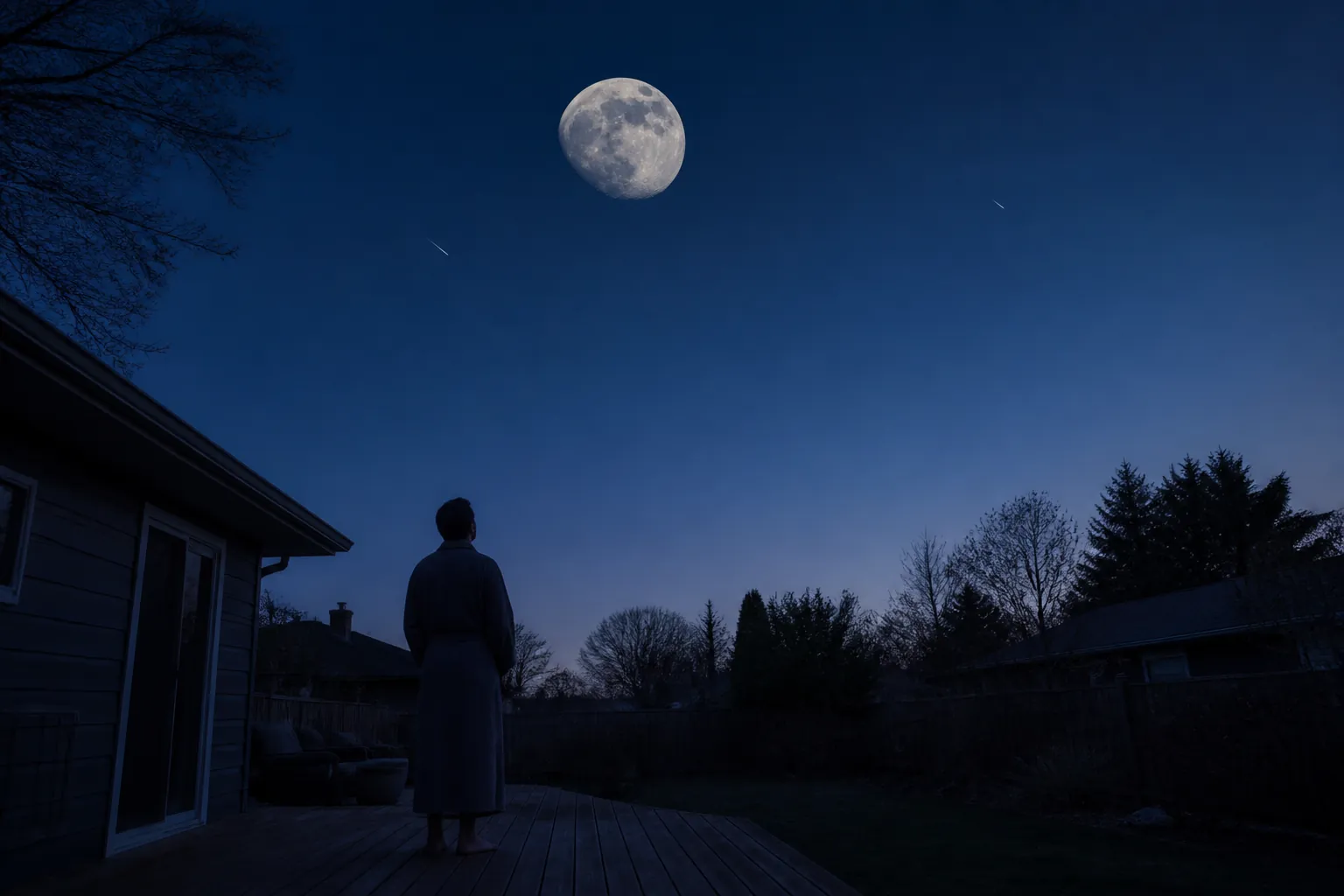
On Aug. 1, 2026, the moon is a waning gibbous about 91% illuminated, only a few nights past the full Buck Moon.[3] That matters because the meteors you are most likely to lose are the faint ones. A bright moon does not politely dim the background; it washes the sky and raises the threshold for what your eyes can catch.
| Source tonight | What to expect | Sleep decision |
|---|---|---|
| Southern Delta Aquariids | Faint, moon-vulnerable meteors; only a few per hour are realistic tonight. | Do not wake up just for these under a bright moon. |
| Alpha Capricornids | Fewer meteors, but the best chance for a bright, slow fireball. | This is the one reason a short look can still be fun. |
| Early Perseids | Already active but still building toward the Aug. 12–13 peak. | Nice bonus, not tonight’s main event. |
| Sporadics | Random background meteors can add a few before dawn. | They help, but they do not turn this into a meteor storm. |
What you might actually see tonight
The Southern Delta Aquariids are the weakest reason to sacrifice sleep tonight. NASA describes Delta Aquariid meteors as faint and hard to spot, and its viewing guidance is blunt: if the Moon is visible, “you will not be able to view them.” NASA also notes that the shower favors southern latitudes and that your eyes need up to about 30 minutes to adapt to the dark.[4]
The Alpha Capricornids are different. They are not numerous, but they are known for bright fireballs, and those have a better chance of punching through moonlight than faint Delta Aquariids.[1] If you step outside tonight and get one slow, bright meteor, it is more likely to feel worth the interruption than a barely visible streak you wonder whether you imagined.
The Perseids are also active, but this is still the build-up phase. Do not let Perseid peak numbers leak into tonight’s expectations. Tonight is a handful-of-meteors kind of night, and the bright moon may reduce even that.
So the honest expectation is not “watch two showers peak.” It is: stand under a bright late-night sky, give your eyes a little time, and hope for one or two memorable meteors, especially an Alpha Capricornid fireball.
The 20–30 minute plan
If you are going to try, make the outing boringly controlled. The goal is to see whether the sky gives you something in a short window, not to turn one meteor shower search into a full sleep disruption.
- Before bed, check local cloud cover and local moonrise/moonset. Do not use a universal moon time; it varies by location.
- Choose one viewing window after midnight, preferably before dawn. Do not set rolling alarms.
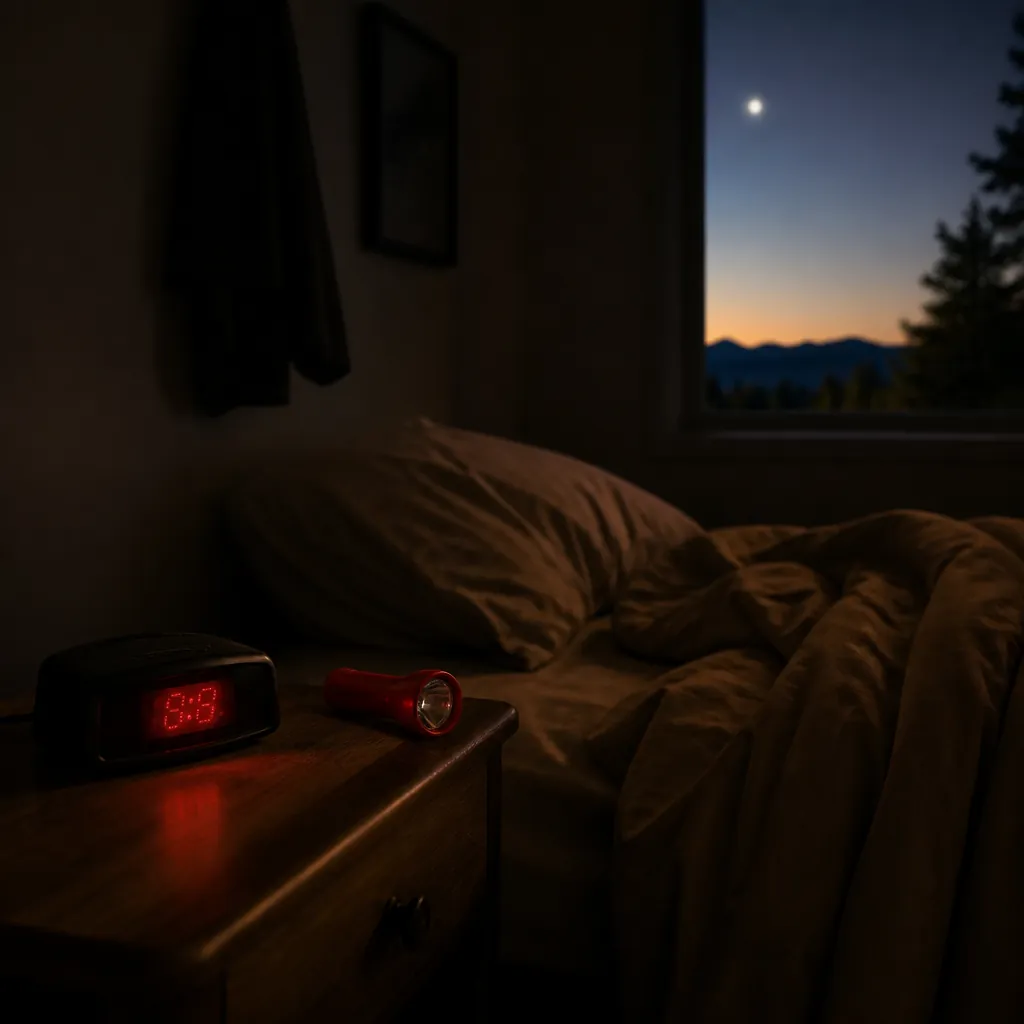
- Put warm layers, shoes, a chair or blanket, and a red flashlight by the door before you sleep.
- When the alarm rings, avoid bright indoor lights and do not start scrolling.
- Go outside for 20–30 minutes. Face the darkest part of your sky, with the moon blocked by a building, tree, or your own line of sight if possible.
- When the timer ends, go back in. No “just five more minutes,” no social post, no checking a dozen meteor reports.
That window is short, but it is not pointless. Dark adaptation takes time, and the first few minutes outside are often the least useful. The National Park Service explains that rhodopsin build-up for dark adaptation takes about 20–40 minutes, and that seconds of white light can undo it; deep red light helps preserve it.[5] NASA gives similar practical advice for meteor watching: get away from city lights, put the phone away, and allow your eyes up to about 30 minutes to adjust.[4]
A few details that prevent the outing from becoming the night
Use a timer you can stop without unlocking your phone. If your phone is the alarm, put it in a mode that will not show notifications when you silence it. A weather app check at 2:40 a.m. can become a message check, then a headline check, then a body that no longer believes it is bedtime.
Dress warmer than you think you need to. Standing still before dawn feels different from stepping out to grab the mail. The Society for Popular Astronomy’s observing guidance says there is no point observing if you are exhausted and warns that falling asleep outdoors can create a real hypothermia risk.[7]
Do not spend the whole session hunting for the radiant. For this kind of short look, comfort and sky darkness matter more. Let your eyes rest on a broad, dark patch of sky. Meteors can appear away from the radiant, and staring at a moon-bright direction only makes the faint ones harder.
How to get back to sleep after the look
The return-to-bed part starts before you leave the bed. Keep the path dim. Avoid overhead lights. Do not reward your brain with a phone session. In a controlled study, exposure to room light below 200 lux before bedtime suppressed melatonin in 99% of participants and shortened melatonin duration by about 90 minutes.[6] That does not mean one hallway light guarantees a ruined night, but it does make bright light a bad bargain for a low-rate meteor attempt.
When you come back in, make the next moves automatic: shoes off, layers down, bathroom only if needed, back to bed. Keep the clock turned away if clock-watching tends to wake you more. If you are alert, use your usual quiet recovery routine rather than trying to force sleep. If you need a fuller plan, use the site’s back-to-sleep recovery protocol after an eclipse or meteor shower.
If you know that a little stimulation keeps you awake for hours, tonight is not the event that deserves the experiment. That is especially true if you are already in a stretch of middle-of-the-night waking, pregnancy discomfort, ADHD-related bedtime fragility, caregiving, shift recovery, or older-adult sleep disruption. For perimenopause-related 3 a.m. patterns, start with how to identify a middle-of-night insomnia pattern before deciding that a past-peak meteor shower deserves an alarm.
When skipping tonight is the better astronomy decision
Skipping is not failing at sky-watching. It is choosing the better sky. If you have clouds, haze, city glare, a bright moon in your best viewing direction, sleep debt, a fixed morning obligation, or a history of not falling back asleep after alarms, keep the night intact.
The better near-term target is the Perseid peak on Aug. 12–13. The Perseids are active July 17–Aug. 24 and peak Aug. 12–13 in 2026, with dark-sky theoretical maxima often described around ZHR 100; some guides translate ideal conditions to 90-plus meteors per hour.[1][8] That is not a promise for your backyard, but it is a much stronger reason to plan sleep around the sky than tonight’s moon-washed leftovers.
For that night, use the Perseid meteor shower without losing sleep guide for stay-up, alarm, and skip verdicts, or the hour-by-hour Perseid 2026 sleep schedule if you want to plan the whole evening. If you are thinking about a nap-and-recovery strategy, the Perseid eclipse sleep schedule has the more strategic framing.
If your real question is whether any meteor shower is worth a sleep hit, compare tonight against the broader meteor showers worth wrecking sleep framework and the general meteor shower without ruining sleep plan. And if you want the sky without the wake-up, consider photographing the Perseid meteor shower while sleeping instead.
Tonight’s rule is simple enough to keep at the bedside: clear sky, flexible morning, one short before-dawn look for a possible fireball. Otherwise, sleep now and aim for the moonless Perseid peak on Aug. 12–13.
References
- Meteor Shower Calendar, American Meteor Society.
- Meteor Activity Outlook for July 25-31, 2026, American Meteor Society, July 2026.
- Moon Phase on August 1, 2026, Moon Giant.
- Delta Aquariids, NASA Science.
- Dark Adaptation of the Human Eye and the Value of Red Flashlights, National Park Service.
- Exposure to Room Light before Bedtime Suppresses Melatonin Onset and Shortens Melatonin Duration in Humans, PubMed Central, 2011.
- Hints and tips for meteor observers, Society for Popular Astronomy.
- Everything you need to know: Perseid meteor shower, EarthSky.
Read the full guide: How to Watch the Perseid Meteor Shower Without Losing Sleep