
How to Watch Late-Night Baseball Without Ruining Your Sleep
Late-night baseball is not a character flaw. It is a scheduling problem with emotional consequences. If you are on the East Coast or in Central Time, a perfectly normal West Coast night game can start at the hour when the rest of your household is already negotiating pajamas, dishes, homework, or tomorrow’s alarm. A postseason game can be worse: one pitching change, one replay review, one extra-inning baserunner, and suddenly the responsible choice was supposed to happen three innings ago.
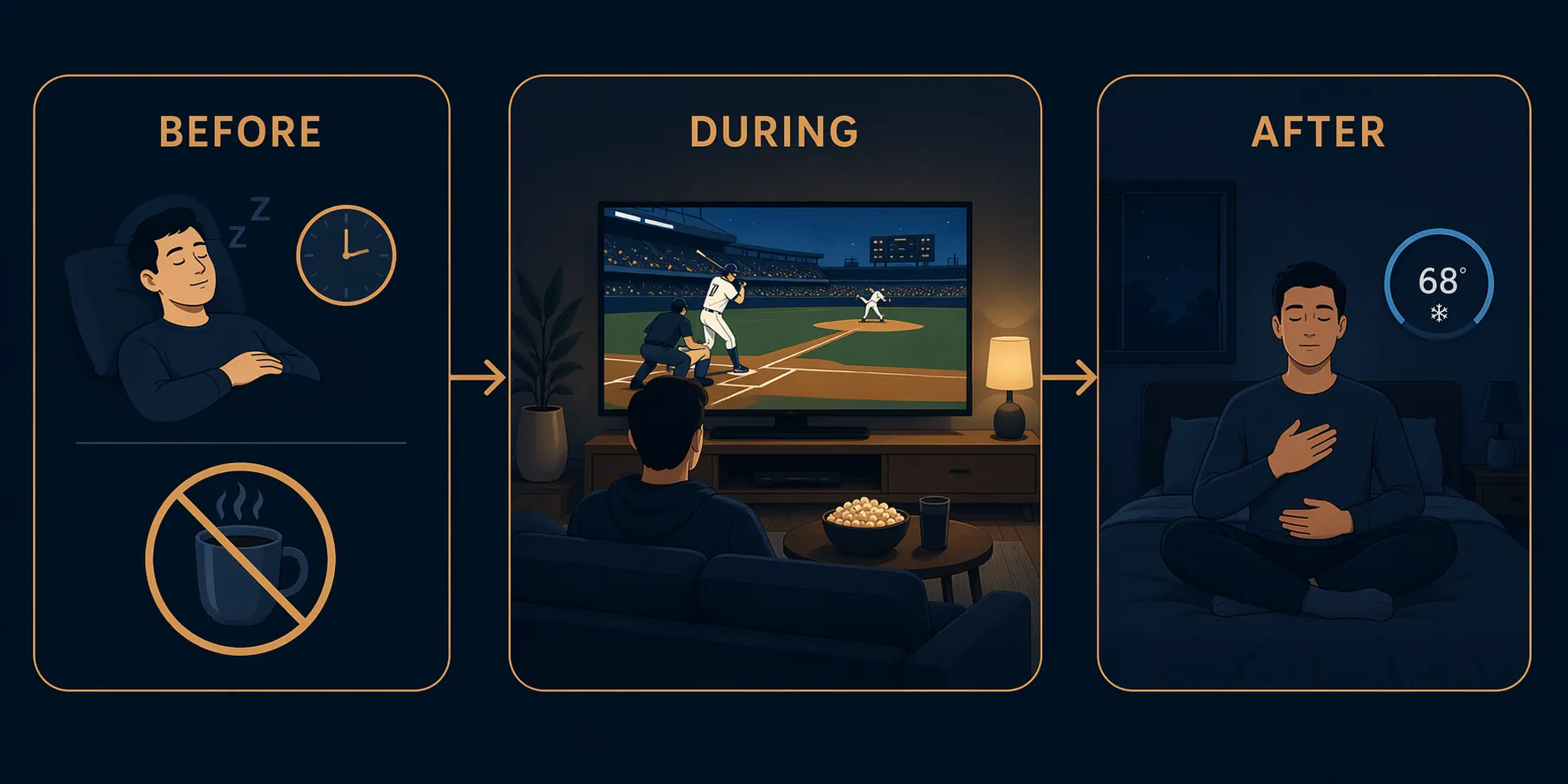
The useful question is not whether you should care less. The useful question is how to watch late-night baseball without ruining sleep so badly that the next morning belongs to the game too. The answer is a three-part plan: protect the day before first pitch, manage the inputs during the game, and make the final out the beginning of a real downshift rather than the start of another hour on a screen.
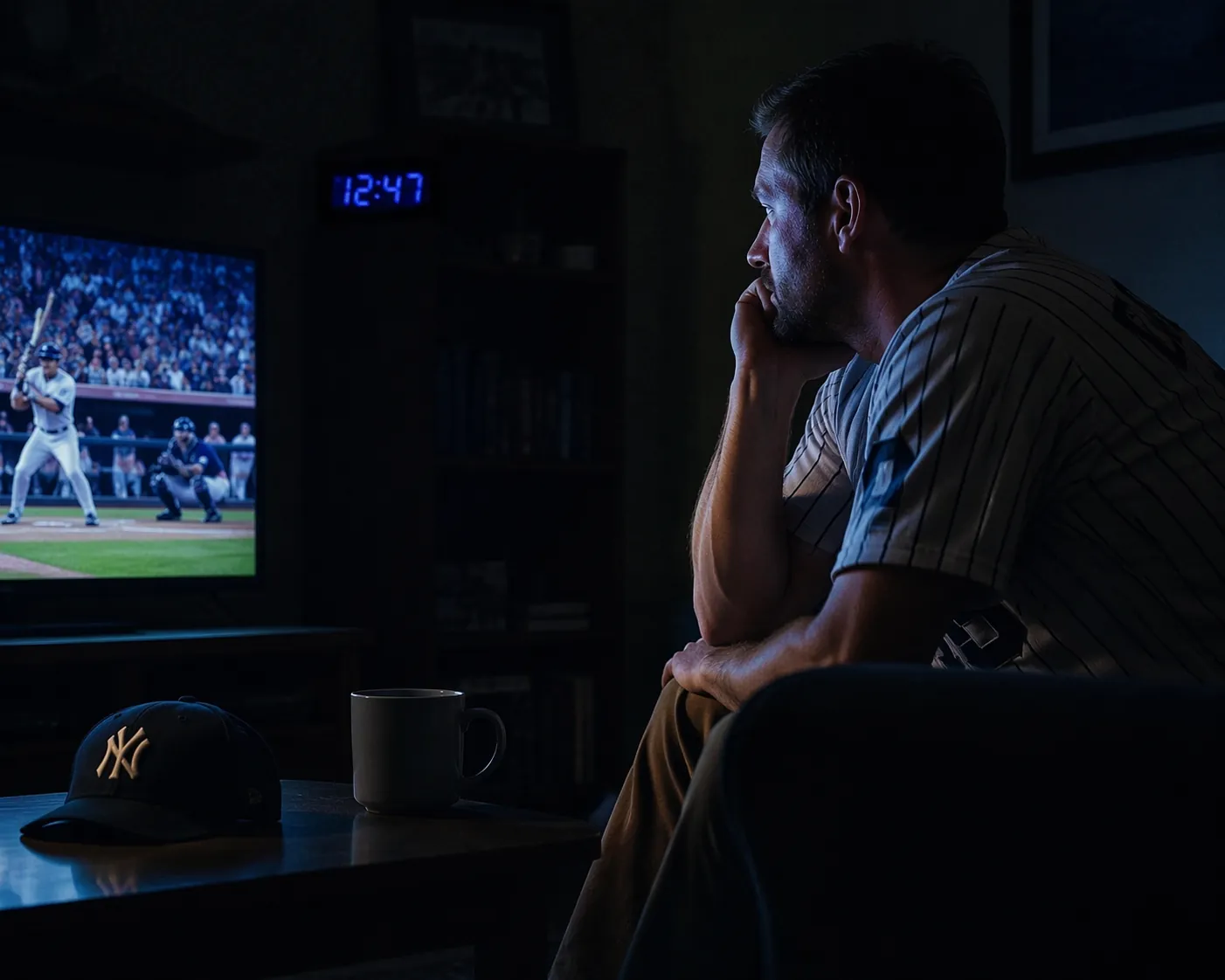
The Late-Game Plan, Before the First Pitch
The best sleep decision on a late baseball night often happens hours before the broadcast starts. If you arrive at first pitch already short on sleep, hungry, over-caffeinated, and still answering work messages, the game does not have to do much damage. You have already done some of it.
| When | Main job | What to do |
|---|---|---|
| Before the game | Reduce the debt you bring into the night | Keep the day steady, finish essential tasks early, and consider a short nap if your schedule allows. |
| During the game | Stop adding stimulation inning by inning | Watch outside the bedroom, cap caffeine, slow alcohol, dim screens, and avoid turning breaks into more scrolling. |
| After the game | Move the body from game mode to sleep mode | Use a dark, cool room, a short relaxation routine, and no highlights-in-bed spiral. |
| Next morning | Recover without extending the damage | Get morning light, use caffeine carefully, and avoid making one late night into a week-long pattern. |
If a nap is realistic, keep it short. Sleep.me’s game-night advice recommends a 20- to 30-minute power nap before 3 p.m., which is long enough to take the edge off without turning into a second sleep episode that steals pressure from bedtime later.[1] That is a useful tool, not a moral requirement. A parent on pickup duty, a nurse between shifts, or anyone without control of the afternoon may not have that option.
If you cannot nap, lower the bar and protect what you can. Eat a normal dinner rather than grazing through nine innings. Get tomorrow’s essentials out of the way before the game: coffee set up, clothes ready, school forms signed, laptop bag packed. The point is not to create a perfect sleep-hygiene evening. It is to make sure the tenth inning is not also when you remember the dishwasher, the work deck, and the permission slip.
During the Game, Treat Stimulation Like the Opposing Lineup
A close game does not feel like passive entertainment to the body. Saatva’s popular sleep-health explanation of sports viewing reports that watching live sports can raise heart rate by 75% to 110%, with sympathetic nervous system activation lingering after the game ends.[2] That is not baseball-specific clinical proof, and it should not be stretched into one. But it fits the familiar experience: even a so-so game can leave you wired if the final outs were tense, your team stranded the tying run, or the bullpen made every pitch feel like a negotiation.
That arousal is why the middle innings matter. Fans usually do not lose the night in one dramatic choice. They lose it by stacking small inputs: another coffee because the starter is dealing, another beer because the sixth got weird, full brightness on the phone during every commercial, then highlights and box scores under the covers because the ending was too good or too irritating to leave alone.
Keep the Game Out of Bed
The bedroom is the easiest place to lose the boundary. The couch still feels like watching a game. The bed turns the game into a sleep-onset problem, especially once the TV gives way to the phone.
The American Academy of Sleep Medicine’s Sleep Education guidance summarizes the clinical concern plainly: evening screen exposure can delay sleep onset, in part because light exposure affects melatonin timing and because interactive content keeps the mind engaged.[3] A 2025 Healthline report on a Norwegian study in Frontiers in Psychiatry found a 59% higher insomnia risk per hour of screen time after getting into bed, but that result needs to be handled narrowly: the study population was younger, ages 18 to 28, and the measured behavior was screen time in bed, not watching a TV game from the living room earlier in the evening.[4]
That distinction is exactly why the practical rule is simple: if you are going to watch, watch somewhere that is not the bed. The couch, a chair, or a basement TV is not magic, but it preserves one clean association. Bed is where the game is over.
Use Inning-Based Cutoffs for Caffeine and Alcohol
Clock-based rules can get fuzzy when first pitch is late, so inning-based rules work better for fans. Dr. Ritwick Agrawal of Baylor Sleep Medicine advised capping caffeine by the fifth inning and avoiding alcohol after the seventh inning, noting that alcohol can disrupt REM sleep even when it makes someone feel sleepy at first.[5]
For a 10:10 p.m. ET start, that fifth-inning coffee is already aggressive. If you know caffeine hits you hard, move the cutoff earlier and make the late-game drink boring: water, seltzer, herbal tea, whatever you can tolerate while watching a two-on, one-out mess in the eighth. This is not about pretending a playoff game is a spa night. It is about not adding a chemical delay to an emotional one.
Alcohol deserves the same kind of honesty. A beer in the early innings may be part of the ritual for some fans. The problem is the automatic refill as the game gets later and tighter. Alcohol can make sleep feel easier at the front end while making the night more fragmented. If tomorrow has a commute, a caregiving shift, or a 9 a.m. meeting, the seventh-inning cutoff is less about purity than damage control.
Do Not Let Every Break Become Another Screen
Baseball has space in it, which is part of its charm and part of the trap. Between innings, during pitching changes, after a replay review starts, the phone appears. Now one screen has become two, and the “quiet” parts of the game are filled with fantasy updates, social feeds, gambling lines, text threads, and arguments with strangers who have somehow seen a different strike zone.
Set the phone across the room if you can. If that is too much, at least make the boring parts boring again: dim the screen, turn off unnecessary alerts, and decide before first pitch which app actually matters. A box score check is different from an endless scroll. The body may not care that both feel like fandom.
- Watch on a TV or larger screen outside the bedroom when possible.
- Lower brightness and use warm display settings, especially after the middle innings.
- Cap caffeine no later than the fifth inning, earlier if you are sensitive.
- Stop alcohol after the seventh inning, and skip the automatic late refill.
- Use between-inning breaks for water, bathroom, stretching, or setting up the bedroom instead of scrolling.
After the Final Out, Do Less Than You Want To
The most dangerous part of a late game is often not the game. It is the half hour after it, when your brain argues that you have already stayed up, so you may as well watch the postgame show, then the highlights, then one clip of the manager’s press conference, then the reaction thread that will definitely not help anyone sleep.
Make the final out a trigger, not a suggestion. Turn off the broadcast. Put the phone somewhere other than the bed. If you need to know one piece of information — injury update, pitching matchup tomorrow, whether the call was overturned correctly — get it standing up, outside the bedroom, and stop there.
Set the Bedroom Before You Need Willpower
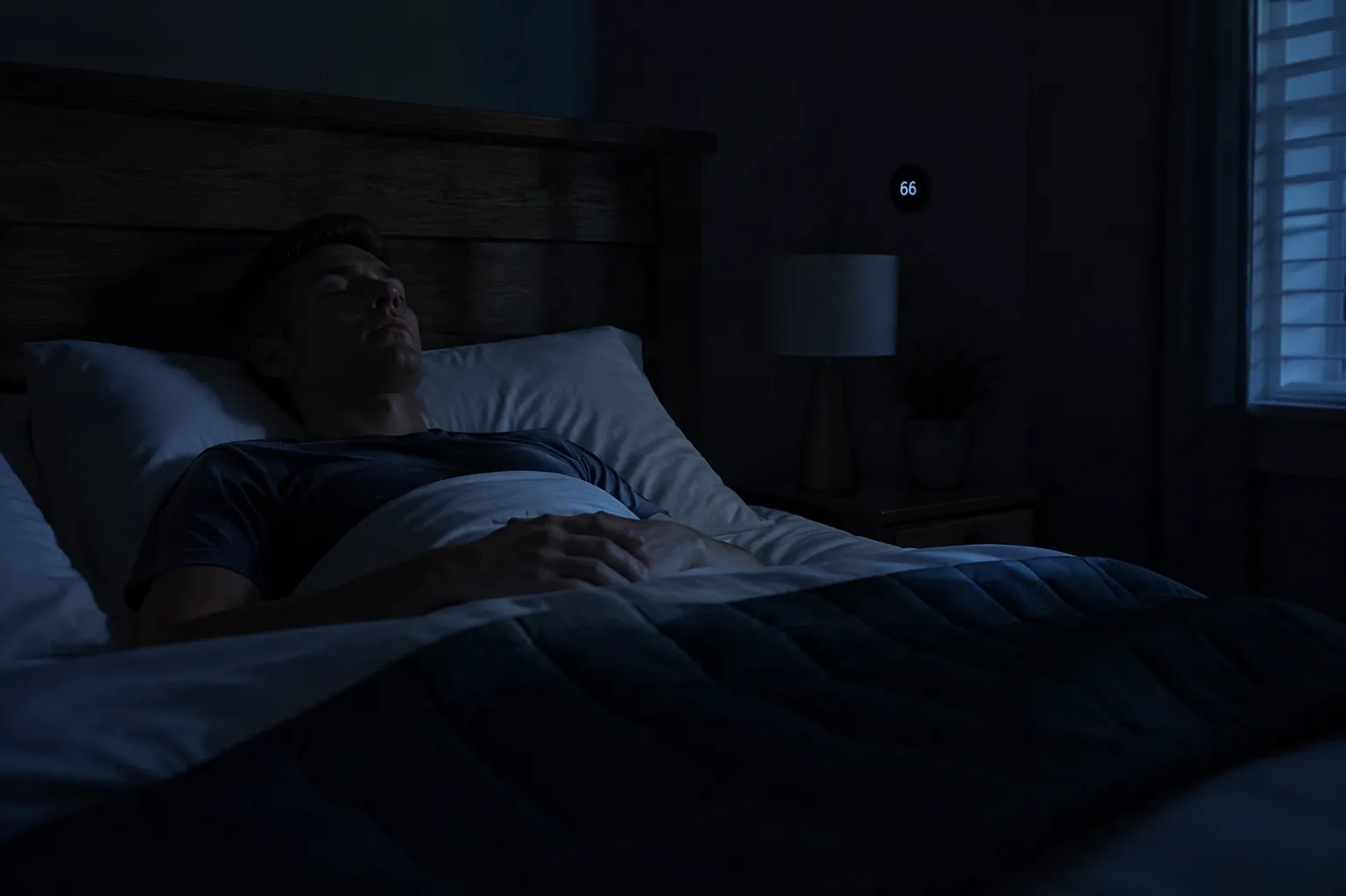
Do the room setup during the seventh or eighth, not after midnight when your team has just loaded the bases. SimpliFaster’s recovery guidance for evening games emphasizes helping the body shift toward parasympathetic activity after high-arousal competition, including a dark room, a cool environment around 65°F to 67°F, and 10 minutes of deep breathing or progressive muscle relaxation.[6]
That translates well for fans because the body still needs a signal that the event is over. Close the curtains. Set the thermostat or fan. Put water by the bed. Leave the phone charging outside arm’s reach. If you use a relaxation routine from a broader guide to an evidence-based bedtime routine, choose the shortest version on a game night. Ambition is not your friend at 1:18 a.m.
Use a 10-Minute Downshift
Ten minutes is enough to be useful and short enough that most fans will actually do it. Start with the lights low. Lie down or sit on the edge of the bed. Breathe slowly, with the exhale longer than the inhale if that feels comfortable. If your mind keeps replaying the ninth, move to progressive muscle relaxation: tense your feet for a few seconds, release them, then work upward through calves, thighs, hands, shoulders, and face.
The goal is not to force sleep on command. That usually backfires. The goal is to stop feeding the arousal system. No more highlights. No more postgame radio in bed. No more proving to yourself that the umpire missed it by finding seven angles of the same pitch.
If you are still awake after a while, keep the response boring. Get out of bed briefly if you are frustrated, sit somewhere dim, and do something quiet until sleepiness returns. The bed should not become the place where you re-litigate the bullpen.
The Morning After a 13-Inning Game
Some consequences are not fully avoidable. If the game ended late and the alarm did not move, you slept less. No room temperature, breathing drill, or clever caffeine timing changes that arithmetic.
Dr. Michael Summers put the boundary bluntly in a WJLA/ABC7 segment on late-night games: “Nothing can replace sleep.”[7] That sentence is worth keeping around because fan culture can get silly about fatigue, as if being useless the next morning proves devotion. It does not. It just moves the cost to your coworkers, kids, partner, patients, passengers, or future self.
Still, the next morning is not hopeless. Pat Byrne, described by The Tyee as an MLB sleep consultant rather than a physician, recommends morning sunlight to help reset circadian timing, a strategic 20-minute afternoon nap when feasible, and restraint with caffeine so the recovery day does not become another bad night.[8] That advice is practical, but it depends on schedule control. Not everyone can step outside after sunrise or nap in the afternoon.
- Get outdoor light early if your morning allows it, even briefly.
- Use caffeine to function, not to erase the night; avoid chasing tiredness all afternoon.
- If you nap, keep it short and earlier rather than letting it drift toward evening.
- Lower expectations for intense workouts, complicated decisions, or optional late plans when sleep was clearly cut short.
Older fans may need an even more conservative version of the plan. Sleep can become lighter and more fragmented with age, and some standard sleep-hygiene advice does not map neatly onto older adults’ realities. If that sounds familiar, it may help to think in terms of adjustment rather than discipline; our guide to why sleep hygiene advice often fails older adults goes deeper on that problem.
When the Better Choice Is Not Watching Live
Occasional late games are different from a standing weekly sleep cut. Dr. Agrawal’s late-night sports guidance makes the same distinction: a one-off late night is usually recoverable, while consistent patterns are the larger problem.[5] That is the line baseball fans have to be honest about, especially during a long West Coast trip or a postseason run.
There are nights when the most fan-friendly sleep plan is a delayed one: watch the first few innings live, record the rest, and wake up before checking your phone. There are nights when radio is less stimulating than a bright screen. There are nights when the condensed game tomorrow is the adult bargain. None of those choices revoke your credentials.
A useful comparison is any late-night sports plan where the logistics matter more than the pep talk; this minute-by-minute late-night match schedule uses the same kind of thinking. Decide in advance what you will watch live, what you will skip, and what tomorrow cannot absorb.
If late baseball repeatedly triggers insomnia, dread around bedtime, or daytime impairment that does not resolve when the schedule normalizes, move beyond game-night tactics. Cognitive behavioral therapy for insomnia is a more appropriate pathway than another list of screen rules; start with an explainer on what actually cures insomnia and how CBT-I works, or talk with a sleep specialist.
A late game can be managed. It cannot be made consequence-free every time. Keep the game out of bed, stop adding stimulation as the innings get later, give yourself a real downshift after the final out, and be honest when a run of late nights has become something your body can no longer cover.
References
- Enjoy the Big Game and Wake Up Refreshed, Sleep.me
- Is the Super Bowl Ruining Your Sleep?, Saatva
- Screen Time and Sleep: What New Studies Reveal, AASM Sleep Education
- Screen Time at Bedtime May Increase Insomnia Risk, Healthline, March 2025
- Top 5 ways to improve sleep after late-night sports games, Click2Houston, November 3, 2021
- Sleep and Recovery After Evening Games, SimpliFaster
- Are too many late-night games messing with your sleep schedule?, WJLA/ABC7
- World Series Sleep, The Tyee, October 29, 2025
Read the full guide: Princess Diana's nighttime tips for better sleep