
Use Your Weekend Weather Forecast to Plan Better Sleep
By Thursday night or Friday morning, the weekend weather forecast is already telling a sleep story. Not the whole story, and not a guarantee, but enough to decide which night deserves protection. A Friday overnight low of 72°F followed by a Sunday cool-down is not neutral information if you are waking with hot flashes, sleeping while pregnant, setting up a safer room for an older parent, or trying to keep an ADHD routine from unraveling before Monday.
The first number most people notice is the daytime high. When you use a weekend weather forecast to plan sleep, that is usually the wrong place to start. Look instead at the overnight low, humidity, the temperature your bedroom will actually hold by bedtime, and any storm or pressure shift that could disrupt routines or symptoms.
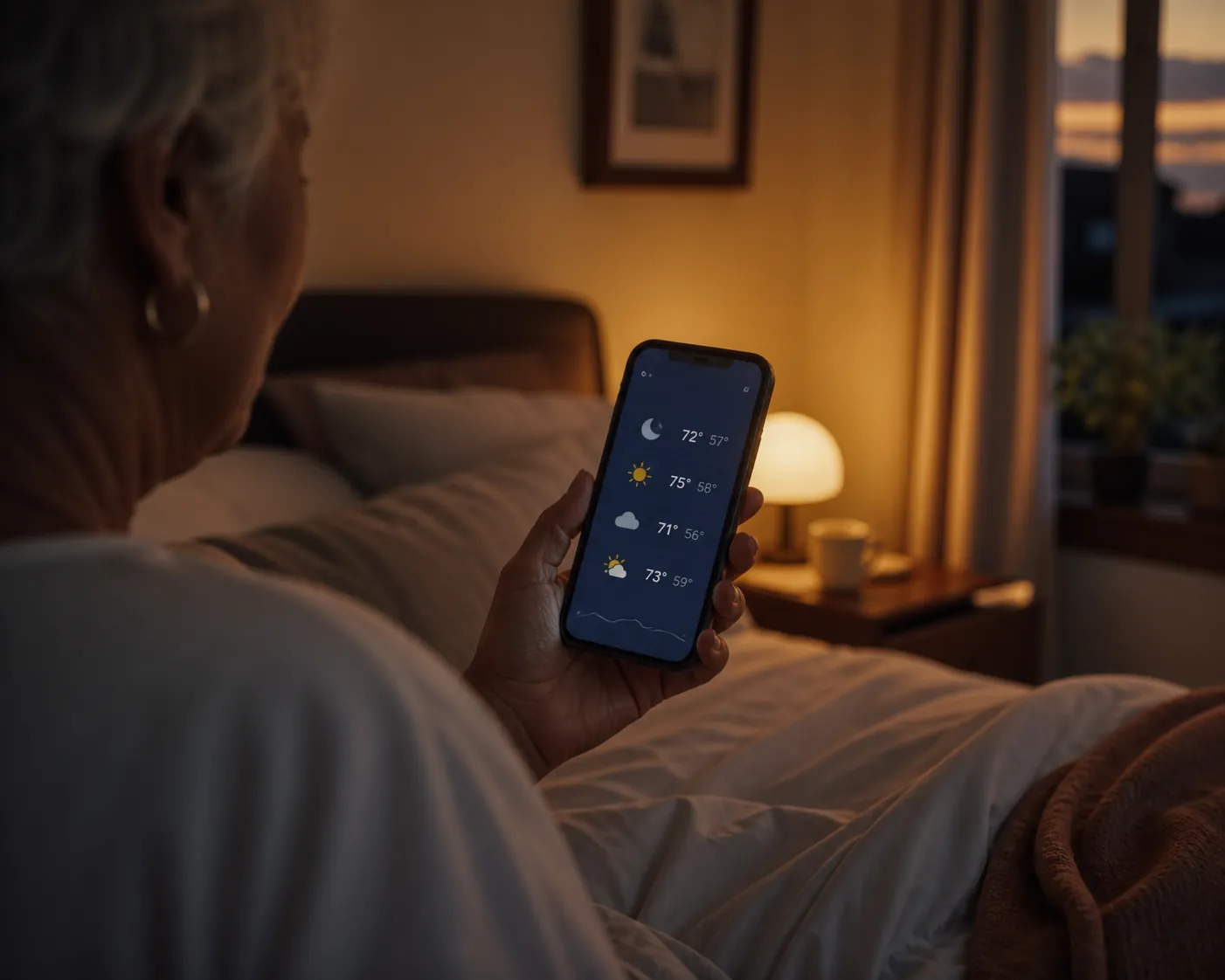
General sleep-temperature guidance is still useful as a starting point. The Sleep Foundation describes the best bedroom temperature for sleep as around 65°F, while the National Sleep Foundation commonly points adults toward a cool room in the 60s, often summarized as about 65–68°F.[1][2] That baseline helps, but it does not answer the more practical question: which forecast number matters for this body, this weekend?
The Quick Forecast Pass
Before changing plans, make one clean pass through the forecast. This is not a medical guideline from one institution; it is a cautious way to combine findings from temperature, sleep, aging, pregnancy, menopause, and pressure research. The value is in translating a public forecast into a more specific sleep risk.
| Forecast item | Why it matters for sleep planning | Weekend decision it can change |
|---|---|---|
| Overnight low | Shows how much outdoor cooling the bedroom may or may not get after sunset | Which night to protect most |
| Humidity | Makes heat harder to shed and can make the same temperature feel more oppressive | Whether to pre-cool earlier and reduce bedding |
| Indoor bedroom temperature | The body sleeps in the room, not in the weather app | Whether fans, AC, curtains, or room choice need to change before bedtime |
| Storm or pressure change | May affect sleepiness, pain, sensory load, or routines for some people | Whether to simplify the evening and protect wake time the next morning |
A useful weekend plan usually comes down to one question: which night is least forgiving? If Friday stays hot and humid, that may be the night to pre-cool the room and make Saturday morning lighter. If Sunday brings the first stable cool air, that may be the night to protect as recovery sleep before the workweek.
Heat Does Not Cost Everyone the Same Sleep
The case for reading the forecast differently by body is strongest with temperature. A USC Keck School of Medicine study using data from 14,232 U.S. adults and more than 12 million nights found that rising temperatures were linked with reduced sleep, with greater sleep loss among females, Hispanic adults, people with chronic disease, and people with lower socioeconomic status.[3] That is the important lesson for a weekend forecast: the same warm night can land harder depending on physiology, health, housing, and access to cooling.
A large Nature Communications study, using 214,445 participants and 23 million sleep records, found that each 10°C temperature increase was associated with a 20.1% increase in the odds of insufficient sleep.[4] In weather-app terms, a shift from a 65°F overnight environment to about 83°F is not a small mood change. It is the kind of jump that can turn a normal weekend night into a higher-risk sleep night.
The same study also found stronger temperature-sleep associations among women over 45, people with BMI of at least 25, and people in high-humidity environments.[4] A Casper-Gallup poll gives that pattern a more familiar shape: women were nearly twice as likely as men to say they sleep too hot always or most of the time, 18% versus 10%, and 25% of women versus 19% of men said being too hot caused their most recent poor night of sleep.[5]
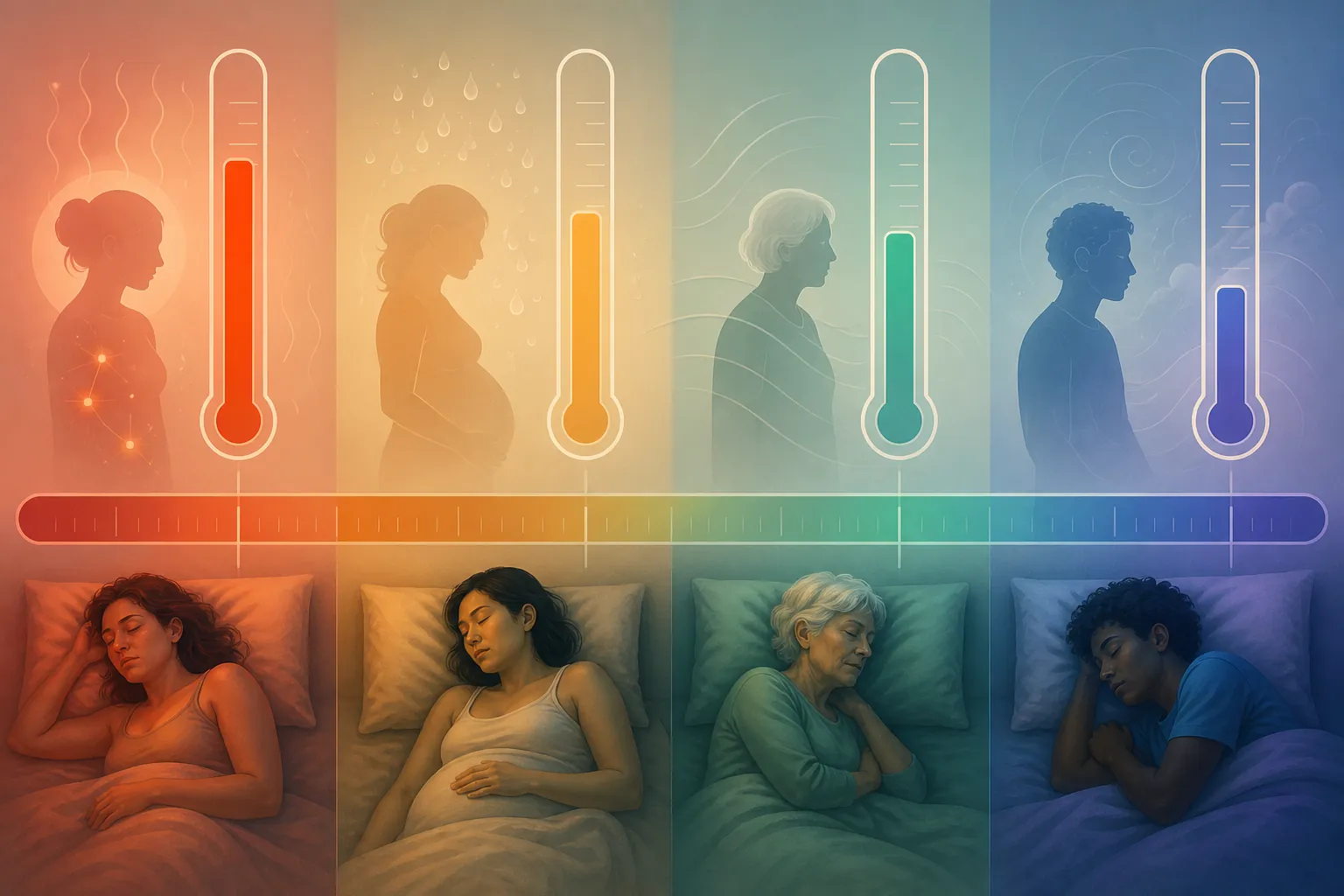
If You Are Perimenopausal, Start With the Overnight Low
For a perimenopausal reader, the weekend forecast becomes more useful when the overnight low gets treated as a hot-flash amplifier. A low above 70°F does not mean the room will be 70°F; it means the house may have less chance to dump heat overnight, especially if the bedroom faces sun, holds heat from the day, or has weak airflow.
That is where generic advice can feel almost insulting. “Keep the bedroom cool” is true, but it does not say whether Friday night needs active defense because the low stays warm, or whether Saturday night can be managed with lighter bedding and a fan. The Nature Communications findings matter here because women over 45 showed stronger associations between temperature and sleep outcomes.[4]
For a hot weekend, the practical move is to choose the vulnerable night early. If Friday’s low is above 70°F and humidity is high, pre-cool the bedroom before bedtime rather than waiting until the first hot flash wakes you. Reduce thermal traps: heavy comforters, heat-holding mattress toppers, warm sleepwear, and closed bedroom doors that stop air exchange. If the forecast shows a real cool-down Sunday, do not treat all three nights as equally available for errands, late dinners, alcohol, or social plans.
- Protect the hottest overnight low, not necessarily the hottest afternoon.
- Pre-cool before symptoms begin; recovery is harder after repeated awakenings.
- Plan the next morning as if sleep may be fragmented when the overnight low stays above 70°F.
- Treat a later cool night as recovery time, not as a bonus night to spend.
If You Are Pregnant, Humidity Deserves Equal Billing
Pregnancy changes the forecast reading because comfort depends on more than the number beside the moon icon. Heat that might be merely annoying on another weekend can become harder to tolerate when the body is already working with a higher thermal load. High humidity narrows the margin further because sweat evaporates less efficiently, and the large Nature Communications dataset found stronger temperature-sleep effects in high-humidity environments.[4]
The standard cool-room target around the mid-60s is still a reasonable place to begin.[1][2] Some pregnant sleepers may need to aim slightly cooler, by about 1–2°F, especially during a humid weekend or later pregnancy discomfort. That is a comfort-planning adjustment, not a universal prescription; anyone with medical restrictions, dizziness, fever, or heat illness symptoms needs clinical advice rather than a weather-app workaround.
On a humid Friday night, the best sleep plan may start in the late afternoon. Close blinds before the bedroom heats up, cool the room before bedtime, keep water nearby, and simplify the evening so there is less body heat from chores, late cooking, or a rushed bedtime. The useful forecast detail is not only “low of 72°F.” It is “low of 72°F with humidity that keeps the room from feeling cool.”
For Older Adults, the Safe Sleep Range May Be Warmer—but Not Hot
Older adults are often given the same cool-bedroom advice as everyone else, but the weekend setup may need more care. A Marcus Institute for Aging Research study of 50 older adults and about 11,000 person-nights found an optimal sleep temperature range of 68–77°F for older adults, with sleep efficiency dropping 5–10% as bedroom temperature rose from 77°F to 86°F.[6]
That finding has two practical edges. First, an older parent may not need the room pushed as cold as a younger adult prefers. Second, letting the room drift above 77°F during a heat wave is not harmless just because the person says they feel fine. Reduced thermoregulation, medications, mobility limits, and fall risk can make a hot, restless night more consequential the next morning.
For a weekend heat wave, check the bedroom itself before dinner, not at bedtime. If the room is already warm, pre-cooling matters because the walls, mattress, and upstairs air may hold heat after sunset. Set up clear walking paths before adding fans or cords. Keep water reachable without requiring a dark walk to the kitchen. If a Sunday cold front is coming, that cooler, stable night may be the best chance for recovery sleep before appointments, caregiving, or Monday routines resume.
| Weekend pattern | Older-adult sleep concern | Planning move |
|---|---|---|
| Bedroom likely to stay 68–77°F | Often within the observed optimal range for older adults | Prioritize comfort, safe pathways, and stable bedding |
| Bedroom likely to rise above 77°F | Sleep efficiency may begin to drop | Pre-cool early and reduce heat-holding bedding |
| Bedroom may approach the mid-80s | The Marcus Institute study observed a 5–10% efficiency drop from 77°F to 86°F | Treat the night as high priority for cooling and next-day recovery |
For ADHD Adults, Watch the Weather Change as Much as the Temperature
The ADHD part of weekend sleep planning is less settled than the heat evidence, so it deserves a different tone. Temperature research includes very large datasets. Barometric pressure research is thinner, and one peer-reviewed study often discussed in this area focused specifically on patients with obstructive sleep apnea, not ADHD adults broadly.[7] That does not make pressure useless for planning. It does mean pressure should be treated as a clue, not a diagnosis.
Some people notice a storm-before-the-storm pattern: unexpected drowsiness, heavier limbs, sensory irritation, headache, joint pain, or the maddening state of feeling tired but unable to settle. A consumer sleep synthesis from Amerisleep describes possible pathways involving low barometric pressure before storms, melatonin-related sleepiness, and tissue expansion that may irritate nerves, especially for people with chronic pain or sensory sensitivities.[8] That is suggestive and mechanism-adjacent; it is not proof that a pressure drop causes ADHD insomnia.
For planning, humility is enough. If the weekend forecast shows storms arriving Saturday evening, an ADHD adult does not need to decide whether barometric pressure is the whole explanation. The useful move is to reduce the number of transitions that can go wrong: choose dinner earlier, charge devices before the storm, set the next morning’s first task while executive function is still available, and avoid treating storm-night bedtime as the moment to improvise a new routine.
- If storms usually scramble your evening, protect the routine before the weather arrives.
- If pressure changes seem linked to pain or sensory discomfort, plan for a lower-demand night.
- If you feel sleepy too early, avoid turning an accidental couch nap into a midnight second wind.
- If the link is inconsistent, track patterns lightly rather than forcing certainty.
Season and Timing Still Matter
The same 72°F overnight low can feel different in April than in August because routines, daylight, pollen, humidity, and expectations differ. In one npj Digital Medicine study of 216 participants and 51,836 observations, spring sleep was 12.6 minutes shorter than winter sleep, and each additional hour of daylight was associated with 3.6 minutes less sleep.[9] That does not mean one spring weekend will ruin sleep. It means the forecast is arriving inside a seasonal pattern that may already be shaving the edges off the night.
This is why the weekend frame is useful. Most people do not need a perfect climate model to make a better Thursday decision. They need to know whether Friday is the hot, humid night to defend; whether Saturday storms are likely to disrupt routines; or whether Sunday’s cool-down should be kept boring on purpose.
How to Choose the Night to Protect
Start with the most vulnerable sleeper in the house. If that person is perimenopausal, the first red flag is a warm overnight low, especially above 70°F, layered with humidity. If that person is pregnant, humidity and room heat deserve early attention. If that person is older, the bedroom’s actual temperature matters more than the outdoor number, with special concern once the room moves above 77°F. If that person has ADHD, storm timing may matter because it can disrupt the routine that makes sleep possible.
| Sleeper | Forecast number to check first | Night to protect |
|---|---|---|
| Perimenopausal woman | Overnight low, then humidity | The warmest night, especially if the low stays above 70°F |
| Pregnant person | Humidity plus overnight low | The muggiest night, even if the temperature looks only moderately warm |
| Older adult | Actual bedroom temperature | Any night the room may remain above 77°F |
| ADHD adult | Storm timing and pressure shift, then bedtime routine risk | The evening when weather is most likely to disrupt transitions |
Then make the plan smaller than your ambition. Pre-cool one room, not the whole house. Move one demanding errand away from the vulnerable morning. Decide ahead of time that the hottest night is not the night for alcohol, a late heavy meal, or a long overdue household reset. Put the older parent’s fan where it will not become a trip hazard. Let the ADHD adult’s storm-night routine be plain and repeatable.
The forecast cannot guarantee sleep. It can, however, stop you from treating every weekend night as equally controllable. That is a quiet but real improvement: protect the night your physiology is most likely to lose, and let the better-weather night do some of the recovery work.
References
- Best Temperature for Sleep, Sleep Foundation
- Sleep Tips, National Sleep Foundation
- Study links rising temperatures to reduced sleep in U.S. adults, Keck School of Medicine of USC
- Ambient temperature and insufficient sleep: evidence from 23 million sleep records of 214,445 adults, Nature Communications, 2025
- Sleep Temperature Linked to Overall Sleep Quality, Wellbeing, Gallup, February 2023
- Optimal Sleep Temperature for Seniors Is Between 68 and 77 Degrees Fahrenheit, Study Reveals, Marcus Institute for Aging Research
- Can Sleep Apnoea be a Weather-Related Phenomenon?, PMC, 2010
- Barometric Pressure and Sleep, Amerisleep
- Seasonality of sleep: evaluating the seasonality of sleep patterns in a prospective observational study, npj Digital Medicine
Read the full guide: How to sleep better when relationship stress is keeping you up