Why can't earthquake survivors sleep?
The most confusing part is often the timing. During the day, you may be making calls, cleaning debris, checking on relatives, waiting for inspectors, or acting more functional than you feel. Then the room goes dark, the house gets quiet, and your body gets louder. A pipe ticks. A truck passes. The bed shifts under your own weight. Your mind starts replaying the seconds when the ground moved, or the moments after, when you were trying to understand whether everyone was alive.
That is not a character flaw. It is also not proof that you are “bad at coping.” In one peer-reviewed study of 165 Haiti earthquake survivors, 94% reported insomnia symptoms and 43% reported earthquake-specific nightmares.[1] Those numbers should not be treated as a prevalence estimate for every earthquake population everywhere; it was a modest single-site sample. But they are strong enough to make one point plain: after an earthquake, sleep problems can be widespread, specific, and physically convincing.
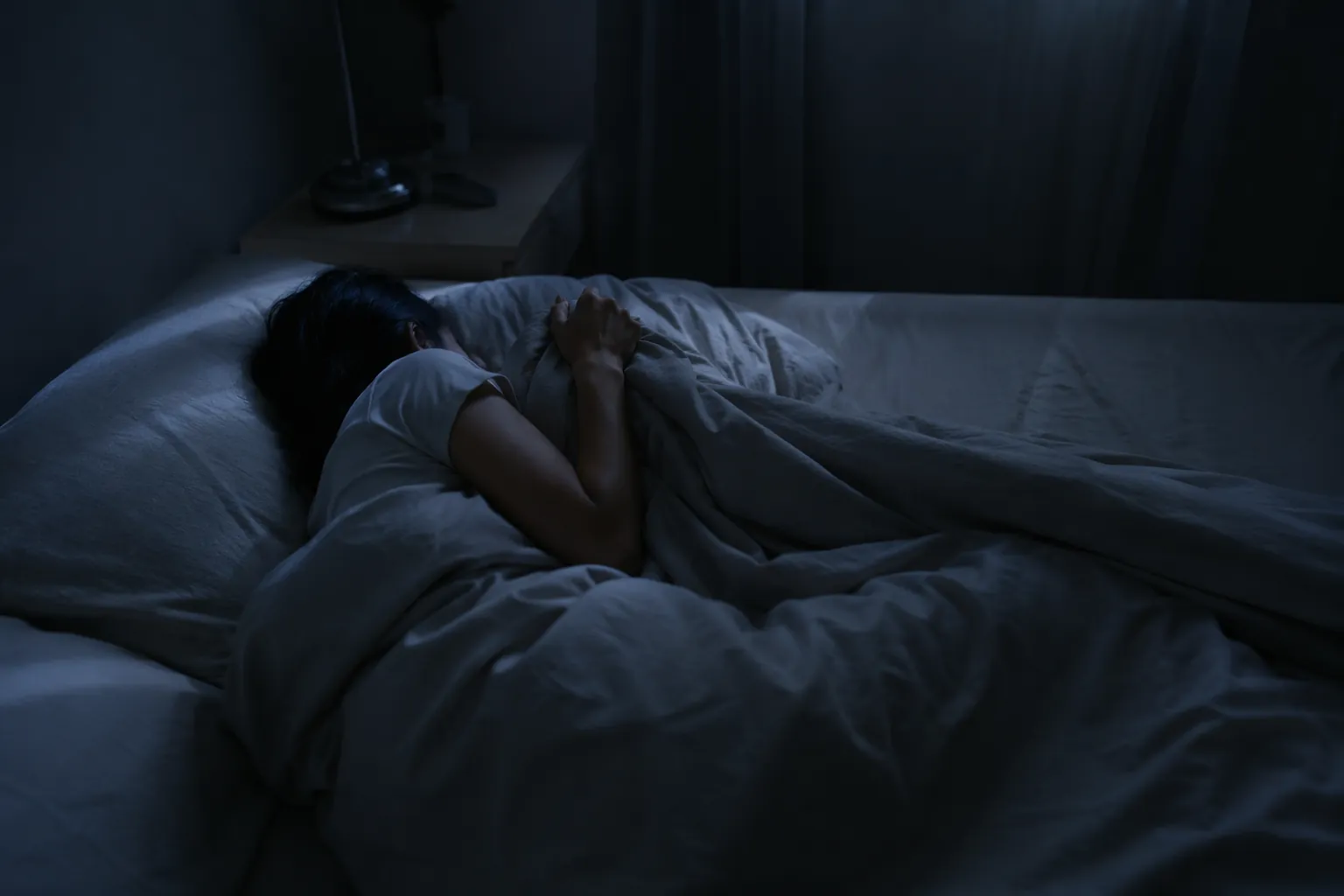
The useful question is not simply “how stressed are earthquake survivors?” Stress is too blunt a word for what happens at night. The sharper question is: what changes in the sleep system make ordinary sleep advice fail?
Sleep requires surrender, and trauma trains the body not to surrender
Healthy sleep depends on a downshift. Heart rate, muscle tension, vigilance, and threat scanning all have to loosen their grip. After an earthquake, the body may treat that downshift as poor timing. The same systems that helped you orient, move, protect someone, or listen for danger can keep firing long after the immediate shaking has stopped.
This is the first mechanism: trauma-induced hyperarousal. Wang and colleagues describe the sleep-wake system as one of the regulatory mechanisms most vulnerable after trauma, with post-traumatic sleep disturbance tied to sympathetic nervous system and HPA-axis activation.[2] In plain terms, the body’s alarm circuitry may stay biased toward detection when sleep requires disengagement.
Hyperarousal does not always feel like panic. It can feel like being unable to get comfortable. It can feel like needing to keep one foot out of the covers, or keeping a phone within reach, or waking fully at a sound that would once have passed unnoticed. It can feel like lying very still because stillness seems safer than sleep.
That is why sleep problems in earthquake survivors often look irrational from the outside and entirely logical from the inside. The body is not asking whether the statistical risk of another quake is high at 2 a.m. It is asking whether missing the first sign of danger could cost too much.
This also helps explain why a person can be exhausted and still unable to sleep. Exhaustion increases the need for sleep; it does not automatically convince a threat-trained nervous system that unconsciousness is safe. For a related look at the anxiety side of that pattern, see why earthquake anxiety hijacks your sleep.
The bedroom can become a replay screen
Generic sleep advice often assumes the bedroom is a controllable wellness environment: dim lights, quiet sounds, comfortable temperature, no screens. None of that is wrong in ordinary insomnia care. The problem is that after an earthquake, quiet and darkness may remove distractions that were helping the mind stay away from the event.
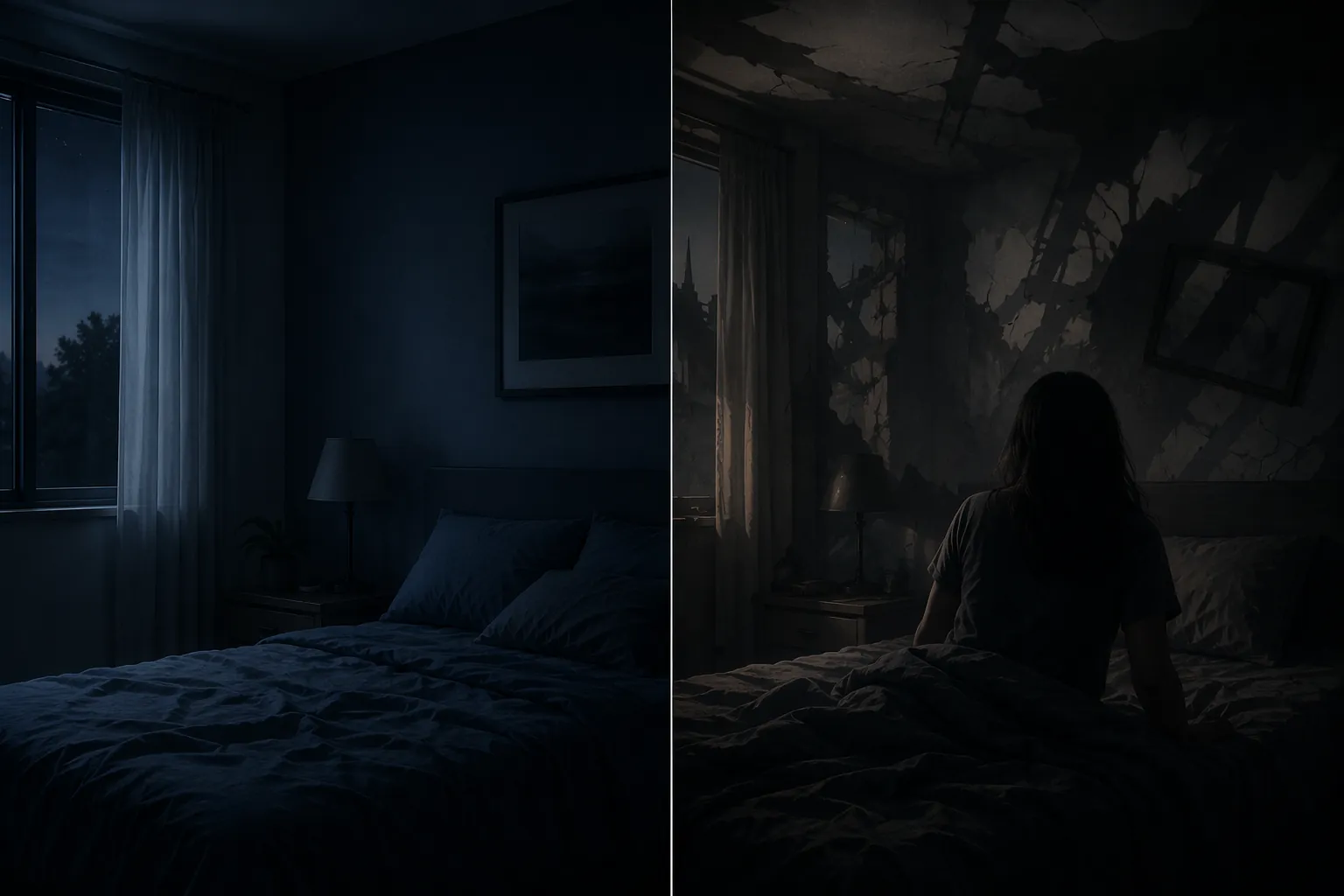
This is the second mechanism: the fear-of-sleep paradox. Sleep is the thing the body needs, but the act of approaching sleep can feel like becoming undefended. The lights go out. The room gets quiet. You stop moving. You stop checking. The mind has fewer tasks to hold it in the present. For some survivors, that is when aftershock memories, collapse sounds, images of damaged buildings, or the feeling of the ground moving become most vivid.
Nightmares make this more than a metaphor. In the Haiti sample, 43% of participants reported nightmares specifically linked to the earthquake.[1] That distinction matters. These are not merely “bad dreams” appearing in a stressful month. The dream content can carry the disaster back into the bed.
Once that happens, bedtime itself can become a cue. A survivor may start delaying sleep, keeping lights on, scrolling, sitting upright, or waiting until the body collapses from exhaustion. From the outside, those behaviors may be mislabeled as poor sleep hygiene. From the inside, they may be attempts to avoid the moment when the room becomes too quiet to outrun memory.
This is especially important for family members and clinicians. A person who resists bedtime after an earthquake may not be refusing help. They may be trying not to re-enter the most vulnerable state their body knows. If the earthquake came in the night, or if aftershocks continued, that association can be even more convincing.
For people living through repeated tremors or earthquake swarms, the calculation can be different again. The nervous system is not only remembering a past event; it may also be listening for the next one. Readers in that situation may find the related discussion of earthquake swarms and sustained hypervigilance more directly relevant.
Fragmented REM sleep can keep emotional processing unfinished
The third mechanism is more cautious, because earthquake-specific REM evidence is limited. What can be said responsibly is this: broader trauma-sleep physiology suggests that disrupted sleep, including disruption of REM-related emotional processing, may interfere with the brain’s usual work of integrating frightening experiences. Wang and colleagues discuss post-traumatic sleep problems in this wider neurobiological context, while their own earthquake study focuses on reported sleep problems rather than direct REM measurement.[2]
REM sleep is often involved in emotional memory processing. When sleep is repeatedly interrupted by awakenings, alarms, aftershock checks, nightmares, or the body’s own startle response, the night may stop functioning as a clean recovery period. The brain gets pieces of sleep rather than a stable architecture. The next day can then begin with the emotional volume still high.
This is one reason post-earthquake insomnia and nightmares can become self-reinforcing. A bad night leaves the person more reactive the next day. A more reactive day can make bedtime feel more threatening. More threatening bedtime can fragment the next night. None of this requires the survivor to be weak, dramatic, or unwilling to improve.
Sleep is not only a symptom after trauma
One of the most clinically useful findings in the earthquake sleep literature is that sleep problems may sit in the pathway between earthquake exposure and later post-traumatic symptoms, not merely trail behind them. In a study of 1,342 adolescents exposed to the Wenchuan earthquake, sleep problems mediated 29.93% of the total effect between earthquake exposure and PTSD symptoms in a moderated mediation model.[2]
That sentence is statistical, but the implication is practical. The model suggests that earthquake exposure can increase sleep problems, and those sleep problems may help carry some of the effect forward into PTSD symptoms. This is not the same as a longitudinal experiment proving that fixing sleep prevents PTSD. It does, however, raise the stakes. Sleep disruption is not just an annoying side effect to tolerate until the “real” trauma work begins.
It also changes how we should listen. If someone says, “I can’t sleep since the earthquake,” the safest clinical assumption is not that they need a lecture about caffeine. They may be describing one of the mechanisms keeping their whole post-trauma system activated.
Resilience does not guarantee sleep protection
The Haiti study found that resilience was not a protective buffer against sleep disturbance after earthquake exposure.[1] Wang and colleagues also found a more specific pattern: resilience moderated the pathway from sleep problems to PTSD symptoms, but not the pathway from earthquake exposure to sleep problems.[2]
That is a useful correction to a moral story people often tell themselves. Being resilient may matter for recovery in many ways, but it does not mean the body will sleep normally after the ground has become unsafe. A capable person can still wake at every sound. A steady person can still fear sleep. A person who is doing everything “right” can still have earthquake-linked nightmares.
This matters for caregivers, too. Praising someone as strong should not become a reason to overlook their insomnia. Strength during the day can coexist with a nervous system that has not accepted nighttime as safe.
Why ordinary sleep hygiene can land badly
Consistent wake times, less late caffeine, reduced screen use, and a calmer bedroom can help some forms of insomnia. They are not foolish recommendations. They are just incomplete when the core problem is threat detection.
Telling an earthquake survivor to “make the bedroom relaxing” may miss the fact that the bedroom is where the body expects danger to return. Telling them to “just relax” can sound like an accusation when their muscles, pulse, and attention are acting automatically. Telling them to avoid checking sounds may be premature if they are still sleeping in a damaged building, an unfamiliar shelter, or a place where aftershocks are continuing.
Disaster guidance from the American Psychiatric Association emphasizes practical coping after disaster and trauma, including maintaining routines where possible, staying connected, limiting media exposure, and seeking professional help when distress persists or interferes with functioning.[3] Those are reasonable anchors. But in sleep care, the sequence matters: safety, stabilization, and trauma-informed support come before polishing a perfect bedtime routine.
If you need immediate tonight-level steps, use how to get some sleep after an earthquake. If the question is treatment rather than explanation, the better next page is evidence-based sleep treatments after earthquake trauma.
What the evidence does not yet tell us
The existing earthquake sleep studies are useful, but they are not complete. Several are cross-sectional, which limits causal claims. The Wang mediation model is stronger than a simple association, but it is still a statistical model, not a randomized experiment or a long-term proof of mechanism.[2]
The evidence also does not adequately represent every group that may be reading this. Perimenopausal women, pregnant people, adults with ADHD, and older adults are not well characterized in the cited earthquake sleep studies. Those groups may have additional sleep vulnerabilities, medication considerations, hormonal factors, caregiving demands, sensory sensitivity, or medical risks that deserve more specific research.
So the responsible conclusion is narrow: earthquake exposure can be followed by insomnia, nightmares, and hypervigilance; those sleep problems may be tied to trauma-related threat physiology and may help maintain post-traumatic distress; and resilience does not reliably prevent sleep disruption. That is enough to stop treating post-earthquake sleeplessness as stubbornness.
If sleep is still broken after an earthquake, the body may be doing exactly what trauma-trained threat systems are built to do. The trouble is that a system designed to protect you can become exhausting when it keeps protecting you from the bed, the dark, and the quiet. Understanding that does not fix sleep by itself, but it should reduce shame, make families and clinicians less dismissive, and point the next conversation toward trauma-informed sleep support.
References
- Disturbed sleep, mental health problems are common among earthquake survivors, American Academy of Sleep Medicine, 2019.
- Sleep Problems Mediate the Relationship Between Earthquake Exposure and Posttraumatic Stress Symptoms in Chinese Adolescents: A Moderated Mediation Model, Frontiers in Psychiatry, 2021.
- Coping After Disaster, American Psychiatric Association, updated June 2026.
Read the full guide: Is Earthquake Sleep Anxiety Normal or a Sign of PTSD?