
Mechanism explainer
Maximalist Bedroom Decor That Helps ADHD Adults Relax
Standard minimalist sleep advice can backfire for ADHD adults who are sensory-seeking. This guide explains how to build a maximalist bedroom with color drenching, closed storage, and deep-pressure textiles that organizes sensory input and supports relaxation rather than overstimulation.
If you have ADHD and your nervous system relaxes around color, texture, books, pattern, soft light, familiar objects, and a little visual abundance, the usual bedroom advice can feel suspiciously unhelpful. A blank beige room may look peaceful in a photo and still leave you under-stimulated, restless, or weirdly unanchored at bedtime.
So the useful question is not whether you are allowed to use maximalist bedroom decor for relaxation if you have ADHD. You are. The question is whether the room organizes sensory input or keeps multiplying it. Rich can be regulating. Chaotic is different.
There are no peer-reviewed trials that directly compare maximalist and minimalist bedrooms for sleep outcomes, so the honest answer has to be evidence-informed rather than evidence-proven. What we do have is enough adjacent evidence to take sensory design seriously: in a randomized controlled trial of 120 adults with insomnia and co-occurring psychiatric disorders, weighted blanket users were nearly 26 times more likely than the control group to achieve at least a 50% reduction in Insomnia Severity Index scores; the sample was 68% women, with a mean age of about 40.[1] That does not mean every person sleeps better under weight. It does mean tactile pressure can be physiologically relevant for a sleep-disrupted adult nervous system.
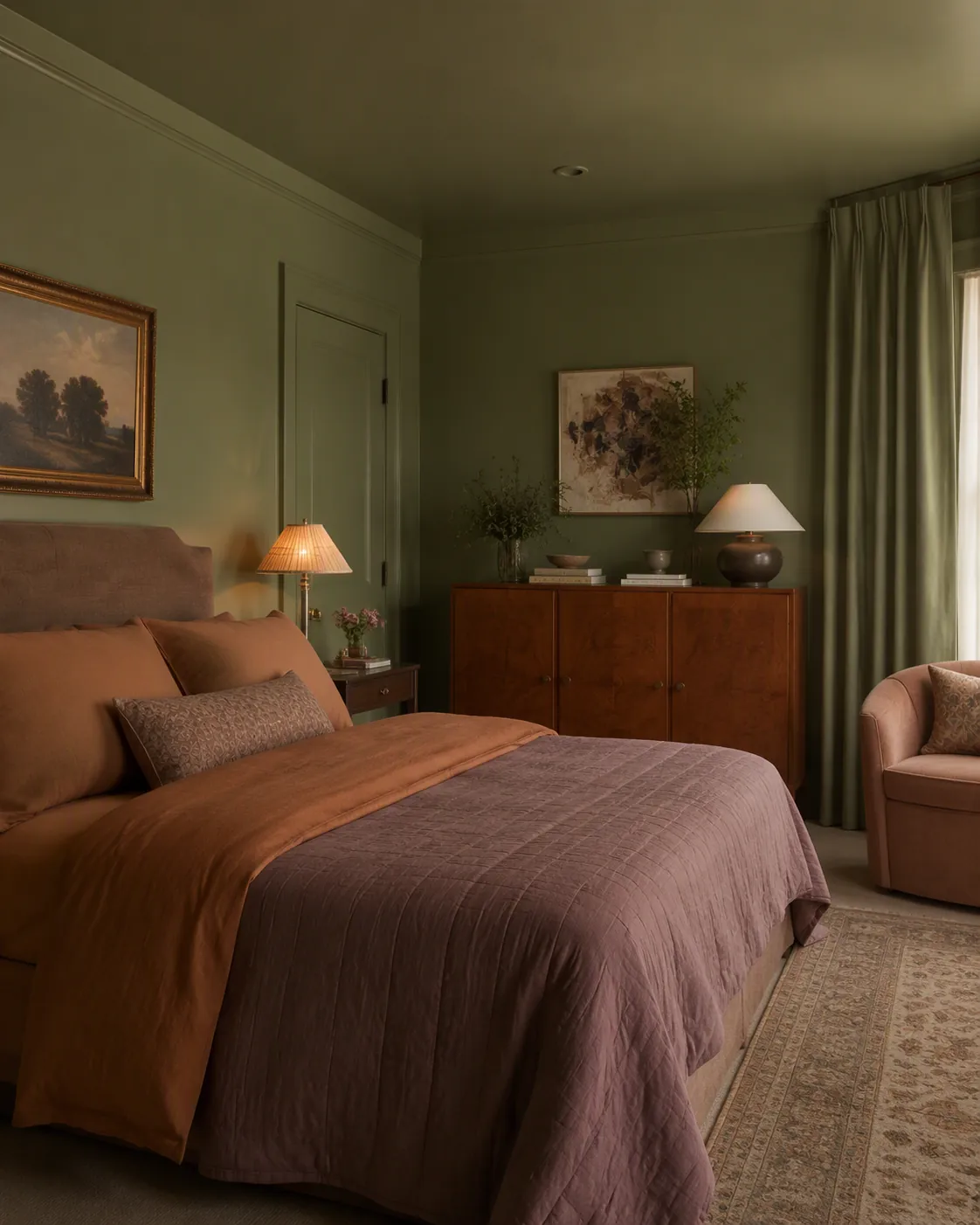
What Makes a Maximalist Bedroom ADHD-Friendly
ADHD-friendly maximalism is not a permission slip for every surface to become a holding zone. It is also not minimalism with one patterned pillow. It is a bedroom that gives the brain enough input to settle while removing the kinds of input that demand sorting, remembering, choosing, or rescuing at 11:40 p.m.
The difference shows up in the mechanics of the room. A wall color can be saturated without being high-contrast. A collection can exist without being scattered across the floor. A bed can feel enveloping without becoming a laundry mound. The goal is not less personality. The goal is fewer unfinished visual tasks.
| Room System | What It Adds | What It Reduces |
|---|---|---|
| Muted color drenching | Color richness, enclosure, warmth | Hard visual boundaries and contrast changes |
| Closed-front one-motion storage | Collections, books, textiles, personal objects | Visible clutter and bedtime decision load |
| Deep-pressure textiles | Weight, tactile feedback, body awareness | Restless searching for sensory input |
That table is the spine of the room. You can layer style on top of it, but if those three systems are missing, maximalism has to rely on willpower. Willpower is not a storage plan, and it is especially unreliable on the nights when ADHD symptoms, fatigue, or emotional residue are already loud.
Color Drenching Lets the Room Be Colorful Without Shouting
Color drenching means carrying one color family across multiple surfaces: walls, trim, ceiling, curtains, sometimes built-ins or closet doors. In a maximalist bedroom, it does something more useful than looking editorial. It lowers the number of borders the brain has to process.
A retailer-published neurodivergent bedroom design guide argues that muted color drenching can reduce visual boundaries for brains that struggle to filter competing input at bedtime.[2] Because that source comes from a retailer, it should not be treated as clinical proof. Still, the design logic is sound enough to test at home: the room can feel enveloping and expressive without creating a hard stop between white ceiling, dark curtain, bright wall, black furniture, and patterned bedding.
For ADHD relaxation, the safest version is usually muted and warm rather than bright and crisp. Think sage green, warm gray-blue, soft terracotta, dusty lavender, mushroom, clay, olive, or a browned rose. These colors still give the sensory-seeking brain something to land on, but they avoid the alerting snap of sharp contrast.
A 2025 commercial survey reported that 38% of 2,674 respondents said their sleep improved after changing their bedroom color.[3] That is a survey finding, not a sleep lab result, and it measures reported improvement rather than proving the paint caused better sleep. It is useful only in a modest way: people notice color in the bedroom, and some connect color changes with sleep quality. The Better Sleep Council also connects softer bedroom hues with relaxation-oriented responses, which fits the practical case for muted tones over highly stimulating palettes.[4]
The important move is to separate color from contrast. A maximalist ADHD bedroom can use a lot of color if the transitions are gentle. Sage walls with sage curtains and a slightly deeper olive headboard are easier to read than white walls, black curtain rods, high-contrast bedding, exposed shelving, and five accent colors competing for attention.
A Simple Color-Drenching Test
- Choose one muted base color that feels settling in low light, not just attractive in daylight.
- Repeat it on the largest visual surfaces: walls, curtains, bedding base, rug, or closet doors.
- Use pattern inside the same color family before adding a new high-contrast accent.
- Stand in the doorway at night. If the room breaks into too many separate blocks, reduce contrast before removing personality.
This is where a lot of minimalist sleep advice gets too blunt. The problem is not that your room has color. The problem may be that your room has too many abrupt visual claims and nowhere for the eye to stop.
Closed-Front Storage Is the Difference Between Rich and Noisy
A maximalist bedroom can hold books, art, candles, framed photos, textiles, jewelry, plants, sentimental objects, and strange little treasures. It cannot ask a tired ADHD adult to visually process every single one of them while trying to fall asleep.
Clutter matters because it behaves like visual noise. ANCSleep describes bedroom clutter as a source of visual noise that can raise cortisol, keeping the body closer to alertness than rest.[5] The practical consequence is not that every object must disappear. It is that the bedroom needs a way to close the visual loop before bed.
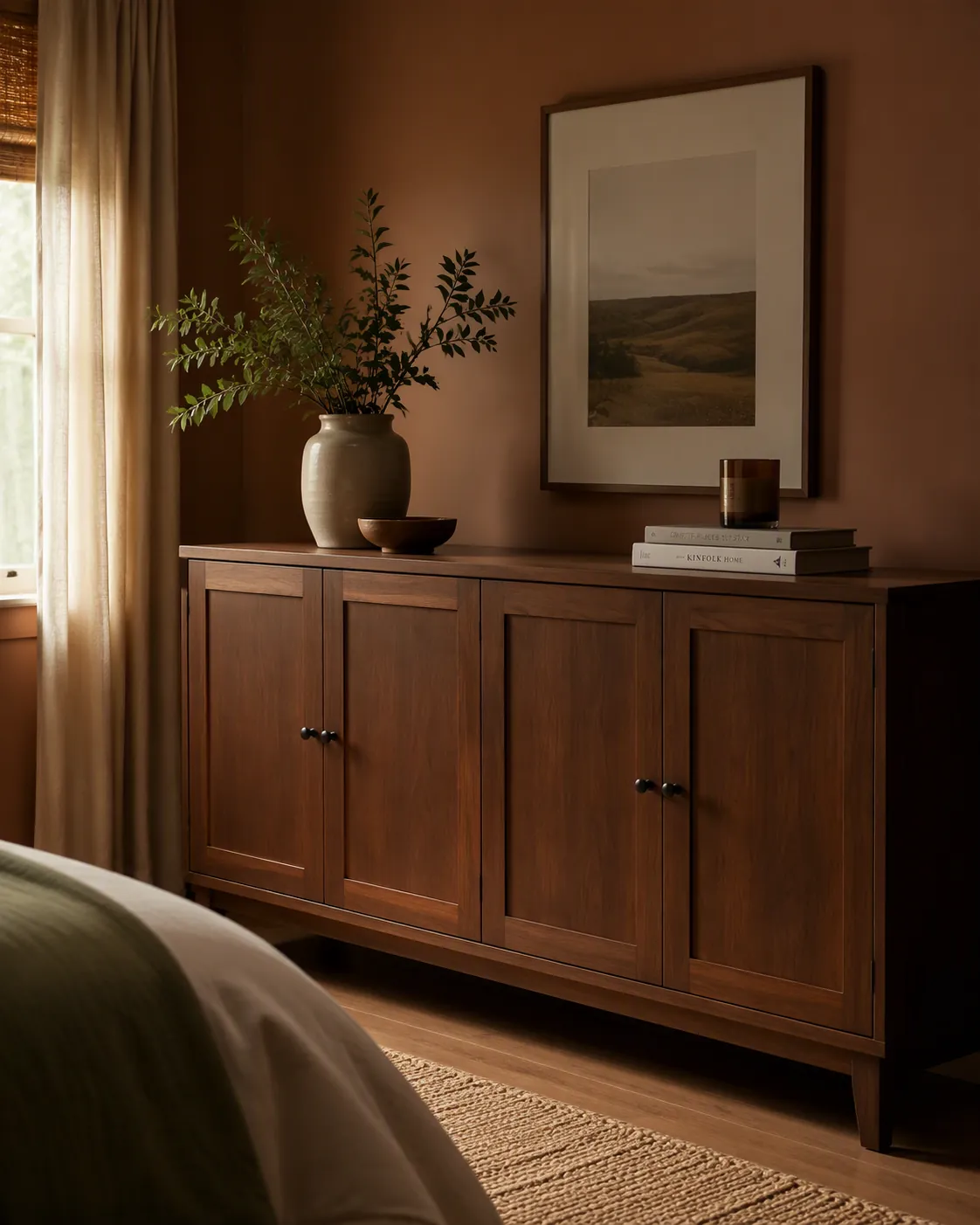
Open shelving looks generous when it is styled. On a bad executive-function day, it becomes a live inventory: socks, receipts, half-read books, skin care, abandoned mugs, chargers, supplements, hobby materials, all quietly requesting categorization. Closed fronts change the job. The room can still contain abundance, but the nervous system does not have to keep scanning it.
The one-motion rule is the part that makes closed storage usable. If putting something away requires opening a closet, pulling out a bin, lifting a lid, moving another item, and then reversing the sequence, the system is decorative wishful thinking. One motion means the item goes where it belongs with one simple action: drop the charger into the nightstand drawer, toss worn-but-not-dirty clothes into a lidded hamper, slide books behind cabinet doors, hook the robe on the back of the door.
This matters more than matching baskets. ADHD rooms fail at the point of return. The design has to assume that bedtime cleanup will happen while the person is tired, bored, possibly medicated-off, and already negotiating with themselves about brushing teeth. If the reset requires precision, it will not happen consistently.
Where to Put the Visual Abundance
Keep abundance in places that do not become bedtime command centers. A gallery wall behind the bed is usually easier to tolerate than a crowded wall directly opposite the pillow. Patterned curtains are often calmer than a chaotic pile of visible laundry. A closed dresser with a few loved objects on top is more sleep-friendly than a beautiful open shelf that exposes every unfinished category in the room.
- Use closed nightstands if your current bedside table collects medication packets, cords, lip balm, books, tissues, and cups.
- Choose wardrobes, cabinets, or dressers with solid doors for clothes, hobby items, bedding overflow, and personal collections.
- Keep one shallow dish or tray for the objects that must land beside the bed, so they read as one zone instead of many loose items.
- Put open display higher, farther from the pillow, or outside the direct line of sight from bed.
- Leave one empty landing surface on purpose. Not a minimalist moral victory, just a place where tomorrow’s self can find the phone charger.
If the room currently looks cluttered, do not start by asking what you should get rid of. Start by asking which categories need doors. The answer is often laundry, cables, skin care, paperwork, and clothes that are not clean enough for drawers but not dirty enough for the hamper. Those are not character objects. They are friction objects.
Deep-Pressure Textiles Give the Body Something Clear to Feel
Visual richness helps some ADHD adults feel oriented. Tactile pressure helps the body register where it is. That distinction matters, because a bedroom can look warm and still fail to provide enough physical feedback for a restless nervous system.
The weighted-blanket trial is the strongest clinical anchor here, but it should stay in its lane. The study involved adults with insomnia and co-occurring psychiatric disorders, not a general sample of all sleepers, and it tested weighted blankets rather than maximalist decor.[1] The useful takeaway is narrower and more practical: deep pressure is a legitimate design variable, not just a cozy aesthetic.
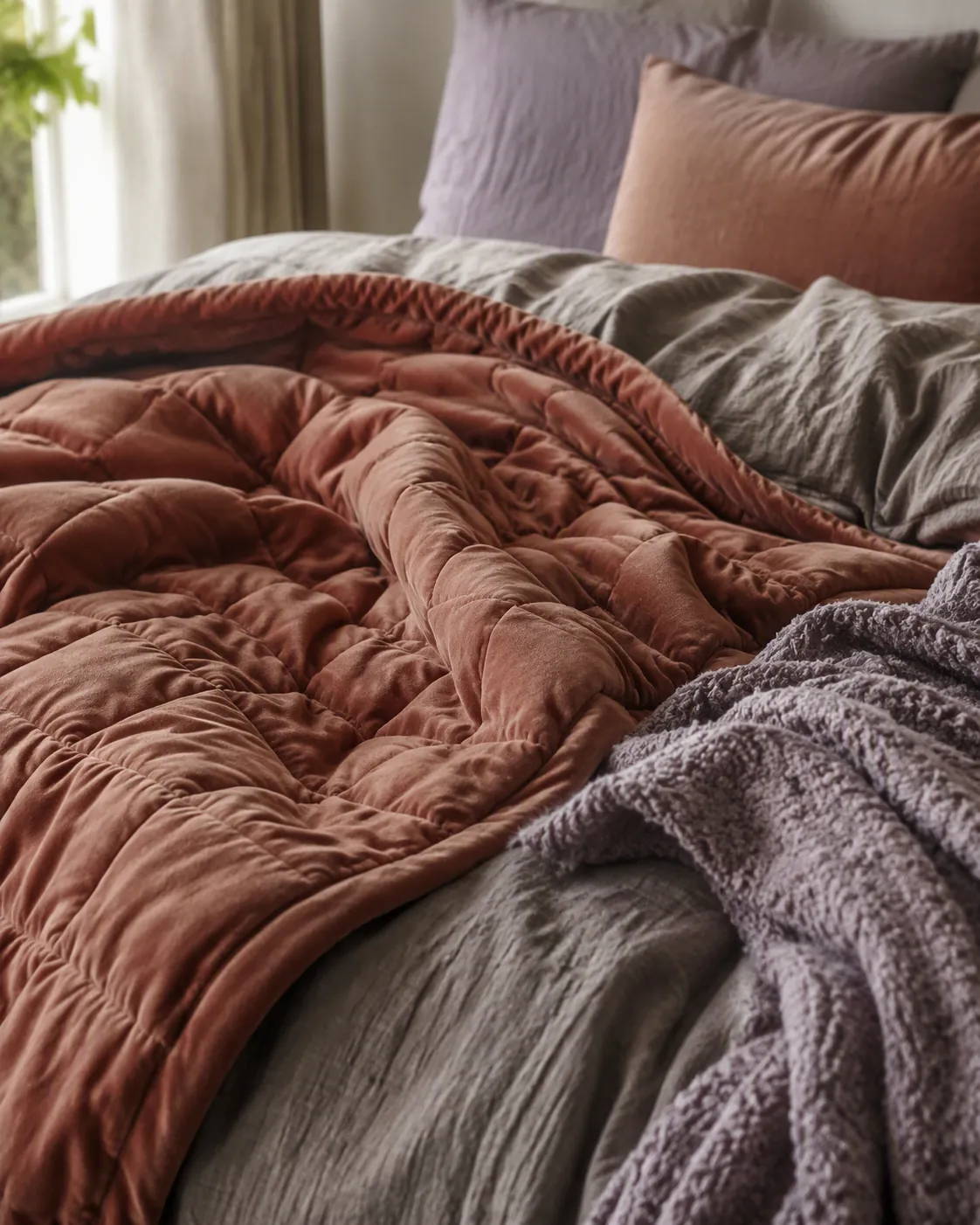
For a maximalist bedroom, that can mean a weighted blanket if it is safe and comfortable for you, but it can also mean layered bedding with real heft: a textured duvet, a heavier throw folded across the lower legs, substantial pillows, or a mattress feel that gives enough proprioceptive feedback without trapping heat or causing pain. The point is not to pile on bedding until the bed becomes impractical. The point is to make the bed send a clear signal: here is pressure, here is warmth, here is the boundary of the body.
This is also where maximalism has an advantage over bare-room sleep advice. Texture can be regulating without being visually busy. A matelasse coverlet, velvet pillow, nubby wool throw, washed linen duvet, or quilted blanket gives the hand and body something to notice. If all of those pieces fight in bright contrasting colors, the room gets loud again. If they live inside a muted color family, the bed can feel abundant without becoming visually jagged.
Build the Bed From Weight Outward
- Start with the pressure layer: weighted blanket, heavier duvet, quilt, or folded throw where your body likes input most.
- Add the temperature layer: breathable sheets, a duvet weight that matches your climate, and an easy way to vent heat.
- Add the texture layer: one or two tactile fabrics that feel good against hands, legs, or shoulders.
- Add the visual layer last: pattern, color variation, pillows, or a throw, but only if the bed remains easy to remake.
Ease matters. If the beautiful bedding arrangement takes seven minutes and a private pep talk to reset, it will eventually become a heap. For ADHD sleep design, a bed that can be made in two broad motions is usually better than a bed that looks perfect only when life is going well.
Lighting Should Soften the Layers, Not Add Another Task
Lighting does not need to become a complicated smart-home ritual. In a visually rich room, its main job is to reduce edge and glare. Warm lamps, shaded bulbs, low sconces, or one dimmable bedside light can make color drenching and texture feel enveloping instead of busy.
The same one-motion standard applies here. If turning the room into night mode requires opening an app, adjusting three scenes, moving laundry off the switch, and unplugging a novelty lamp, the system is too fragile. Put the light you actually need within reach of the place where you actually stop functioning.
For maximalist rooms, lighting is often what decides whether the layers feel restful or theatrical. A bright overhead fixture turns every object into a separate announcement. A warm pool of light lets the room recede into zones: bed, dresser, chair, door. That kind of legibility is calming because it reduces the need to keep interpreting the room.
The Nightstand Is the Smallest Real Test
A bedroom can look regulated from the doorway and still fail at the nightstand. This is where the phone charges, the water glass lands, the medication reminder sits, the book waits, and the entire day tries to leave receipts.
A maximalist nightstand can have a lamp, a ceramic dish, a book, a small framed image, a plant, or a textured object that feels pleasant to touch. It should not be the place where every unresolved category comes to die. If you need many items near bed, use a drawer, a small cabinet, or a tray that creates one visible boundary.
- Visible: lamp, current book, water, one dish for small essentials.
- Hidden but reachable: charger, medication, tissues, earplugs, lip balm, sleep mask.
- Not bedside: unopened mail, extra skin care, work notes, laundry, hobby supplies, duplicate cups.
This is not about being tidy in a moral sense. It is about what your brain has to see when you are trying to stop initiating tasks. A nightstand full of useful objects can still be sleep-disruptive if every object is visible and slightly out of place.
How to Tell Rich From Chaotic
A rich bedroom gives you cues. A chaotic bedroom gives you assignments. That is the most reliable distinction.
Rich is a dusty lavender throw that tells your body the bed is soft and heavy. Chaotic is three laundry piles that require a decision before you can lie down. Rich is a sage room with patterned curtains, warm wood, and a cabinet full of books. Chaotic is open shelving filled with unrelated objects that your eyes keep revisiting. Rich is a bedside drawer that hides the charger and medication but keeps them reachable. Chaotic is needing to hunt for both while already in bed.
If you are rebuilding the room, do it in this order: drench or visually unify the largest color fields, close the categories that create visual noise, then add tactile pressure at the bed. Decorate after those systems work. Otherwise, maximalism may give you the room you wanted for a week and the room you have to fight after that.
The ADHD-friendly version does not ask you to become a beige minimalist. It asks the room to carry more of the sorting, hiding, cueing, and soothing. A relaxing maximalist bedroom can be full of color, texture, memory, and weight. It just needs low contrast, closed visual noise, easy reset points, and enough tactile pressure that your nervous system has somewhere clear to land.
References
- Study shows weighted blankets can decrease insomnia severity, American Academy of Sleep Medicine
- Neurodivergent Bedroom Design Sensory Guide, Mattress Miracle
- Can Paint Way Better Sleep?, Sleep Review, January 2025
- Bedroom Color Psychology and Its Impact on Sleep, Better Sleep Council
- How Clutter in Your Bedroom Can Sabotage Your Sleep, ANCSleep
Supports these guides
Spot an error or have clinical feedback?
Because this article covers clinical, medication, or safety information, we use a moderated correction channel instead of open public comments. Let us know if something about “Maximalist Bedroom Decor That Helps ADHD Adults Relax” needs a closer look.
Send feedback on this article