
How the A24 Backrooms Candle Can Signal Sleep for ADHD Adults
For ADHD adults who find lavender too subtle as a bedtime cue, the A24 Backrooms candle's deliberately unsettling scent profile can actually serve as a powerful sleep anchor. This article explains why sensory-seeking individuals may benefit from this distinctive olfactory cue and how to use any strong scent as a consistent wind-down signal.
The odd part of the search term “a24 backrooms candle for relaxation before sleep” is not that someone wants a candle at bedtime. It is that this particular candle is built from notes that sound more like a failing fluorescent light than a spa: metallic hiss, ash, humidity, sweetness, electrical overload, and signal deformation. The A24 Backrooms x Joya candle is a $48, 200g soy-wax candle in a glass vessel printed with the film’s yellow wallpaper pattern, handmade by Joya in New York, listed for preorder with shipping expected in September 2026 and an estimated burn time of about 50 hours.[1]
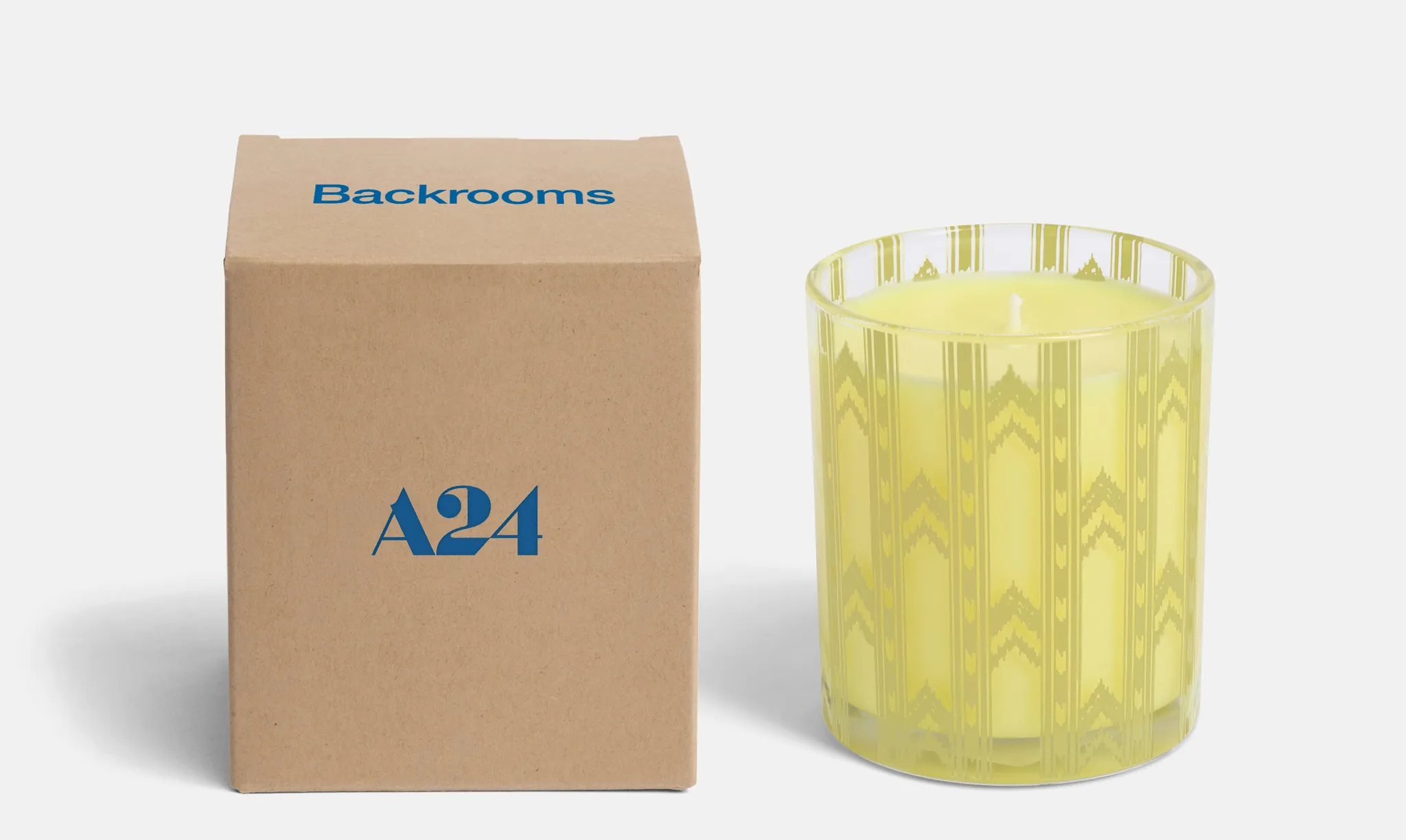
On paper, that looks like the wrong object for sleep. For some ADHD adults, though, the problem with ordinary bedtime cues is not that they are too strange. It is that they are too faint to survive contact with an active brain at 10:30 p.m. Lavender, chamomile, low-volume white noise, and a tasteful lamp can all be technically calming and still fail as signals. They blur into the room. They do not interrupt the scrolling, the kitchen detour, the last email, the sudden laundry concern, or the feeling that the day has not quite released its grip.
That does not make the Backrooms candle a sleep product in any clinical sense. It means it is a useful doorway into a better question: when does relaxation need to be soft, and when does it need to be unmistakable?
| Product detail | Why it matters for bedtime use |
|---|---|
| Scent notes include metallic hiss, ash, humidity, sweetness, electrical overload, and signal deformation.[1] | The scent is meant to be noticeable and atmospheric, not conventionally soothing. |
| $48, 200g soy wax, glass vessel, roughly 50-hour burn time.[1] | These are practical buying details, not evidence that it improves sleep. |
| Handmade by Joya in New York and sold by A24 as a Backrooms collaboration.[1] | The object is part home fragrance, part film merchandise. |
| Preorder status with September 2026 shipping listed on the product page.[1] | There are no independent consumer experiences to lean on yet. |
The Backrooms part is atmosphere, not the sleep mechanism
The candle’s weirdness comes from the film world it is attached to. Backrooms, the A24 film associated with Kane Parsons and the liminal-horror aesthetic, arrived in May 2026 and was reported with a domestic gross of $192.3 million; reviews and coverage emphasized the familiar atmosphere of empty yellow spaces, dread, and internet-native unease rather than a conventional haunted-house setup.[2][3]
That context explains the scent copy. A Backrooms candle that smelled only of vanilla linen would be bad world-building. The “relaxation before sleep” angle, if there is one, does not come from pretending liminal horror is inherently restful. It comes from the possibility that a highly specific scent can function as a transition marker for a person whose nervous system often misses subtler markers.
This distinction matters because the product page can tell us what the candle is made to evoke, what it costs, and when it is expected to ship. It cannot tell us that ADHD adults sleep better after using it. Since the candle is still listed as a preorder item, there is not yet a body of independent consumer reviews of the final shipped product to compare against the marketing language.[1]
Why a stronger cue can make sense for some ADHD sleepers
A lot of bedtime advice assumes the nervous system is overexposed and needs less: less sound, less light, less texture, less smell, less intensity. That is often true. It is not always true. In the Dunn Sensory Profile framework used in occupational therapy, people differ in sensory thresholds and in how actively they respond to those thresholds. A sensory seeker tends to need more intense, frequent, novel, or complex input before the nervous system feels adequately registered. A sensory avoider tends to experience strong input as intrusive, exhausting, or threatening.
This is where the Backrooms candle becomes more interesting than its novelty would suggest. Metallic, smoky, humid, sweet, electrically strange notes are not “better” than lavender. They are simply harder to ignore. For a sensory-seeking ADHD adult, that intensity may be exactly what lets the scent become a real boundary between the active evening and the wind-down period.
A subtle scent can fail in a very ordinary way: it is present, but it does not command attention. The person lights the candle, opens three tabs, answers a message, remembers dishes, and never quite receives the cue. The room technically smells relaxing. The brain has not been interrupted enough to change tracks.
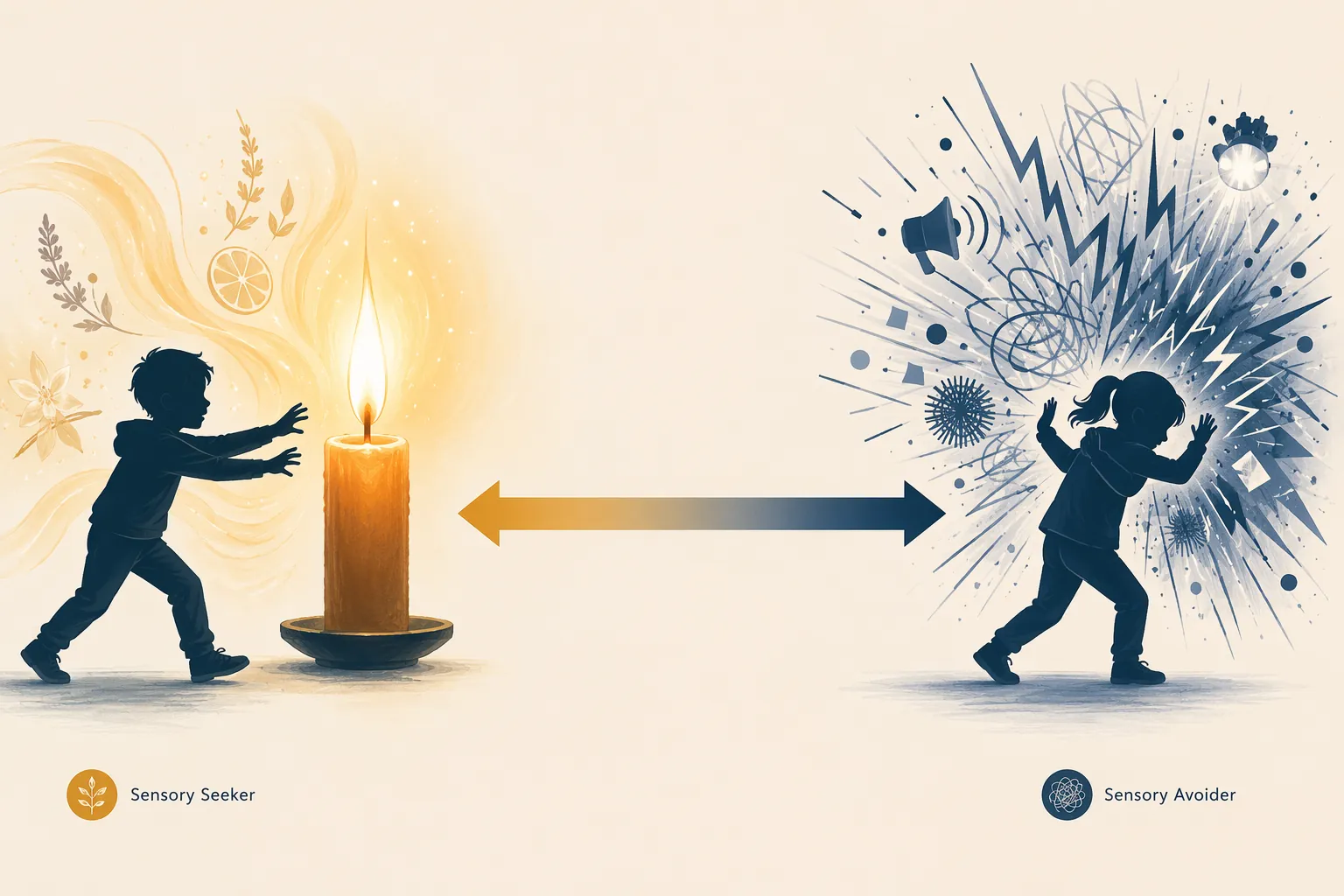
For a sensory avoider, the same candle could do the opposite. Metallic or smoky notes may make the body more alert. Humidity and ash may feel claustrophobic. A scent designed to suggest electrical overload may not read as “distinctive bedtime anchor”; it may read as “something is wrong in the room.” If the nervous system interprets uncanny sensory input as threat, using that input before bed is not clever. It is counterproductive.
The useful dividing line is not whether the candle is aesthetically cool. It is what happens in the first few minutes of exposure. A sensory seeker may feel oriented: there it is, the strong cue, the evening has shifted. A sensory avoider may feel watched, crowded, irritated, or keyed up. Those reactions deserve more weight than the product concept.
The scent is only half the cue; repetition teaches it what to mean
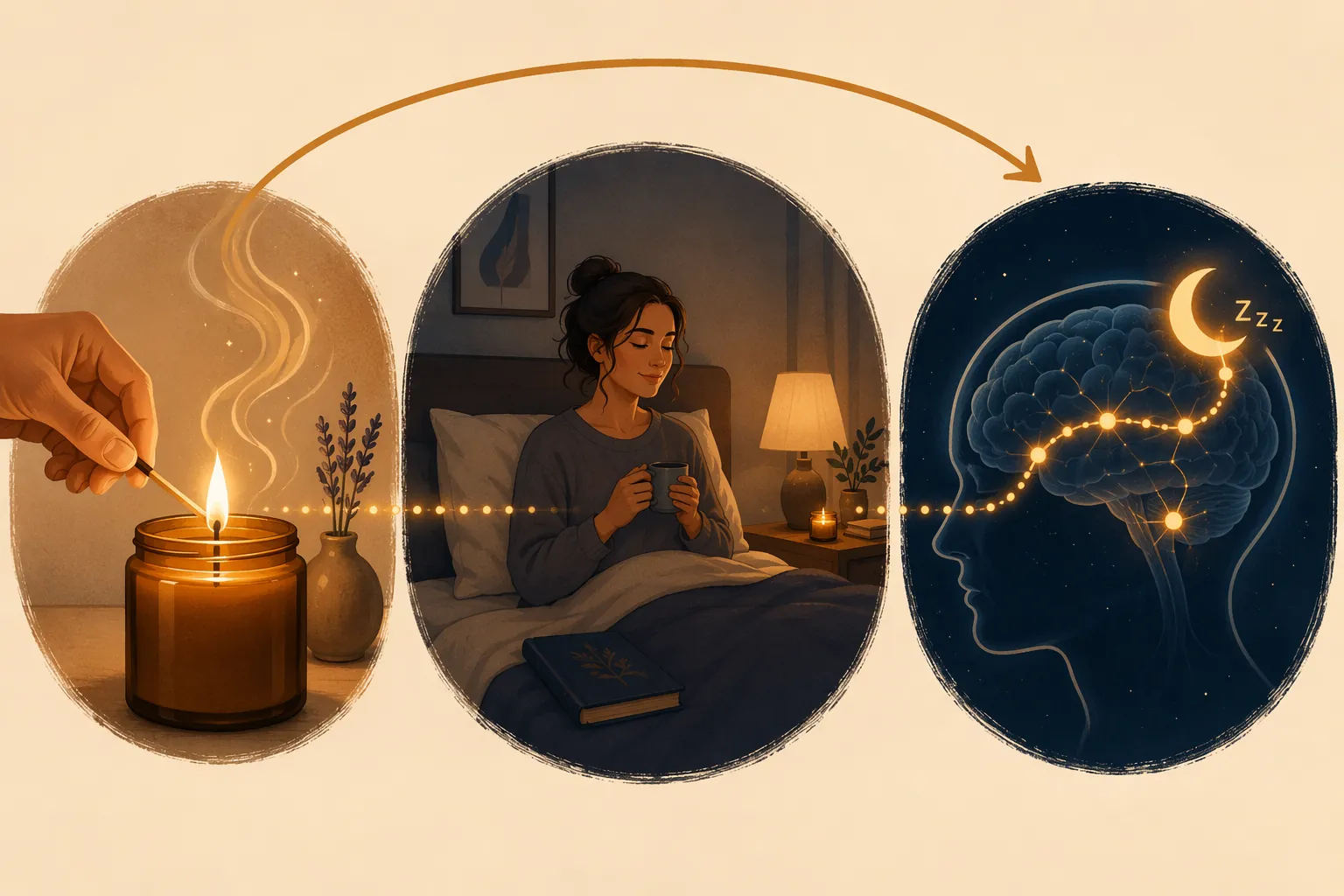
A candle does not carry sleep instructions into the brain by itself. The Pavlovian part is the repeated pairing: the same sensory cue appears at the same point in the evening, followed by the same sequence of lower-demand actions, often enough that the cue starts to predict sleep readiness.
That is why the Backrooms candle’s strongest argument is not “this scent is relaxing.” The better argument is “this scent is hard to miss.” Once a cue registers, routine can do the teaching. Light it 30–60 minutes before bed. Turn down the same lights. Put the phone in the same place. Do the same hygiene steps. Read the same kind of book, stretch in the same spot, or sit with the same low-stakes activity. Then extinguish the candle before sleep.
The first few uses may feel like nothing more than trying a new object. That novelty is not the goal. In fact, novelty can work against the ritual if every night becomes an evaluation: Do I like it? Is it weird? Does it smell like wet carpet, ozone, ash, or sugar? Is this funny? Is this too much? A sleep cue needs to stop being entertainment and become infrastructure.
For ADHD bedtime routines, that difference is enormous. A novelty asks for attention. A cue organizes attention. The same object can do either job depending on how it is used.
How to try a distinctive scent without turning bedtime into an experiment forever
If you are considering the A24 Backrooms candle for relaxation before sleep, treat it as a test of fit, not as a treatment. The test is simple: does this scent make the transition to bedtime more visible to your brain without making your body more vigilant?
- Use it at a consistent time window, roughly 30–60 minutes before bed, rather than whenever you happen to remember it.
- Pair it with the same two or three wind-down actions, such as dimming lights, changing clothes, washing up, reading, stretching, or setting tomorrow’s essentials in one place.
- Keep the rest of the routine boring enough that the scent becomes the headline cue.
- Blow the candle out before you are sleepy enough to forget it. A flame is not a background sleep aid.
- After several nights, judge the transition, not the scent review: did you start moving toward bed sooner, with less internal bargaining?
This same method works with any distinctive scent. The candle does not have to be A24, Joya, or horror-adjacent. It can be cedar, coffee, clove, eucalyptus, petrichor, incense, a sharp citrus, a resinous blend, or something else that your brain notices quickly and does not read as danger. The point is not to collect the most unusual fragrance. The point is to choose a signal strong enough to be received and repeat it until it becomes predictive.
A quick fit check
| If this sounds like you | The Backrooms-style cue may... |
|---|---|
| You often ignore gentle sleep cues until the night has already slipped away. | Help because it is noticeable enough to mark a transition. |
| You like complex, atmospheric, slightly strange sensory input. | Feel regulating rather than disruptive. |
| You are easily unsettled by smoky, metallic, damp, or uncanny smells. | Make bedtime feel less safe and should probably be skipped. |
| You have insomnia, medication-timing issues, delayed sleep timing, or major circadian drift. | Be only a minor support, not the main intervention. |
| You want a collectible object from the film world. | Be worth considering as merchandise, separately from any sleep benefit. |
When the candle is the wrong tool
There are plenty of reasons not to use this candle before bed. If strong smells trigger headaches, nausea, irritation, asthma symptoms, anxiety, or a “something is off” feeling, choose a different anchor. If horror imagery follows you into dreams, do not invite it into the last hour of the night just because the object is well designed. If you share a room, the other person’s sensory profile counts too.
It is also the wrong tool if the real sleep problem is bigger than a missing transition cue. ADHD sleep can be affected by delayed circadian rhythm, stimulant timing, evening hyperfocus, anxiety, inconsistent wake time, light exposure, and learned bedtime resistance. A strong scent can help mark the beginning of wind-down. It cannot replace ADHD-specific sleep care, medical guidance for persistent insomnia, or a circadian plan when the body clock is running late.
That is not a failure of the candle. It is a boundary. Sleep anchors work best when the missing piece is “I need a clear cue to start the routine.” They are much less powerful when the missing piece is pain, panic, untreated sleep disorder, unsafe sleep environment, or a schedule that changes faster than the body can adapt.
What the Backrooms candle gets right about ADHD bedtime cues
The valuable idea here is not that a candle inspired by liminal horror is secretly soothing. The valuable idea is that some ADHD adults need bedtime cues with enough sensory contrast to cut through the evening. A cue can be calming because it is familiar, but it may first need to be strong enough to become familiar.
For the narrow group that likes bold, complex, uncanny scent profiles and struggles to notice gentler routines, the A24 Backrooms x Joya candle could become a useful pre-sleep anchor. Its scent notes are distinctive. Its visual design is memorable. Its film association gives it atmosphere. None of that proves sleep benefit. It simply gives the brain something obvious to attach the ritual to.
For everyone else, take the principle and leave the product. Pick a sensory signal your nervous system actually accepts. Repeat it at the same point in the evening. Pair it with actions that lower demand. Let the cue become less interesting and more reliable.
If your sleep falls apart when one sensory anchor disappears, start with Restful Ground’s guide to ADHD sensory anchors. If your bedtime problem is more about body-clock timing than routine initiation, read the pieces on natural sleep aids and the ADHD circadian clock and why ADHD adults need a circadian sleep aid, not a pill. For the ritual mechanics, the same cue-response logic shows up in reading to your pet before bed: the activity matters, but the repeated transition matters more.
References
- Backrooms x Joya Candle, A24 Shop.
- ‘Backrooms’ Digital Release Date, Deadline.
- Backrooms Review, Rendy Reviews.
Safety & eligibility read
Cross-check against other interventionsExplore the mechanism
Next step
Spot an error or have clinical feedback?
Because this article covers clinical, medication, or safety information, we use a moderated correction channel instead of open public comments. Let us know if something about “How the A24 Backrooms Candle Can Signal Sleep for ADHD Adults” needs a closer look.
Send feedback on this article