
Heat Dome Sleep Tips for Older Adults
Older adults face unique risks during heat domes—general sleep advice like using fans or cold showers can be ineffective or dangerous. This article provides evidence-based strategies calibrated for aging physiology, including temperature thresholds, safe cooling methods, and hydration guidelines.
The first sleep tip for older adults during a heat dome is not about pajamas, pillows, or whether the window is cracked. It is this: check the room temperature before waiting for the person in the bed to feel overheated. For older adults, an indoor temperature of 80°F is already a point to act, not a number to watch casually from the hallway.[1]
That threshold matters because the body may not sound the alarm early enough. Cornell’s Climate and Aging work has found that older adults are less likely to perceive heat discomfort and therefore less likely to take corrective action during heat waves.[2] The CDC also warns that older adults should not rely on thirst as a hydration cue during heat, and that people aged 65 and older are at higher risk because of age-related body changes, chronic conditions, and medication use.[3]
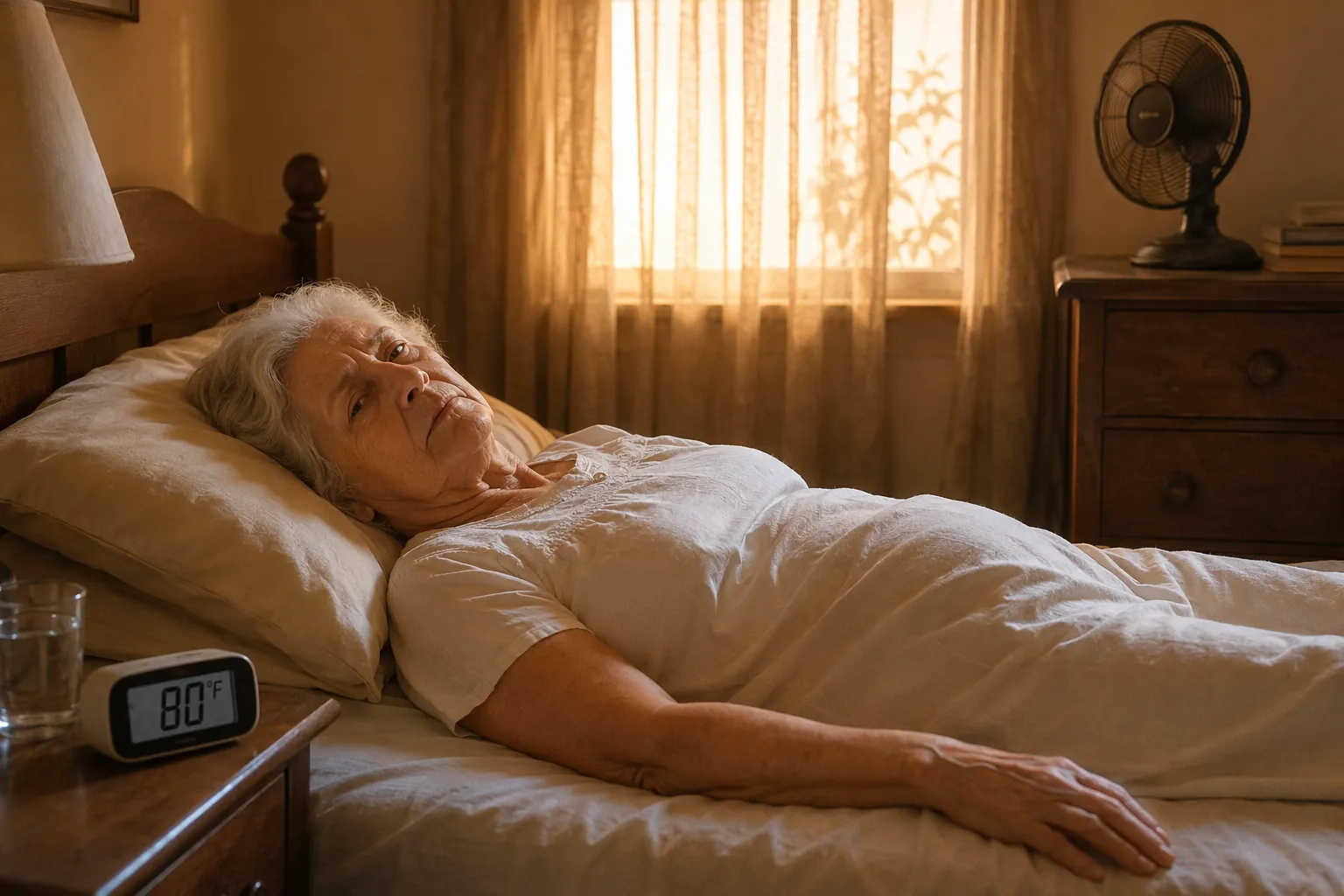
This is why ordinary summer sleep advice can miss the mark. A 78-year-old on a diuretic does not have the same margin for “just drink more water” as a healthy 30-year-old. A spouse deciding whether the bedroom is still safe at 9 p.m. needs something firmer than “use a fan if you feel warm.” During a heat dome, the danger is not only the daytime high. It is the bedroom that stays warm overnight, night after night, while the person in it feels only mildly uncomfortable.
Use 80°F As The Bedtime Trigger
At 80°F indoors, begin the cooling plan. Do not wait for sweating, flushing, dizziness, or complaints of being hot. Older adults may sweat less, move less blood to the skin, and shed heat less efficiently than younger adults, which makes the bedroom temperature a better early signal than comfort alone.[4]
| Bedroom or indoor condition | What to do before sleep |
|---|---|
| Below 80°F and the person is well | Keep the room stable, offer regular fluids if allowed, and continue overnight checks during a heat dome. |
| 80°F or higher | Begin active cooling: reduce heat sources, cool the body safely, use air conditioning if available, and consider a cooler room or lower floor. |
| Fan-only cooling with indoor air near or above 95°F | Do not treat the fan as protection. Move to air conditioning or another cooler location. |
| Indoor heat cannot be reduced, or the person has confusion, weakness, faintness, vomiting, or worsening illness | Escalate from sleep management to heat-safety management: call a clinician, use a cooling center, or seek emergency care depending on symptoms. |
The point of the 80°F trigger is not to make a house medically perfect. It gives caregivers and older adults a line that turns vague worry into a decision: cool the body now, cool the room now, or move now.
Use Fans Carefully, Because They Have A Ceiling
A fan can feel kind. It moves air across damp skin and can help sweat evaporate. But a fan is not air conditioning, and during a heat dome that distinction can become important.
AARP, citing Cornell and World Health Organization guidance, notes that fans become ineffective above 95°F and can be dangerous above 104°F because they may blow hot air across the body rather than helping it cool.[5] WHO heat guidance similarly warns that fans do not prevent heat-related illness when temperatures are above 95°F and can increase dehydration risk.[6]
For an older adult sleeping in a hot room, that means the fan should be treated as a comfort tool only within limits. It may help when the room is warm but not dangerously hot, especially if the person can sweat and has access to safe fluids. It should not be the main plan when the indoor air is approaching the mid-90s, when the person is not sweating normally, or when medication and fluid limits already make heat tolerance uncertain.
- Use a fan to move cooler air from an air-conditioned room or shaded area, not to make very hot air safe.
- Pair fan use with body cooling, such as damp cloths or forearm cooling, when the room is still under the danger range.
- Stop relying on a fan if the room remains hot, the person becomes confused or weak, or the skin is hot and dry.
- Do not aim a strong fan at an older adult all night if it causes chilling, discomfort, dry mouth, or discourages sleep.
Replace The Cold Shower With Gentler Cooling
Cold showers are one of those tips that sound decisive and can be poorly matched to an older body at bedtime. Very cold water can constrict blood vessels near the skin. That can briefly feel bracing while making it harder for the body to release heat, followed by rebound warming after the shower. It can also be unpleasant enough that the person simply refuses it the next night, which matters if the heat dome is expected to linger.
A safer pre-bed option is a warm or lukewarm shower one to two hours before bed. The goal is not to shock the body cold. It is to encourage heat to move toward the skin, then let evaporation and a cooler room do the work. Afterward, use light sleepwear, a breathable sheet if needed, and enough time for the body to settle before lying down.
If a shower is too tiring, unsafe, or likely to increase fall risk, use smaller cooling steps. Age UK recommends practical measures such as placing the hands and forearms in cool water, wearing a damp T-shirt, or resting in the coolest part of the home.[7]
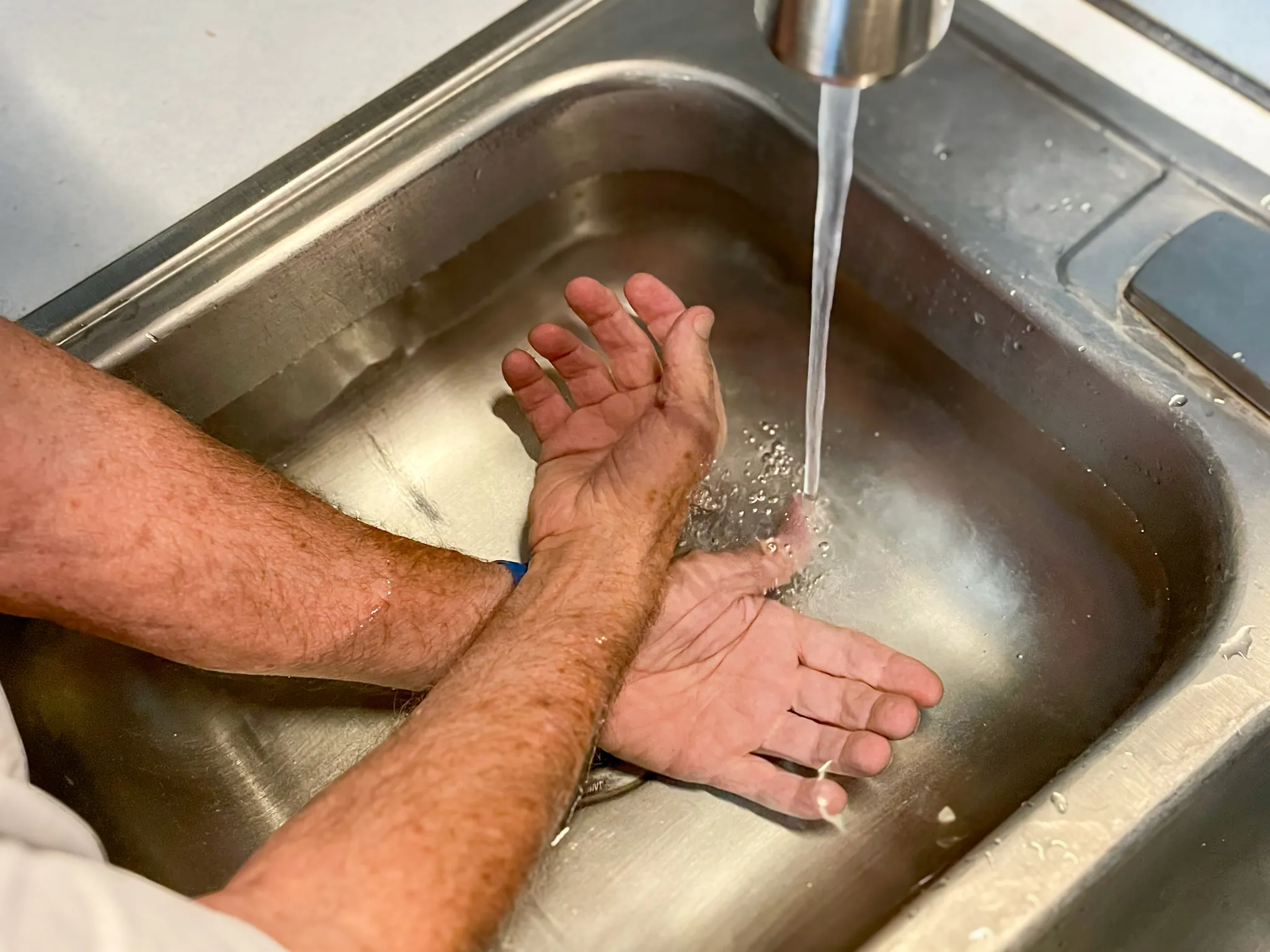
Forearm cooling is useful because it is specific, low-drama, and easy to supervise. Fill a basin with cool—not icy—water, place the hands and forearms in it for several minutes, then dry the skin before bed to reduce slipping. For someone who is frail, unsteady, or resistant to a shower, this is often the better first move.
Use Air Conditioning Without Overcooling The Bedroom
If air conditioning is available, use it before the room becomes oppressive. Waiting until midnight, when the walls, mattress, and upstairs rooms have absorbed heat all day, makes the system work harder and leaves the older adult in the hottest part of the home for too long.
A practical target around 78°F can be enough to bring the room below the 80°F action threshold without making the space uncomfortably cold. For many older adults, especially those who chill easily or wake to use the bathroom, overcooling the room can create its own problems: stiffness, interrupted sleep, and a cold walk across a dark floor.
The setup matters. Close blinds before the late-day sun hits the room. Turn off unnecessary lights and heat-producing appliances. Pre-cool the bedroom or the room where the person will actually sleep, not only the living room where everyone sat after dinner. If there is only one cooled room, it may need to become the sleeping room during the heat dome.
Move Sleep Lower, Earlier, And Closer To Help
Heat rises, and upstairs bedrooms can become stubbornly hot during prolonged heat. Age UK advises spending time in the coolest room and sleeping on the lowest floor when possible during hot weather.[7] This is not a lifestyle upgrade; it is a temporary safety adjustment.
Move the sleep location before the person is exhausted. A mattress on a lower floor, a recliner in a cooled room, or a guest bed nearer to the air conditioner may be safer than the familiar upstairs bedroom. Keep the route to the bathroom lit and clear. Heat, dehydration, sleep loss, and nighttime urgency are a poor combination for fall risk.
If the home cannot be kept below the practical threshold, make a cooling-center plan before bedtime. That means knowing the location, hours, transportation, medication needs, mobility equipment, and who will make the call. A cooling center is easier to use at 6 p.m. than after confusion begins at 1 a.m.
Hydrate On A Schedule, But Respect Medical Limits
“Drink more water” is too blunt for older adults in a heat dome. The CDC specifically cautions that older adults should not wait until they feel thirsty to drink.[3] At the same time, some people have heart failure, kidney disease, low sodium risk, fluid restrictions, or diuretic schedules that make unlimited water unsafe.
The better approach is structured and individualized. Offer fluids steadily earlier in the day if the person is allowed to have them. Reduce heavy evening catch-up drinking when it will cause repeated bathroom trips, poor sleep, or rushing in the dark. Include water-rich foods if they fit the person’s diet. Watch urine color, dizziness, dry mouth, new weakness, and mental status, but do not use any one sign as proof that everything is fine.
If a clinician has set a fluid limit, follow it and ask how to manage heat days. If the person takes a diuretic, do not skip it casually because the weather is hot. The right question is not “Should we stop this?” but “What is the heat-day plan for this medication, this kidney function, this blood pressure, and this fall risk?”
Check Medications Before The Heat Dome Peaks
Many common medicines can affect heat tolerance. AARP highlights several categories of concern, including antihistamines, antidepressants, beta-blockers, and diuretics, because they may interfere with sweating, circulation, hydration, or the body’s ability to respond to heat.[5]
That does not mean stopping medication when a heat alert appears. It means calling the prescriber, pharmacist, or care team before the worst night arrives if the person is high-risk, has had prior heat illness, lives alone, has kidney or heart disease, or has become dizzy or confused in past heat waves. Medication timing, blood pressure monitoring, and hydration targets are clinical decisions, not guesses to make beside the bed.
For caregivers, the useful task is to make the medication list visible: drug names, doses, timing, prescriber, and any fluid or salt instructions. During a heat emergency, a nurse line or emergency clinician can work faster with that list than with a plastic bag of bottles gathered in a panic.
What To Do The Night Before A Dangerous Heat Day
The night-before plan should be boring on purpose. Heat safety fails when every decision is postponed until the older adult is tired, warm, and less able to explain what feels wrong.
- Check the bedroom temperature before bedtime. If it is 80°F or higher, begin active cooling or move sleep to a cooler space.
- Pre-cool the sleeping area with air conditioning if available, aiming for comfort and safety rather than an icy room.
- Use a warm or lukewarm shower one to two hours before bed, or use cool forearm immersion if showering is unsafe.
- Set up fluids according to the person’s medical plan, with daytime intake emphasized when nighttime bathroom trips are risky.
- Move medications, phone, glasses, mobility aids, and a light source within reach.
- Choose who will check in and when, especially if the person lives alone or has memory problems.
For a person who insists the room feels acceptable, use the thermometer as the neutral referee. The conversation is easier when the decision is tied to a number: “The room is over 80, so we’re moving downstairs tonight,” not “I think you look hot.”
Overnight Monitoring Should Look For Confusion, Not Just Sweat
Heat illness in an older adult may not arrive as a dramatic collapse. It may look like unusual confusion, irritability, unsteadiness, nausea, headache, faintness, muscle cramps, or a sudden inability to do the ordinary bedtime routine. The CDC lists older adults among those at increased risk for heat-related illness and emphasizes checking on them during hot weather.[3]
Overnight, check the room temperature again if the house has been retaining heat. Check the person, too: Are they making sense? Can they sit and stand safely? Are they sweating heavily, not sweating despite heat, vomiting, or too weak to drink? If there are signs of heat stroke, such as confusion, loss of consciousness, or very high body temperature, treat it as an emergency.
Sleep research gives another reason not to dismiss a bad hot night as mere discomfort. A USC study linked rising nighttime temperatures with reduced sleep among U.S. adults, and nights with minimum temperatures above 77°F are part of the pattern researchers use to describe heat-related sleep loss.[8] A 2025 study of older adults also reported combined effects of sleep and extreme heat exposure on cognitive function, with normal sleep associated with lower cognitive-impairment risk in the study population.[9]
Those findings should not be stretched into bedside certainty for one person on one night. They do support a practical point: for older adults, heat-fragmented sleep can feed into cognition, balance, medication mistakes, and next-day resilience. A hot bedroom is not only uncomfortable. It can make the next morning harder to manage safely.
When The Bedroom Is No Longer The Right Place To Solve It
Home cooling steps are reasonable only while the room can be made safe enough and the person remains well enough to participate. If the bedroom stays at or above the action threshold despite cooling attempts, move to a cooler room, lower floor, air-conditioned public space, relative’s home, or cooling center. If the only available plan is a fan in very hot air, that is not enough.
Call a clinician or pharmacist when medication, fluid restriction, kidney disease, heart disease, or repeated dizziness makes the home plan uncertain. Seek urgent or emergency help if confusion, fainting, inability to drink, worsening weakness, vomiting, chest symptoms, loss of consciousness, or signs of heat stroke appear.
During a heat dome, the sleep plan stops being a sleep plan when the room cannot be kept below the practical threshold or the person’s condition changes. At that point, the safest bedtime decision is not a better pillow, another glass of water, or a fan turned higher. It is getting the older adult into cooler air and bringing in the right help.
References
- Tip Sheet: Hot Weather Safety Tips for Older Adults, Health in Aging / American Geriatrics Society
- How Well Do Older Adults Cope with Heat Waves?, Cornell University Climate & Aging
- Heat and Older Adults (Aged 65+), Centers for Disease Control and Prevention
- The Effects of Heat on Older Adults, Harvard Medicine Magazine, 2021
- How Extreme Heat Affects the Body After 50, AARP
- Climate Change: Heat and Health, World Health Organization
- How to keep cool in hot weather, Age UK
- Study links rising temperatures to reduced sleep in U.S. adults, USC Keck School of Medicine
- The combined effects of sleep and extreme heat exposure on cognitive function among older adults, Ecotoxicology and Environmental Safety, 2025
Safety & eligibility read
Cross-check against other interventionsExplore the mechanism
Next step
Spot an error or have clinical feedback?
Because this article covers clinical, medication, or safety information, we use a moderated correction channel instead of open public comments. Let us know if something about “Heat Dome Sleep Tips for Older Adults” needs a closer look.
Send feedback on this article