
What Olympic Bobsledders Taught Me About Pregnancy Insomnia
Elite bobsledders Kaillie Humphries, Elana Meyers Taylor, and Lauren Gibbs managed severe sleep deprivation while competing and parenting young children. This article maps their real-world tactics—from World Cup travel kits to nursing schedules that protect rest—onto evidence-based pregnancy insomnia remedies that apply to any reader.
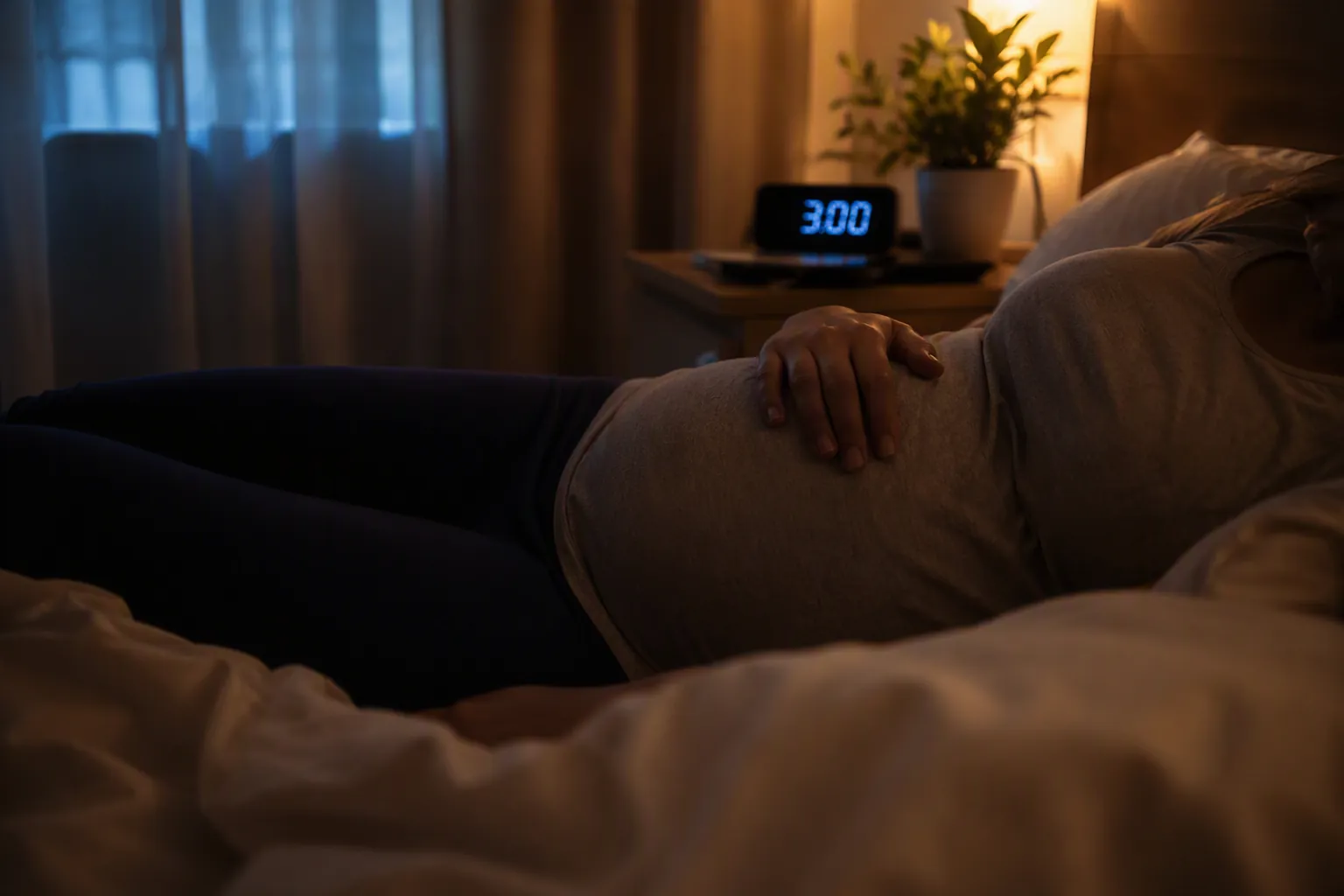
By 3 a.m., pregnancy insomnia stops sounding like a wellness problem. You may already have tried the warm bath, the earlier bedtime, the reduced caffeine, the lavender-scented optimism. Then reflux climbs, one hip burns, the baby starts moving, your bladder negotiates badly, and the next day is still waiting.
The phrase pregnancy insomnia remedies bobsled athlete sounds oddly specific until you look at what elite bobsledders are actually managing: narrow sleep windows, body discomfort, travel disruption, feeding logistics, performance pressure, and a morning that does not care how fragmented the night was. That is not so far from the problem in an ordinary bedroom. It is the same math, made louder.
Insomnia in pregnancy is common enough that a bad night should not be treated as a personal failure. Sleep Foundation reports that about 60% of pregnant people experience insomnia by late pregnancy, while Cleveland Clinic notes that insomnia may affect up to 80% by the third trimester and that nocturnal awakenings are reported by most pregnant people.[1][2] Those numbers do not make the experience harmless. They simply mean the problem is big enough to deserve stronger tools than “just relax.”
The bobsled lesson is logistical, not inspirational
Kaillie Humphries told TIME in 2026 that during breastfeeding and infant sleep-regression periods she was getting approximately four hours of sleep a night while still competing at the World Cup level.[3] That is a striking account, but it should not be converted into advice. It is self-reported, not measured sleep data, and four-hour nights are not a target. The useful part is what the story exposes: when sleep cannot be made perfect, the remaining sleep opportunity has to be defended.
Elana Meyers Taylor made the same conflict plain after winning Olympic gold at age 41 while parenting two deaf sons, one with Down syndrome. “The only thing that has really changed is I'm sleep-deprived now. I'm an Olympic gold medalist with a lack of sleep,” she told CNN.[4] The quote lands because it refuses the fantasy that expertise, fitness, or discipline protects a person from exhaustion. It does not.
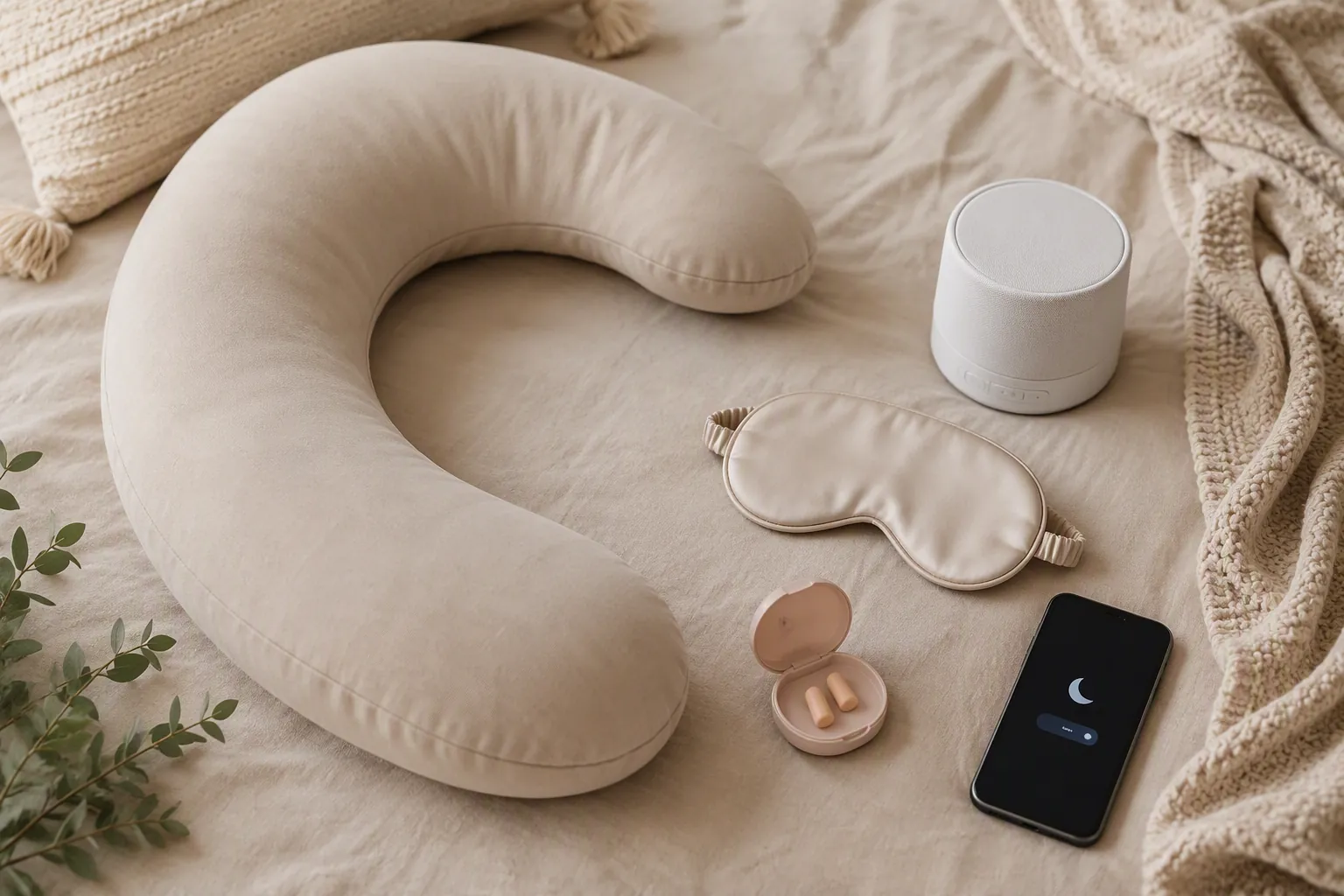
Lauren Gibbs gives the most transferable example because her approach is not heroic. It is practical. She traveled the World Cup circuit with a pregnancy pillow, CPAP machine, silicone ear plugs, eye mask, diffuser, cool-room preference, and device curfew.[5] The CPAP matters because it was tied to diagnosed sleep apnea, not ordinary pregnancy restlessness. The rest of the kit shows something simpler: she reduced friction before the night began.
| What the bobsledder did | What it translates to in pregnancy insomnia care | Evidence strength |
|---|---|---|
| Humphries protected available rest around breastfeeding and competition demands | Identify the actual sleep window instead of chasing an ideal bedtime | Clinical logic; athlete account is illustrative |
| Meyers Taylor organized nursing and parenting around training blocks | Treat feeding, caregiving, work, and appointments as scheduling constraints, not moral failures | Supported by postpartum athlete literature and sleep-block principles |
| Gibbs traveled with a pregnancy pillow and sleep kit | Reduce physical and sensory barriers before bed | Pregnancy pillow evidence plus practical athlete example |
| Persistent insomnia needs more than sleep hygiene | Use CBT-I, adapted for pregnancy and unpredictable nights | Strongest evidence among non-drug remedies |
| Gibbs used CPAP for diagnosed sleep apnea | Escalate snoring, choking, witnessed pauses, or severe daytime sleepiness | Clinical evaluation required |
Start with the sleep window you actually have
The first remedy is not a product. It is a scheduling correction: stop planning around the night you wish you had and protect the best sleep window that remains. For a pregnant person, that window may be the first half of the night before reflux worsens, a late-morning recovery block after a fragmented night, or a protected two-hour stretch after a partner handles the first toddler wake-up.
This is where the athlete examples are useful. Humphries pumping breast milk in the start house before runs was not a lifestyle tip; it was a logistical move inside an unforgiving schedule.[8] Meyers Taylor’s nursing schedules around training blocks point to the same principle. Feeding, work, caregiving, and medical appointments should be put on the calendar honestly, because sleep only happens in the space left after real obligations are named.
For someone with pregnancy insomnia, this can look less dramatic but more important: move the longest uninterrupted sleep attempt to the part of the night when symptoms are least severe; ask a partner or support person to own a specific morning task rather than “help more”; batch bathroom, snack, medication, and pillow setup before bed; and stop spending the best quiet hour on chores that could survive until tomorrow.
If you are already postpartum or planning ahead, the same logic continues. Restful Ground’s guide to protecting uninterrupted sleep blocks uses this exact premise: the block has to be assigned, defended, and visible to the people who can disrupt it.
Use CBT-I when insomnia has become a pattern
Once insomnia becomes repetitive, sleep hygiene alone is usually too weak. Cognitive behavioral therapy for insomnia, or CBT-I, has the strongest evidence among non-drug pregnancy insomnia remedies in this brief. In a 2019 randomized clinical trial of 179 pregnant participants, in-person CBT-I produced a 64% insomnia remission rate, with a median of 31 days to remission.[6] A 2020 randomized trial found digital CBT-I produced 44% remission compared with 22% in standard treatment.[6]
CBT-I is often misunderstood as a stricter bedtime routine. It is not. It is a structured treatment that changes the behaviors and thoughts that keep insomnia running: spending too much wakeful time in bed, extending the sleep opportunity until sleep becomes more shallow, fearing the next day before the night has even started, or trying harder and harder to sleep until the bed itself feels like a performance test.
Pregnancy complicates classic CBT-I because the night is not fully controllable. A bladder wake-up is not a bad habit. Fetal movement is not a thought distortion. Hip pain is not solved by willpower. That is why pregnancy-adapted CBT-I needs restraint: the goal is not to punish wakefulness, restrict rest recklessly, or ignore symptoms. The goal is to consolidate sleep where possible while making room for the physiology that is actually happening.
- If you wake for a necessary reason, handle the need with low light and minimal stimulation, then return to bed without turning the wake-up into a full alert period.
- If you are awake and distressed for a sustained stretch, move to a quiet, dim place until sleepiness returns, so bed does not become the place where you rehearse panic.
- Keep the wake time steadier than the bedtime when possible; pregnancy may move bedtime, but the body clock still benefits from an anchor.
- Track sleep enough to see patterns, not so intensely that the log becomes another source of threat.
- Do not use sleep restriction aggressively in pregnancy without clinical guidance, especially if you are already severely sleep deprived.
For a deeper treatment ladder, Restful Ground’s CBT-I pregnancy sleep aid guide is the place to start before moving toward medication questions. If symptoms are severe, persistent, or paired with mood changes, the broader pregnancy sleep aid safety guide can help frame what belongs in a clinician conversation.
Build the bed before you need it
Gibbs’ travel kit is useful because it refuses to treat the sleep environment as decoration. A pregnancy pillow, ear plugs, eye mask, cool room, device curfew, and diffuser are not proof of elite discipline. They are barriers removed in advance.[5] By the time insomnia is active, decision-making is already worse. The pillow should not still be in the closet. The phone should not be negotiating with you from the pillowcase.
The pregnancy pillow deserves more respect than it usually gets. A 2024 study found that pregnancy pillow use increased sleep quality and comfort in the third trimester.[7] That does not mean one pillow fixes insomnia. It means that mechanical discomfort is a real sleep barrier, and reducing it can make the available sleep window more usable.
The practical test is simple: does the setup reduce the number of times you have to wake fully to solve a body problem? A useful pillow arrangement may support the abdomen, reduce hip strain, keep the knees separated, or make side-lying more stable. Some people need a full-body pillow; others do better with separate wedges behind the back, under the belly, and between the knees. The right setup is the one you can return to after a bathroom trip without rebuilding the bed.
- Put water, antacid if clinician-approved, tissues, and any needed medication within reach before lights out.
- Use ear plugs or white noise if household sound is triggering alertness, but keep safety needs in mind if you are responsible for a child overnight.
- Make the room cool enough to reduce overheating, with layers you can remove without turning on bright lights.
- Charge the phone away from the bed or place it face-down with notifications controlled before the first wake-up.
- Keep the pillow layout consistent for several nights before deciding it failed; the body often needs a little repetition before a new position feels automatic.
Separate ordinary discomfort from clinical sleep problems
One boundary in Gibbs’ example matters: her CPAP machine was not a general sleep accessory. It was treatment for diagnosed sleep apnea; she later had a tonsillectomy and deviated septum repair.[5] That distinction protects readers from turning medical treatment into a shopping list. Ear plugs and pillows can be self-managed. Suspected sleep-disordered breathing needs evaluation.
Escalate promptly if insomnia comes with loud snoring, gasping, choking, witnessed breathing pauses, morning headaches, severe daytime sleepiness, high blood pressure concerns, panic symptoms, depression symptoms, or an inability to function safely. Pregnancy can make sleep worse, but pregnancy should not be used to dismiss every symptom as normal.
The same caution applies to medication. Some pregnant people do need medication or treatment beyond CBT-I and environmental changes. That decision belongs with a clinician who can weigh trimester, medical history, symptom severity, and fetal-maternal risk. Restful Ground’s clinically grounded pregnancy sleep aid ladder is useful because it keeps behavioral strategies, supplements, medications, and red flags in separate lanes.
What survives outside elite sport
A 2026 Sports Medicine scoping review of 101 studies, including 46 original studies, found that sleep deprivation and breastfeeding create coordination difficulties for elite athlete training; it also reported that 95% of elite athletes in a Norwegian cohort returned to training within 3 months postpartum.[9] Those findings are not bobsled-specific proof that one sleep tactic works. The review is broader and weighted toward endurance-sport literature. Still, it confirms the basic conflict: postpartum and pregnancy demands do not politely wait outside the training plan.
For the non-Olympian reader, the translation is not “perform through it.” It is smaller and more useful. Name the immovable demands. Defend the best available sleep block. Use CBT-I when insomnia has become conditioned and repetitive. Remove physical barriers with a pillow setup that actually survives the night. Treat possible sleep apnea, mood symptoms, or unsafe exhaustion as clinical problems, not character tests.
The most useful Olympic sleep strategies are boring in the best way. Someone packed the pillow. Someone protected the block. Someone accepted that the night would be fragmented and planned anyway.
References
- Insomnia During Pregnancy, Sleep Foundation.
- Pregnancy Insomnia, Cleveland Clinic.
- Kaillie Humphries Is Ready to Bobsled at the 2026 Olympics, TIME, February 14, 2026.
- Elana Meyers Taylor wins Olympic gold at age 41 while parenting two deaf sons, CNN, February 17, 2026.
- Episode 5: Olympic-Sized Sleep Problems, Vox.
- Essential Reads: Cognitive Behavioral Therapy for Insomnia During Pregnancy, MGH Center for Women's Mental Health.
- Effect of Pregnancy Pillow on Sleep Quality and Comfort in the Third Trimester, PMC, 2024.
- Olympics bobsled: Elana Meyers Taylor and Kaillie Humphries on being working moms, The Athletic, January 29, 2026.
- Elite Athletes and Pregnancy, Postpartum and Return to Sport: A Scoping Review, Sports Medicine, 2026.
Safety & eligibility read
Cross-check against other interventionsExplore the mechanism
Next step
Spot an error or have clinical feedback?
Because this article covers clinical, medication, or safety information, we use a moderated correction channel instead of open public comments. Let us know if something about “What Olympic Bobsledders Taught Me About Pregnancy Insomnia” needs a closer look.
Send feedback on this article