
Does the Zyrtec recall affect your sleep side effects?
Learn whether your drowsiness or insomnia is linked to the July 2026 Zyrtec recall or simply the normal effects of cetirizine, and how to evaluate each risk separately.
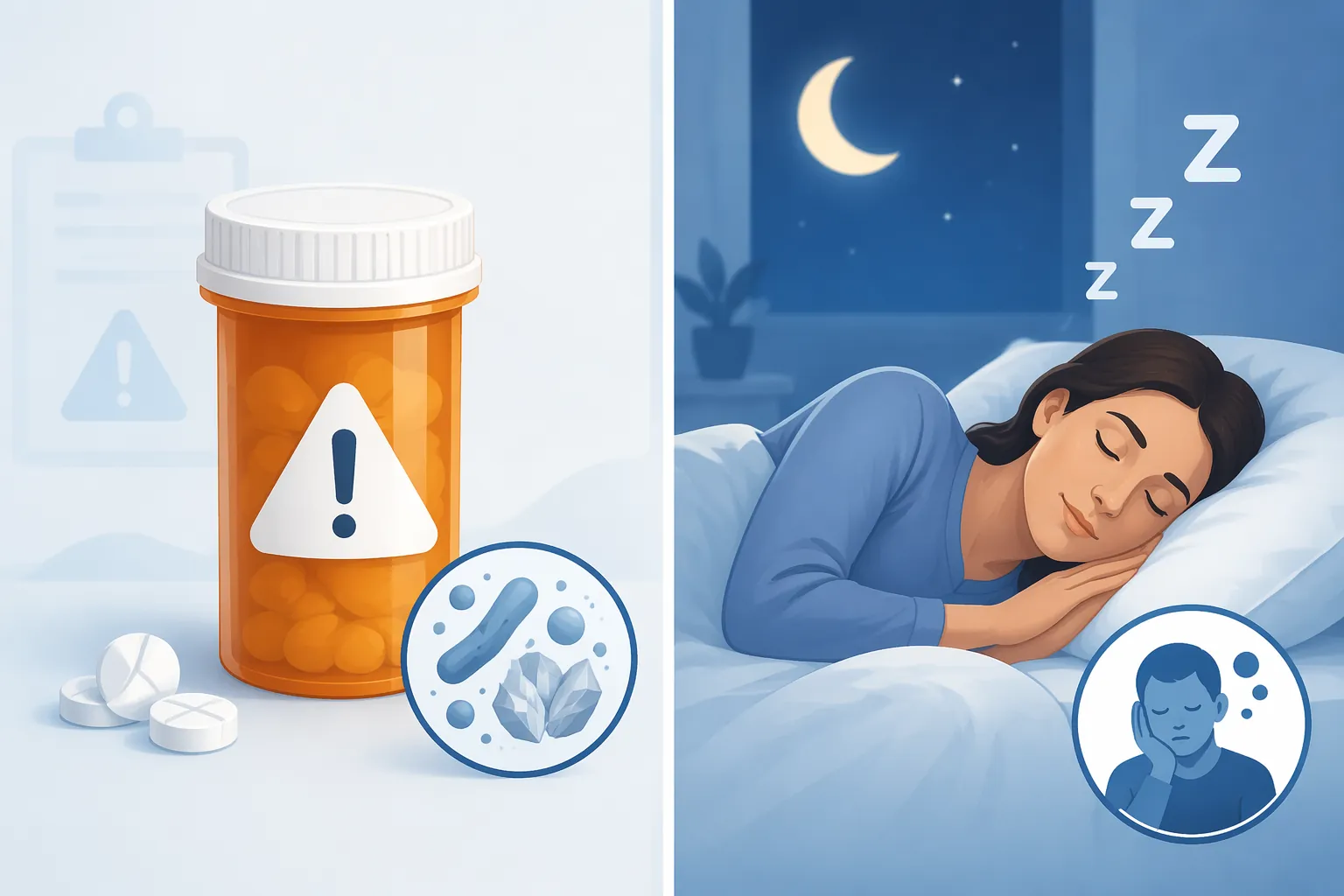
If you are searching for “zyrtec recall 2026 sleep side effects,” separate the two issues first: the July 2026 recall does not create new sleep side effects. It applies to specific lots of generic cetirizine HCl 5 mg tablets that may be cross-contaminated with ranitidine, and the stated concern is severe hypersensitivity or anaphylaxis in people allergic to ranitidine ingredients—not drowsiness, insomnia, or fatigue.[1]
Name-brand Zyrtec products are not the product named in the FDA notice. Neither are all cetirizine products, all allergy pills, or every bottle with a familiar blue-and-white label. The recall question starts with the bottle in your hand.
Check Whether Your Bottle Is Actually in the Recall
The FDA recall notice identifies four lots of cetirizine HCl 5 mg tablets, packaged in 100-count bottles, with NDC 16571-401-10, expiration 10/2028, manufactured by Unique Pharmaceutical Laboratories and distributed by Rising Pharma Holdings.[1]
| Bottle detail | Recalled product information |
|---|---|
| Product | Cetirizine HCl 5 mg tablets |
| Lot numbers | GY825029, GY825030, GY825031, GY825032 |
| Expiration | 10/2028 |
| NDC | 16571-401-10 |
| Package | 100-count bottle |
| Manufacturer | Unique Pharmaceutical Laboratories |
| Distributor | Rising Pharma Holdings |
| Recall reason | Potential cross-contamination with ranitidine |
Three mistakes are easy to make here. First, 5 mg is not the same as 10 mg. Second, generic cetirizine is not automatically name-brand Zyrtec. Third, the manufacturer and distributor names do not mean there are two separate recall problems; they describe different roles in the same product chain.
As of the FDA notice cited here, no adverse events had been reported.[1] That does not make the recall irrelevant, but it does keep the risk in the right category: a potential contamination-related allergy risk for a defined product, not evidence that cetirizine has suddenly changed how it affects sleep.
What Ranitidine Has to Do With This Recall
Ranitidine is the ingredient many people remember from Zantac. Earlier ranitidine coverage centered on NDMA contamination concerns and the market withdrawal of ranitidine products; that older story is not the same as this cetirizine recall.[2]
In this recall, ranitidine matters because a cetirizine product may have been cross-contaminated with it. The FDA’s stated concern is that people with allergies to ranitidine ingredients could have a severe allergic reaction, including anaphylaxis, if exposed.[1] That is a different pathway from feeling sleepy after taking cetirizine.
Drowsiness Is a Known Cetirizine Effect
If your main symptom is daytime sleepiness, heavy eyelids, slower focus, or feeling too sedated after taking cetirizine, the recall is probably the wrong explanation. Drowsiness is already part of cetirizine’s known side-effect profile.
Manufacturer-published clinical tolerability data for Zyrtec report somnolence in 14% of people taking Zyrtec compared with 6% taking placebo.[3] The NHS similarly treats drowsiness as a common cetirizine side effect, affecting more than 1 in 10 people.[4]
Dose also matters. StatPearls describes cetirizine-related somnolence as dose-related and more common at 10 mg than at 5 mg.[5] That does not mean everyone should change dose on their own, especially if cetirizine is being used for hives or another clinician-directed reason. It does mean a person taking a 10 mg tablet and feeling foggy should not assume a 5 mg recall explains the symptom.
The practical distinction is simple: the recall is identified by product details; drowsiness is identified by timing and tolerability. If sleepiness appears after regular cetirizine use, worsens with a higher dose, or improves when a clinician helps you adjust the medication plan, that pattern points toward cetirizine’s ordinary sedating effect rather than ranitidine cross-contamination.
Insomnia Can Happen, but It Is Not the Main Pattern
Some people report the opposite problem: they take cetirizine and feel wired, sleep becomes fragmented, or bedtime gets harder. That is plausible enough to take seriously, but it should not be treated as numerically comparable to drowsiness.
The NHS lists insomnia among uncommon cetirizine side effects.[4] The stronger public numbers are on sleepiness, not sleeplessness. Rare paradoxical sleep disruption has also been described in case-report-level medical literature, including cases where sleep symptoms resolved after cetirizine was stopped, but case reports are not the same as controlled trial rates.
That distinction matters for decision-making. A case report can show that a reaction is possible. It cannot show how often it happens in ordinary users or prove that a new recall explains a symptom across the population.
How to Sort the Two Risks Without Guessing
- Check the label first. Look for cetirizine HCl 5 mg, NDC 16571-401-10, a 100-count bottle, expiration 10/2028, and one of the four recalled lot numbers: GY825029 through GY825032.
- If the product details match, treat it as a recall issue. Contact a pharmacist, clinician, or the recall contact listed by the FDA, especially if you have any known ranitidine allergy concern.
- If the bottle does not match, evaluate sleepiness as a cetirizine tolerability issue. Timing, dose, other sedating medicines, alcohol use, shift work, and untreated sleep problems can all affect how noticeable the drowsiness feels.
- If insomnia is the concern, do not assume contamination. Track when the symptom started, when you take cetirizine, whether the dose changed, and whether symptoms improve after a clinician-approved change.
- If symptoms are severe, involve a clinician rather than trying to solve the recall and sleep questions with trial-and-error dosing.
For an older adult, a shift worker, someone driving early, or anyone caring for another person overnight, “common drowsiness” is still a real safety issue. It just belongs in the medication-effect column, not the contamination column.
One More Safety Note for Long-Term Users
In May 2025, the FDA required a warning about rare but severe itching after stopping long-term use of oral cetirizine or levocetirizine. The FDA identified 209 cases of this discontinuation pruritus.[6]
That warning is not a sleep-side-effect warning and it is not the July 2026 recall. It belongs here because many people asking about Zyrtec sleep effects are long-term users, and stopping suddenly can raise a different question than whether the medicine made them drowsy.
What to Do as of July 23, 2026
Last reviewed: July 23, 2026. Because this recall is recent, check the FDA recall page for updates before relying on a screenshot, social post, or partial list of lot numbers.[1]
If your bottle matches the recalled cetirizine HCl 5 mg product, ask a pharmacist or clinician what to do with it, and be especially careful if you have a ranitidine allergy concern. If your problem is drowsiness or rare insomnia, evaluate it as a cetirizine effect. The recall determines whether a specific contaminated product matters to you; the sleep symptoms come from cetirizine’s known profile.
References
- Unique Pharmaceutical Laboratories, Div. J.B. Chemicals & Pharmaceuticals Ltd., Issues Voluntary Nationwide Recall of Cetirizine Hydrochloride Tablets USP 5 mg Due to Cross Contamination with Ranitidine, FDA, https://www.fda.gov/safety/recalls-market-withdrawals-safety-alerts/unique-pharmaceutical-laboratories-div-j-b-chemicals-pharmaceuticals-ltd-issues-voluntary-nationwide
- Allergy medication recall 2026: What to know about the Zyrtec generic cetirizine recall, CBS News, https://www.cbsnews.com/news/allergy-medication-recall-2026-zyrtec/
- ZYRTEC® Clinical Tolerability, Kenvue Pro, https://kenvuepro.com/en-us/clinical-resources/tolerability
- Side effects of cetirizine, NHS, https://www.nhs.uk/medicines/cetirizine/side-effects-of-cetirizine/
- Cetirizine, StatPearls, https://www.ncbi.nlm.nih.gov/books/NBK549776/
- FDA requires warning about rare but severe itching after stopping long-term use of oral allergy medicines cetirizine or levocetirizine, FDA, May 2025, https://www.fda.gov/drugs/drug-safety-communications/fda-requires-warning-about-rare-severe-itching-after-stopping-long-term-use-oral-allergy-medicines
Safety & eligibility read
Cross-check against other interventionsExplore the mechanism
Next step
Spot an error or have clinical feedback?
Because this article covers clinical, medication, or safety information, we use a moderated correction channel instead of open public comments. Let us know if something about “Does the Zyrtec recall affect your sleep side effects?” needs a closer look.
Send feedback on this article