
Melatonin for Sleep: Evidence, Dosage, and Safety by Population
A mechanistic and evidence-graded guide to melatonin as a sleep aid — covering what it actually does in the body, what the clinical research shows by indication, how much to take across different life stages, and why safety profiles differ substantially for children, older adults, pregnant women, and perimenopausal women.

What Melatonin Does — and What It Doesn't
Melatonin is not a sleeping pill. It does not sedate you, does not block arousal pathways, and does not work the way antihistamines or benzodiazepines work. What it does is send a chemical signal to your brain that darkness has arrived and it is time to begin the transition toward sleep.
The mechanism runs through two receptor types — MT1 and MT2 — located in the suprachiasmatic nucleus (SCN), the brain's master circadian clock. MT1 receptor activation suppresses the SCN's wake-promoting output. MT2 activation helps shift the phase of the circadian rhythm itself. Together, these actions move your internal clock earlier or later, depending on when melatonin is administered.
Your body produces melatonin endogenously. The pineal gland begins releasing it roughly two hours before your habitual sleep time, triggered by the dimming of light detected by retinal photoreceptors. Production peaks in early childhood, remains high through adolescence, and declines progressively with age — a decline that accelerates significantly around perimenopause and continues into older adulthood.
This distinction matters enormously for setting realistic expectations. Melatonin taken at the wrong time relative to your circadian phase can actually delay rather than advance your sleep timing. Melatonin taken at the right time for the right indication can meaningfully shift when you fall asleep — but the effect is measured in minutes, not hours.
What the Clinical Evidence Actually Shows
The most widely cited summary of melatonin's sleep effects comes from a meta-analysis that found approximately a 7-minute reduction in sleep onset latency and an 8-minute increase in total sleep time versus placebo. These are statistically real effects. They are also modest — smaller than the effects of CBT-I, sleep restriction therapy, or stimulus control, and smaller than the effects of most prescription sleep medications.
The evidence picture changes substantially depending on the indication. Melatonin's strongest support is for circadian rhythm disorders, not for general insomnia.
| Indication | Evidence Strength | AASM or Guideline Position |
|---|---|---|
| Delayed Sleep-Wake Phase Disorder (DSWPD) | Strong | AASM-endorsed first-line treatment |
| Non-24-Hour Sleep-Wake Rhythm Disorder (N24SWD) | Strong | AASM-endorsed |
| REM Sleep Behavior Disorder | Strong | AASM-endorsed |
| Jet lag | Moderate | Supported by multiple RCTs; timing-dependent |
| Shift work disorder | Moderate | Evidence supports circadian shifting; modest effect on sleep quality |
| Chronic primary insomnia (sleep onset or maintenance) | Weak | 2017 AASM guideline recommended against use; European Insomnia Guideline concurs |
| Insomnia in adults ≥55 (prolonged-release formulation) | Moderate | Circadin 2 mg approved in EU and Australia for this indication; 74% showed no improvement in pivotal trial |
This does not mean melatonin is useless — it means that using it for chronic insomnia without a circadian component is unlikely to produce meaningful results, and that better-evidenced treatments exist for that condition.
How Much Melatonin to Take: Dosage by Population
The most important dosing fact that most melatonin packaging obscures: 0.3 mg of exogenous melatonin is enough to reach concentrations similar to the body's natural nighttime peak. Doses above 1 mg are supraphysiological — they produce blood levels far above what your pineal gland would ever generate. Most OTC products in the US sell 5 mg to 10 mg doses. These are not more effective. They are simply larger.
Higher doses do not produce better sleep outcomes in most populations. They do, however, produce longer-lasting elevated melatonin levels, which can cause morning grogginess, persist into the next day, and — in children — reach concentrations more than 100-fold above adult norms when doses exceed 10 mg.
Timing matters as much as dose. For hypnotic use (helping you fall asleep at your normal bedtime), melatonin should be taken 30 to 60 minutes before bed. For circadian phase-shifting (moving your sleep timing earlier, as in DSWPD or jet lag), it should be taken 3 to 4 hours before your desired sleep time — not immediately before bed.
Immediate-release (IR) formulations are appropriate for sleep onset difficulties. Extended-release (ER) formulations — such as Circadin 2 mg — are designed for sleep maintenance and are approved in Europe and Australia for adults 55 and older with primary insomnia.
| Population | Suggested Starting Dose | Timing | Notes |
|---|---|---|---|
| Healthy adults (hypnotic use) | 0.5–1 mg | 30–60 min before bed | Doses above 5 mg are supraphysiological; start low |
| Healthy adults (circadian shifting) | 0.5–3 mg | 3–4 hours before desired sleep time | For DSWPD, jet lag, shift work adjustment |
| Children ages 3–5 | 0.25–0.5 mg (max 1 mg) | 30–60 min before bed | Requires clinician supervision; pediatric use is off-label in the US |
| Children ages 6–12 | 0.5–1 mg (max 2 mg) | 30–60 min before bed | AASM weight-based dosing: 0.15 mg/kg for DSWPD |
| Adolescents 12+ | 0.5–3 mg (max 3 mg) | 30–60 min before bed or 3–4 hrs before for phase-shifting | Clinical supervision recommended |
| Adults ≥55 (insomnia) | 2 mg prolonged-release | 1–2 hours before bed | Circadin approved in EU/Australia; slowed CYP1A2 clearance prolongs half-life |
| Perimenopausal women | 0.5–3 mg low-dose | 30–60 min before bed | Biological rationale strong; robust RCT evidence in this population is limited |
| Pregnant or breastfeeding | Avoid | — | Insufficient human safety evidence; clinical consensus is avoidance |
Safety by Population
Melatonin's safety profile is not uniform across populations. The pharmacokinetic differences between a healthy adult, a child, an older adult, and a pregnant woman are significant enough that each group warrants separate consideration.
Healthy Adults
For most healthy adults, short-term melatonin use (one to two months) appears safe. The most commonly reported side effects are mild and transient: daytime drowsiness, headache, and dizziness. No tolerance has been documented in the clinical literature — unlike with antihistamine-based sleep aids, melatonin does not appear to lose effectiveness with regular use.
Two drug interactions warrant particular attention. CYP1A2 inhibitors — including fluvoxamine (an SSRI) — can substantially increase melatonin blood levels by slowing its hepatic metabolism. Combining melatonin with other CNS depressants, including alcohol, benzodiazepines, or sedating antihistamines, increases sedation risk.
Long-term safety data remain limited across all populations. An emerging cardiovascular signal from a preliminary study presented at the American Heart Association's 2025 Scientific Sessions found approximately 90% higher incidence of heart failure diagnosis over five years in adults with chronic insomnia who used melatonin long-term versus matched non-users. The researchers themselves acknowledged major confounders — including the fact that the database mixed countries where melatonin is prescription-only with countries where it is sold OTC, likely misclassifying many US users as non-users. This is a conference abstract, not a peer-reviewed study, and cannot be treated as establishing a causal risk. It is worth monitoring as research continues.
Children
Pediatric melatonin use requires more caution than most parents realize, for a reason that is counterintuitive: children naturally produce higher melatonin levels than adults before puberty. Adding exogenous melatonin on top of already-elevated endogenous production is pharmacologically more complex than supplementing in an adult whose natural production has declined.
The scale of pediatric melatonin ingestion in the US has become a genuine public health concern. Between 2012 and 2021, US poison control centers received reports of 260,435 pediatric melatonin ingestions — a 530% increase over that decade. The majority (83.8%) involved children aged five and under. Most cases were asymptomatic, but 14.7% of those who received healthcare were hospitalized, five children required mechanical ventilation, and two died — both under age two. Gummy formulations, which are visually indistinguishable from candy, are the highest-risk vector for accidental ingestion.
Dosing in children requires particular precision. Doses above 10 mg can produce melatonin concentrations persisting over 24 hours at more than 100 times adult norms. Even moderate doses can extend significantly beyond the intended sleep window.
There is an additional contamination-related risk specific to children: serotonin contamination in melatonin supplements poses a risk of serotonin syndrome in children who are concurrently taking SSRIs or triptans. (More on the contamination data in the section below.)
Older Adults
In older adults, the primary pharmacokinetic concern is slowed metabolism. Approximately 90% of melatonin is cleared by the CYP1A2 enzyme in the liver. CYP1A2 activity declines with age, which means the same dose that clears in roughly 1–2 hours in a younger adult may persist significantly longer in someone over 65. This extended half-life increases the risk of next-day grogginess and — more importantly — fall risk.
Fall risk is a documented clinical concern in older adults taking sedating sleep aids. While melatonin is not explicitly listed in the American Geriatrics Society Beers Criteria (which identifies potentially inappropriate medications for older adults), the sedative effects and prolonged clearance in this population are flagged in the clinical literature alongside benzodiazepine-class sedatives.
For older adults with primary insomnia, the 2 mg prolonged-release formulation (Circadin) is the best-studied option and carries regulatory approval in Europe and Australia specifically for adults 55 and older. Even so, the pivotal trial data showed no improvement in sleep quality for 74% of patients — a reminder that lower endogenous melatonin production with age does not automatically mean supplementation will restore sleep.
Pregnant and Breastfeeding Women
The clinical consensus here is unambiguous: pregnant and breastfeeding women should avoid melatonin. This is not a precautionary overstatement — it reflects a genuine absence of adequate human safety data.
Melatonin crosses the placenta. It also transfers into breast milk: for each 1 mg taken by a breastfeeding mother, breast milk melatonin concentration increases by approximately 0.4–1 µg/L. The downstream effects on fetal and infant development have not been adequately studied in humans. Until that evidence exists, avoidance is the appropriate recommendation.
Perimenopausal Women
Perimenopause involves a significant decline in endogenous melatonin production, which provides a biologically coherent rationale for low-dose supplementation. Sleep onset difficulties are among the most common complaints during this life stage, and the circadian disruption associated with declining melatonin is a plausible contributor.
However, the honest position here is that robust, dedicated RCT evidence specifically in perimenopausal women is limited. The biological rationale is strong; the clinical evidence base to support specific dosing recommendations in this population is not yet at the same level as the evidence for DSWPD or jet lag. Low-dose use (0.5–3 mg) is reasonable given the safety profile in healthy adults, but expectations should be calibrated accordingly.
The Supplement Label Accuracy Problem
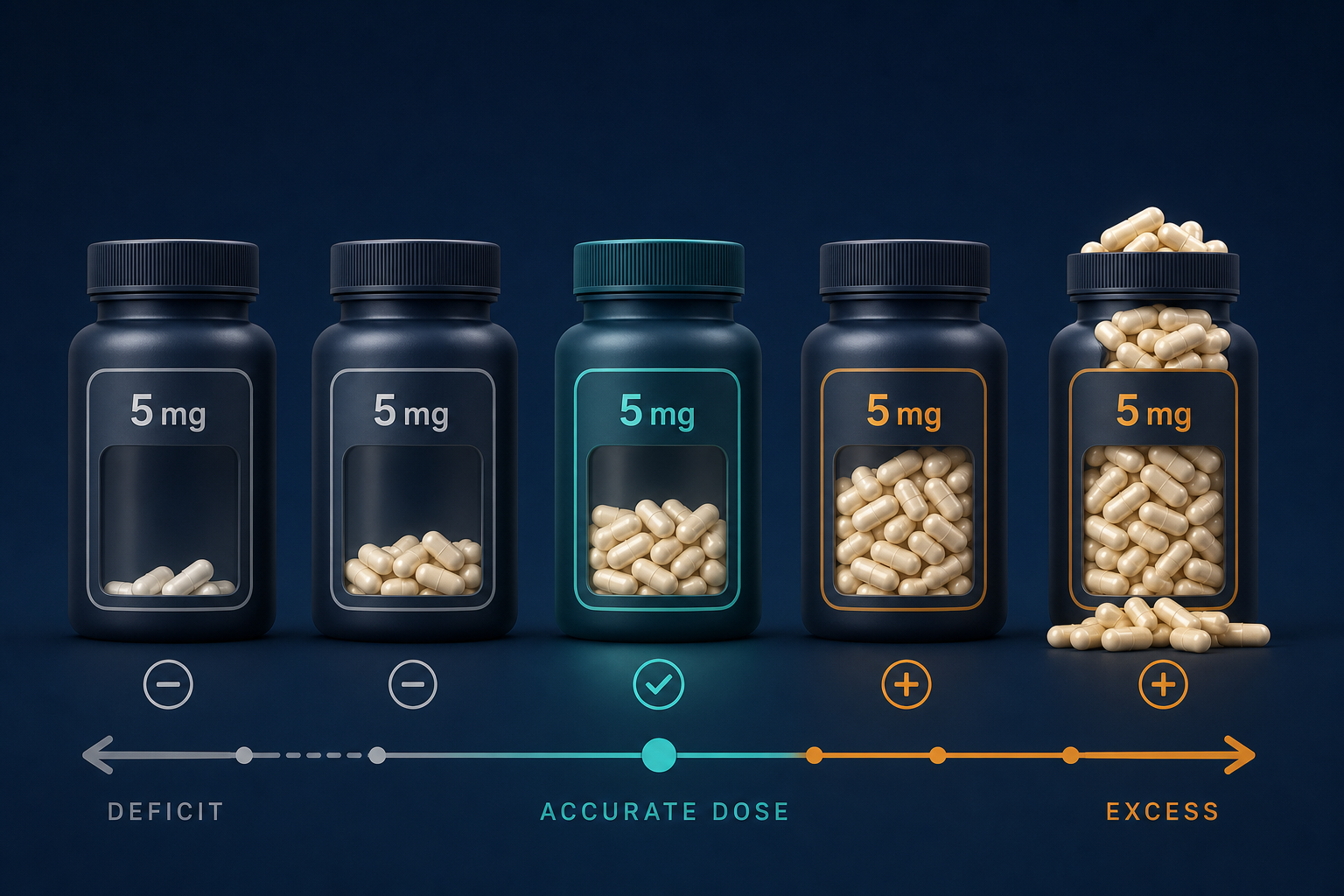
Every dosing recommendation in this article is complicated by a practical problem: the dose printed on a melatonin supplement label may not reflect what is actually in the product.
In the US, melatonin is classified as a dietary supplement — not an FDA-regulated drug. This means manufacturers are not required to demonstrate safety or efficacy before selling their products, and the FDA does not review products for label accuracy before they reach store shelves. The agency can act after the fact if a product is found to be unsafe or mislabeled, but there is no pre-market quality gate.
The contrast with other markets is stark. In the European Union, Circadin (2 mg prolonged-release melatonin) is a prescription drug approved only for adults 55 and older. In Canada, melatonin is a natural health product requiring a Drug Identification Number (DIN). In the UK, it is a prescription medicine. In the US, anyone can buy 10 mg gummies at a grocery store checkout.
The label accuracy data are sobering. A study of 31 melatonin supplements purchased from Canadian pharmacies and grocery stores found that actual melatonin content ranged from 83% below to 478% above the labeled amount. More than 71% of products failed to meet their label claim within a 10% margin. Lot-to-lot variability within the same product reached 465% — meaning the same bottle bought twice could contain dramatically different amounts.
That study also found serotonin in 8 of 30 products, at concentrations of 1 to 75 µg. This contamination finding is specific to the Canadian market products tested. A subsequent survey of US products did not replicate the serotonin finding — so the contamination risk should not be presented as universal, but the label inaccuracy pattern is consistent across markets.
The most recent and comprehensive US data come from an FDA study of 110 melatonin supplements marketed for children, purchased in 2023. That analysis — the largest of its kind conducted in the United States — found doses ranging from 0% to 667% of the labeled amount. A product claiming to contain 1 mg might deliver nothing, or it might deliver nearly 7 mg.
- Choose products with USP, NSF International, or ConsumerLab verification marks.
- Avoid gummy formulations if using in or around children — they are the highest-risk vector for accidental overdose.
- Start with the lowest available dose and verify your actual response before assuming the label is accurate.
- Be cautious with products that have unusually complex formulations — simpler products (melatonin plus a filler) showed less variability in the Canadian study.
When Melatonin Is Not the Right Choice
Melatonin is most useful for a specific and relatively narrow set of sleep problems: those involving circadian misalignment. If your sleep difficulty is chronic insomnia — defined as trouble falling or staying asleep at least three nights per week for at least three months, causing meaningful daytime impairment — melatonin is not the first-line treatment. CBT-I is.
CBT-I (Cognitive Behavioral Therapy for Insomnia) is the treatment endorsed as first-line by the AASM, the American College of Physicians, and the European Sleep Research Society for chronic insomnia disorder. It produces durable improvements in sleep onset latency, wake after sleep onset, and sleep efficiency — effects that persist after treatment ends, unlike pharmacological approaches. For a full explanation of how CBT-I works and what it involves, see the Chronic Insomnia Disorder guide.
Melatonin should also not be the first intervention for sleep difficulties that have straightforward behavioral explanations — irregular sleep schedules, excessive light exposure in the evening, caffeine timing, or insufficient wind-down time. These are addressed through evidence-based sleep hygiene practices that should precede or accompany any supplement use.
Seek professional evaluation if any of the following apply:
- Sleep difficulty has persisted for more than three months despite behavioral changes.
- You have significant daytime impairment — cognitive difficulties, mood changes, or inability to function at work or home.
- You or a bed partner have noticed snoring, gasping, or breathing pauses during sleep — these may indicate sleep apnea, which melatonin will not address.
- You are considering melatonin for a child, particularly one with neurodevelopmental conditions — pediatric use requires clinical supervision.
- You are pregnant, breastfeeding, or taking medications that interact with CYP1A2 pathways.
Melatonin is a legitimate tool for a specific job. Knowing what that job actually is — adjusting circadian timing, not sedating the brain into sleep — is what separates useful supplementation from a bottle that sits on your nightstand doing very little.
Explore the mechanism
Next step
Spot an error or have clinical feedback?
Because this article covers clinical, medication, or safety information, we use a moderated correction channel instead of open public comments. Let us know if something about “Melatonin for Sleep: Evidence, Dosage, and Safety by Population” needs a closer look.
Send feedback on this article