
How Would Permanent Daylight Saving Time Affect Mississippi Sleep?
The first thing permanent daylight saving time would change in Mississippi is not bedtime. It is the morning.
In deep winter, earlier projected Mississippi sunrise times under permanent daylight saving time put northern counties around 8:07 a.m., central Mississippi around 7:59 a.m., and the Gulf Coast around 7:52 a.m. Those figures came from 2022 projections and the exact 2026–2027 clock times could shift by a few minutes, but the pattern is the point: much of the state would start ordinary school and work days before sunrise for weeks at a time.[1]
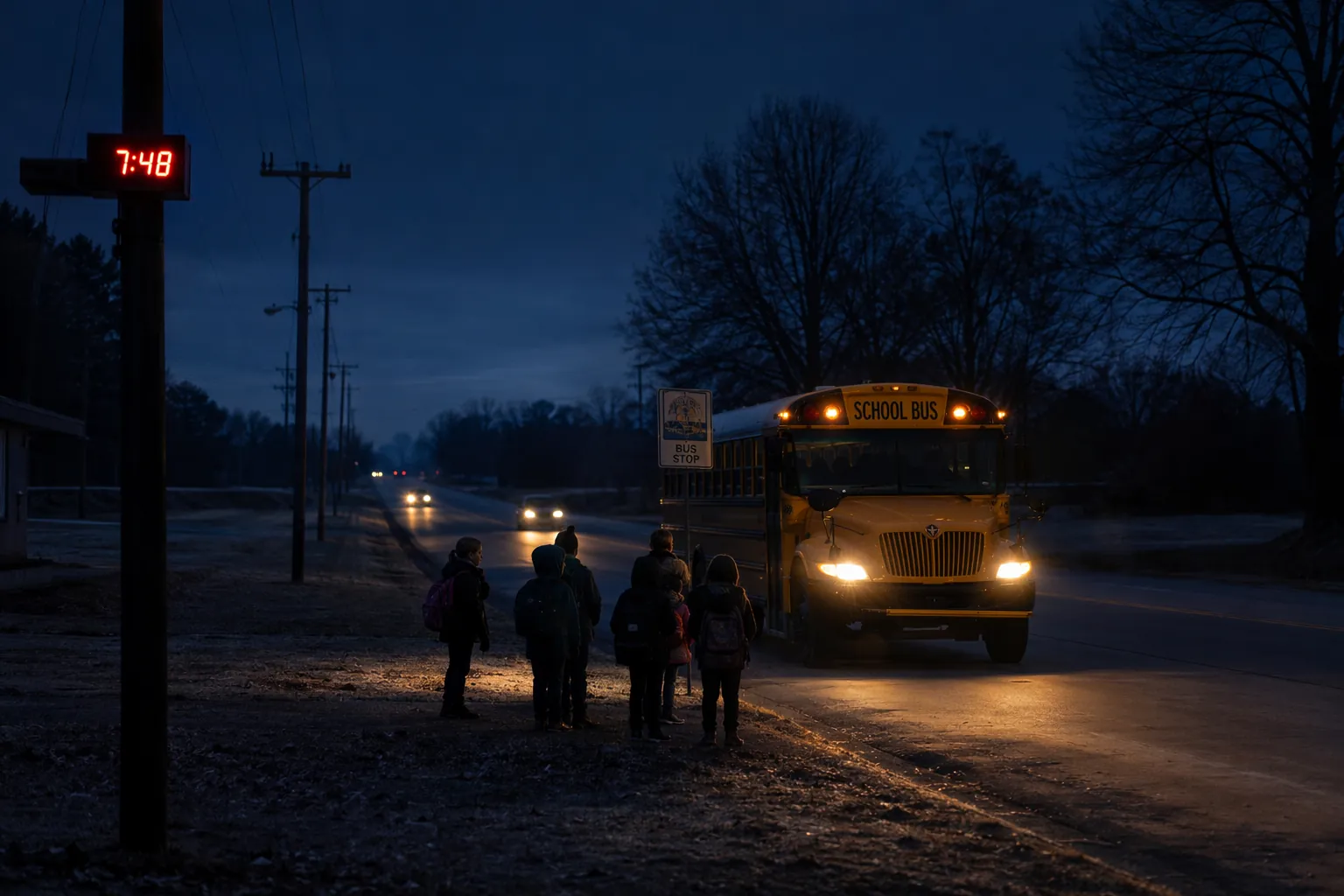
That is the part that gets flattened when the debate is reduced to “no more clock changes.” No one has to be talked into liking a brighter winter evening. A 5:30 p.m. sunset instead of a 4:30 p.m. one can feel like a small mercy after work, after school activities, or a long day indoors. The appeal is real.
But in Mississippi, the trade is not just one pleasant hour of evening light. It is also repeated winter mornings when children wait for buses in the dark, teenagers walk into first period before their brains have had a real morning light signal, and adults drive to work because the clock says the day has started even though the sun has not caught up.
What Would Actually Happen In Mississippi
If federal law allowed permanent daylight saving time, Mississippi already has a trigger law from 2021 that would put the state on permanent DST without needing another state vote. The recent House passage does not make the change immediate; the Senate still matters, and federal law still has to change before Mississippi’s trigger can operate.[2]
The practical result would be simple: winter clock time would move one hour later than standard time. The sun would set later in the afternoon, but sunrise would also move later in the morning.
| Mississippi Area | Approximate Deep-Winter Sunrise Under Permanent DST | What That Means On School And Work Days |
|---|---|---|
| Northern counties | Around 8:07 a.m. | Many bus stops, commutes, and early classes begin before sunrise |
| Central Mississippi | Around 7:59 a.m. | Morning routines stay dark well into the start of the work and school day |
| Gulf Coast | Around 7:52 a.m. | The coast is somewhat earlier, but still near 8 a.m. in deep winter |
Mississippi’s location makes this sharper than it may sound in a national headline. The state sits toward the western side of the Central Time Zone. Places farther east in the same time zone see the sun earlier. Mississippi already carries later Central Time sunrises; permanent DST would add another hour to that winter morning delay.
For a household, that does not show up as an astronomy fact. It shows up as a child being told to hurry before dawn, a parent scanning a shoulder with headlights on, a teacher starting the day with a room full of bodies whose clocks are still being asked to wake in the biological night.
The Sleep Problem Is Chronic Morning Darkness, Not Just The Lost Hour
The familiar spring clock change is disruptive. But permanent DST raises a different sleep question: what happens when the social clock stays late all winter, while school and work start times remain fixed?
Sleep medicine groups generally prefer permanent standard time because morning light is one of the body’s strongest timing signals. Morning light helps anchor wake time. Evening light pushes the body clock later. Permanent daylight saving time does both of the wrong things for winter sleep: it gives more light at the end of the day, when light can delay sleep timing, and withholds light in the morning, when the body needs help shifting into daytime.
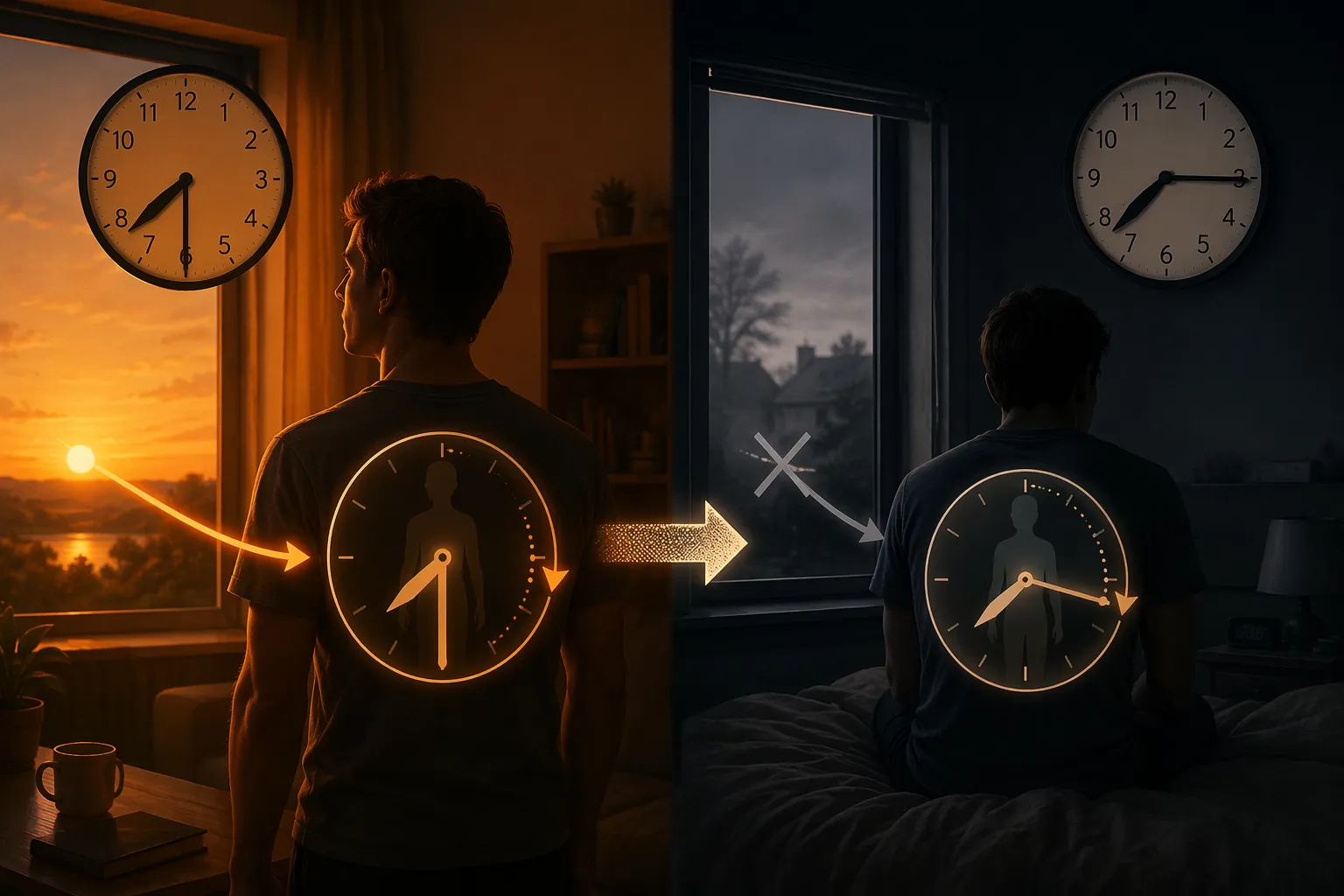
The American Academy of Sleep Medicine’s position statement puts this more bluntly: daylight saving time can produce a “permanent phase delay,” meaning the body clock is pushed later relative to social demands. The same statement cites evidence that the human circadian system does not simply adjust to daylight saving time even after months of exposure.[3]
That matters because the Mississippi question is not whether people can survive a darker Monday. Of course they can. The question is what happens when January and February mornings repeatedly ask people to be awake, alert, learning, driving, and working before the sun has supplied the signal their biology uses to start the day.
Students Carry More Of The Cost Than The Debate Usually Admits
Teenagers are already mismatched with early school schedules because adolescent sleep timing naturally runs later. Permanent DST would not create that problem, but it would lean on it.
A study of high school students after the spring shift to daylight saving time found that teens lost an average of 32 minutes of sleep per night and accumulated 2 hours and 42 minutes of sleep debt across the school week.[4] That study measured an acute transition, not Mississippi under permanent DST. Still, it is useful because it shows how quickly a one-hour clock change can become measurable sleep loss in students when school start times do not move with biology.
Permanent DST would not mean students lose exactly 32 minutes every night all winter. The research does not support that kind of Mississippi-specific number. The more careful conclusion is also the more worrying one: when the clock is set later year-round, the same kind of misalignment that shows up after the spring transition can become a repeated weekday condition instead of a short-term adjustment.
For parents, the visible concern is safety in the dark. For sleep, the quieter concern is timing. A student can be in the building on time and still be biologically out of step with the schedule. Darker mornings make it harder for light to pull the body clock earlier; brighter evenings make it easier for the body clock to drift later.
The National Health Evidence Points The Same Direction
The Mississippi sunrise problem is local. The health evidence against permanent DST is broader.
A 2025 Stanford Medicine report on modeling by Jamie Zeitzer and colleagues estimated that permanent daylight saving time would leave the national obesity burden 0.51 percentage points higher and the stroke burden 0.04 percentage points higher than permanent standard time. The same report translated those modeled differences to about 1.7 million more people with obesity and 220,000 more stroke cases nationally.[5]
That is not a Mississippi forecast. It should not be read as a county-by-county prediction for Jackson, Tupelo, Meridian, or Gulfport. Its value here is narrower: it supports the same biological judgment sleep clinicians have been making for years, that standard time better matches human circadian timing than daylight saving time.
The professional consensus is not limited to one sleep society. The Coalition for Permanent Standard Time includes the American Academy of Sleep Medicine, National Sleep Foundation, American Medical Association, National PTA, and more than 20 other organizations backing permanent standard time over permanent daylight saving time.[6]
That consensus does not mean every person will feel worse under permanent DST. Some people value evening light enough that they would accept darker mornings. But sleep health is not just a preference survey. It depends on when light hits the eye, when melatonin and alertness are being signaled, and whether school and work clocks ask people to perform before their internal day has properly begun.
We Have Tried The Dark-Morning Version Before
The United States has already had a real-world warning about permanent daylight saving time. In 1974, the country tried extended year-round DST during the energy crisis. The experiment was reversed within a year, and public support reportedly fell from 79% to 42%, with parents’ concern about children traveling to school in darkness becoming a major political force.[3]
That history is not a perfect match for Mississippi in 2026. School transportation, work patterns, and public lighting have changed. But the complaint that undid the experiment is still recognizable: winter evening light sounded better in theory than it felt when families had to start the day in the dark.
The often-repeated claim about eight Florida schoolchildren killed during that period appears in congressional-history discussions, but it is not the strongest basis for judging Mississippi’s sleep effects unless the exact attribution is being examined directly. The sturdier lesson is the one documented across the broader debate: support for permanent DST can look high before people live through the dark mornings.
What Changes For Your Mornings And Evenings
For a Mississippi household, permanent DST would feel uneven. The afternoon benefit is obvious. The morning cost is concentrated on people with the least control over their schedules.
- Evenings: winter sunsets would come an hour later by the clock, giving more usable daylight after school or work.
- Mornings: sunrise would also come an hour later by the clock, pushing deep-winter sunrise close to or past 8 a.m. in much of Mississippi.[1]
- School commutes: more bus stops, drop-offs, and first-period arrivals would happen before sunrise for part of the school year.
- Sleep timing: later evening light would tend to delay the body clock, while darker mornings would make it harder to advance the clock earlier.[3]
- Adjustment: the issue would not be one rough transition weekend, but repeated winter misalignment between social time and solar time.
There are ways to soften daylight saving disruption in the short term, especially around the spring transition. Sleep timing, morning outdoor light, and evening light control can help; readers who want practical steps can use this guide to daylight saving sleep adjustment. But mitigation is not the same as making permanent DST the healthier clock.
For the broader evidence beyond Mississippi, see Permanent daylight saving time damages sleep and health. For the student-specific side, Why permanent daylight saving time harms student sleep goes deeper into adolescents, school timing, and morning light.
The Practical Answer For Mississippi
Permanent daylight saving time would give Mississippi later winter sunsets and end the twice-yearly clock change. Those are real benefits, especially for people who feel the early winter dark closing in after work.
The sleep cost is that Mississippi would also move deep-winter sunrise toward 8 a.m. or later across much of the state, layering recurring morning darkness onto fixed school and work schedules. Because morning light is the healthier anchor for circadian alignment, sleep medicine organizations favor permanent standard time instead of permanent daylight saving time.[3][6]
So the Mississippi sleep answer is not that people cannot handle a clock change. It is that permanent DST would move the harder part of winter onto the weekday morning, when children, commuters, teachers, and shift-bound workers have the least room to choose a better schedule.
References
- Here’s what permanent daylight saving time would mean for Mississippi sunrises, sunsets, WLBT, 2022
- Will Congress make daylight saving time permanent? What to know in Mississippi, Clarion Ledger, July 15, 2026
- Daylight saving time: an American Academy of Sleep Medicine position statement, Journal of Clinical Sleep Medicine, 2020
- Study shows that teens lose sleep after change to daylight saving time, American Academy of Sleep Medicine
- Permanent daylight saving time would be bad for our health, study finds, Stanford Medicine, 2025
- Sleep experts push for adoption of permanent standard time for public health, safety and efficiency, American Academy of Sleep Medicine
Read the full guide: Permanent daylight saving time's unequal burden on sleep