
The overnight mistake to avoid
Sleeping during a tornado watch can be reasonable. The mistake is treating an outdoor siren as an indoor alarm or assuming you can make up the gap after you are already half asleep. The safer model is simple: build an alert chain that can wake you inside the house, then go to bed with a plan.
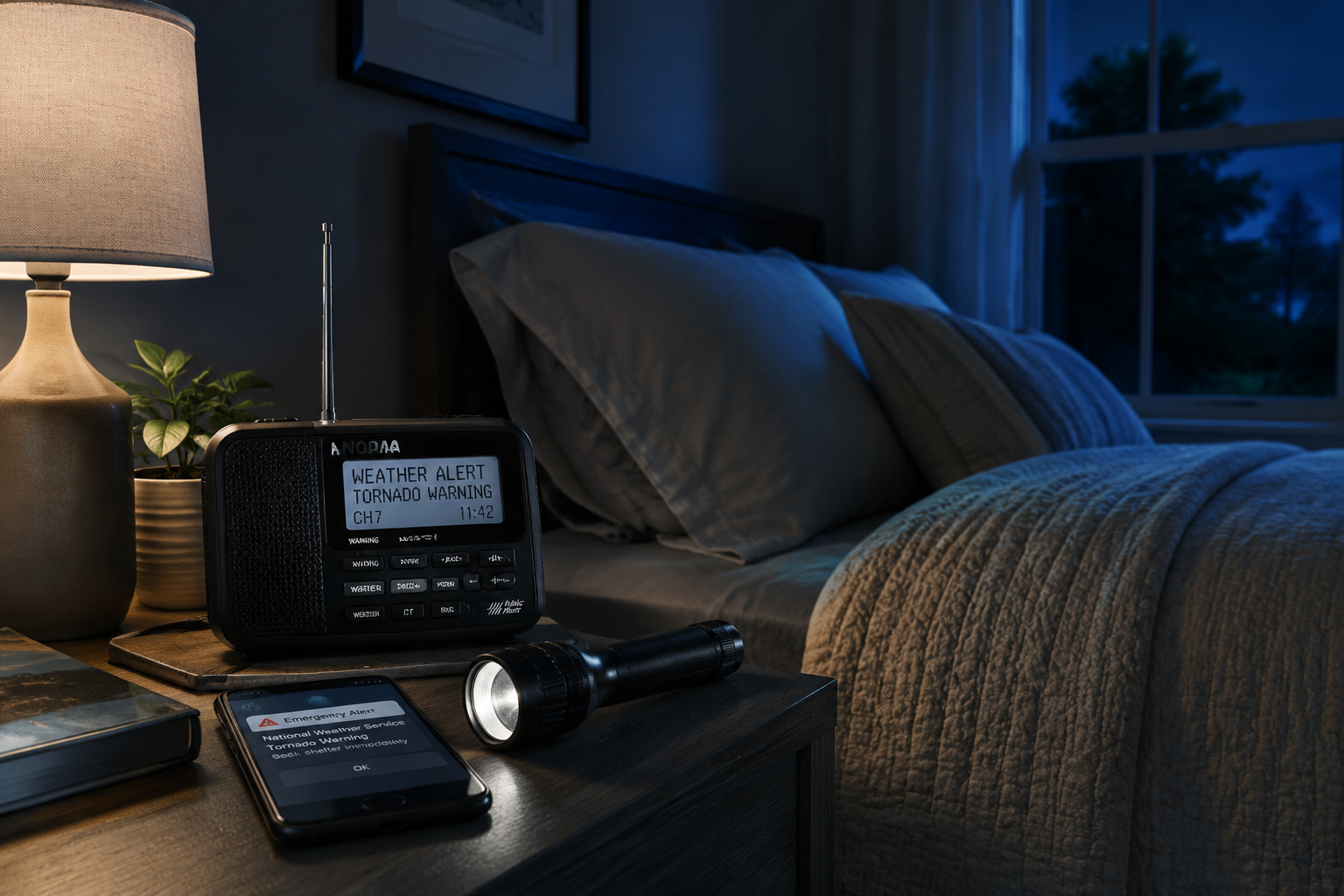
Nighttime tornadoes are a bigger problem than daytime ones. One widely cited analysis found that 27% of tornadoes happen at night but account for 39% of tornado deaths, and that nighttime tornadoes are about 2.5 times more deadly than daytime tornadoes. That is roughly 1 in 20 nighttime tornadoes versus 1 in 50 daytime tornadoes ending in death.[1]
Lead time helps, but it is not a promise. National warning data cited by weather outlets put average tornado warning lead time for EF3-plus storms around 13 to 16 minutes, with 97% of EF3 to EF5 tornadoes warned before impact. Some storms still give less than 10 minutes, so the useful question is not whether you will have plenty of time; it is whether the alarm will actually reach you while you are asleep.[2]
Build the wake-up chain before bed
The load-bearing setup is redundant and indoors. A NOAA Weather Radio with battery backup should be on and audible, and Wireless Emergency Alerts should be enabled on your phone. Those are the systems designed to reach a sleeping household. Outdoor warning sirens are for people outside, not for penetrating walls and waking someone in bed.[3]
- Keep the NOAA Weather Radio near the bed, with fresh batteries or other backup power.
- Make sure Wireless Emergency Alerts are turned on and the phone is not set so quietly that it cannot wake you.
- Put a flashlight, shoes, and your phone within arm's reach so you do not have to search in the dark.
- Keep a blanket, sleeping bag, or mattress available for cover once you reach the safest interior spot.[4]
Watch versus warning
| Alert | What it means | What to do |
|---|---|---|
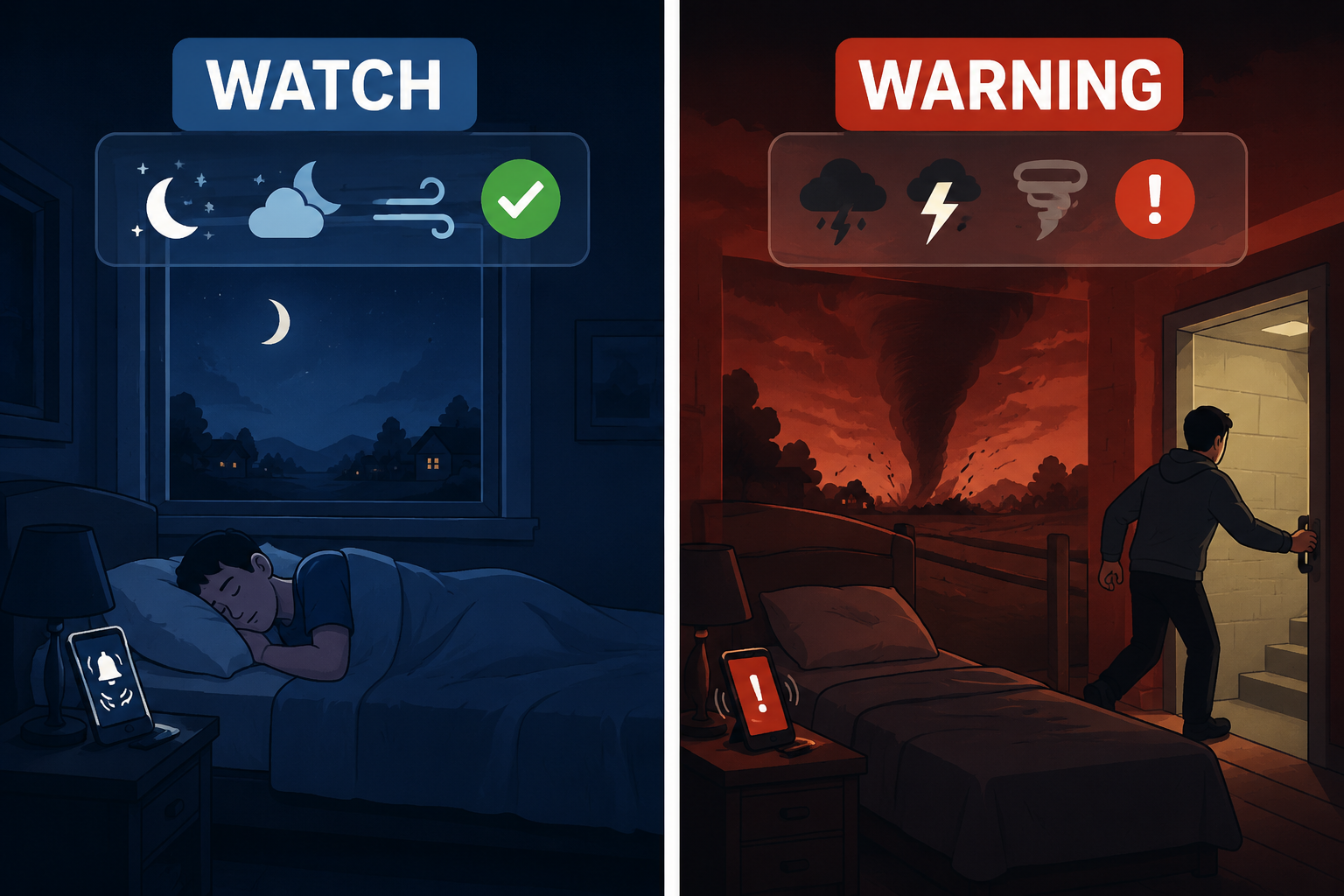
| Tornado watch | Conditions are favorable for tornadoes. | Sleep if you want to, but keep alerts active and your shelter plan ready. |
| Tornado warning | A tornado has been detected or indicated. | Wake everyone immediately and shelter at once in the safest interior location you have.[4] |
That distinction is the whole night-shift problem in one sentence. A watch is a permission slip to rest with alarms on; a warning is the moment the rest stops. There is no useful middle ground where you keep checking radar from bed.
If you sleep in a mobile or manufactured home
This is where the overnight plan often changes. The risk is not just that mobile homes are vulnerable; it is that the safest answer may be to sleep somewhere sturdier before storms arrive. One report tied 40% of tornado fatalities in the Southeast to about 6% of U.S. housing stock, much of it mobile and manufactured homes, and noted that even weaker tornadoes can destroy mobile homes.[1] If your shelter is not realistically reachable from bed in the few minutes a warning might give you, it is not an overnight plan.
A calm pre-bed checklist
- Check that the NOAA Weather Radio has power and volume set for overnight use.
- Confirm Wireless Emergency Alerts are enabled on the phone.
- Put shoes, flashlight, and phone beside the bed.
- Keep a blanket, sleeping bag, or mattress ready for the safest interior location.[4]
- If you live in a mobile home, know the sturdier place you will go before you go to sleep.
If the bigger problem is the sleep disruption that follows a disaster scare rather than the warning itself, a related guide on Earthquake Anxiety Keeping You Awake? How to Finally Sleep covers the sleep side of that problem.
References
- "Nighttime Tornadoes Are More Likely To Be Deadly" — The Weather Channel, 2026-03-09 — weather.com/storms/tornado/news/2026-03-09-tornado-night-nighttime-deadly-south
- "Nighttime tornadoes: How you can stay safe from dangerous, nocturnal twisters" — Fox Weather — foxweather.com/learn/nighttime-tornadoes-how-you-stay-safe
- "Severe Storms Overnight Safety Rules" — NWS Louisville — weather.gov/lmk/ref_night
- "Safety Guidelines: During a Tornado" — CDC — cdc.gov/tornadoes/safety/
Comments
Join the discussion with an anonymous comment.