
Mechanism explainer
Why AHRQ Research Grant Cancellations Matter for Sleep Health
AHRQ was the only federal agency funding research on clinician fatigue, inpatient sleep, and sleep disorder screening guidelines. With its grants cancelled and staff gutted, the evidence pipeline that informs patient safety and sleep health has no replacement.
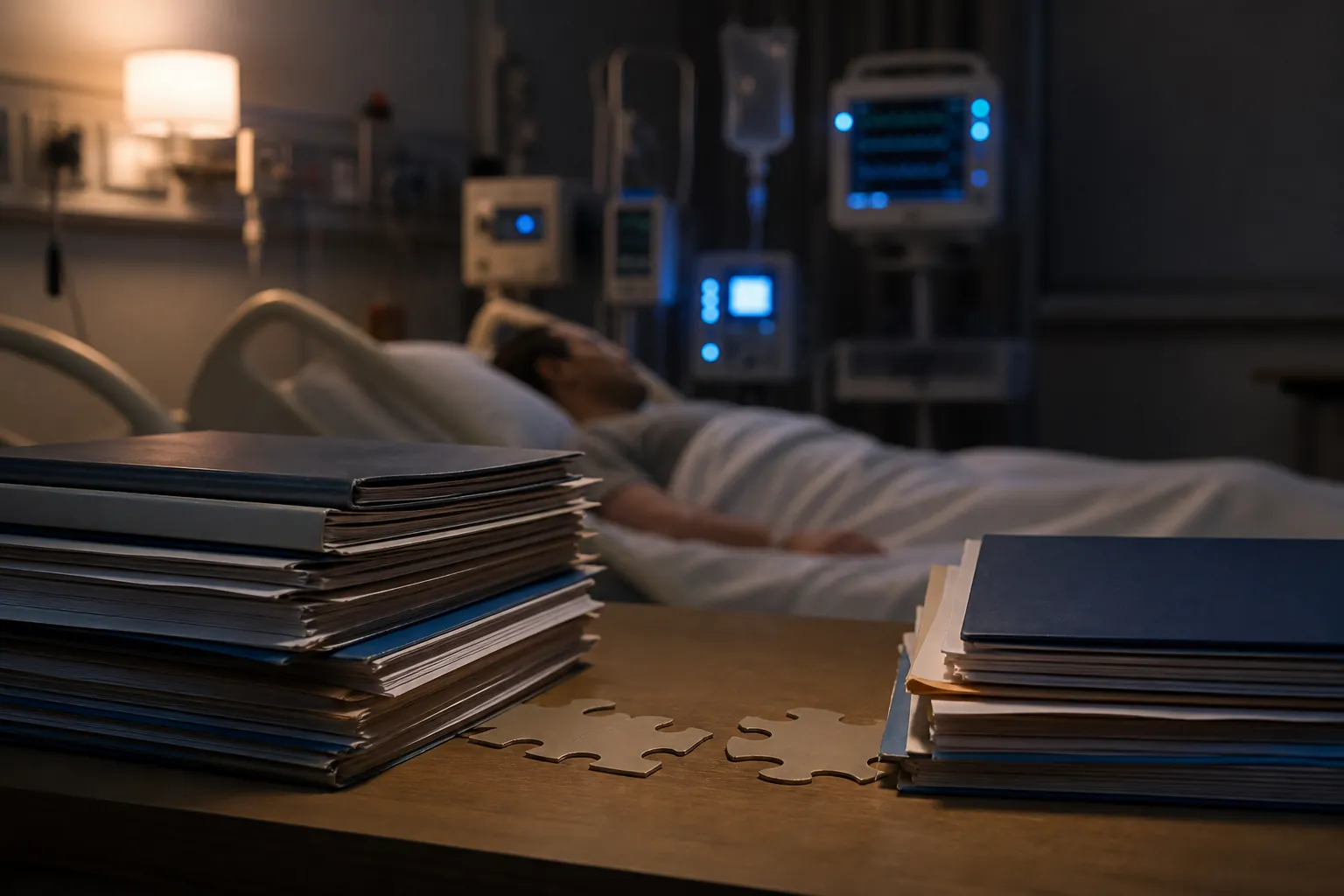
A hospital can tell a patient to rest and then wake her every few hours for vitals, medication, alarms, hallway noise, and lab draws. It can ask a resident to recognize a subtle decline near the end of an overnight shift. It can discharge an older adult after several fragmented nights and expect recovery to continue at home. Sleep is not a soft comfort issue in these moments. It is part of whether care is safe enough to work.
That is why the 2025 AHRQ research grant cancellations matter for sleep health. The Agency for Healthcare Research and Quality was not the federal government’s basic sleep-science laboratory. It was the agency that studied what happens when sleep, fatigue, staffing, hospital routines, and clinical decisions collide inside real care settings. When that grant engine stopped, the loss was not an abstract subtraction from a spreadsheet. It removed a working pathway for asking whether the way care is delivered helps people recover or quietly makes them more vulnerable.
The sleep problem AHRQ was built to see
Most federal sleep research fits into recognizable lanes: biology, disease mechanisms, surveillance, devices, drugs, or public health messaging. AHRQ’s lane was different. It funded health-services research: the patient-safety studies, evidence reviews, implementation tools, surveys, and training programs that translate medical knowledge into care that can survive contact with a busy ward, a rural clinic, a nursing station, or a primary care appointment.
That distinction matters because sleep-related harm in healthcare rarely arrives labeled as a sleep disorder. It may show up as a medication error after a long shift, a hospitalized patient whose delirium risk rises after several broken nights, a sleep apnea screening question that never gets asked, or a preventive-care recommendation that cannot be updated because the evidence review staff and grant pipeline are gone.
AHRQ’s patient-safety materials describe fatigue and sleep deprivation as an unsafe condition and a latent hazard in healthcare, not merely as a wellness problem for clinicians. Its primer points to the 2006 National Academy of Medicine report on resident duty hours, funded by AHRQ, as a foundational document in making that connection explicit.[1]
Clinician fatigue was treated as a patient-safety exposure
The resident at hour 25 is not just tired. The safety question is whether the system has placed that resident, and the patients waiting for decisions, into a condition known to increase risk. AHRQ-funded evidence helped make that question harder to ignore.
AHRQ’s patient-safety primer cites the classic Landrigan resident-shift study, funded by AHRQ, which found significantly more serious medical errors when residents worked shifts longer than 24 hours compared with shorter schedules.[1] The point is not that every error can be traced to one sleepless clinician. The point is that shift design became a measurable safety variable, not a private endurance test.
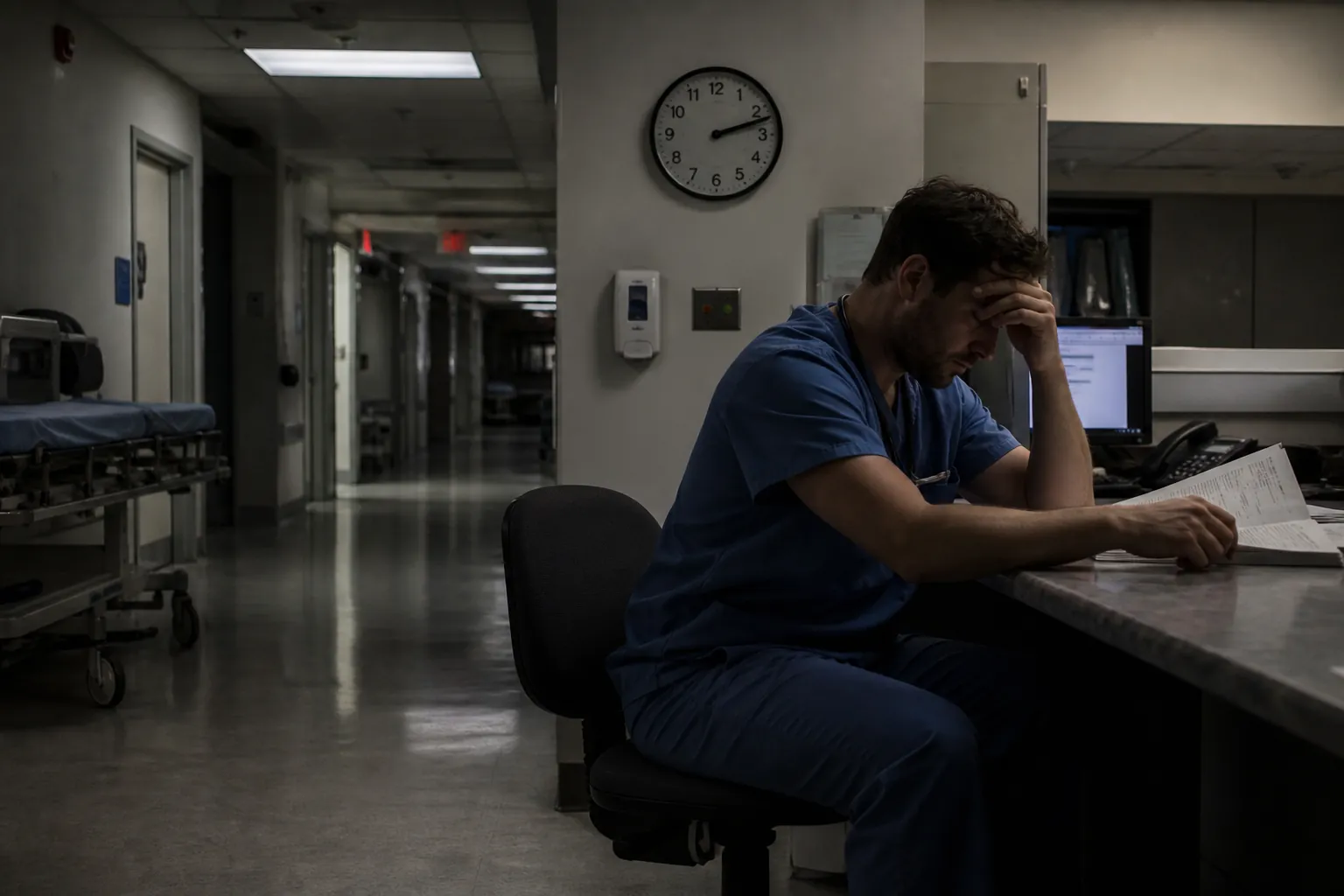
Nursing research followed the same practical line. AHRQ’s primer cites nurse-fatigue research showing increased nursing errors when shifts last longer than 12 hours, and a systematic review reporting that 75% of shift workers experienced fatigue while on duty.[1] Those figures matter because nurses are often the people who notice subtle changes, catch medication problems, help patients move safely, and decide whether a nighttime interruption is necessary or avoidable.
This is where sleep health becomes patient safety rather than personal advice. A resident can be told to sleep more. A nurse can be told to practice self-care. But if the research question is whether shift length, handoff design, staffing, and fatigue management change error rates, someone has to fund studies that examine care delivery itself. AHRQ was the federal agency with that job.
Hospital sleep was studied as part of recovery, not ambience
For patients, the hospital night is often a sequence of small intrusions: blood pressure cuff, hallway light, monitor alarm, roommate noise, medication timing, a door opening just as sleep finally begins. None of those interruptions may look dramatic on its own. Together, they can leave a recovering person cognitively foggy, anxious, weak, or less able to participate in care the next day.
AHRQ funded work that treated inpatient sleep as something hospitals could measure and improve. One example is SLEEPkit, an AHRQ-funded patient-facing sleep promotion toolkit for hospitalized patients. The project, led by Boston College researchers, received $297,576 under grant R21 HS024330 and randomized 126 hospitalized patients using wrist-sensor tracking.[2]
This grant was completed in 2018, so it should not be misdescribed as one of the grants cancelled in 2025 or 2026. Its importance is different: it shows the kind of applied sleep-safety work AHRQ could support. The question was not whether sleep is biologically useful. It was whether a practical tool could assess and promote sleep for patients inside the constraints of hospitalization.
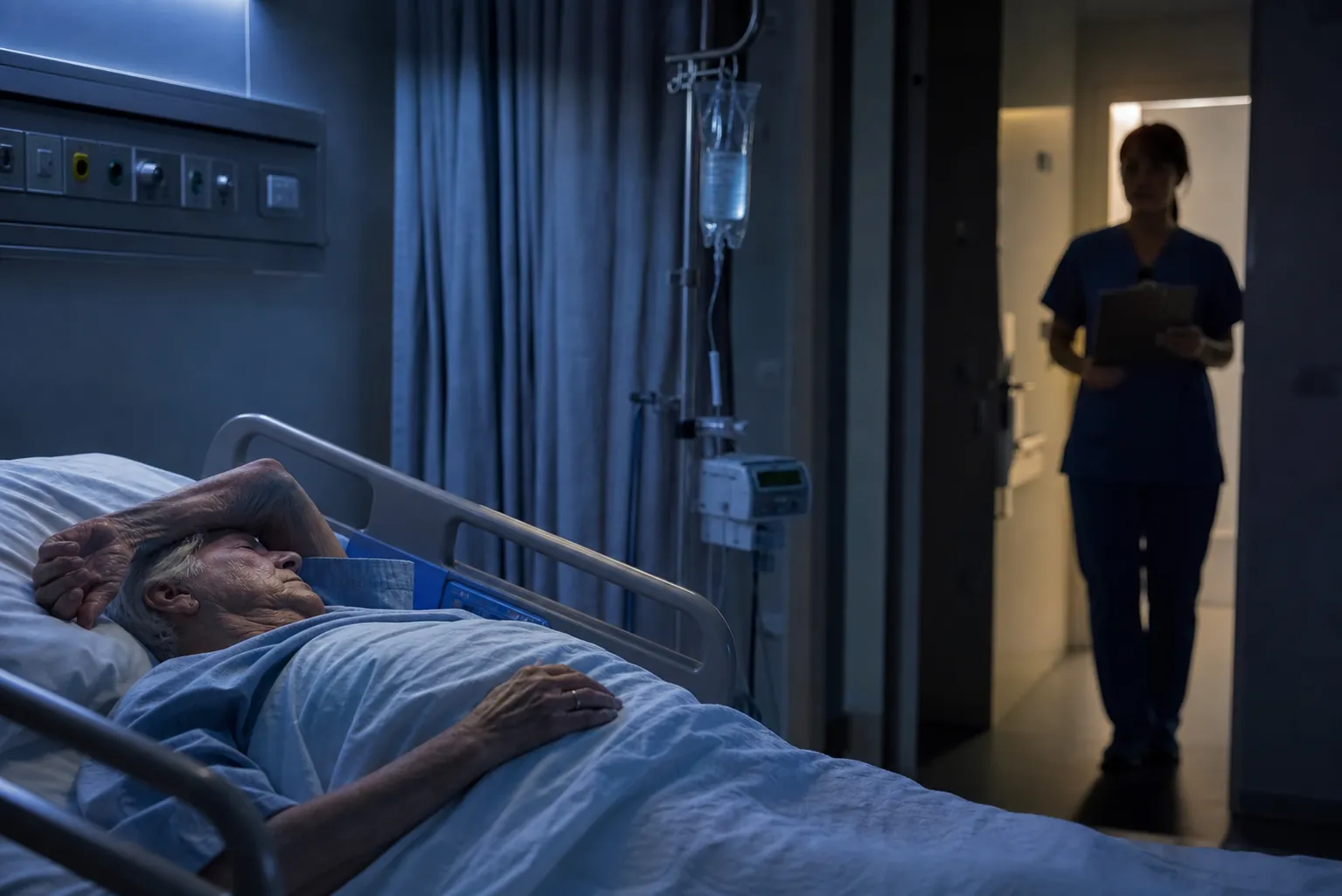
That kind of work sits close to the bedside. It asks whether the patient can sleep, who interrupts that sleep, how sleep is tracked, and which interventions are feasible for nurses and clinicians already carrying heavy workloads. Readers looking for immediate coping strategies can still use practical guidance such as how to sleep in the hospital during recovery, but those bedside tips become stronger when hospitals also have a research system testing what works across real patients and wards.
AHRQ’s sleep relevance also reached primary care. In 2013, the American Academy of Sleep Medicine noted that AHRQ had included snoring and daytime sleepiness questions in a sample health assessment for primary care practices.[3] That is not a glamorous intervention. It is the sort of quiet screening prompt that can determine whether sleep symptoms ever enter the clinical conversation.
Sleep apnea guidance depends on evidence review machinery
Obstructive sleep apnea is a good example of why AHRQ cannot be replaced simply by pointing to another federal acronym. Sleep apnea has biology, devices, behavioral factors, and long-term cardiovascular questions. But clinicians also need evidence about screening, diagnosis, comparative treatment, and whether preventive recommendations should change for adults without obvious symptoms.
AHRQ previously produced a comparative effectiveness review on obstructive sleep apnea diagnosis and treatment that reviewed 234 studies through 2010, including evidence on CPAP, mandibular advancement devices, and surgery.[4] That review is old now, which is exactly the point. Evidence baselines age. Devices change, diagnostic pathways shift, and treatment adherence remains hard in ordinary life.
The U.S. Preventive Services Task Force is also part of this cascade. It is statutorily supported by AHRQ, and CNN reported that the task force had not met since March 2025.[5] Its 2022 obstructive sleep apnea screening recommendation was an “I” statement, meaning the task force found insufficient evidence to assess the balance of benefits and harms for screening adults in the general population.[5]
An “insufficient evidence” finding is not a permanent answer. It is a marker that more evidence is needed before a broad screening recommendation can responsibly change. If the staff, contracts, and research grants that support evidence review are weakened, the recommendation does not necessarily become wrong overnight. It becomes harder to revisit with current evidence.
What was dismantled
The current damage is measurable in a way that connects directly to the care pipeline. Inside Higher Ed reported on July 29, 2026, that more than 100 active AHRQ grants had been cancelled, totaling $131.3 million across 28 states.[6] CBS News reported that AHRQ had not issued a new research grant since April 2025, after 393 new awards in fiscal year 2024 and 7 in fiscal year 2025; through July of fiscal year 2026, there were none.[7]
The agency also lost much of the staff that would normally manage reviews, awards, evidence synthesis, and implementation work. CBS News reported that AHRQ’s workforce fell from roughly 300 employees to about 74.[7] Grant Witness described the reduction as about 75%.[8]
| Part of the pipeline | What the reported cuts mean |
|---|---|
| New grants | No new AHRQ research grants reported since April 2025; 0 new awards in FY2026 through July |
| Active projects | More than 100 active grants cancelled, totaling $131.3 million across 28 states |
| Agency staff | Workforce reported down from roughly 300 to about 74 employees |
| Evidence translation | Fewer people and awards available to update reviews, test interventions, train researchers, and move findings into care settings |
Those numbers are not important because large numbers automatically prove harm. They matter because health-services research is cumulative and slow to restart. A grant is not just a check. It supports patient recruitment, data systems, institutional review work, research staff, trainees, community partners, and analytic plans. When active grants are terminated and new awards stop, the next evidence review is missing studies that were never completed, and the next generation of researchers may have already left the field.
CBS News also reported that Congress appropriated about $345 million for AHRQ in fiscal year 2026, while the agency spent less than 4% on grants.[7] Whatever the legal and political explanations prove to be, that gap is clinically relevant because grant spending is how much of this work reaches patients indirectly: through tested safety practices, surveys, toolkits, evidence reviews, and training programs.
Why “another agency will do it” is not a safe assumption
NIH can fund disease biology and clinical studies. CDC can track population health and issue public health guidance. FDA regulates drugs and devices. Those roles matter, but they are not the same as studying whether a hospital’s nighttime routines, a clinician’s schedule, a primary care screening workflow, or a rural obstetric training model changes patient outcomes.
Sleep health sits directly in that gap. A new CPAP device, a better understanding of circadian biology, or a public awareness campaign does not answer whether a primary care team can identify patients who need evaluation, whether hospitalized patients can sleep enough to recover, or whether shift structures make errors more likely. Those are delivery questions. AHRQ was the federal home for them.
This also means the sleep-related consequence should not be overstated. The available sources do not show that the cancelled grants directly ended a specific insomnia, narcolepsy, restless legs, or sleep apnea treatment trial. The clearer and better-supported conclusion is narrower: the cancellations interrupted the federal health-services research infrastructure that studied sleep-related safety, inpatient sleep, fatigue, screening, and evidence translation.
The loss reaches beyond sleep clinics
The same dismantling affects populations for whom sleep and safety are already fragile: pregnant patients, older adults, people recovering after emergencies, and patients whose care depends on whether local teams have been trained for complications they may not see every week.
CBS News and KFF Health News reported that Andrea Shields, a University of Connecticut obstetrician-gynecologist, had an AHRQ grant terminated that trained rural clinicians in high-risk pregnancy care. The same reporting noted that rural women are 2 to 3 times more likely to die in pregnancy.[7] This is not a sleep-grant example. It is a health-services research example that matters to sleep readers because pregnancy care, nighttime symptoms, emergency transfers, and postpartum recovery all depend on trained systems, not just individual vigilance.
For pregnancy and later-life readers, the practical advice in guides such as heatwave sleep tips for pregnancy, menopause, and older adults is only one layer of safety. The harder layer is whether clinics, hospitals, and care teams have current evidence for the patients most likely to be harmed when conditions are complex.
CBS News and KFF Health News also reported that Goutham Rao of Case Western Reserve University had three AHRQ grants terminated after 16 years of agency support, including work that produced deprescribing approaches for frail older patients.[7] Again, this should not be stretched into a claim about a cancelled sleep study. Its relevance is the older adult at the bedside: the patient at higher risk from sedating medications, nighttime confusion, falls, fragmented sleep, and care plans that may not fit frailty.
Older-adult sleep coverage often focuses on brain health, including questions like whether sleep problems are early signs of Alzheimer’s in older adults. But hospital safety for older adults also depends on medication decisions, nighttime routines, delirium prevention, and whether evidence reaches the teams making daily choices.
Patient experience work is part of the same infrastructure. CBS News reported that Susan Edgman-Levitan’s $1 million annual AHRQ grant developing hospital surveys for childbirth and behavioral health was terminated, and that her team’s work helped define patient- and family-centered care and create surveys used by the Centers for Medicare & Medicaid Services in payment determinations.[7] Surveys can sound bureaucratic until they are the only structured way patients have to report whether care respected them, communicated clearly, or met needs during vulnerable admissions.
Training cuts make the gap last longer
AHRQ did not only fund individual projects. It helped train the people who know how to study care delivery. Grant Witness reported that T32 training grants were disproportionately affected in its database, and that among 150 grants it reviewed, 85% of grants mentioning “equity,” 87.5% mentioning “scientists,” and 95.8% mentioning “faculty” were terminated.[8]
Those percentages should be read carefully. They come from the Grant Witness database and describe grants in that reviewed set, not every possible AHRQ activity. Still, they point to a problem that does not repair itself quickly. If early-career health-services researchers lose training support, the field loses people who would have learned how to study hospital sleep interventions, fatigue policies, primary care screening workflows, rural care models, and patient surveys.
This is why the collapse cannot simply be reversed by announcing a future competition. A research team that lost staff may not be able to reassemble. A rural clinic partner may move on. A trainee may choose another career. A hospital may keep using old tools because the people who would have tested better ones were never funded.
What patients should and should not conclude
Patients should not conclude that every sleep guideline disappears tomorrow, or that clinicians no longer know how to treat sleep apnea, manage fatigue, or protect hospital rest. Existing evidence still exists. Clinicians still bring judgment, training, and professional standards to the bedside. Hospitals can still reduce nighttime disruptions, protect handoffs, and ask better sleep questions.
The more immediate concern is that the update mechanism has been interrupted. Healthcare depends on old evidence being challenged by new data: new staffing models, new devices, new patient populations, new hospital constraints, new post-discharge patterns. When the agency that funds delivery research is no longer issuing grants and has lost much of its staff, fewer of those questions become studies, and fewer studies become tools clinicians can trust.
For someone recovering after a medical emergency, that can matter long after discharge. Sleep may stay disrupted because of pain, stress physiology, medication changes, ICU memories, or a hospital schedule that trained the body to wake repeatedly. Practical guidance on why sleep stays disrupted after a medical emergency helps individuals make sense of the experience. AHRQ-style research asks the system-level follow-up: which hospital practices reduce that burden, for whom, and under what conditions?
The pending lawsuit and congressional oversight may change pieces of the story, but they do not erase the present gap. Through July 2026, the reported picture is an agency with no new research grants since April 2025, more than $131 million in active grants cancelled, and a staff reduced to a fraction of its prior size.[6][7][8]
Patients will still be told to rest. Clinicians will still work nights. Older adults, pregnant patients, and recovering patients will still need care that is safe when people are tired and systems are strained. What has been removed is the federal mechanism that studied whether those conditions are actually safe, and how to make them safer when they are not.
References
- Fatigue, Sleep Deprivation, and Patient Safety — PSNet, Agency for Healthcare Research and Quality.
- Sleep Promotion Toolkit for Hospitalized Patients — AHRQ Digital Healthcare Research.
- AHRQ includes sleep in sample health assessment for primary care practices — American Academy of Sleep Medicine.
- AHRQ releases comparative effectiveness review for obstructive sleep apnea — American Academy of Sleep Medicine.
- USPSTF preventive care HHS — CNN, March 3, 2026.
- Group Says Canceled AHRQ Grants Top $131M Across 28 States — Inside Higher Ed, July 29, 2026.
- Trump healthcare safety agency AHRQ — CBS News.
- AHRQ Terminations — Grant Witness, July 22, 2026.
Supports these guides
Spot an error or have clinical feedback?
Because this article covers clinical, medication, or safety information, we use a moderated correction channel instead of open public comments. Let us know if something about “Why AHRQ Research Grant Cancellations Matter for Sleep Health” needs a closer look.
Send feedback on this article