Mechanism explainer
How AHRQ grant terminations threaten sleep safety research
AHRQ grant cuts have disproportionately hit patient safety research for perimenopausal, pregnant, and older adult populations. This article explains why the terminations stalled the very evidence those life stages rely on for safe sleep interventions and what that loss means.
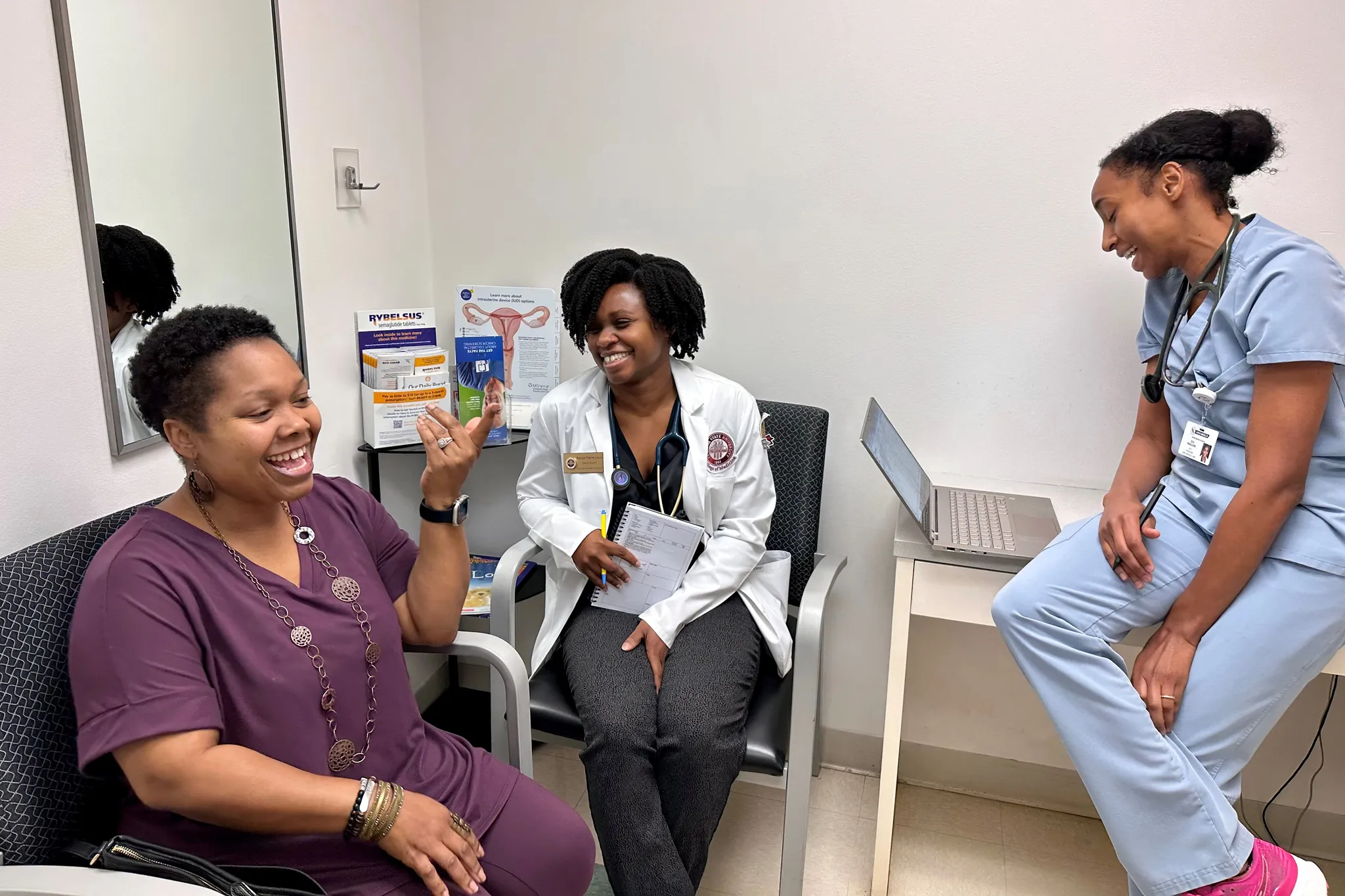
A rural clinician who does not specialize in maternal-fetal medicine still has to recognize when a pregnant patient is moving from ordinary discomfort into danger. That was the practical point of Andrea Shields' AHRQ grant at the University of Connecticut: train rural nonspecialist providers in high-risk pregnancy care. The grant was eliminated, in a country where rural women are already 2 to 3 times as likely to die during pregnancy as women in other settings.[1]
That is a patient-safety loss before it is a budget item. It means fewer clinicians practicing the pattern recognition that keeps sleep apnea, anemia, hypertension, fatigue, medication effects, and delayed referral from being treated as disconnected complaints. It means a tool or training pathway may stop before it becomes part of routine care for the patient who cannot simply drive to a tertiary center.
The AHRQ grant termination impact on patient safety is especially sharp because the cuts were not scattered evenly across an abstract research portfolio. In Grant Witness' July 2026 analysis, 85% of AHRQ grants mentioning "equity" were terminated: 75 terminated, 13 remaining. Grants mentioning "disparities" had a 73.3% termination rate. Rural and access-to-care research, along with primary care and care delivery, was roughly 9 to 10 percentage points more represented among terminated grants than among the remaining portfolio; maternal and child health and aging or geriatrics were also disproportionately affected.[2]
Those categories matter for sleep safety because sleep problems rarely arrive alone in the populations Restful Ground covers. Pregnancy sleep disruption may sit beside hypertension, anemia, apnea risk, medication limits, and fetal monitoring concerns. Perimenopausal insomnia may sit beside mood symptoms, vasomotor symptoms, work fatigue, alcohol use, and new prescriptions. Older-adult sleep treatment may sit beside falls, delirium risk, kidney function, polypharmacy, and the next morning's ability to stand safely.
The Pattern Was Not Random Pruning
The exact count changes by tracker, because groups used different definitions and different cutoffs. Grant Witness tracked 349 AHRQ grants and reported that 52%, or 182 grants, had either been terminated or were at least 60 days overdue for renewal; it also reported only 7 new awards in all of FY2025, down from 393 in FY2024, and zero in FY2026 through July 21.[2] KFF Health News and CBS News reported at least 104 halted grants and described a FY2026 appropriation of $345 million, with less than $15 million spent.[1] AcademyHealth's Research Interrupted tracker identified more than 78 grants totaling about $200 million.[3]
Those differences should make a careful reader cautious about pretending there is one perfect tally. They do not erase the direction of the evidence. Across the available counts, the terminated work clusters in exactly the areas where patient-safety guidance most often has to be adapted rather than copied from a general adult recommendation: rural access, maternal and child health, primary care, care delivery, aging, geriatrics, equity, and disparities.[1][2][3]
| Affected area | Why it matters for sleep safety |
|---|---|
| Maternal and child health | Pregnancy sleep apnea, severe fatigue, anemia, hypertensive risk, medication constraints, and perinatal safety workflows depend on care-delivery evidence, not only disease biology. |
| Aging and geriatrics | Sleep medications, deprescribing, falls, delirium, nighttime bathroom trips, next-day sedation, and caregiver monitoring require safety evidence in older adults. |
| Rural and access-to-care research | Patients may rely on nonspecialist clinicians, telehealth, local protocols, and referral thresholds rather than specialty sleep clinics. |
| Primary care and care delivery | Most insomnia, fatigue, medication review, and sleep-apnea screening questions first appear in ordinary visits, not in research centers. |
| Equity and disparities | Evidence that excludes or undermeasures higher-risk groups leaves clinicians guessing when the patient does not match the default study participant. |
A stopped grant can look small if it is described only by title. In practice, it may be the missing step between a published concern and a usable safety process: who screens, which question is asked, what threshold triggers referral, what medication is avoided, what follow-up date is safe, and what warning sign is documented so the next clinician sees it.
Why Sleep Safety Depends On This Kind Of Research
There is no public tracker that currently labels AHRQ terminations by a clean "sleep" topic. That boundary matters. The stronger conclusion is not that every terminated AHRQ project was a sleep study. The stronger conclusion is that the terminated portfolio included the care-delivery, maternal health, aging, telehealth, digital safety, and equity work that sleep-safety guidance depends on when it moves from a general recommendation to a safe decision for a pregnant person, a perimenopausal woman, or an adult over 65.[2][3]
A sleep article can say, for example, that a sedating medication may increase fall risk in older adults. That statement is useful, but it is not enough for a daughter helping her father after a hospital discharge. She needs to know whether deprescribing has been studied in people like him, whether the intervention increased confusion or withdrawal symptoms, whether clinicians had a review date, and whether the outcome measured falls, emergency visits, sleep quality, or only prescription counts.
A pregnant patient with loud snoring, exhaustion, low iron, and rising blood pressure needs a different kind of evidence. She needs screening tools that work in pregnancy, referral pathways that do not assume urban specialty access, and safety signals that account for both maternal and fetal risk. AcademyHealth's tracker includes cut remaining committed funding tied to projects in telehealth, AI tools for pregnancy iron deficiency, and digital health tools for hospitalized children's safety; Grant Witness reported that the cut remaining committed funding totaled $109.2 million.[2][3]

Even when a project does not carry the word "sleep" in its title, it may be doing sleep-safety work indirectly. Telehealth research can decide whether a tired pregnant patient gets screened and referred without an avoidable trip. A digital safety tool for hospitalized children can affect nighttime monitoring and caregiver alerts. An AI pregnancy screening project can identify anemia before delivery, a condition tightly bound up with fatigue, function, and perinatal risk. A deprescribing study in older adults can determine whether sleep improves without trading insomnia for falls or delirium.
The missing evidence is often boring in the most important way. It does not always produce a dramatic new drug or device. It produces the sentence in a clinical pathway that says, "Review in two weeks," or the EHR flag that says, "High fall risk with sedative," or the training module that tells a rural clinician when sleep apnea symptoms in pregnancy should not wait.
AHRQ's Role Is Different From NIH Or CMS
It is tempting to assume another federal agency can absorb the work. That assumption misses the function AHRQ has usually served. NIH can fund mechanisms, disease biology, and clinical research. CMS can influence payment, reporting, and quality programs. AHRQ has been the agency most explicitly built around care delivery, patient safety, evidence review, implementation, and the conversion of research into tools that clinicians and health systems can use.
That distinction shows up in the kinds of projects now lost or stalled. A 5-year, $5 million University of Minnesota Learning Health System Embedded Scientist Training Program was terminated midstream, with no funding for a year. The program had produced a tool for early bipolar detection using electronic health record data.[4] That is not a sleep study, but it is the same infrastructure a health system needs when it tries to detect risk early, test a workflow in real care, and keep the result from living only in a journal article.
The same is true for infection prevention. KFF Health News and CBS News reported that a 40-hospital antibiotic stewardship randomized controlled trial was among the terminated grants. They also cited AHRQ analysis estimating that AHRQ-funded infection prevention practices saved 20,500 deaths and $7.7 billion from 2014 to 2017.[1] The lesson is not that infection prevention and sleep are the same topic. The lesson is that AHRQ-funded patient-safety research has a track record of turning evidence into measurable harm reduction.
A broader review in the Journal of General Internal Medicine estimated that AHRQ-funded research on hospital-acquired conditions saved 125,000 lives and $28 billion over 25 years.[5] Those numbers should make it harder to dismiss implementation research as paperwork. When implementation works, the patient never develops the complication, the family never has to learn the term, and the hospital never has to explain why a known hazard was not built into the workflow.
What Gets Lost For Pregnant People
Pregnancy sleep safety sits inside perinatal safety, not beside it. Sleep apnea, fragmented sleep, severe fatigue, restless legs, iron deficiency, hypertensive disorders, and medication decisions can all appear during the same prenatal window. A rural clinician may need to decide whether a symptom cluster is common pregnancy discomfort, a sleep disorder, a worsening medical condition, or a referral that cannot wait.
That is why the Shields grant matters beyond its title. Training rural nonspecialist providers in high-risk pregnancy care is the kind of intervention that makes sleep-related warning signs actionable in places without immediate specialty backup. Eliminating that training does not prove a specific patient will be harmed. It does remove one pathway designed to help clinicians notice risk earlier in a population already facing higher mortality.[1]
The AI pregnancy iron-deficiency project listed by AcademyHealth belongs in the same practical category. Iron deficiency is not simply a lab value when a pregnant patient is exhausted, short of breath, sleeping poorly, or approaching delivery. A tool that identifies risk before delivery could have helped clinicians act earlier; without validation and implementation work, readers are left with a familiar gap between "this may matter" and "this is how we safely screen for it in routine care."[3]
What Gets Lost For Perimenopausal Women
Perimenopause is not named as prominently in the termination trackers as pregnancy or geriatrics, so the claim has to be narrower. The risk here is not that a public list shows a specific wave of terminated perimenopause sleep grants. The risk is that equity, disparities, primary care, care delivery, and telehealth research are the exact channels through which perimenopausal sleep evidence usually becomes useful.
Many perimenopausal women first raise sleep problems in primary care, OB-GYN, behavioral health, or a telehealth visit. The safety question may involve hormone therapy, antidepressants, gabapentinoids, alcohol use, over-the-counter sleep aids, shift work, migraine medication, mood symptoms, or cardiovascular risk. A general insomnia recommendation does not answer whether an intervention is safe in that tangle of symptoms, prescriptions, and life-stage risks.
When grants mentioning equity and disparities are terminated at the rates Grant Witness reported, the people most likely to be treated as exceptions lose evidence twice: first when they are underrepresented in the original studies, and again when the care-delivery research that might adapt recommendations to them disappears.[2] That is how a patient ends up reading a sleep recommendation that sounds authoritative but still does not answer, "Does this apply to someone like me?"
What Gets Lost For Older Adults
Older-adult sleep safety is inseparable from medication safety. A drug that improves sleep onset can still create next-day sedation. A nighttime bathroom trip can become a hip fracture. A medication change can reduce anticholinergic burden but worsen anxiety or rebound insomnia. A caregiver may be the person who notices confusion before the prescribing clinician does.
That is why aging and geriatrics being disproportionately affected is not a side note.[2] The older adult does not need another generic reminder that sleep hygiene matters. They need evidence about which interventions reduce harm, which tradeoffs are acceptable, which patients need closer monitoring, and when the safer choice is deprescribing, dose reduction, physical therapy, pain treatment, apnea evaluation, light exposure, caregiver support, or no medication change at all.
AHRQ-style work is well suited to those questions because it can follow what happens in actual care. Who reviews the medication list? Does the pharmacist have authority to recommend a taper? Does the primary care clinician see the fall-risk flag? Does the patient return after insomnia worsens? Does the outcome measure a meaningful safety event, or only whether a prescription was discontinued?
The Educational Pipeline Is Also A Safety Tool
AHRQ's patient-safety role has not been limited to grants. Its PSNet primer on "Fatigue, Sleep Deprivation, and Patient Safety" is one of the plain-language educational resources hospitals use to connect clinician fatigue with errors, handoffs, duty hours, and safety culture. The primer was funded under contract 75Q80119C00004, and the current funding collapse raises a practical concern: resources like this may stop being updated just as care delivery changes around them.[6]
The clinician-sleep side of the evidence is relevant to patient sleep safety because tired systems miss tired patients. A sleep-deprived resident, an understaffed night shift, or a rushed medication reconciliation can turn a known risk into an actual injury. The National Academy of Medicine's 2006 report on resident duty hours, which grounded the link between clinician sleep deprivation and medical errors, was AHRQ-funded.[6]
Education alone does not prevent harm. But education that is tied to evidence review, training, safety culture, and implementation can change what gets noticed. A fatigue primer, a perinatal safety toolkit, an EHR-embedded alert, and a deprescribing workflow all belong to the same patient-safety chain: recognize the hazard, make the safer action easier, and check whether harm actually decreases.
AI Cannot Simply Replace Evidence Review
KFF Health News and CBS News reported that AHRQ Director Roger Klein told staff that AI can replace evidence review and analytics work.[1] AI can help search, summarize, and detect patterns. It cannot make a terminated implementation study finish enrolling patients, cannot observe whether an alert worsens alarm fatigue, cannot tell whether a rural training program changes referral timing, and cannot produce follow-up data that were never collected.
This distinction is especially important for sleep guidance. A model can summarize that benzodiazepines are risky in older adults. It cannot replace the study that tests how a deprescribing pathway works in a clinic where patients also have chronic pain, anxiety, transportation barriers, and caregivers making half the observations. It can summarize pregnancy sleep apnea risk. It cannot validate a screening workflow in rural prenatal care after the grant supporting that work has ended.
What Readers Should Expect From Sleep Guidance Now
For readers, the immediate consequence is not that every sleep recommendation becomes unusable. Many established safety cautions remain valid. Sedating drugs still deserve extra caution in older adults. Pregnancy symptoms that suggest apnea, anemia, hypertension, or severe functional decline still deserve clinical attention. Sleep-deprived clinicians still work in systems where fatigue can contribute to error.
The harder consequence is slower updating. A future article may be able to say that evidence is strong for a general adult population but thin for pregnant patients. It may have to say that a telehealth workflow looked promising but lost funding before validation. It may have to keep an older-adult medication warning in place without newer data on how best to taper safely in primary care. It may have to mark a recommendation as biologically plausible, clinically cautious, or expert-informed rather than tested in the population most at risk.
That kind of labeling is not pessimism. It is how safety writing stays honest when the research pipeline breaks. The danger is not only that fewer papers appear. It is that fewer checklists, review dates, screening thresholds, training modules, EHR flags, and decision aids make it to the bedside, the pharmacy counter, the prenatal visit, the telehealth screen, or the kitchen table where a caregiver is deciding whether last night's sleep aid was worth this morning's unsteady gait.
Restful Ground can still separate evidence tiers, name uncertainty, and keep review dates visible. But if AHRQ's patient-safety pipeline is dismantled, some future guidance will have to say "evidence stalled" where it should have been able to say "evidence updated." For pregnant people, perimenopausal women, older adults, rural patients, and caregivers, that is not an abstract research loss. It is the disappearance of the studies that tell them whether a sleep intervention is actually safe for someone like them.
References
- Trump Administration Hobbles Health Care Safety Research Agency, KFF Health News/CBS News, July 29, 2026.
- AHRQ Terminations, Grant Witness, July 22, 2026.
- Research Interrupted, AcademyHealth.
- HHS research agency ends funding for dozens of health studies, Roll Call, July 17, 2026.
- What Is AHRQ's Role in Patient Safety?, Journal of General Internal Medicine, 2025.
- Fatigue, Sleep Deprivation, and Patient Safety, AHRQ PSNet.
Supports these guides
Spot an error or have clinical feedback?
Because this article covers clinical, medication, or safety information, we use a moderated correction channel instead of open public comments. Let us know if something about “How AHRQ grant terminations threaten sleep safety research” needs a closer look.
Send feedback on this article