
Mechanism explainer
Why Poor Sleep Leads to Statin Underuse in Women
Many postmenopausal women who need statins most are also least likely to take them consistently. This article explains how poor sleep—common in midlife—disrupts medication adherence through cognitive, behavioral, and clinical blind spots, and why addressing sleep may be a neglected step in cardiovascular risk reduction.
The difficult part of a new statin prescription often begins after the visit is over. A woman gets the lab result, hears that her cardiovascular risk is high enough to justify medication, nods through the explanation, and goes home with another daily task to manage. If she is also waking at 2:30 a.m., sweating through the sheets, or starting the morning already tired, the prescription has entered a life that may not have much spare capacity left.
That is the practical answer to why poor sleep leads to statin underuse in women: sleep does not have to change cholesterol biology to interfere with cholesterol treatment. It can make the everyday work of taking a preventive medication harder—remembering it, refilling it, tolerating uncertainty about symptoms, and staying with it long enough for benefit.

The pattern is already troubling without adding sleep. In an American Heart Association discussion of a study of 5,693 patients, 67% of women were treated with statins compared with 78% of men, and women were more likely to discontinue treatment after starting it.[1] The article did not measure sleep quality, so it cannot tell us whether insomnia explains that gap. But it does show the gap that many women recognize from the exam room: preventive care is offered less consistently, and persistence is more fragile.
At the same time, the menopause years are not neutral years for sleep or heart risk. In SWAN, women with chronic insomnia symptoms across midlife had significantly higher cardiovascular event risk, and the highest risk appeared among women who had both chronic insomnia and short sleep of less than five hours a night.[2] The American Academy of Sleep Medicine describes insomnia symptoms as affecting about one in four women, with midlife women disproportionately affected.[3]
Put those findings next to one another and the clinical paradox becomes plain. The women whose cardiovascular risk is rising may be asked to begin a daily preventive medication during the same season when sleep is becoming unstable. The woman is then judged on whether she “adheres,” a word that can flatten the messy sequence underneath: sleep, remember, plan, take, notice symptoms, decide whether the symptom matters, call the clinician, refill, repeat.
What the Evidence Can—and Cannot—Say
There is not one definitive trial showing that poor sleep causes postmenopausal women to underuse statins. The honest case is a synthesis across separate bodies of evidence. Women are treated with statins less often and discontinue more often in the AHA-cited study.[1] Midlife insomnia and short sleep are linked with cardiovascular events in SWAN.[2] Poorer sleep quality is associated with poorer medication adherence in broader chronic-disease research, including a systematic review in adults with type 2 diabetes that found a 9% increase in medication non-adherence for each one-point increase in Pittsburgh Sleep Quality Index score.[4]
That 9% figure deserves attention, but also restraint. It comes from a diabetes medication-adherence literature, not a statin-specific cohort of postmenopausal women. It supports the idea that sleep quality matters for medication-taking behavior. It does not prove that improving sleep will make a woman stay on a statin, nor does it prove that insomnia is the cause of the AHA sex gap.
Still, absence of a perfect statin-specific trial is not a good reason to ignore sleep during statin initiation. Clinicians already act on imperfect but plausible adherence barriers: cost, pill burden, muscle symptoms, fear of side effects, confusion about benefit. Sleep belongs in that same conversation because it affects the person who must carry out the plan.
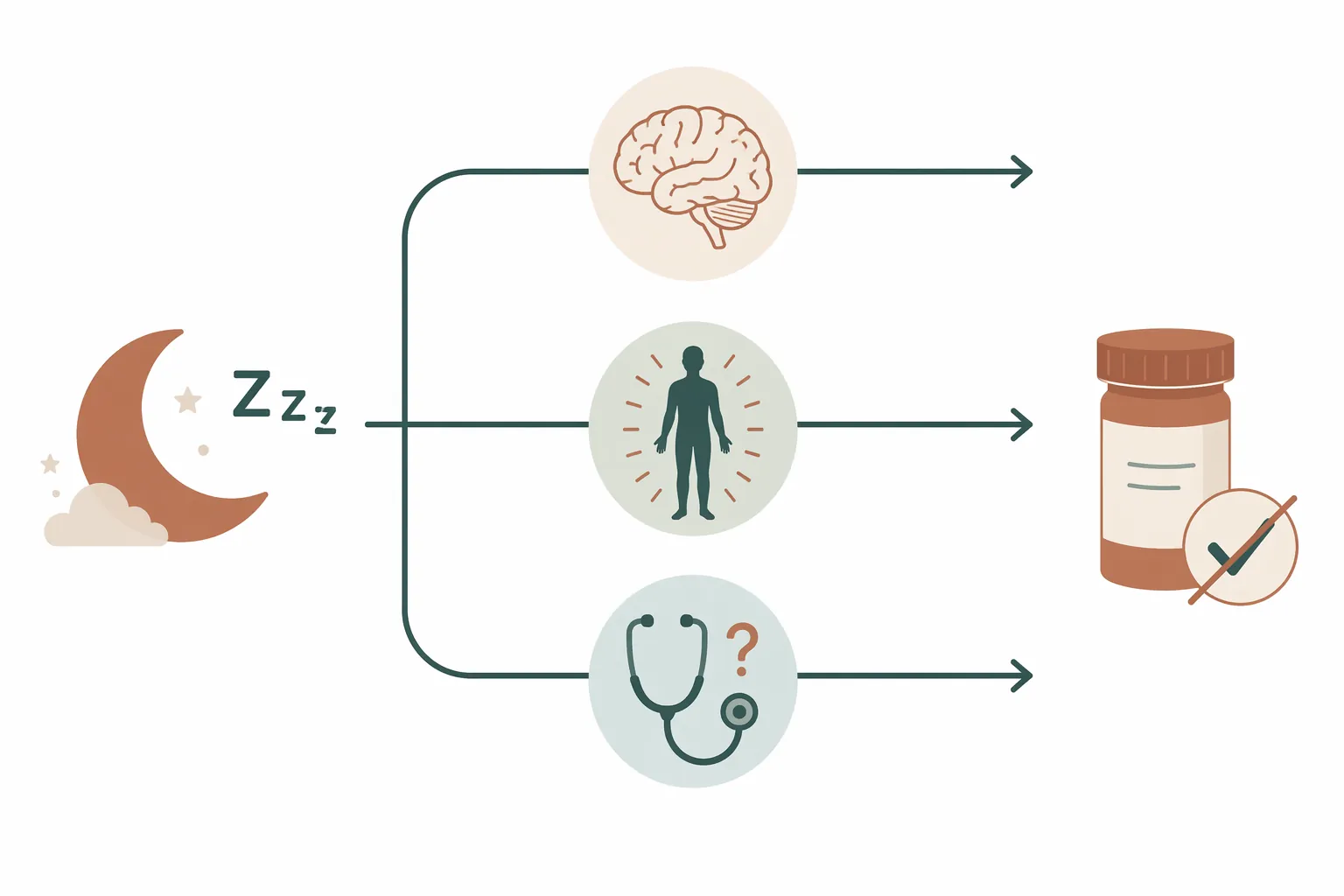
Poor Sleep Weakens the Daily Machinery of Adherence
Taking a statin is a small act only when life is orderly. In real use, adherence depends on executive function: working memory, planning, attention, inhibition, and the ability to recover after a disruption. A person has to remember whether the pill was taken, keep track of refills, integrate the dose into meals or bedtime, and avoid letting one missed evening become a quiet stop.
Riegel and Weaver’s sleep-cognition-self-care model connects sleep deprivation with prefrontal executive-function deficits and then with impaired self-care in chronic illness.[5] The model is not statin-specific, but it fits the kind of tasks statins require. A preventive medication gives no immediate felt reward. There is usually no sensation the next morning that says, “Good, that dose protected your arteries.” The benefit is delayed and statistical, while the work is daily and concrete.
This matters especially for women whose nights are fragmented. A missed dose after a sleepless night may not feel like a decision. It may be the result of a broken routine: falling asleep on the couch, skipping the usual bedtime steps, waking too late, or staring at the pill bottle and not being sure whether yesterday’s dose was already taken. When that happens repeatedly, underuse can look like reluctance from the outside when it is partly a systems problem.
The diabetes adherence review gives a useful warning here because the association moves with measured sleep quality: each worsening point on the PSQI was associated with a higher likelihood of non-adherence.[4] That does not transfer automatically to statins, but it challenges the habit of treating sleep as background noise. Sleep quality may be part of the medication environment.
Poor Sleep Can Make Side Effects Harder to Interpret
The second pathway is not forgetfulness. It is interpretation. A woman who already has poor sleep may start a statin and then notice fatigue, aching, brain fog, or another rough night. Some symptoms may be related to the medication; some may come from the sleep problem that was present before the prescription; some may come from other midlife conditions. The patient is left to sort out the timing, often with limited guidance.
This is where fear of side effects can become powerful even when no one is being irrational. Statins have a long public reputation for muscle symptoms and other adverse effects. If a woman begins treatment while exhausted, every new sensation has more competition for attention. Fatigue feels louder when sleep is already poor. A normal ache may feel more suspicious when the patient has been warned to watch for muscle symptoms. One bad night after the first dose can become evidence in the patient’s mind, even if the timing is not enough to prove causation.
The sleep issue also complicates reporting. A clinician may ask, “Any side effects?” The patient may say, “I’m not sleeping,” or “I feel awful,” without a shared baseline from before the statin began. If sleep quality was never recorded at initiation, neither person has a clear comparison point. The next step may be discontinuation, a dose change, reassurance, or silence—sometimes without enough information to tell which is appropriate.
There is a pharmacology nuance that can be worth discussing, but it should not become a self-directed experiment. A systematic review notes that simvastatin, lovastatin, and atorvastatin are lipophilic and can cross the blood-brain barrier, while pravastatin and rosuvastatin are hydrophilic and less central-nervous-system penetrant.[6] For a patient who reports sleep changes after statin initiation, that distinction may help frame a clinician-supervised conversation about options. It is not a reason to stop or switch medication without medical guidance.
The Blind Spot Often Appears at the First Prescription
The third pathway is built into the visit itself. Statin counseling usually centers on cholesterol numbers, cardiovascular risk, dose, common side effects, and sometimes cost. Those are necessary topics. But a woman’s sleep pattern is often left out, even though the medication plan depends on a stable daily routine.
A better initiation conversation would not need to be long. It could begin with a few practical questions:
- How many nights a week are you having trouble falling asleep or staying asleep?
- Are you usually getting less than five hours of sleep?
- Do you already wake with fatigue, aches, or brain fog?
- What time of day is most reliable for a daily medication?
- If you notice symptoms after starting the statin, who should you contact before stopping it?
Those questions do two things. They make adherence easier to design, and they create a baseline. If the patient already wakes unrefreshed four nights a week, that matters before the first dose. If she already has muscle aches from poor sleep, arthritis, or another condition, that matters too. The goal is not to dismiss later symptoms as “just sleep.” The goal is to prevent every symptom from arriving in a fog of uncertainty.
This is also where women’s cardiovascular prevention can become more respectful. A patient who says, “I don’t think I can manage another pill right now,” may be describing a real capacity problem, not a values problem. The clinician still has to explain why the statin was recommended. But the next useful move may be to simplify the dosing routine, address insomnia, choose a follow-up date, clarify which symptoms require a call, and make stopping the medication a conversation rather than a disappearance.
How the Three Pathways Fit Together
| Sleep-related barrier | How it can lead to statin underuse | What is supported by the evidence |
|---|---|---|
| Reduced executive function | The patient has more trouble remembering, planning, refilling, and restarting after missed doses. | Sleep-cognition-self-care models support this pathway in chronic illness; the statin-specific causal link remains unproven. |
| More symptom noise | Fatigue, aches, poor concentration, or another bad night may be attributed to the statin, correctly or incorrectly. | The mechanism is clinically plausible; careful baseline symptom assessment is needed. |
| Unasked sleep history | The treatment plan is built without knowing whether the patient has enough routine stability to carry it out. | AHA-cited data show sex gaps in treatment and discontinuation, but that dataset does not measure sleep. |
The point is not that every woman with insomnia will stop her statin. Many will take it consistently. Others will have side effects that deserve prompt clinical attention. The more precise claim is that poor sleep can lower the margin for success. It makes an already invisible behavior—taking a pill for a future benefit—more vulnerable to disruption.
What to Bring Into the Clinical Conversation
For a postmenopausal woman who is struggling with a statin and sleeping badly, the most useful step is not to decide alone that the medication is the problem. It is to bring both issues into the same conversation. The wording can be plain: “I want to take this seriously, but my sleep is poor, and I’m worried it’s affecting how I’m taking the medication and how I’m interpreting symptoms.”
That conversation can cover the cardiovascular reason for the statin, the dose, the timing, the expected and concerning side effects, and the sleep pattern that may interfere with consistency. It can also separate three different questions that often get tangled together: Is the statin still indicated? Is the current statin and dose tolerable? Is the daily routine realistic enough for the patient to take it as prescribed?
Sleep treatment may be appropriate for many reasons, especially when insomnia is chronic or sleep duration is very short. But it would overstate the evidence to promise that treating insomnia will improve statin persistence or reduce cardiovascular events. SWAN links chronic insomnia and short sleep with cardiovascular event risk; it does not test whether insomnia treatment improves statin use.[2] The adherence review links poorer sleep quality with non-adherence in diabetes; it does not prove that sleep treatment fixes statin adherence.[4]
For now, sleep assessment should become part of statin adherence conversations for postmenopausal women because sleep is a plausible, modifiable barrier that current care can miss. Cardiovascular prevention is incomplete when it asks a woman to take a daily medication but ignores the nightly conditions that make daily adherence possible.
References
- Why do women get cholesterol-lowering statins less frequently than men? American Heart Association, August 19, 2019.
- Trajectories of sleep over midlife and incident cardiovascular disease events SWAN Study, 2024.
- Shining the spotlight on women and sleep American Academy of Sleep Medicine.
- Sleep health and medication adherence in adults with type 2 diabetes: A systematic review PMC.
- Sleep and self-care in adults with chronic illness PMC, 2009.
- Statins and sleep: a systematic review PMC.
Supports these guides
Spot an error or have clinical feedback?
Because this article covers clinical, medication, or safety information, we use a moderated correction channel instead of open public comments. Let us know if something about “Why Poor Sleep Leads to Statin Underuse in Women” needs a closer look.
Send feedback on this article