How to Sleep in a Heat Wave Without AC During Perimenopause
Learn a layered system of environmental prep, personal cooling, and physiological strategies to sleep during a heat wave when you are perimenopausal and do not have air conditioning, with evidence-backed interventions like cooling mattress pads and electrolyte-timed hydration.
The fan is on. The window is cracked. The water bottle is on the nightstand. You may even have a damp cloth waiting beside the bed. And still, during perimenopause, a heat wave can turn the night into a series of small emergencies: wake hot, throw off covers, cool down, get chilled, change sleepwear, try not to wake anyone, repeat.
That is not a failure of willpower, and it is not simply ordinary summer overheating with a new label. Declining estrogen can narrow the hypothalamic thermoneutral zone by as much as 60%, meaning the temperature range your brain accepts as “fine” gets much smaller; a small rise that once passed unnoticed can now trigger sweating, flushing, and a full heat-release response.[1] In a heat wave without air conditioning, the margin for error is already thin. Perimenopause can make it thinner.
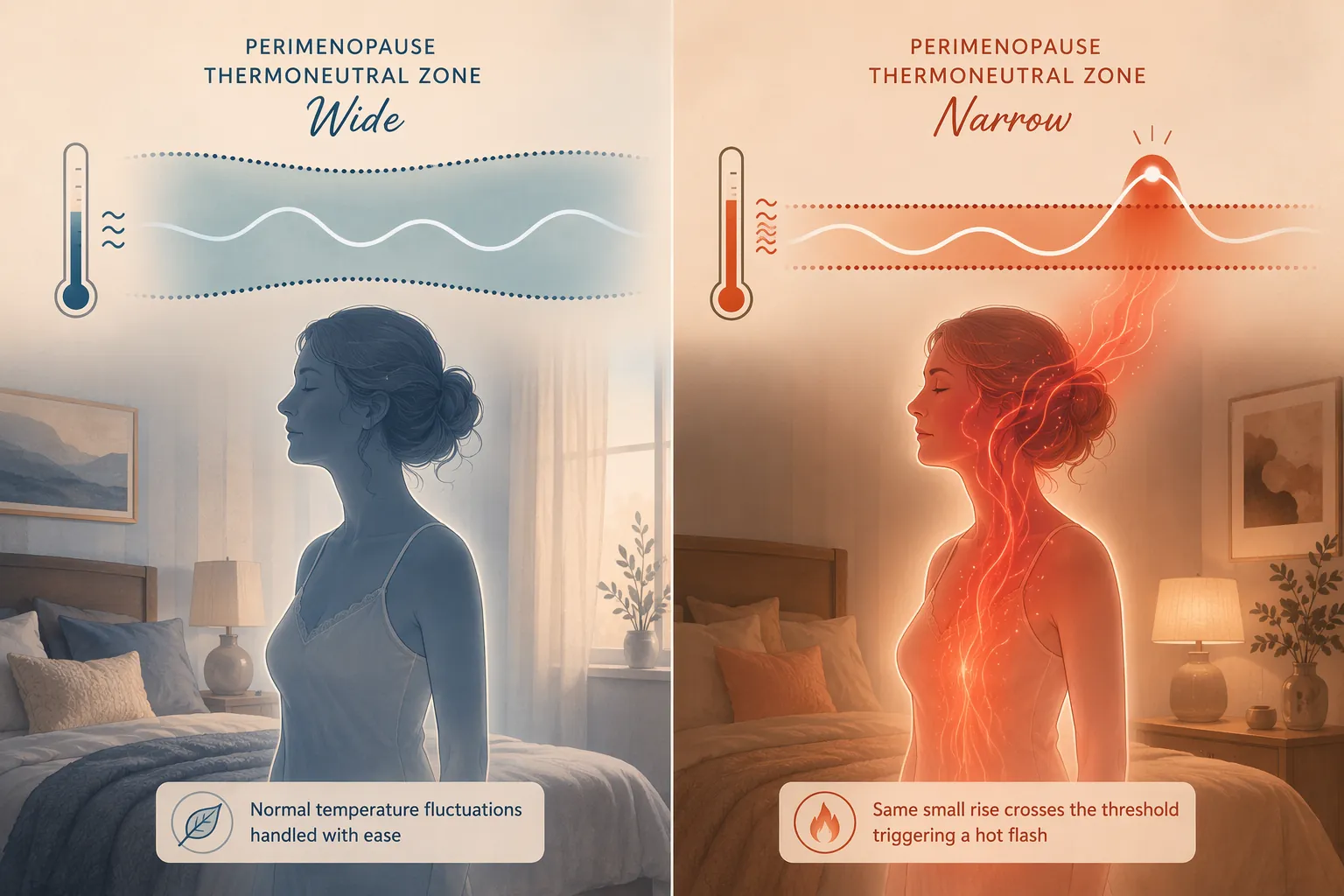
The answer is not one heroic trick. Without AC, the goal is to stack several small protections so your body has more room before the hypothalamus fires: prepare the room before bedtime, cool the body before sleep onset, keep sweat able to evaporate overnight, manage hydration and triggers, and know when night sweats need medical attention rather than more bedding experiments.
The No-AC Protocol, in Order
| When | What to do | Why it matters in perimenopause |
|---|---|---|
| Late afternoon to dusk | Block incoming heat; open windows only when outdoor air is cooler than indoor air; move sleeping setup lower if possible. | You are protecting a narrower thermoregulatory margin before the first hot flash starts. |
| 60–90 minutes before bed | Take a lukewarm shower, then let skin cool naturally; set out cooling cloths, water, and spare dry sleepwear. | You reduce core temperature before sleep onset and remove 2 a.m. decision-making. |
| At bedtime | Use cross-ventilation, breathable sheets, light sleepwear, and a cooling surface if available. | Sweat has to evaporate; trapped humidity turns sweating into insulation. |
| Overnight | Cool pulse points, rotate gel packs safely, sip electrolyte fluid if you wake drenched. | The aim is to interrupt the heat-sweat-dehydration-repeat loop without fully waking yourself. |
| Next day | Adjust caffeine, alcohol, spicy foods, high-sugar evening meals, and supplements with safety in mind. | Triggers do not create perimenopause, but they can make the threshold easier to cross. |
This order matters. Cooling a pillow helps less if the bedroom has been absorbing sun all day. Drinking a large glass of water at midnight helps less if it wakes you to urinate at 2 a.m. The best plan is boring in the right way: it reduces choices when you are hot, tired, and already awake.
Prepare the Room Before It Becomes a Heat Trap
A bedroom without AC is not just “warm.” By bedtime, it may be storing heat in walls, flooring, bedding, curtains, and the mattress itself. During perimenopause, that stored heat matters because the body has less tolerance for small upward changes.
Start earlier than bedtime. During the hottest part of the day, keep sun-facing windows covered and closed if outdoor air is hotter than indoor air. Once the outside temperature drops below the room temperature, open windows to create a path for air to move through the house. A fan pointed straight at your face may feel good for a few minutes, but a fan placed to pull cooler evening air in from one opening or push hot indoor air out another often changes the room more effectively.
If you live in a multi-story home, the least elegant answer may be the most useful one: sleep lower. Heat rises. A downstairs room, finished basement, or even a temporary mattress on a lower floor can reduce the baseline heat load before your body has to manage a hot flash. This is not surrender. It is environmental triage.
Humidity is the part many heat-wave tips underplay. Sweat cools you only when it evaporates. When humidity rises above 70%, sweat evaporation becomes ineffective, heat stays trapped on the skin, and the hypothalamus may keep firing as if the body still has not released enough heat.[2] That is why a fan can feel useless in a sticky room: it is moving air across skin that cannot evaporate efficiently.
If you own a dehumidifier, this is the time to use it, especially in the room where you will sleep. If you do not, the smaller moves still count: avoid hanging wet laundry indoors, keep a bathroom fan running after showers, and choose the least humid sleeping area available. The target is not a perfect bedroom. It is a bedroom where sweat has a chance to do its job.
Cool the Body Before Sleep, Not Only After You Wake Up Sweating
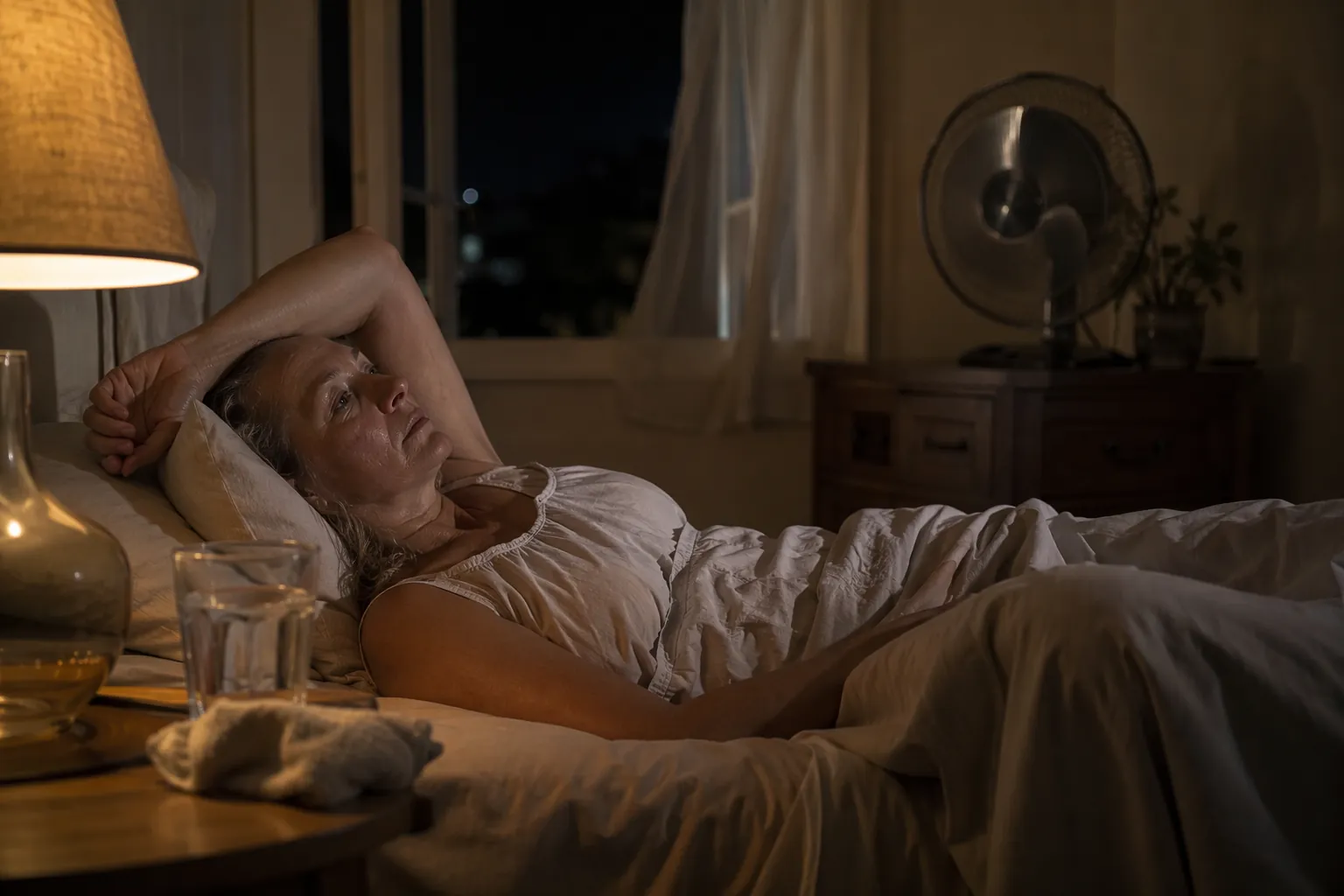
A cold shower sounds logical in a heat wave, but it can backfire if it makes blood vessels constrict and leaves the body working to rebalance. A lukewarm shower about 90 minutes before bed is more useful: it dilates surface blood vessels, and the evaporative cooling afterward can lower core temperature for up to an hour, lining up with the body’s normal sleep-onset temperature dip.[3]
Do not towel off aggressively and rush into heavy pajamas. Pat dry, let skin cool, and put on the lightest sleepwear that still feels comfortable. If night sweats leave you chilled after the flush passes, place a dry top beside the bed before you turn out the light. The point is not to create a spa ritual; it is to prevent a fully awake clothing search in the middle of the night.
Pulse-point cooling belongs in the same practical category. A cool cloth at the neck, wrists, or behind the knees can help move heat away from areas where blood vessels run close to the surface. Use cool, not icy, contact. If a cold pack is too intense, wrap it in a thin cloth and use it briefly. The better version is the one you can reach half-asleep.
- Set one damp cloth in a bowl or sealed bag near the bed, with a dry towel underneath.
- Keep a second sleep top within arm’s reach if you often wake drenched.
- Use gel packs only with a fabric barrier, and avoid falling asleep with very cold packs pressed directly to skin.
- Place water where you can sip without sitting fully upright if reflux or nighttime urination is not an issue.
Make Evaporation Work Overnight
Bedding can either help sweat evaporate or hold it against you. In humid heat, high-thread-count cotton can feel smooth at first and swampy later. Bamboo and Tencel sheets, along with ultralight merino sleepwear, wick sweat more effectively than high-thread-count cotton in humid conditions.[3] That does not mean everyone needs a new linen closet by Friday. It does mean the heavy, tightly woven, “nice” sheets may be the wrong sheets for a perimenopausal heat-wave night.
Strip the bed down. Use the lightest breathable sheet that does not cling when damp. If you need a cover for comfort, choose a separate light layer you can pull over only part of the body after a flush passes. Avoid waterproof mattress protectors unless medically necessary; many trap heat and moisture. If you need protection for sweating, look for breathable versions and test them before the hottest night if you can.
Mattresses themselves are a problem because foam can hold warmth close to the body. If you cannot change the mattress, change the surface. A thin breathable topper, a cooling gel pad, or a chilled-but-not-wet towel layer can reduce that heat reservoir. The layer should stay dry enough that evaporation continues; lying on damp fabric for hours can leave you clammy, chilled, and awake for a different reason.
Where a Cooling Mattress Pad Actually Earns Attention
Most heat-wave products promise more than they can prove. Cooling mattress pads deserve a more careful answer because the early data are directly relevant to nighttime hot flashes, even though the evidence is still limited.
In a Wake Forest pilot study of 15 women using a passive cooling pad, nighttime vasomotor symptom frequency fell 52% at 8 weeks, severity dropped by about 50%, and sleep scores improved 30%.[4] In a separate Eight Sleep study presented at SLEEP 2025, 38 women with a mean age of 50.6 used an active cooling pad; 40% were perimenopausal and 60% were postmenopausal. Nighttime hot flash frequency fell 54%, from 1.78 to 0.75 per night, and 65% of participants cut their hot flash count at least in half.[4]
Those numbers are meaningful because they measure the thing that is ruining sleep: nighttime hot flashes. They are not proof that every woman needs a device, and they are not proof that a pad replaces environmental cooling. Both studies were small. The Wake Forest work was a pilot without a sham control. The Eight Sleep study lacked randomization and was industry-funded.[4] That combination should slow down the sales pitch, not erase the finding.
If you have the budget and the heat waves are frequent, a cooling mattress pad may be the strongest single non-drug tool in the room. If you do not, imitate the principle: cool the surface under your torso, reduce heat stored in the bed, and keep the top layers breathable enough for sweat to evaporate. A product can help, but the mechanism is what you are trying to reproduce.
Protect Light Sleep, Because That Is When Hot Flashes Often Hit
Nighttime hot flashes do not distribute themselves politely across the night. In research presented at SLEEP 2025, 61% of nighttime hot flashes occurred during light sleep, compared with 7% during deep sleep.[4] That matters because light sleep is easier to disrupt. A small temperature rise, a damp shirt, a partner shifting, or a noisy fan can be enough to turn a hot flash into a long awakening.
This is why the bedside setup is not a fussy detail. Put the cool cloth, water, dry top, and any fan remote where your hand naturally lands. If you use a gel pad, decide before bed where it goes and where it will be moved if it becomes too cold. The fewer decisions you make during light sleep, the better your odds of staying close to sleep after the surge passes.
Hydrate for the Night You Are Actually Having
“Drink water” is technically true and practically incomplete. If night sweats are heavy, fluid loss can feed the next round of symptoms. Night-sweat dehydration may trigger catecholamine surges that worsen subsequent hot flashes, so timed hydration with electrolytes may help interrupt that cycle.[2]
The timing is the trick. Start earlier in the evening rather than chugging a large amount at bedtime. During a heat wave, consider an electrolyte drink with dinner or in the early evening, especially if you have been sweating all day. If you wake drenched, a few sips may be more useful than finishing a full bottle and guaranteeing another bathroom trip.
People with kidney disease, heart failure, blood pressure restrictions, or medications that affect fluid or sodium balance should be cautious with electrolyte products and ask a clinician what is safe. More electrolytes are not automatically better. The aim is steady replacement, not a salty bedtime dare.
Do Not Spend the Evening Narrowing the Margin Further
Triggers are not moral failures, and avoiding them does not make heat waves harmless. But during perimenopause, when the thermoneutral zone is already narrowed, common triggers can make the threshold easier to cross. The most useful heat-wave rule is to be stricter on the worst nights, not necessarily forever.
- Caffeine: avoid it after 2 p.m. if nighttime hot flashes or insomnia are active concerns.[5]
- Alcohol: skip it in the evening during heat waves; it is a recognized hot flash trigger and can fragment sleep.[5][6][7] For a deeper sleep-specific explanation, see how alcohol disrupts sleep in perimenopause.
- Spicy foods: move them earlier or avoid them on the hottest nights if they reliably bring on flushing.[5][6][7]
- High-sugar meals: keep them out of the last 3 hours before bed when sleep is already vulnerable.[5]
Magnesium glycinate is sometimes useful as a sleep-support tool. A dose of 200–400 mg before bed may help with sleep quality and thermoregulation, but it should be treated as a modest support rather than a hot-flash cure.[8] Check with a clinician first if you have kidney disease, take medications that interact with magnesium, or are already using sedating medications or supplements.
When the Problem Is Bigger Than a Perimenopause Heat-Wave Night
Most perimenopause night sweats are miserable rather than dangerous. Some patterns deserve medical attention. Night sweats with fever, unexplained weight loss, or persistent drenching that soaks through bedding warrant a medical visit.[5] So do new symptoms that feel different from your usual pattern, chest pain, fainting, or severe shortness of breath.
If you wake soaked and gasping, snore heavily, have morning headaches, or feel unrefreshed even after enough hours in bed, do not assume every awakening is a hot flash. The overlap can be confusing; this is where a differential guide such as sleep apnea or perimenopause can help you decide what to raise with a clinician.
For broader extreme-heat planning, the heat dome sleep FAQ covers other high-risk groups and home setups. If storms and pressure changes also worsen your sleep, perimenopause thunderstorm sleep tips may be the more relevant next read.
No single hack recreates air conditioning. But stacking cooler room timing, humidity-aware airflow, breathable textiles, surface cooling, timed hydration, and trigger control gives a perimenopausal body more room before the hypothalamus fires.
References
- Perimenopause Night Sweats & Sleep Tips, Concierge Medicine of South Shore
- How to cope in hot weather when you’re menopausal, Dr. Louise Newson
- Tips for sleeping without air conditioning, HealthPartners
- Menopause-Related Hot Flashes Get Cooled Off by Bed Cooling Systems, MedPage Today
- Hot Flashes at Night, Cleveland Clinic
- An Ob-Gyn’s Top Tips for Managing Hot Flashes, ACOG
- Managing Hot Flashes: Tips From a Menopause Expert, Johns Hopkins Medicine
- Ways to Manage Hot Flashes, UnityPoint Health
Explore the mechanism
Next step
Spot an error or have clinical feedback?
Because this article covers clinical, medication, or safety information, we use a moderated correction channel instead of open public comments. Let us know if something about “How to Sleep in a Heat Wave Without AC During Perimenopause” needs a closer look.
Send feedback on this article