
Does a Low Carb Diet Improve Sleep in Perimenopause?
Learn whether reducing carbohydrates improves sleep during perimenopause, how blood sugar volatility drives nighttime awakenings, and why a moderate low-glycemic approach offers sleep benefits without the risks of strict keto.
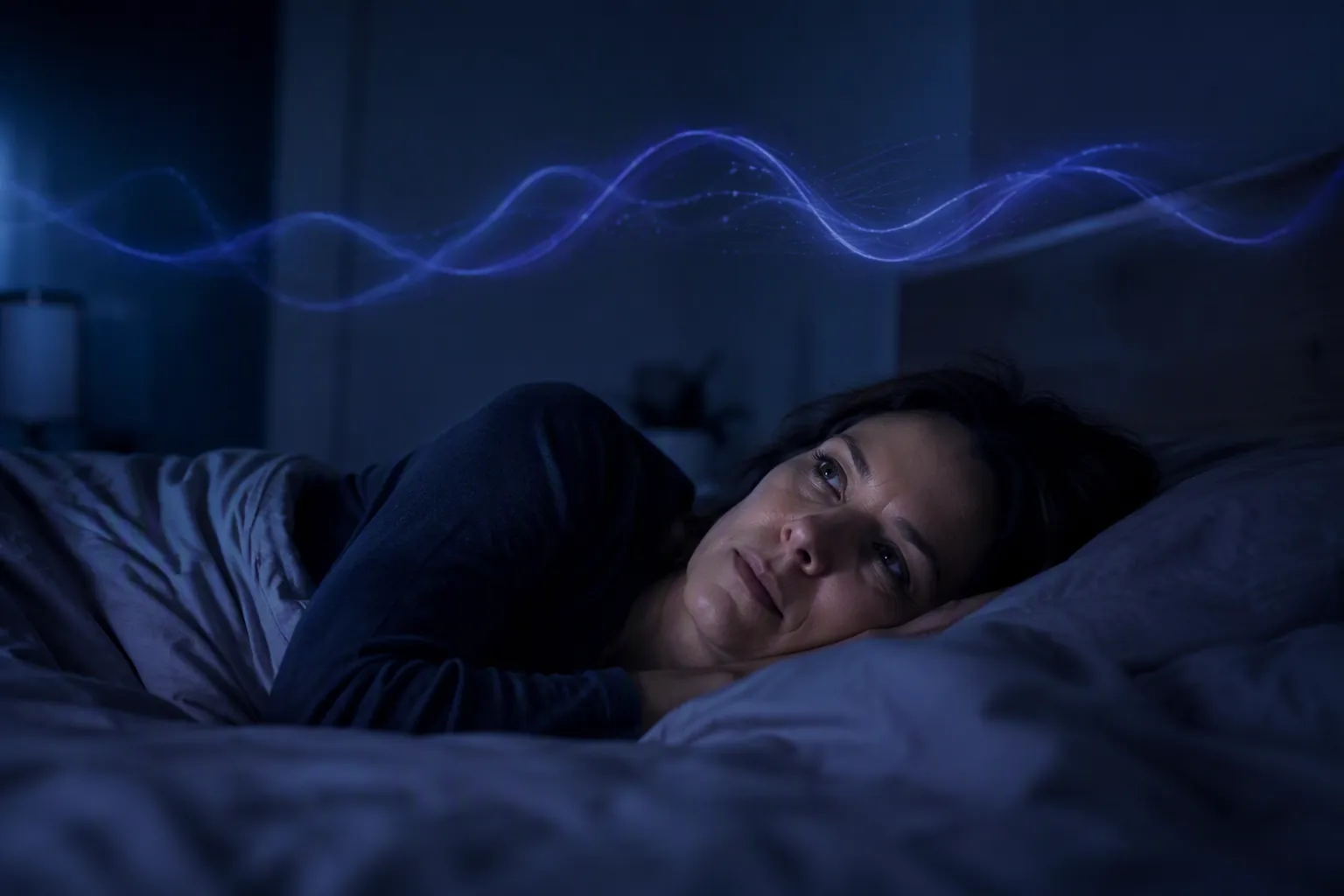
You used to fall asleep and stay asleep. Now you can still drift off, but somewhere around 3 a.m. your body switches on: heart a little fast, mind alert, sheets too warm, stomach oddly hollow, anxiety arriving before there is even a thought attached to it. If this started in perimenopause, it is reasonable to wonder whether dinner, sugar, or a low carb diet could change your sleep quality.
The short answer is yes, reducing refined carbohydrates may help some perimenopausal women sleep better. But the useful part is not “getting into ketosis.” It is making the night metabolically calmer: fewer glucose spikes, fewer sharp drops, and less chance that stress hormones have to rescue your blood sugar while you are trying to stay asleep.
This article is informational and is not a substitute for medical care. If you use insulin, sulfonylureas, GLP-1 medications, blood pressure medication, or have diabetes, kidney disease, an eating disorder history, pregnancy, or complex medical conditions, do not make major carbohydrate changes without a clinician. Evidence tier: moderate observational evidence for high-glycemic diets and insomnia risk in postmenopausal women, plausible mechanistic support for perimenopause, and limited direct intervention evidence for low carb diets in this specific life stage.
The strongest clue comes from high-glycemic diets, not from keto
The best large human evidence here is not a perimenopause keto trial. It is a 2019 analysis from the Women’s Health Initiative, published in The American Journal of Clinical Nutrition, that studied 77,860 postmenopausal women. The researchers found that higher dietary glycemic index and higher intake of added sugars were associated with greater insomnia risk. Women consuming the most refined carbohydrates had an 11% higher likelihood of poor sleep and a 16% higher risk of developing new insomnia over 3 years.[1]
Those numbers are worth taking seriously, and also worth keeping in proportion. An 11% or 16% increase is not a guarantee that sugar is the cause of every wake-up, and the study was observational, so it cannot prove that cutting refined carbohydrates will cure insomnia. The participants were postmenopausal, with a mean age around 63, not perimenopausal women in their 40s or early 50s. Still, it is unusually relevant compared with much of the diet-and-sleep conversation because it looked at women, insomnia, glycemic load, added sugars, and sleep over time.
Harvard Health’s discussion of the same findings put the practical point plainly: lower-glycemic foods may be a better sleep target than simply cutting all carbohydrates.[2] The NIH’s National Heart, Lung, and Blood Institute also highlighted the association between added sugars, refined carbohydrates, and insomnia in postmenopausal women, giving the finding more institutional weight without turning it into a prescription.[3]
For a perimenopausal reader, that distinction matters. A low carb diet can mean many things: skipping dessert, replacing a bowl of sweet cereal at night, eating beans and vegetables instead of white bread, or pushing carbohydrates so low that the body is forced into ketosis. The sleep evidence points much more strongly toward the first group of changes than the last one.
How refined carbohydrates can wake you at 2-4 a.m.
A high-glycemic dinner or evening snack is absorbed quickly. Blood glucose rises, insulin responds, and in some people glucose then falls more sharply than the body likes. If that drop happens during the night, the brain still needs fuel. The body can respond by releasing counter-regulatory hormones, including cortisol and adrenaline, to push blood sugar back up.
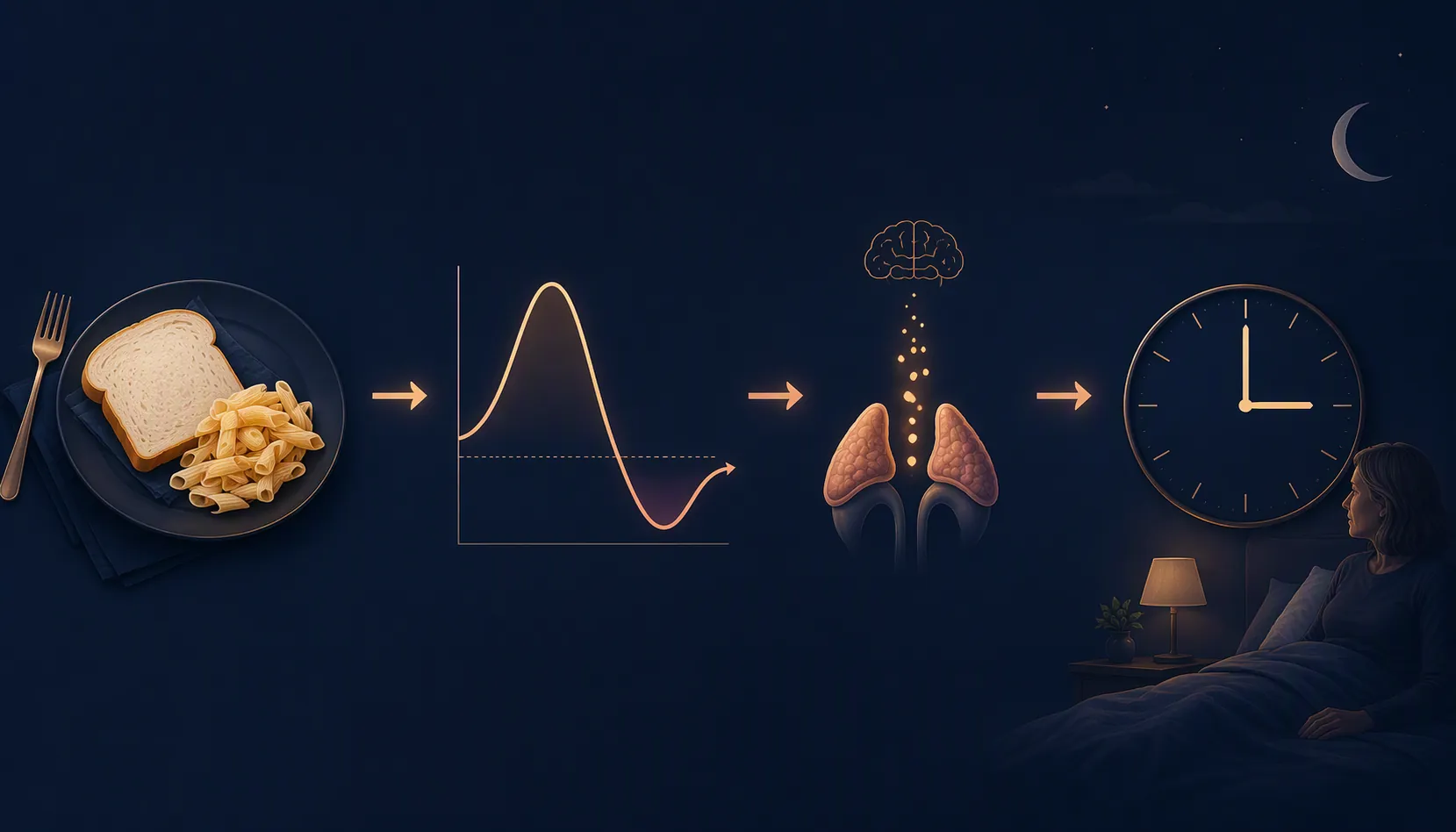
That rescue system is useful if your blood sugar is genuinely too low. It is not soothing. Adrenaline is not a lullaby; cortisol is not a weighted blanket. A nighttime surge can feel like waking up panicked, hot, restless, hungry, or strangely alert. If you have ever opened your eyes before dawn and felt as if your body started the day without asking you, this pathway is one plausible reason.
Perimenopause can make that pathway more noticeable. Estradiol and progesterone are fluctuating rather than simply declining in a tidy line, and sleep systems become more sensitive to temperature changes, stress reactivity, and mood shifts. Stanford Lifestyle Medicine notes that 40-60% of perimenopausal women experience sleep disruption, and Allara Health reports that insomnia prevalence is 56% higher than before menopause.[4][5]
That does not mean carbohydrates are the only issue. Hot flashes, night sweats, sleep apnea, alcohol, caregiving stress, pain, bladder symptoms, medications, and anxiety can all fragment sleep. But if your pattern is “I fall asleep, then wake wired in the early morning,” blood sugar volatility belongs on the short list, especially if the wake-ups are worse after sweets, wine, white rice, pasta, crackers, or a late snack eaten alone.
If you want the broader hormonal sleep context first, it helps to pair this with perimenopause sleep habits that actually work. If the wake-up feels like a panic surge, the blood sugar story overlaps with why you wake up panicking during perimenopause.
What “lower carb” should mean when sleep is the goal
For sleep, the first move is usually not to count every gram. It is to reduce the foods most likely to create a fast rise and fall: added sugars, sweet drinks, desserts, sweetened yogurt, refined breakfast cereals, white bread, crackers, chips, large portions of white pasta or rice, and late-night snacks that are mostly starch or sugar.
The second move is to keep carbohydrates that arrive with fiber, minerals, water, and structure. Lentils, beans, intact whole grains, squash, berries, plain yogurt with nuts, vegetables, and modest portions of potatoes or fruit behave differently from a sweet roll or a bowl of ice cream. They are not magic sleep foods, but they are less likely to produce the sharp glucose pattern that makes the 3 a.m. nervous-system alarm more likely.
| Instead of focusing on | Try focusing on | Why it matters for sleep |
|---|---|---|
| Eliminating all carbs | Reducing refined carbs and added sugars first | Targets the foods most linked with glucose volatility |
| A carb-heavy dinner eaten alone | Carbs paired with protein, fat, and fiber | Slows digestion and may reduce a sharp glucose rise |
| Late sweet snacks | Earlier, balanced meals and a small protein-containing snack if truly hungry | Avoids sending a fast sugar signal into the first half of the night |
| Ketosis as the goal | A lower-glycemic, sustainable pattern | Aims for a quieter night without adding restriction stress |
A sleep-focused plate can be simple: protein, non-starchy vegetables, a small-to-moderate serving of a lower-glycemic carbohydrate, and enough fat to make the meal satisfying. For example, a hypothetical dinner might be salmon, roasted vegetables, lentils, and olive oil; or eggs, avocado, greens, and a small serving of beans. The point is not that these exact meals fix insomnia. The point is the structure: slower fuel, less sugar, fewer abrupt swings.
Some women do better with most of their starch earlier in the day and a lower-glycemic dinner. Others sleep worse if dinner is too light, especially if they wake hungry. That is why moderation is not a weak answer here. It gives you room to notice your own pattern instead of turning the experiment into another source of vigilance.
Why strict keto can backfire during perimenopause
Strict ketogenic diets deserve a fair but narrow place in this conversation. A 2022 systematic review in Nutrients found that nutritional ketosis may improve sleep quality or REM sleep in some populations, but the results varied widely and were not specific to perimenopausal women.[6] That is very different from saying keto is the default sleep strategy for a 48-year-old waking at 3 a.m.
Very low carbohydrate intake can also create its own sleep obstacles, particularly during adaptation. Some people report lighter sleep, early waking, leg cramps, palpitations, or more nighttime urination. Part of that may come from fluid and electrolyte shifts. Part may come from the stress of pushing the body through a sharp fuel transition while hormones are already fluctuating.
The cortisol evidence is indirect but relevant. A review from Samphire Neuro summarizes studies including Langfort et al. 1996, which found higher pre- and post-exercise cortisol on low-carbohydrate diets, and Stimson et al. 2007, which found enhanced cortisol regeneration on a high-fat ketogenic diet independent of weight loss.[7] These data do not prove that keto raises cortisol in every perimenopausal woman. They do argue against casually recommending severe carbohydrate restriction to someone whose main complaint is waking wired.
The often-cited sleep-disturbance figure for keto adaptation also needs careful handling. A 20% sleep disturbance rate has been reported in a pediatric epilepsy population, not in perimenopausal women.[7] It is evidence that sleep disruption is a known possible side effect of ketogenic therapy. It is not evidence that one in five perimenopausal women will sleep worse on keto.
Weight loss, insulin resistance, and metabolic health can still matter. If a clinician has recommended carbohydrate restriction for those reasons, sleep may improve as blood sugar control improves. But if you are self-directing the change mainly because you want to stop early-morning awakenings, a lower-glycemic pattern is the more sensible starting point than a dramatic carb purge.
A practical two-week sleep experiment
Two weeks is not long enough to solve every perimenopause sleep problem, but it is long enough to see whether refined carbohydrates are part of your pattern. Keep the experiment boring on purpose. Change the foods most likely to drive glucose swings, keep the rest of your sleep routine steady, and watch what happens to the specific wake-up you care about.
- Remove or sharply reduce added sugars, desserts, sweetened drinks, and refined evening starches.
- Keep a lower-glycemic carbohydrate at dinner if sleeping hungry makes you wake earlier.
- Pair carbohydrates with protein, fiber, and fat rather than eating them alone.
- Notice alcohol separately; it can worsen both glucose stability and sleep continuity.
- Track wake time, hunger, heat, heart racing, and anxiety on waking, not just total sleep hours.
Do not judge the experiment by one night. Perimenopausal sleep is noisy. Look for a pattern: fewer 2-4 a.m. wake-ups, less intensity when you do wake, easier return to sleep, fewer hunger surges, or less morning exhaustion. If the only result is that you feel deprived and sleep becomes more pressured, the plan is too strict for the outcome you are chasing.
Food is also not the whole sleep system. Resistance training, morning light, consistent wake time, magnesium- and protein-rich meals, and managing night sweats can all matter. For a broader nutrient-focused approach, see what to eat for better sleep and memory in menopause; for movement support, a 12-week weight training routine for perimenopause sleep may fit better than another round of stricter food rules.
When to get help instead of cutting harder
If your insomnia persists, if you are regularly awake for hours, if you have severe night sweats, panic symptoms, snoring, gasping, restless legs, depression, or daytime impairment, diet should not be the only tool on the table. Perimenopause can reveal sleep apnea, thyroid problems, iron issues, medication effects, mood disorders, and vasomotor symptoms that deserve direct treatment.
The calibrated answer is this: a moderate low-glycemic approach is a reasonable sleep-focused experiment for many perimenopausal women, especially when the problem is early-morning wired wakefulness after years of normal sleep. Strict keto is not the default answer. The goal is a steadier night, not a more impressive restriction.
References
- High glycemic index and glycemic load diets as risk factors for insomnia: analyses from the Women’s Health Initiative. The American Journal of Clinical Nutrition, 2019.
- Menopause and insomnia: Could a low-GI diet help?. Harvard Health Publishing, January 17, 2020.
- Added sugars, refined carbs linked to insomnia in postmenopausal women. National Heart, Lung, and Blood Institute, 2019.
- Why Sleep Disturbances Are More Common During Perimenopause. Stanford Lifestyle Medicine.
- Perimenopause Insomnia: How Hormones Disrupt Your Sleep. Allara Health.
- Effects of Ketogenic Diet on Sleep Disorders: A Systematic Review. Nutrients, 2022.
- The Keto Diet and Menopause: What You Need to Know. Samphire Neuro.
Safety & eligibility read
Cross-check against other interventionsExplore the mechanism
Next step
Spot an error or have clinical feedback?
Because this article covers clinical, medication, or safety information, we use a moderated correction channel instead of open public comments. Let us know if something about “Does a Low Carb Diet Improve Sleep in Perimenopause?” needs a closer look.
Send feedback on this article